

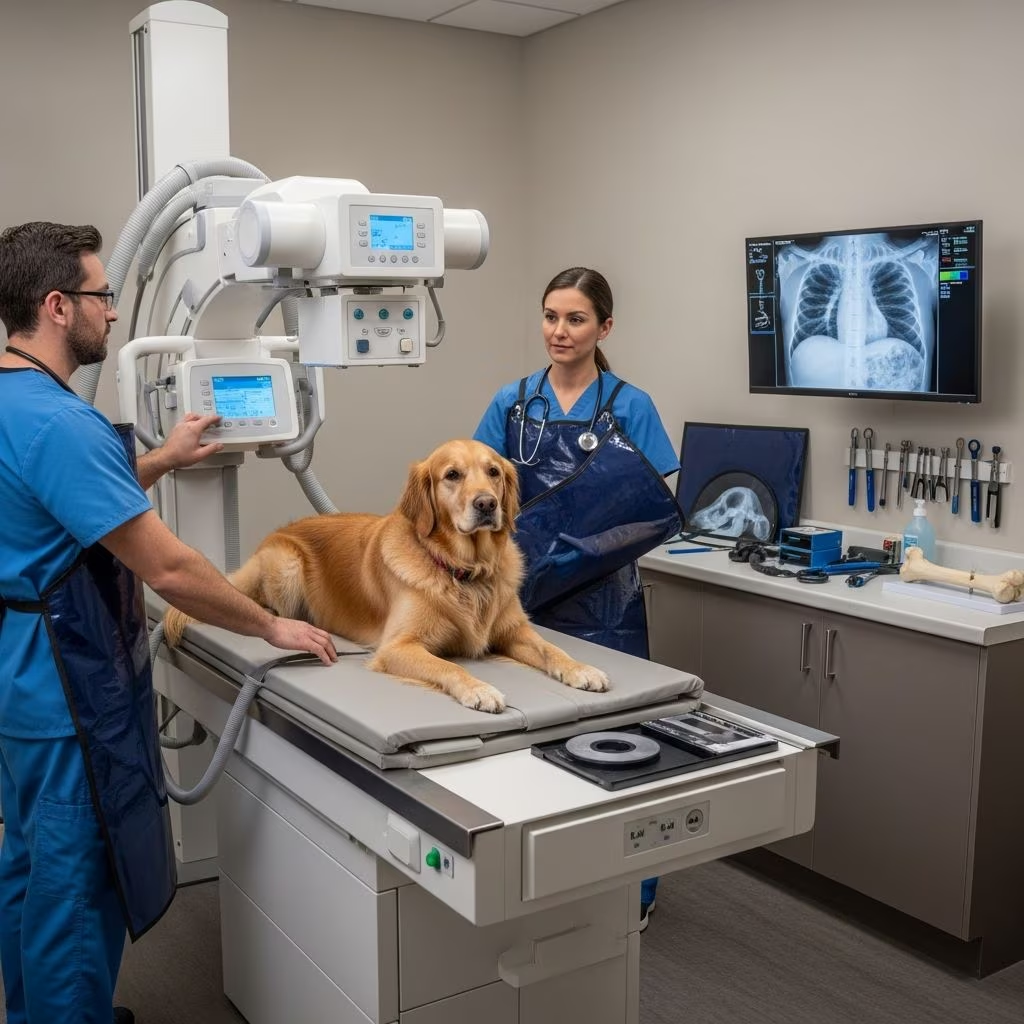
Veterinary radiography remains a cornerstone of diagnostic imaging in animal health, providing critical visual insights into internal structures. This guide delves into the core elements of producing high-quality X-ray images, ensuring veterinarians and technicians can reliably detect abnormalities in pets and livestock.
Core Principles of X-Ray Generation
X-rays are produced when high-speed electrons strike a metal target within an X-ray tube, generating photons that penetrate tissues variably based on density. In veterinary settings, optimizing exposure parameters like kilovoltage peak (kVp), milliamperage (mA), and exposure time is essential for clear images. High kVp settings, typically 80-120 for thoracic views, create a wide gray scale ideal for distinguishing subtle lung patterns from heart shadows.
Modern systems integrate technique charts tailored to species, body size, and region. These charts standardize protocols, adjustable for detector speed and contrast preferences, reducing operator error. Digital radiography (DR) and computed radiography (CR) have revolutionized workflows; DR offers instant processing via wireless detectors, perfect for mobile equine practices, while CR uses phosphor plates for flexible imaging.
Equipment Selection and Setup
Choosing between CR and DR depends on practice needs. CR systems process plates sequentially or in pairs, with software enabling post-capture adjustments like brightness and magnification. DR eliminates plates entirely, using flat-panel detectors for rapid image acquisition and wireless data transfer, minimizing cables in field conditions.
Key setup considerations include focal spot size for sharpness and source-to-image distance (SID), usually 100-110 cm for table-top exams to minimize distortion. Collimators restrict the beam to the area of interest, reducing scatter and radiation dose.
| Equipment Type | Advantages | Disadvantages | Best Use Cases |
|---|---|---|---|
| Computed Radiography (CR) | Cost-effective; reusable plates | Slower processing; requires darkroom | Small clinics; multi-plate batches |
| Direct Radiography (DR) | Instant images; wireless options | Higher upfront cost | Ambulatory vets; high-volume practices |
Patient Preparation and Positioning Techniques
Proper positioning prevents artifacts and ensures anatomical accuracy. For small animals, thoracic exams typically include left and right lateral, plus ventrodorsal (VD) or dorsoventral (DV) views. Center the thorax, extending collimation from thoracic inlet to caudal lungs and cranial abdomen.
- Lateral Recumbency: Patient on side; cranial to left, dorsal up for consistency.
- VD/DV: Sternum down or up; ideal for cardiac silhouette evaluation.
- Standing or Bipedal: Horizontal beam for pleural effusion suspicions.
- Oblique Views: 20° for ureteral assessment in urography.
Measure patient thickness at the site to select kVp/mAs. Sedation minimizes motion; short-acting agents are preferred when medically safe, reducing manual restraint needs.
Radiation Safety Protocols
Adhering to ALARA (As Low As Reasonably Achievable) principles—time, distance, shielding—is paramount. Minimize exposure time by maximizing mA for required mAs. Maintain distance: double it, radiation intensity quarters. Use lead aprons, thyroid shields, gloves, and barriers.
Staff exit behind control walls pre-exposure. Pregnant personnel avoid the room. Regular equipment calibration ensures compliance with safety standards.
Optimizing Image Quality
Quality hinges on exposure factors, positioning, and processing. Underexposure appears faint; overexposure, washed out. Motion blur from breathing demands fast exposures (<0.01s for thorax).
Grid use reduces scatter in thick patients. Post-processing in digital systems corrects minor issues but can’t fix poor acquisition. Collimation post-capture simulates tight beams but pre-exposure is best.
Systematic Image Interpretation
Interpret with anatomical knowledge, assessing size, shape, position, opacity, and margins. Use structured methods:
- Outside-In: Start with soft tissues/musculoskeletal, end with heart/lungs to catch peripherals.
- Inside-Out: Prioritize viscera, then periphery.
- Systems-Based: Group organs (e.g., cardiovascular, respiratory).
For thorax: Evaluate lungs for pattern (interstitial, alveolar), heart for enlargement (vertebral heart score), airways for collapse. Compare views for superimposition errors.
Special Considerations by Species and Region
Small Animal Thorax
High kVp/low mAs for latitude. Collimate vertically at scapula caudal border, horizontally over sternum to T13.
Equine and Large Animals
Wireless DR excels here. Portable units with horizontal beams for standing navicular views or stifles.
Dental Radiography
Bisecting-angle for most teeth; parallel for caudal mandible. Sensor behind teeth, beam perpendicular.
Common Artifacts and Troubleshooting
| Artifact | Cause | Solution |
|---|---|---|
| Grid Lines | Misaligned grid | Reposition or remove grid |
| Motion Blur | Patient movement | Sedate; shorten time |
| Uneven Density | Improper collimation | Tighten beam pre-exposure |
Advancements and Future Directions
AI-assisted interpretation flags abnormalities. Portable DR units integrate with cloud storage for remote consults. Hybrid systems combine radiography with ultrasound for comprehensive diagnostics.
Frequently Asked Questions (FAQs)
What is the ideal kVp for small animal chest X-rays?
80-120 kVp with 1-5 mAs for optimal lung-heart contrast.
Is sedation always required for radiography?
No, but recommended to minimize motion; manual restraint minimized per regulations.
How does DR differ from CR?
DR provides direct digital capture without plates; faster, wireless-capable.
What are ALARA principles?
Time, distance, shielding to reduce radiation exposure.
Can X-rays diagnose fractures accurately?
Yes, with proper oblique/parallel techniques for superposition avoidance.
References
- Radiography of Animals — Merck Veterinary Manual. 2023. https://www.merckvetmanual.com/clinical-pathology-and-procedures/diagnostic-imaging/radiography-of-animals
- Imaging techniques in Veterinary Medicine. Part I: Radiography — PMC/NCBI. 2021-10-15. https://pmc.ncbi.nlm.nih.gov/articles/PMC8529508/
- Small Animal Thoracic Radiography — Today’s Veterinary Practice. 2023. https://todaysveterinarypractice.com/radiology-imaging/small-animal-thoracic-radiography/
- Veterinary Dental Radiography Tips — Veterinary Dentistry. 2023. https://veterinarydentistry.net/dental-radiography-small-improvements-technique-can-make-big-difference/
- An Introduction to Veterinary Radiography — FVMA. 2023. https://fvma.org/an-introduction-to-veterinary-radiography/



