Veterinary Management of Venomous Snake Bites
Emergency protocols and clinical approaches for treating envenomated pets
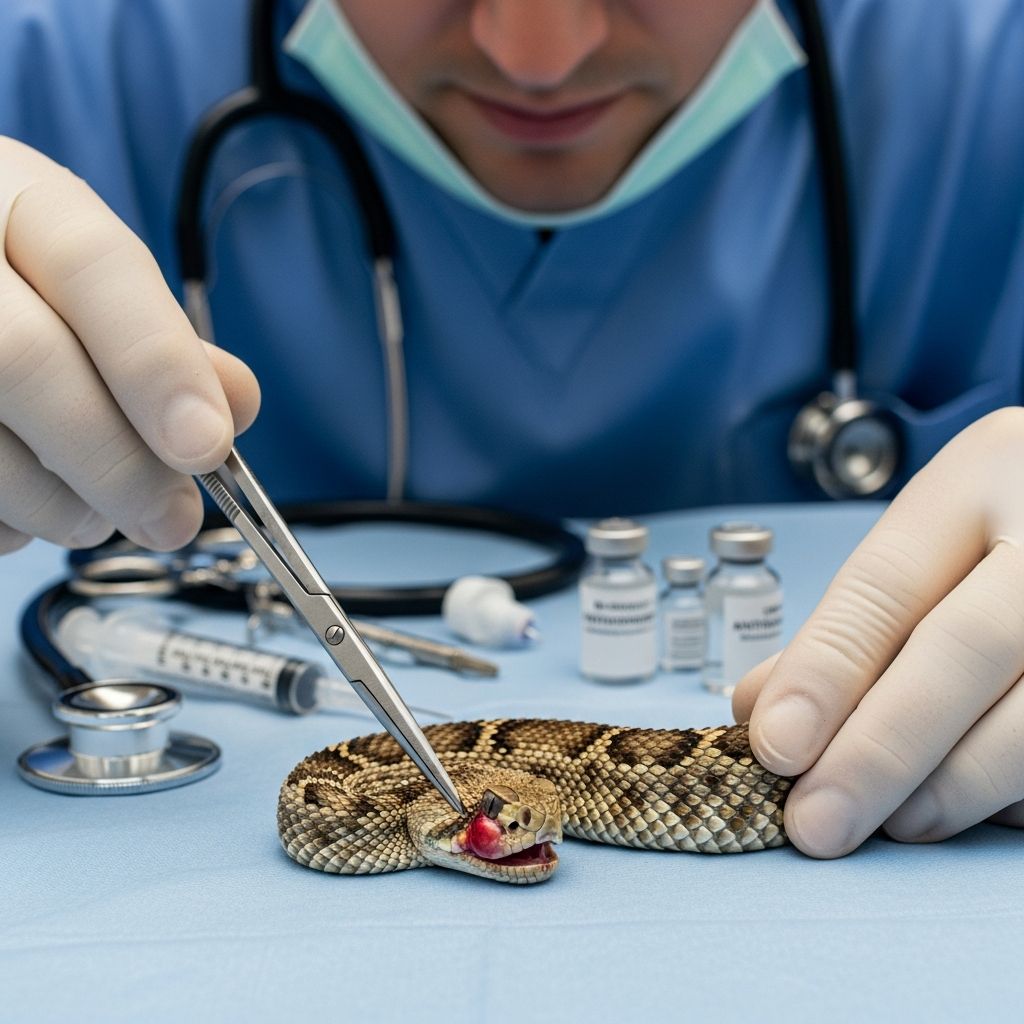
Snakebite envenomation represents a true medical emergency requiring immediate veterinary intervention. The toxic effects of venom begin immediately upon injection, making rapid assessment and appropriate treatment essential for optimal patient outcomes. Understanding the pathophysiology of envenomation and the evidence-based management protocols can substantially improve survival rates and reduce long-term complications in affected animals.
Understanding Envenomation Severity and Classification
Snakebite envenomation severity varies considerably depending on multiple factors, including the snake species, venom potency, bite location, amount of venom injected, and the victim’s size and health status. Different snake families produce distinct venom compositions that affect treatment decisions. Pit vipers (including rattlesnakes, copperheads, and cottonmouths) introduce hemotoxic and myotoxic venom components, while elapids (such as coral snakes and Australian brown snakes) produce predominantly neurotoxic effects. The clinical presentation varies substantially between these envenomation types, influencing both immediate and long-term management strategies.
Dry bites, where a snake strikes but does not inject venom, occur in a significant percentage of snakebites. However, clinicians should not assume a bite is dry until clinical signs are ruled out through careful observation and monitoring.
Critical First Response and Pre-Veterinary Care
Owner education regarding appropriate first aid measures is paramount, as many commonly recommended interventions actively worsen outcomes. Owners encountering a snakebite should immediately transport their animal to an emergency veterinary facility while maintaining the animal in a calm, quiet state with minimal activity.
Ineffective and Harmful First Aid Measures
Multiple first aid techniques widely circulated through internet sources and folklore have been thoroughly documented as ineffective and potentially harmful:
- Ice packs or cold spray application delays transport and provides no therapeutic benefit
- Incision and suction techniques lacerate tissue and fail to extract venom effectively
- Tourniquets create localized tissue necrosis and exacerbate systemic complications
- Electrical stimulation offers no venom neutralization and causes tissue damage
- Heat application accelerates venom dissemination
- Snakebite extraction kits lack efficacy and consume valuable treatment time
- Delaying veterinary presentation until obvious clinical signs develop allows irreversible tissue damage to progress
The most appropriate first aid measure consists of keeping the animal calm and restricting movement to minimize venom circulation while proceeding directly to emergency veterinary care. Time to professional treatment remains the single most critical factor in determining patient outcomes.
Initial Clinical Assessment and Diagnostic Approach
Upon presentation to the veterinary clinic, rapid systematic evaluation establishes baseline clinical parameters and guides treatment decisions. Veterinarians should perform a thorough physical examination documenting bite location, degree of tissue swelling, presence of coagulopathy indicators (petechiae, ecchymosis, bleeding from bite sites), neurological signs, cardiovascular stability, and respiratory function.
For pit viper envenomations, marking the leading edge of tissue swelling with a skin marker establishes a reference point for monitoring venom spread. Repeated measurements at established intervals (typically every 15-30 minutes) provide objective assessment of local tissue injury progression and help guide therapeutic decisions regarding antivenom administration.
Laboratory Monitoring Parameters
Essential laboratory assessments should include:
- Coagulation profile (prothrombin time, partial thromboplastin time, platelet count)
- Complete blood count to assess for hemolysis
- Serum chemistry panel evaluating renal function and myotoxicity markers
- Blood pressure monitoring for hypotension assessment
- Baseline and serial blood gas analysis in elapid envenomations
Serial venom detection kits may assist in determining whether circulating venom remains present, though clinical signs rather than laboratory results should guide treatment decisions.
Antivenom Administration: The Cornerstone of Treatment
Antivenom therapy represents the most effective intervention for neutralizing circulating venom and preventing progressive tissue damage. These pharmaceutical preparations contain purified antibodies that directly bind to venom components, removing them from circulation and preventing further toxic effects.
Timing Considerations
Antivenom efficacy demonstrates a time-dependent relationship with envenomation. Administration within the first six hours after a bite provides maximum clinical benefit while venom remains circulating in the bloodstream. However, antivenom administration may provide clinically meaningful improvements even when administered 24 hours or longer after the bite, particularly for ongoing venom effects or progressive coagulopathy.
Antivenom Types and Selection
Antivenoms are formulated as either monovalent (targeting single snake species) or polyvalent (targeting multiple species) preparations. In North America, veterinary antivenoms approved for pit viper envenomation provide coverage for all rattlesnakes, copperheads, and cottonmouths. In geographic regions where multiple snake species occur, polyvalent preparations offer advantages when snake identification proves difficult.
Australian veterinary practice commonly employs tiger/brown snake polyvalent antivenom, which covers the majority of clinically important Australian elapid species. Coral snake antivenin is no longer manufactured in the United States, though some practitioners have obtained special import permissions for Mexican-manufactured preparations.
Antivenom Dosing and Administration
Current evidence-based recommendations suggest initial antivenom dosing of 2 vials (8,000 units total for tiger/brown polyvalent antivenom) administered intravenously. This dosing achieves adequate serum levels for circulating venom neutralization in the majority of envenomated animals. Repeat antivenom dosing should be guided by clinical progression rather than laboratory venom detection results, as ongoing clinical signs may indicate inadequate neutralization.
Prior to antivenom administration, intravenous catheterization should be established. Antivenom is administered as a slow intravenous infusion, with careful monitoring for adverse reactions including anaphylaxis. Should anaphylactic reaction occur, antivenom infusion must be discontinued immediately and epinephrine (0.5–1 mL of 1:1,000 solution administered subcutaneously) should be administered, with or without antihistamine support such as diphenhydramine.
Supportive Care and Symptomatic Management
Beyond antivenom administration, comprehensive supportive care addressing the multiple physiological derangements caused by envenomation significantly improves patient outcomes and comfort.
Fluid Resuscitation and Hemodynamic Support
Pit viper venom toxins induce profound hypovolemia and hypotension through multiple mechanisms including direct endothelial damage, inflammatory mediator release, and fluid extravasation into envenomated tissues. Intravenous crystalloid fluid administration provides essential hemodynamic support, with shock fluid boluses administered as needed to maintain adequate tissue perfusion. Ongoing maintenance fluid rates of at least 1x maintenance should be continued throughout the acute phase, with caution exercised in patients with pre-existing cardiac conditions.
Pain Management
Snakebite envenomation causes severe localized and systemic pain. Opioid analgesics (morphine, hydromorphone, methadone) provide effective pain control and should be administered and reassessed regularly throughout hospitalization. Notably, nonsteroidal anti-inflammatory drugs are contraindicated in snakebite management due to their potential to exacerbate coagulopathy and bleeding complications.
Coagulopathy Management
Both pit viper and elapid venoms can induce severe coagulopathy through multiple mechanisms. Pit viper venoms produce disseminated intravascular coagulation and thrombocytopenia, while elapid venoms may cause similar effects. When coagulopathy develops, treatment with low-dose heparin (50–100 units per kilogram subcutaneously every 8 hours) combined with blood replacement products addresses both the coagulation deficit and any hemorrhagic complications. Prothrombin time and platelet counts should be monitored to guide therapy adjustments.
Respiratory Support
Elapid envenomation frequently causes progressive neurotoxic effects leading to respiratory muscle paralysis. Affected animals may require mechanical ventilation for 6–8 hours, with some patients requiring longer support depending on venom load and antivenom administration timing. Ventilatory support should be initiated immediately upon recognition of respiratory compromise, with intubation equipment maintained ready at the bedside given the potential for rapid deterioration from normal respiratory function to complete paralysis within 2–5 minutes.
Additional Supportive Measures
- Tetanus antitoxin administration, particularly in equine patients
- Broad-spectrum antimicrobial therapy addressing potential wound infection risk
- Wound management including shaving and cleansing with germicidal soap
- Temperature regulation and appropriate bedding to prevent pressure sores
- Elevation of affected limbs to reduce swelling
- Artificial tear application for animals with neurological paralysis affecting eyelid function
- Urinary catheterization and bladder care for recumbent patients requiring extended hospitalization
- Physical therapy and mobilization support as the animal recovers
Monitoring Duration and Post-Bite Complications
Appropriate monitoring duration varies by envenomation type. Pit viper envenomated animals require continuous observation for a minimum of 24 hours following envenomation, while elapid-bitten animals warrant at least 48 hours of close monitoring. Extended observation periods ensure that delayed complications do not develop unrecognized.
Animals envenomated by Australian elapid species require specific monitoring for hemolysis, renal injury, myotoxicity evidenced by rhabdomyolysis, cardiovascular abnormalities, and ongoing coagulopathy. Appropriate therapeutic interventions should be implemented as these complications emerge.
Emerging and Adjunctive Therapies
Several adjunctive treatments have been explored for potential benefit in managing snakebite complications. Hyperbaric oxygen therapy may accelerate tissue healing and reduce necrotic tissue formation in some cases. Laser therapy has been anecdotally reported to improve outcomes, though robust clinical evidence remains limited. These interventions should be considered as supplements to, rather than replacements for, antivenom therapy and supportive care.
Rattlesnake Vaccination Considerations
A rattlesnake vaccine is commercially available for dogs, though published efficacy studies remain absent from the veterinary literature. The vaccine may reduce clinical sign severity in vaccinated animals, but reliable protection cannot be guaranteed. Even vaccinated pets require immediate veterinary examination upon snakebite, as clinical signs may still develop and antivenom therapy may remain indicated.
Frequently Asked Questions
Can I treat a snakebite at home?
No. Snakebites require immediate professional veterinary treatment. Attempting home treatments delays effective therapy and worsens outcomes. Transport to emergency veterinary care is the only appropriate response.
How quickly does venom cause damage?
Irreversible venom effects begin immediately upon envenomation. Progression occurs rapidly, with significant tissue damage developing within the first few hours. This timeline emphasizes the critical importance of rapid veterinary presentation.
Is antivenom always necessary?
Antivenom is indicated for any animal showing clinical signs of envenomation. Animals evaluated within 24 hours and displaying envenomation signs require antivenom therapy. The specific decision depends on clinical presentation and venom type.
What is the prognosis after snakebite?
Prognosis depends on multiple factors including venom type, amount injected, bite location, time to treatment, and appropriate therapy implementation. With rapid treatment and comprehensive supportive care, many animals recover fully, though some may experience permanent tissue damage or functional impairment.
How much does snakebite treatment cost?
Treatment costs vary considerably depending on envenomation severity, hospitalization duration, antivenom requirements, and complications. Antivenom alone represents substantial expense, with total treatment costs often ranging from several hundred to several thousand dollars.
Conclusion and Clinical Summary
Venomous snakebite envenomation in companion animals demands rapid recognition and aggressive professional treatment. Owner education regarding the ineffectiveness of home remedies combined with immediate veterinary transport represents the critical initial step. Antivenom therapy, when administered promptly and appropriately, provides the most effective means of neutralizing circulating venom and preventing progressive tissue damage. Comprehensive supportive care addressing the multiple physiological derangements induced by envenomation substantially improves patient survival and functional outcomes. Ongoing monitoring throughout the acute phase ensures that delayed complications receive prompt recognition and appropriate management.
References
- Snakebites in Animals – Toxicology — Merck Veterinary Manual. 2024. https://www.merckvetmanual.com/toxicology/snakebite/snakebites-in-animals
- Treating Pets with Snakebite — MedVet Animal Hospitals. 2024. https://www.medvet.com/snakebites-and-pets/
- Treatment of Snake Envenomation in Dogs and Cats — Animal Emergency Australia. 2024. https://animalemergencyaustralia.com.au/blog/treatment-of-snake-envenomation-in-dogs-and-cats/
- Snakebite 101 — Advanced Veterinary Specialists. 2024. https://www.avs4pets.com/blog/snakebite-101
- NSS Veterinary Treatment Algorithm and Supplemental Information — National Snakebite Support. 2024. https://www.nationalsnakebitesupport.org/nss-snakebite-management-education/dvm-pit-viper-treatment-algorithm-and-supplemental-information
Similar Articles








Read full bio of medha deb