

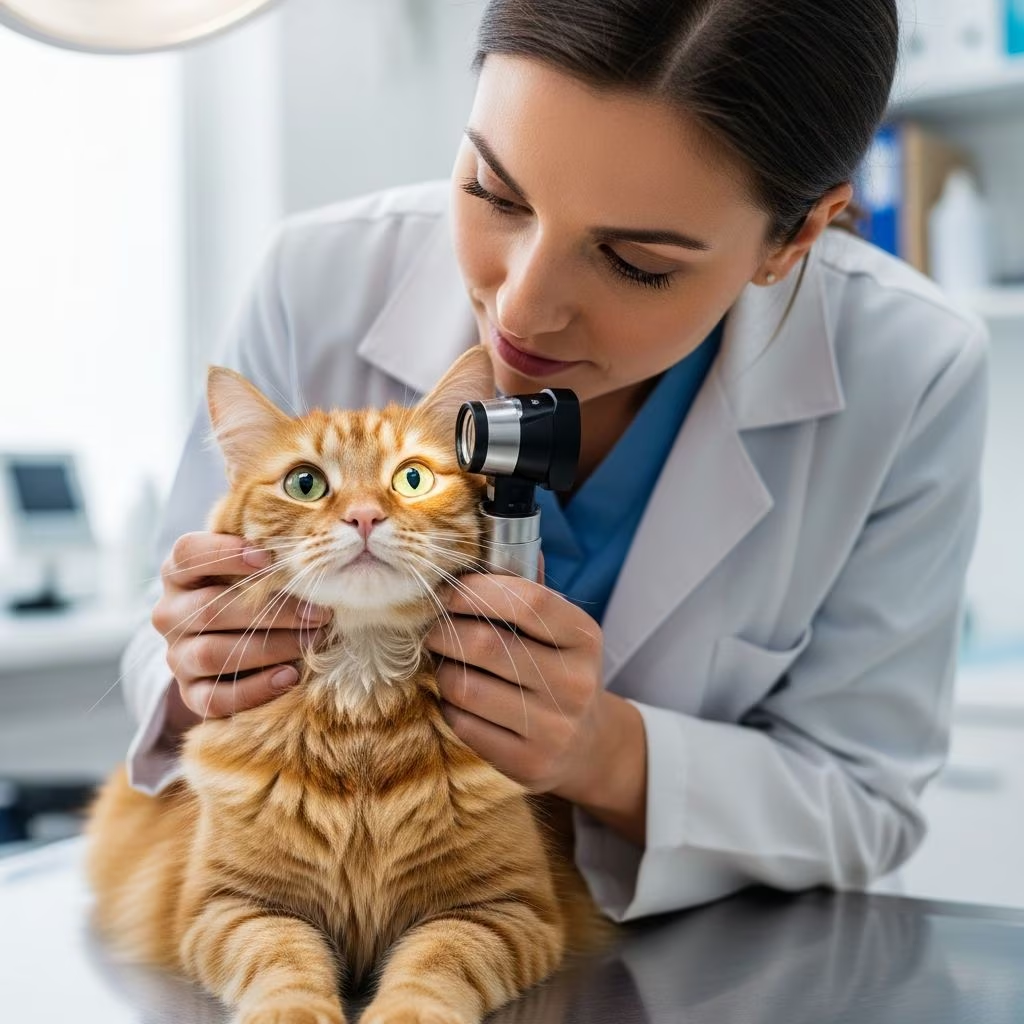
Conducting a meticulous eye examination in animals is fundamental for diagnosing ocular health issues across species like dogs, cats, horses, and livestock. These assessments begin with non-invasive observations and progress to specialized tests, enabling early detection of conditions such as glaucoma, cataracts, or infections. By following a structured approach, veterinarians can evaluate vision, adnexal structures, anterior segment, and posterior segment comprehensively.
Initial Observation and Patient Preparation
Start every eye exam by observing the animal’s behavior upon entering the room. Note any signs of discomfort, squinting, pawing at the face, or reluctance to navigate unfamiliar spaces, which may indicate pain or vision loss. Consider breed predispositions—such as brachycephalic dogs prone to corneal ulcers or herding breeds susceptible to inherited retinal diseases—and age-related changes like lens opacities in seniors.
Prepare equipment including Schirmer tear test strips, fluorescein dye, topical anesthetics, mydriatics like tropicamide for pupil dilation, tonometers for intraocular pressure, and ophthalmoscopes. Perform preliminary tests early to avoid artifacts from manipulation. For instance, measure tear production before applying other agents, as irritation can elevate readings artificially.
Assessing Vision and Neuro-Ophthalmic Function
Evaluate functional vision through targeted reflexes. The menace response tests cortical vision: approach the eye with an open hand or cotton ball from 12-18 inches, mimicking a threat without airflow. A normal animal blinks or withdraws; absence suggests blindness or neurological deficits. Track objects like a cotton ball tossed gently to assess following ability.
Pupillary light reflexes (PLR) gauge subcortical pathways. Shine a bright light into one eye and observe direct constriction in the illuminated pupil and consensual in the opposite. Swinging PLR detects relative afferent pupillary defects. The dazzle reflex, a strong blink to intense light, evaluates retinal integrity even if the fundus is obscured.
Palpebral and corneal reflexes test cranial nerves: touch the eyelid or cornea for blink responses. Vestibulo-ocular reflex in large animals involves head movement; eyes should counter-rotate smoothly.
Evaluating Adnexal Structures
Inspect eyelids for symmetry, hairlessness at margins, masses, or entropion/ectropion. Gently evert lids to check palpebral conjunctiva for follicles, pigmentation, or discharge. In cats, note juvenile entropion or age-related enophthalmos.
Examine the nictitating membrane (third eyelid) by retropulsing the globe or everting with forceps after anesthesia. Look for prolapse, pigmentation, or masses. Conjunctiva should be pale pink; hyperemia signals inflammation.
Tear Production and Corneal Integrity Tests
The Schirmer tear test (STT) quantifies aqueous tear layer: place a strip in the lower cul-de-sac for 60 seconds. Normal values vary by species—over 15 mm/min in dogs, 10-20 in cats. Low readings indicate keratoconjunctivitis sicca.
Fluorescein staining reveals epithelial defects: apply dye, rinse, and inspect under cobalt blue light for green uptake indicating ulcers or abrasions. Avoid over-staining to prevent false positives.
Intraocular Pressure Measurement
Tonometry assesses glaucoma risk. After topical anesthesia, use rebound (TonoVet) or applanation (Tono-Pen) tonometers. Normal IOP is 10-25 mmHg in dogs/cats; higher suggests glaucoma, lower hypotony. Perform bilaterally for comparison.
Anterior Segment Examination
Employ slit-lamp biomicroscopy or focal illumination for detailed views. Cornea should be clear; note edema, vascularization, pigmentation, or deposits. Anterior chamber depth and flare indicate uveitis; hyphema signals bleeding.
Iris evaluation checks for color uniformity, atrophy, or neoplasms. Gonioscopy with Koeppe or indirect lenses visualizes iridocorneal angle for drainage issues like pectinate ligament dysplasia. Pupil dilation with tropicamide (wait 20 minutes) enhances lens and posterior views.
Lens Assessment Techniques
Examine lens position, clarity, and shape via direct, diffuse, and slit illumination. Retroillumination silhouettes opacities against the tapetal reflex. Slit beam cross-sections cataracts by nuclear, cortical, or equatorial involvement. Species variations: horses have larger lenses; small animals show breed-specific susceptibilities.
Fundus and Posterior Segment Evaluation
Dilate pupils for ophthalmoscopy. Indirect method offers wide-field view with 20-28D lens; direct provides high magnification. Assess optic disc size/color, retinal vessels (tortuosity?), tapetum lucidity, and nontapetal pigmentation.
Look for detachments, hemorrhages, or colobomas. Advanced tools like optical coherence tomography (OCT) layer retinal structures; electroretinography (ERG) tests photoreceptor function.
Advanced Diagnostic Procedures
Ultrasonography images posterior segment through opaque media (cataracts, hemorrhage). Fluorescein angiography highlights vascular leaks. Biopsy suspects neoplasms. Sedation aids fractious patients or large animals.
| Test | Dogs | Cats | Horses |
|---|---|---|---|
| STT (mm/min) | >15 | 10-20 | 15-25 |
| IOP (mmHg) | 10-25 | 10-25 | 15-30 |
| PLR | Brisk | Brisk | Present |
Species-Specific Considerations
- Dogs: Common in breeds like Pugs (dry eye), Collies (CEA).
- Cats: FIV/FeLV-linked uveitis; third eyelid tumors.
- Horses: VOR challenging; ERU prevalent.
- Livestock: Sedation for fundus; moon blindness in horses.
Common Pitfalls and Best Practices
Avoid reflex tearing by sequencing tests: vision/reflexes first, STT next, then staining/tonometry. Document bilaterally with photos. Refer to specialists for equivocal findings.
FAQs
What if my pet fails the menace test?
It indicates potential blindness; confirm with maze navigation or electroretinography.
How often should eye exams be done?
Annually for seniors/breeds at risk; post-trauma immediately.
Is pupil dilation painful?
No, topical drops sting briefly but improve exam accuracy.
What does high IOP mean?
Possible glaucoma; urgent referral needed to prevent vision loss.
Can I do STT at home?
Veterinary oversight recommended for accuracy.
References
- Eye Examination and Diagnostics — Veterian Key. 2023. https://veteriankey.com/eye-examination-and-diagnostics/
- Ophthalmology examinations – an easy, step-by-step guide — Vet Times. 2022-10-01. https://www.vettimes.com/news/vets/small-animal-vets/ophthalmology-examinations-an-easy-step-by-step-guide
- Physical Examination of the Eye in Animals — Merck Veterinary Manual. 2026. https://www.merckvetmanual.com/eye-diseases-and-disorders/ophthalmology/physical-examination-of-the-eye-in-animals
- Eye examination in the cat — PubMed Central/NIH (.gov). 2024. https://pmc.ncbi.nlm.nih.gov/articles/PMC11148898/
- What to Expect During Your Pet’s Eye Exam — MedVet. 2023. https://www.medvet.com/what-to-expect-during-your-pets-eye-exam/



