
Veterinary Employment Landscape: Trends, Burnout, Growth 2025
Discover where veterinarians primarily work, emerging trends in practice settings, and factors influencing career choices in a dynamic profession.
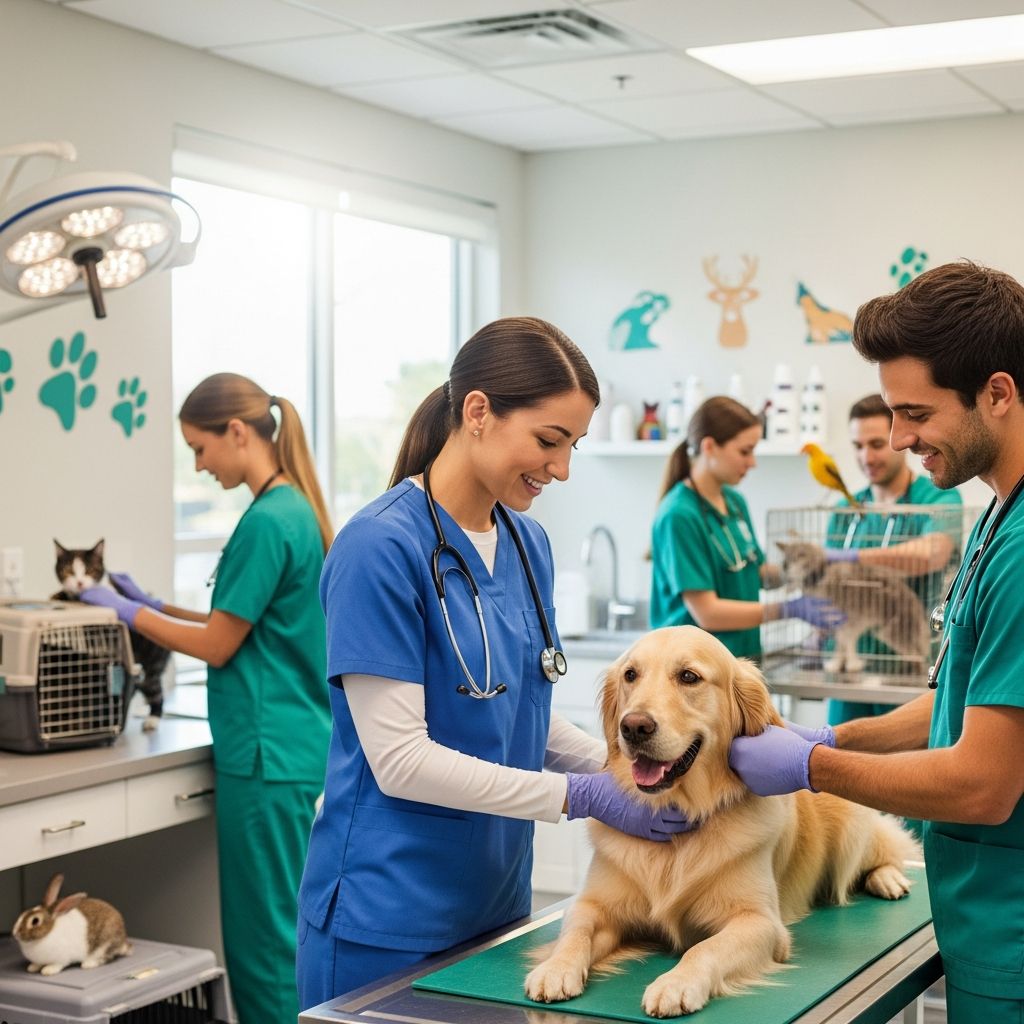
The veterinary profession offers a wide array of career opportunities across various sectors, with the majority of veterinarians finding employment in clinical settings focused on companion animals. This distribution reflects the growing demand for pet care services amid rising pet ownership worldwide. Understanding these employment patterns is crucial for aspiring veterinarians navigating their career choices.
Primary Sectors Employing Veterinarians
Most veterinarians, approximately 75-80% in many regions, work in private clinical practices. These include small animal clinics, mixed practices handling both livestock and pets, and large multi-specialty hospitals. The dominance of companion animal practices stems from urbanization and the human-animal bond strengthening post-pandemic.
Government agencies employ around 10-15% of vets, focusing on public health, food safety, and regulatory roles. Positions in departments like agriculture or animal health services involve disease surveillance, quarantine enforcement, and emergency response to outbreaks.
Academic and research institutions account for about 5-10% of veterinary jobs. Here, professionals engage in teaching future vets, conducting clinical trials, and advancing animal health sciences. These roles often demand advanced degrees and offer opportunities for intellectual pursuit but come with heavier workloads.
Industry roles, including pharmaceuticals, diagnostics, and feed production, represent a smaller but growing segment at 5%. Vets in these positions contribute to product development, regulatory compliance, and sales support.
Evolution of Work Settings Over Time
The veterinary workforce has seen significant shifts. Corporate consolidation has reshaped private practice, with fewer solo owners (down from 45% in 2013 to 36% in 2020) and more corporate-owned clinics. This trend influences job satisfaction, as associates report higher stress without ownership stakes.
Specialized practices, such as equine, exotic animal, or shelter medicine, are expanding. Companion animal vets face higher burnout due to emotional demands from euthanasia and client interactions. Meanwhile, food animal practices deal with economic pressures from livestock industries.
New practice openings surged, with numbers rising 18.5% from 2021 to 2022, signaling robust demand. Globally, nearly half of practices reported increased caseloads.
Workload and Scheduling Realities
Veterinarians routinely exceed standard 40-hour weeks. Full-time vets averaged 48.7 hours in 2023, down slightly from pandemic peaks but still elevated. Median hours for all vets hit 45 weekly during 2020-2022.
House officers (interns and residents) endure extreme schedules, often 55-91 hours per week across 5-7 days, leading to sleep deprivation and fatigue-related errors. Academic vets work 50-59 hours weekly compared to 40-49 for private practitioners.
| Role Type | Average Weekly Hours | Burnout Risk Factors |
|---|---|---|
| Full-time Clinical Vets | 48.7 (2023) | Client demands, appointments up 4.5% |
| Residents/Interns | 55-91 | High caseloads, poor sleep (4-5 hrs/night) |
| Academic Vets | 50-59 | Teaching, research pressures |
Challenges Impacting Retention and Satisfaction
Burnout plagues the profession, with 50% of staff reporting high levels and 69% describing chaotic environments. Only 47% recommend veterinary medicine as a career, and 1 in 5 regret their choice. Turnover stands at 16% for vets (twice physicians) and 26% for technicians[10].
- 31% of staff likely to leave within two years
- Mental health: 56.5% of vets feel mentally well, but serious distress rose to 9.7% (2021)
- Only 35% access employer mental health support
- 86% lack burnout prevention programs
Women and younger vets show higher burnout risks, exacerbated by debt and corporate structures. Practice owners fare better than associates.
Shifting Employment Patterns by Experience
New graduates start full-time (94.4% with <1 year experience), but this drops sharply. After 6-10 years, only 46.5% remain full-time; post-10 years, just 20.4%, with 79.6% opting for part-time/casual.
This reflects desires for balance: 70% want management help, 38% cite staffing needs, 30% seek fewer hours.
Job Market Outlook and Growth Projections
Employment is poised for robust expansion. The U.S. Bureau of Labor Statistics forecasts 10% growth from 2024-2034 (3,000 annual openings), much faster than average. Another projection estimates 20% growth 2022-2032 (20,000 openings). Veterinary services dominate, but diverse industries beckon.
Strategies for Thriving in Veterinary Careers
To combat attrition, practices should prioritize wellness programs, clear burnout policies, and staffing. Storytelling aids retention by fostering connection[10].
Aspiring vets should explore sectors: clinical for hands-on care, government for stability, research for innovation.
Frequently Asked Questions
Where do most new veterinarians start their careers?
Predominantly in companion animal private practices, with 94% of recent grads in full-time roles.
What causes high turnover in veterinary medicine?
Burnout from long hours, emotional stress, and inadequate support; turnover at 16-26%[10].
Are there enough veterinary jobs available?
Yes, with 10-20% projected growth through 2034.
How do work hours vary by veterinary sector?
Clinical: ~49 hrs; academia: 50+ hrs; residents: up to 91 hrs.
Is veterinary medicine a good career choice?
47% recommend it, but challenges like burnout persist; rewarding for resilient individuals.
References
- 22 Veterinary Culture Statistics That Prove We Need a Change — Hound.vet. 2023. https://www.hound.vet/blog/22-veterinary-practice-culture-statistics
- Chart of the Month: Work hours continue to exceed pre-pandemic norms — AVMA. 2024. https://www.avma.org/blog/chart-month-work-hours-continue-exceed-pre-pandemic-norms
- Veterinarian burnout demographics and organizational impacts — PMC (NCBI). 2023-07-21. https://pmc.ncbi.nlm.nih.gov/articles/PMC10352684/
- The Changing Veterinary Workforce: Industry Insight — BBVet. 2024. https://bbvet.net/blogs-and-learnings/the-changing-veterinary-workforce-industry-insight-3/
- Veterinarians: Occupational Outlook Handbook — U.S. Bureau of Labor Statistics (.gov). 2024. https://www.bls.gov/ooh/healthcare/veterinarians.htm
- Veterinary Job Market Update: Trends, Challenges, and Opportunities — VetPartners. 2023. https://vetpartners.org/news/675994/Veterinary-Job-Market-Update-Trends-Challenges-and-Opportunities.htm
- Demand for and Supply of Veterinarians in the U.S. to 2032 — AAVMC (.org). 2024-06. https://www.aavmc.org/wp-content/uploads/2024/06/Demand-for-and-Supply-of-Veterinarians-in-the-U.S.-to-2032-New.pdf
Similar Articles








Read full bio of Sneha Tete


