

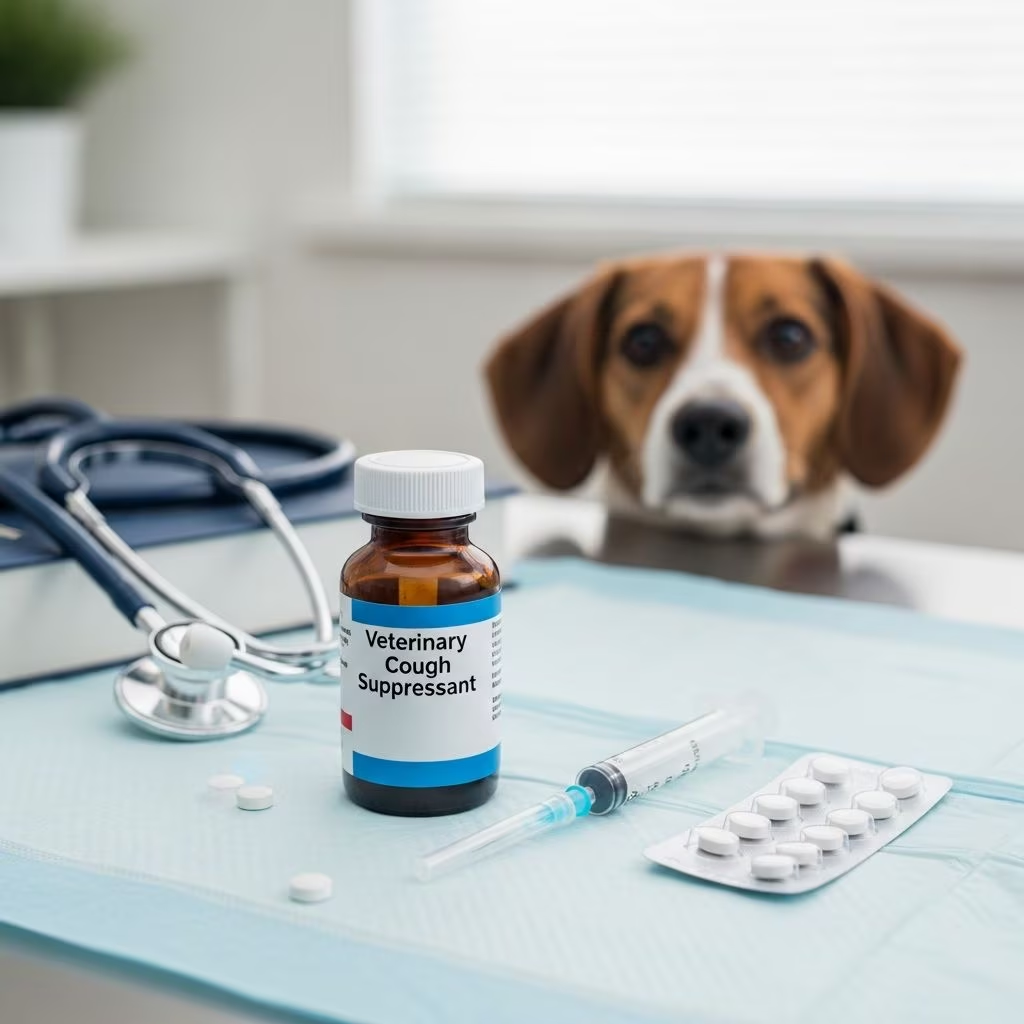
Coughing serves as a vital protective reflex in animals, expelling irritants from the airways. However, persistent or non-productive coughs can cause distress, fatigue, and reduced quality of life, particularly in dogs and cats with chronic respiratory conditions. Antitussive drugs, or cough suppressants, target the neural pathways involved in cough generation to provide symptomatic relief when addressing the underlying cause alone is insufficient. These medications act either centrally by modulating brainstem cough centers or peripherally by desensitizing sensory receptors in the respiratory tract.
Understanding the Cough Reflex in Pets
The cough reflex originates from sensory nerves in the larynx, trachea, and bronchi, transmitting signals via the vagus nerve to the nucleus tractus solitarius (NTS) in the medulla oblongata. Here, integration occurs before efferent signals trigger respiratory muscles for expulsion. In veterinary patients, coughs may stem from infections, allergies, heart disease, or collapsing trachea, often requiring a balanced approach combining diagnostics, bronchodilators, and antitussives.
Suppressing cough indiscriminately risks mucus retention in productive cases, so antitussives suit dry, irritative coughs best. Clinical assessment determines appropriateness, prioritizing non-productive hacks over wet, productive ones.
Main Classes of Antitussive Agents
Antitussives divide into opioid derivatives, which dominate veterinary use due to potency, and non-opioids offering alternatives with fewer regulatory hurdles. Opioids primarily engage mu (μ), kappa (κ), and delta (δ) receptors in the NTS, reducing cough center sensitivity to stimuli.
Opioid-Based Cough Suppressants
Opioids like hydrocodone and butorphanol form the cornerstone of therapy, especially in dogs. Hydrocodone, a semi-synthetic derivative, excels for its reliability and lower sedation compared to codeine. Administered orally at 0.25 mg/kg every 6-12 hours in dogs, it potently dampens cough without excessive drowsiness.
Butorphanol, an agonist-antagonist opioid, binds μ and κ receptors, yielding antitussive and mild analgesic effects. Dosing varies: 0.055-0.11 mg/kg subcutaneously (SC) or 0.55-1.1 mg/kg orally every 6-12 hours in dogs; 0.1-0.4 mg/kg SC in cats. A 2024 study in Beagles confirmed its superior, prolonged efficacy, reducing cough frequency at 1 and 3 hours post-injection (0.3 mg/kg IM), outperforming others in an acute model.
Codeine, at 1-2 mg/kg PO every 6-12 hours in dogs, serves as an alternative but induces more sedation. Diphenoxylate, often combined with atropine (e.g., Lomotil), provides off-label utility at antidiarrheal doses, leveraging μ-agonism.
Non-Opioid Alternatives
Non-opioids appeal for cats, where opioids risk excitation or depression. Dextromethorphan, a common human antitussive, shows limited veterinary efficacy due to poor bioavailability, restricting its role.
Maropitant (Cerenia), a neurokinin-1 (NK-1) receptor antagonist, blocks substance P-mediated signaling. Though injectable forms target emesis, oral use at 2 mg/kg every 48 hours suppresses cough in chronic bronchitis. Studies yield mixed results; a canine trial found no significant reduction versus butorphanol.
| Drug | Dogs Dosage | Cats Dosage | Route/Frequency |
|---|---|---|---|
| Hydrocodone | 0.25 mg/kg | Not routine | PO, q6-12h |
| Butorphanol | 0.055-0.11 mg/kg SC or 0.55-1.1 mg/kg PO | 0.1-0.4 mg/kg | SC/PO, q6-12h |
| Codeine | 1-2 mg/kg | Limited use | PO, q6-12h |
| Maropitant | 2 mg/kg | 1 mg/kg (emesis dose) | PO, q48h |
Species-Specific Considerations
Dogs: Primary Users of Potent Suppressants
Dogs tolerate opioids well, making hydrocodone and butorphanol first-line for conditions like kennel cough aftermath or tracheal collapse. Butorphanol’s rapid onset suits acute flares, though oral bioavailability limits chronic utility.
Cats: Prioritizing Non-Opioids
Felines face higher risks of opioid adverse effects, favoring dextromethorphan or maropitant. Butorphanol remains viable at low SC doses, balancing efficacy and safety.
Adverse Effects and Precautions
- Sedation and Respiratory Depression: Dose-dependent with opioids; monitor in brachycephalics or compromised patients.
- Gastrointestinal Issues: Constipation from opioids; hydrate and consider laxatives.
- Regulatory Controls: Hydrocodone (DEA Schedule II), butorphanol (Schedule IV); comply with laws.
- Drug Interactions: Avoid with CNS depressants; maropitant safe broadly.
Emerging and Investigational Therapies
Innovation targets novel pathways. P2X3 receptor antagonists like gefapixant show promise in humans and canines, inhibiting purinergic signaling without narcotics. Early canine data report no major side effects at low doses, though taste loss occurs higher.
δ-Opioid antagonists (e.g., naltrindole) reduce CNS calcium influx, offering non-scheduled options pending trials. Gabapentin, a neuromodulator, curbs hypersensitivity coughs at 10-15 mg/kg PO q8h, titrated upward; human idiopathic cough data inspire veterinary exploration.
Amitriptyline, a tricyclic, addresses behavioral or neuropathic coughs anecdotally, used cautiously with cardiac patients.
Clinical Guidelines for Implementation
Integrate antitussives after diagnostics (radiographs, endoscopy). Start low-dose opioids for confirmed non-productive coughs, combining with mucolytics or anti-inflammatories. Reassess in 48-72 hours; taper as underlying issues resolve.
For chronic cases (e.g., bronchitis), maropitant generics reduce costs, enabling q48h regimens.
Frequently Asked Questions (FAQs)
Can I use human cough syrups for my dog?
No; formulations contain xylitol or doses unsafe for pets. Veterinary-specific products ensure accuracy.
How quickly do antitussives work?
Opioids like butorphanol act within minutes IV/SC; oral forms in 30-60 minutes.
Is cough suppression safe long-term?
Not ideal; treat causes first. Short-term use (days-weeks) minimizes risks.
What if my cat coughs violently?
Seek urgent vet care; rule out asthma or foreign bodies before suppressants.
Are natural remedies effective?
Limited evidence; prioritize proven pharmaceuticals.
References
- Comparative study of the effects of antitussive drugs in a canine acute cough model — Veterinary Medicine and Science, Wiley. 2024-07-25. https://pubmed.ncbi.nlm.nih.gov/39041252/
- Antitussive Medications for Dogs and Cats — Today’s Veterinary Practice. 2023. https://todaysveterinarypractice.com/pharmacology/antitussive-medications-for-dogs-and-cats/
- Update in Antitussive Drugs and Therapy — VetFolio. 2022. https://www.vetfolio.com/courses/update-in-antitussive-drugs-and-therapy
- Antitussive Drugs Table — MSD Veterinary Manual. 2024. https://www.msdvetmanual.com/multimedia/table/antitussive-drugs
- A Practical Guide to Treating Coughing in Dogs — Wedgewood Pharmacy. 2023. https://www.wedgewood.com/blog/veterinary-antitussive-medications-a-practical-guide-to-treating-coughing-in-dogs/



