

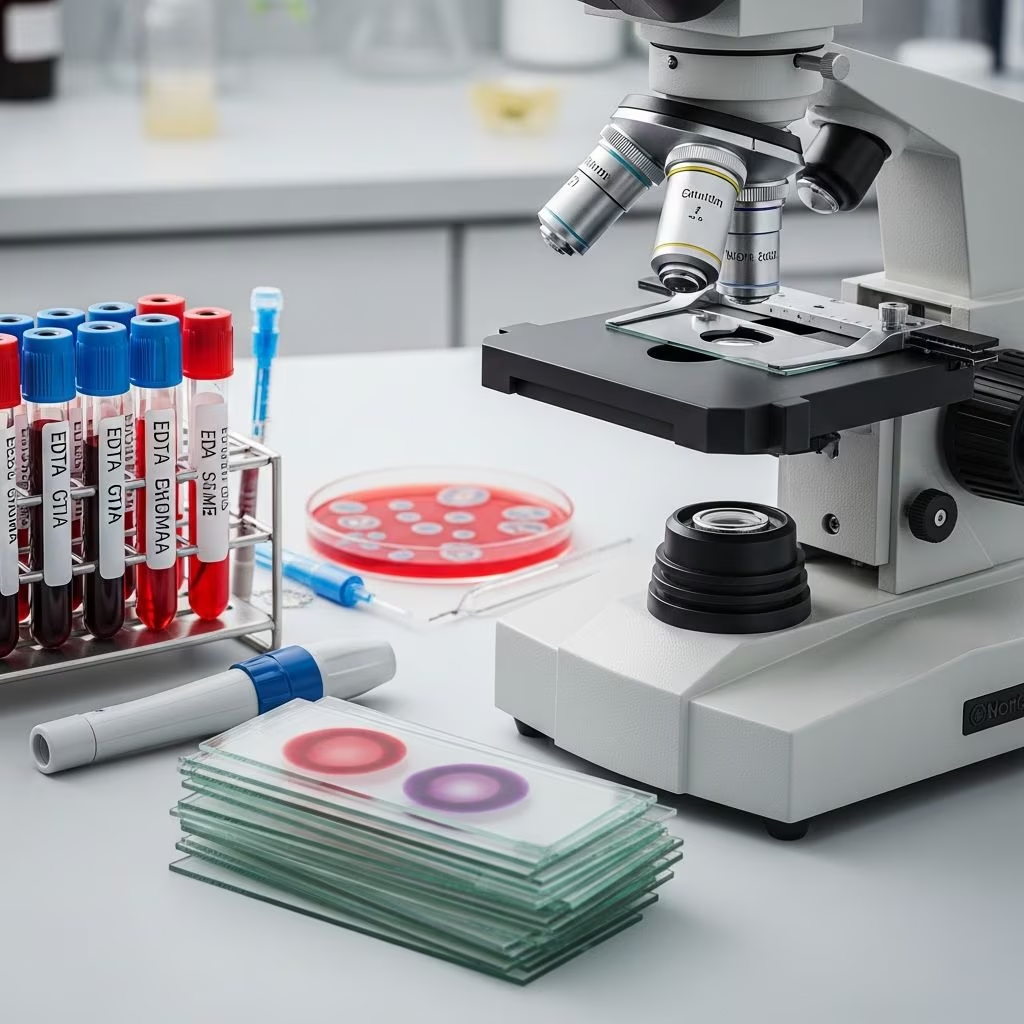
Clinical hematology forms the cornerstone of diagnostic veterinary medicine, providing critical insights into an animal’s health through blood cell analysis. This discipline evaluates red blood cells, white blood cells, platelets, and plasma to detect anemias, infections, inflammations, and clotting disorders.
Importance of Hematology in Animal Diagnostics
Blood tests like the complete blood count (CBC) serve as a primary screening tool in veterinary clinics. They help establish baseline health data for new patients, monitor treatment responses, and identify underlying pathologies in sick animals. For instance, in cases of acute hemorrhage, initial packed cell volume (PCV) readings might appear normal due to fluid shifts taking up to 12 hours to manifest changes. Regenerative responses, marked by juvenile red blood cells, typically emerge within days, aiding in distinguishing blood loss from other anemias.
Hematology panels are cost-effective and yield broad diagnostic value, often guiding further tests like bone marrow evaluation or coagulation profiles when specific issues arise. In private practices, in-house analyzers and manual methods enable rapid results, crucial for timely interventions.
Proper Sample Collection and Handling
Accurate results depend on meticulous blood collection. Use EDTA-anticoagulated tubes, filling them precisely to the mark to prevent clotting or hemodilution. Larger 2.5 mL tubes are preferable over 1 mL pediatric ones for better outcomes, especially in larger animals. Mix samples immediately and thoroughly by inversion.
For species prone to hemolysis in EDTA, such as certain birds or ostriches, alternatives like citrate or heparin are necessary, though heparin may cause cell clumping that invalidates counts. Always prepare blood smears promptly, as white blood cell morphology degrades quickly, particularly in horses. Submit smears with whole blood if analysis is delayed.
- EDTA tubes: Ideal for most mammals; avoid underfilling.
- Heparin or citrate: For non-mammals or EDTA-sensitive species.
- Smear preparation: Make immediately post-collection to preserve cell integrity.
- Storage: Analyze fresh; refrigerate if needed, but avoid freezing.
Traumatic venipuncture can introduce artifacts like platelet clumping or hemolysis, so use atraumatic techniques. Repeated sampling in small animals like rodents may induce stress responses, altering counts; plan timepoints accordingly.
Key Hematology Parameters Explained
A standard CBC includes red cell parameters, leukogram, thrombogram, and plasma assessment.
Red Blood Cell Evaluation
Core metrics are PCV (or hematocrit, HCT), red blood cell count (RBC), hemoglobin (Hgb), and indices like mean corpuscular volume (MCV), mean corpuscular hemoglobin (MCH), and mean corpuscular hemoglobin concentration (MCHC). PCV, measured via microhematocrit centrifugation, is the gold standard: fill capillary tubes three-quarters full, seal, spin at high speed for 6 minutes, and read with a calibrated reader.
Red cell distribution width (RDW) indicates size variation, useful for anisocytosis detection. Morphology review reveals poikilocytosis, polychromasia (regeneration indicator), or parasites.
White Blood Cell Analysis
The leukogram comprises total WBC count and differential (neutrophils, lymphocytes, monocytes, eosinophils, basophils). Automated systems provide absolute values; manual differentials confirm abnormalities like left shifts or toxic changes. Large unstained cells (LUC) may signal reactive lymphocytes or blasts.
Platelet and Plasma Assessment
Platelet count, mean platelet volume (MPV), and smear estimates gauge thrombopoiesis. Total protein via refractometer evaluates hydration and plasma integrity.
| Parameter | Mammalian CBC Components | Non-Mammalian Adaptations |
|---|---|---|
| Red Cells | RBC, Hgb, HCT, MCV, MCH, MCHC, RDW, morphology | PCV primary; RBC morphology |
| White Cells | WBC, differential, morphology | Total WBC, manual differential |
| Platelets | Count, MPV, smear estimate | Smear estimate (thrombocytes) |
| Other | Total protein, plasma appearance | Same, note anticoagulant effects |
Manual versus Automated Hematology Techniques
Manual methods offer precision for morphology but are labor-intensive. Hemacytometer counts dilute blood 1:20 with Turck fluid, using Improved Neubauer rulings under mirrored slides for accuracy. Repeat dilutions ensure reproducibility, as shown in canine studies comparing manual and automated counts.
Automated analyzers like the ADVIA 2120 excel in speed for healthy animals or pre-surgical screens, providing CBC parameters efficiently. However, they miss nuances like band counts or toxic granulation, necessitating smear review in ill patients.
- Manual pros: Detailed morphology, parasite detection.
- Automated pros: High throughput, indices calculation.
- Hybrid approach: Automate counts, manually review films.
For non-mammals, manual PCV tubes and smears are standard due to analyzer limitations.
Interpreting Common Hematology Abnormalities
Anemia classification relies on PCV, morphology, and regeneration. Acute blood loss shows normal initial PCV, progressing to regenerative profiles. Non-regenerative anemias suggest bone marrow issues.
Leukocytosis with left shift indicates inflammation or infection; eosinophilia points to parasitism or allergy. Thrombocytopenia may signal consumption or production failure. Always correlate with clinical signs and species norms.
Best Practices for In-Clinic Hematology
In private labs, integrate CBC with chemistry and urinalysis for comprehensive databases. Stain smears with Diff-Quik for quick review, reserving new methylene blue for reticulocytes. Train staff on artifact recognition to avoid misdiagnosis.
For research or serial monitoring, automated panels suffice for baselines, but include morphology for diseased states.
Frequently Asked Questions (FAQs)
What is the best anticoagulant for veterinary blood samples?
EDTA is standard for mammals; use citrate/heparin for hemolysis-prone species.
How long can EDTA blood be stored before analysis?
Analyze within hours; WBC morphology changes rapidly. Smears preserve details.
Why review blood smears even with automated CBC?
Smears detect morphology, parasites, and analyzer flags like clumping.
What causes false low PCV readings?
Hemolysis, poor mixing, or anticoagulant excess.
Is automated CBC reliable for all animals?
Best for mammals; non-mammals often need manual methods.
Advanced Applications and Future Directions
Beyond routine CBC, specialized tests like reticulocyte counts (auto-added in anemic dogs/cats) or iron studies aid anemia differentials. Comparative hematology labs offer TIBC for iron disorders.
AI-enhanced imaging promises faster smear analysis, complementing traditional methods. Point-of-care devices continue evolving for field use.
References
- Clinical Hematology – Merck Veterinary Manual — Merck & Co. 2023. https://www.merckvetmanual.com/clinical-pathology-and-procedures/diagnostic-procedures-for-the-private-practice-laboratory/clinical-hematology
- Hematology – Cornell University Animal Health Diagnostic Center — Cornell University. 2024. https://www.vet.cornell.edu/animal-health-diagnostic-center/testing/testing-protocols-interpretations/hematology
- Introduction to Veterinary Hematology — PMC (NCBI). 2020-04-01. https://pmc.ncbi.nlm.nih.gov/articles/PMC7152375/
- In-Clinic Hematology: The Blood Film Review — Today’s Veterinary Practice. 2023. https://todaysveterinarypractice.com/hematology/in-clinic-hematology-the-blood-film-review/
- Hematology & Clinical Chemistry Sample Guidelines — University of Michigan Animal Care. 2024-04. https://animalcare.umich.edu/wp-content/uploads/2024/04/acu_ulam-pathology-core-ADL-Hematology-and-Clinical-Chem-Sample-Guidelines.pdf
- FUNdamentals of Hematology — Vetscan Imagyst. 2023. https://www.vetscanimagyst.com/assets/pdf/Hematology-White-Paper.pdf
- Hemogram Basics — eClinPath. 2024. https://eclinpath.com/hematology/



