
Veterinary Care Across Animal Categories
Understanding veterinary responsibilities for companion, wild, and agricultural species.
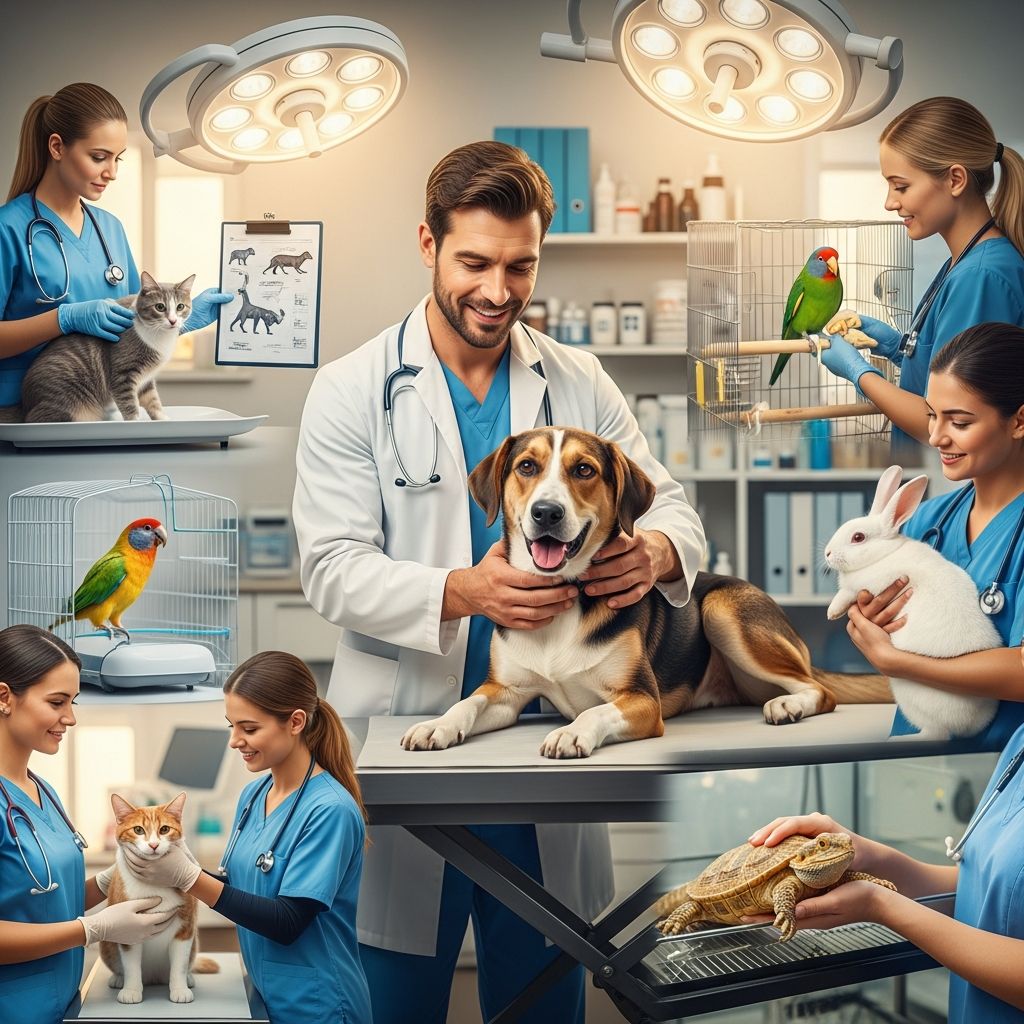
Veterinary medicine extends far beyond treating household pets. Modern veterinarians work with a diverse range of animal populations, each requiring specialized knowledge and adapted care protocols. The scope of veterinary practice encompasses companion animals living in human homes, native wildlife populations requiring conservation efforts, and production animals raised for food and agricultural products. Understanding the distinctions between these categories and the specific welfare considerations for each is essential for both veterinary professionals and animal owners.
The Expanding Scope of Modern Veterinary Practice
Veterinarians today operate within a multifaceted professional landscape that demands expertise across multiple disciplines. Beyond the conventional image of treating dogs and cats in clinical settings, modern veterinary practitioners engage with environmental conservation, public health initiatives, and food security challenges. The American Veterinary Medical Association recognizes that good animal welfare requires disease prevention and treatment, responsible care, proper housing, management, nutrition, humane handling, and when necessary, appropriate end-of-life care.[10]
The diversity of veterinary specializations reflects the complexity of contemporary animal health challenges. Some veterinarians focus exclusively on companion animal medicine, while others dedicate their careers to wildlife rehabilitation and conservation efforts. Still others specialize in herd health management for agricultural operations, contributing to food production safety and efficiency. This specialization has become increasingly important as the demands on each sector have grown more sophisticated and technically demanding.
Companion Animals and Their Role in Ecosystems
Domestic pets, particularly dogs and cats, represent one of the most visible intersections between human society and the broader animal world. While these animals provide significant emotional and social benefits to their owners, they also present conservation challenges when not properly managed. Uncontrolled pet populations can threaten native wildlife populations and disrupt ecological balance in sensitive environments.
Dogs that roam freely or are inadequately contained pose particular risks to native fauna. When dogs are allowed to hunt or chase wildlife, they can devastate populations of vulnerable species including lizards, possums, koalas, and native bird species. The solution is straightforward: maintaining proper containment through fencing or leashing protects native animals while ensuring dogs remain safe from traffic, disease, and other urban hazards.
Cats present an even more significant conservation challenge, particularly during nocturnal hours when hunting instincts intensify. Free-roaming cats, especially at night, prey on numerous small native species including lizards, marsupials, various bird species, and other small fauna. Confining cats indoors during evening hours substantially reduces predation pressure on vulnerable wildlife populations. This represents a straightforward management practice that benefits both native species and the cats themselves by reducing their exposure to predators, disease, and traffic hazards.
Native Wildlife Conservation and Veterinary Medicine
Wildlife conservation has emerged as a critical focus area for contemporary veterinary medicine. Many native animal populations face unprecedented challenges that threaten their survival as species. The primary drivers of wildlife population decline include habitat destruction through land clearing, deliberate human intervention in ecosystems, introduction of invasive species including feral animals, and catastrophic events such as bushfires. Veterinarians play an essential role in addressing these challenges through rehabilitation of injured animals, participation in breeding programs, and contribution to broader conservation strategies.
A fundamental rule for wildlife protection involves minimizing human and domestic animal interference in natural habitats. National parks and protected areas are established specifically to provide refuge for native species. Bringing domestic pets into these designated spaces undermines conservation objectives and can introduce disease or predation pressure to vulnerable populations. Pet owners must understand that keeping animals outside of national parks represents a critical conservation practice rather than an arbitrary restriction.
Advanced conservation strategies now include captive breeding programs designed to maintain genetic diversity in endangered species and facilitate eventual reintroduction into protected habitats. The Species Survival Plan represents a coordinated international effort to manage populations of endangered animals in captivity. However, these programs raise complex ethical questions about whether reintroduced animals can successfully survive in their historical habitats and whether those habitats remain adequately protected to support reestablished populations.
Understanding Production Animals and Agricultural Welfare
Production animals represent livestock species raised specifically to provide food, fiber, and other products essential to human societies. Common production animals include chickens, pigs, sheep, and cattle, each requiring distinct management approaches and veterinary attention. The welfare of these animals matters not only from ethical and moral perspectives but also from practical concerns related to food safety and public health outcomes.
Regardless of the species involved, a fundamental legal and ethical principle governs the treatment of production animals: the duty of care. This concept establishes that individuals responsible for animals bear legal obligations to provide adequate care in reasonable ways. The duty of care framework encompasses several essential components:
- Consistent access to appropriate food and clean water
- Adequate accommodation and appropriate living conditions for the specific species
- Opportunities to express species-typical behavioral patterns
- Prompt diagnosis and treatment of disease and injury
- Humane and appropriate handling procedures
These welfare requirements are grounded in the internationally recognized Five Freedoms of animal welfare framework, which establishes universal principles applicable across species and contexts. This framework transcends cultural boundaries and economic considerations, representing a global consensus on minimum acceptable standards for animal treatment.
Disease Management and Public Health Implications
Adequate care for production animals carries implications that extend beyond the individual animals themselves. When production animals experience untreated illness or disease, the consequences ripple outward to affect human populations. An ill cow or chicken that receives no treatment can transmit diseases to human consumers through the food supply chain. This connection between animal health and human health underscores why production animal welfare represents more than an ethical concern—it constitutes a critical public health imperative.
Veterinarians working in production animal medicine serve as gatekeepers for food safety and security. By diagnosing and treating diseases in livestock populations, veterinary professionals prevent disease transmission through the food chain and maintain the safety of agricultural products. This role positions production animal veterinarians as essential contributors to both animal welfare and human health protection.
Specialized Roles of Production Animal Veterinarians
Veterinary professionals engaged in production animal medicine pursue diverse career paths within agricultural contexts. Many participate in local and international programs focused on optimizing animal production systems while maintaining welfare standards. These professionals work directly with farmers and ranchers to implement best practices in animal health management, nutrition optimization, and disease prevention strategies.
Some veterinarians specialize in public health and food production, working at the intersection of agricultural systems and human health protection. These professionals conduct research on disease transmission pathways, develop protocols for preventing foodborne illness, and contribute to regulatory frameworks governing agricultural practices. Others focus on laboratory animal health and research, ensuring that animals used in scientific investigations receive appropriate care while contributing to human medical advances.
The breadth of veterinary specializations reflects the complexity of modern agriculture and the multifaceted challenges veterinarians address daily. Whether working with sheep, pigs, cattle, or other production species, veterinarians apply specialized knowledge to improve animal health outcomes while supporting sustainable food production systems.
Comparative Welfare Across Production Systems
Contemporary agriculture encompasses diverse production models, from intensive confinement systems to pasture-based operations, each presenting distinct welfare considerations. Intensive agricultural systems, sometimes labeled as “factory farms,” concentrate large numbers of animals in controlled environments designed to maximize production efficiency and minimize costs. However, farm size and production intensity do not necessarily correlate with poor animal welfare outcomes. Animals in well-managed intensive systems may experience better health and welfare outcomes than those on poorly managed smaller operations.
Pasture-based production systems offer welfare advantages for numerous species. Cattle raised on higher-welfare pasture-based farms can graze and maintain their bonded social groups throughout their lives, spending most time outdoors while expressing natural behaviors and consuming appropriate dietary items in their preferred manner. Similarly, pigs on pasture-based farms avoid many serious welfare problems associated with confinement. Pregnant sows remain in groups and can build nests before giving birth; piglets stay with mothers longer, and access to outdoor space eliminates the need for tail docking while permitting natural behaviors including roaming, rooting, playing, and wallowing.
For poultry species, pasture-based systems provide dramatic welfare improvements. Egg-laying chickens on pasture access forage, dust baths, fresh air, and sunlight while having space for natural behaviors including running, flying, stretching, and wing-flapping. They have individual space for laying with access to protected nesting areas. Meat chickens and turkeys raised in modest-sized flocks on pasture similarly experience substantial welfare benefits compared to confinement systems, with access to natural environmental features and opportunities for expressing species-typical behaviors.
Regulatory Frameworks and Welfare Standards
Multiple regulatory and voluntary programs establish and enforce animal welfare standards across agricultural industries. The Beef Quality Assurance (BQA) program provides cattle farmers and ranchers with principles, tools, and education to ensure proper cattle care while raising quality beef. The National Dairy FARM Program works to assure quality, safety, and wholesomeness of dairy products through responsible management practices.
Veal production has undergone significant welfare improvements through industry initiatives. In 2007, veal producers announced transition plans to group housing barn systems, with the American veal industry reporting that 60 percent of veal calves were raised in group housing by 2012. The National Chicken Council developed comprehensive animal welfare guidelines and audit checklists covering every phase of chicken life from hatching through processing.
The Pork Checkoff’s Pork Quality Assurance Plus program demonstrates industry commitment to safe, high-quality, and responsibly produced pork. This program provides guidelines addressing caretaker training, animal observation, emergency support, space allocation, euthanasia procedures, facility management, and zero tolerance for deliberate abuse.
Legislative measures have also strengthened welfare protections. California’s Proposition 12, passed in 2018, prohibits in-state sales of products from animals confined in “cruel manner,” establishing minimum confinement standards and imposing housing requirements on any producer selling in California.
Environmental Enrichment and Behavioral Welfare
Contemporary animal welfare science emphasizes that adequate care requires more than meeting basic biological needs. Animals require opportunities to express species-typical behaviors, necessitating environmental enrichment tailored to species-specific preferences and motivations. Research on laboratory animals has demonstrated that enrichment interventions substantially improve welfare outcomes.
Effective environmental enrichment strategies include provision of hiding places, structural elements enabling thigmotaxis (preference for wall contact), opportunities to obtain food through foraging or food-dispensing objects, and appropriate social housing arrangements. Importantly, larger enclosures alone provide insufficient welfare improvement without accompanying enrichment modifications. The quality of the environment matters as much as its physical dimensions in determining animal welfare outcomes.
Frequently Asked Questions
What legal obligations do pet owners have regarding wildlife protection? Pet owners are legally and ethically obliged to contain their pets appropriately through fencing or leashing, preventing predation on native wildlife. Pets must never be brought into national parks or protected areas.
How do production animal veterinarians contribute to public health? Production animal veterinarians prevent disease transmission through the food chain by diagnosing and treating livestock diseases, directly protecting human health and food safety.
What makes pasture-based production systems better for animals? Pasture systems allow animals to express natural behaviors, maintain social groups, access appropriate diets, and experience environmental variety—all contributing to improved welfare compared to confinement systems.
Are intensive agricultural systems necessarily harmful to animals? Intensive systems do not automatically correlate with poor welfare. Well-managed intensive operations may provide better health and welfare outcomes than poorly managed smaller farms, though system design and management quality significantly influence actual welfare.
What are the Five Freedoms of animal welfare? This internationally recognized framework establishes universal principles for animal treatment, encompassing freedom from hunger and thirst, discomfort, pain and injury, fear and distress, and freedom to express normal behavioral patterns.
References
- Domestic wild and production animals – Vet Voice — Veterinary Voice Australia. 2024. https://www.vetvoice.com.au/ec/ava-petpep/petpep/welfare-of-animals/domestic-wild-and-production-animals/
- Commonly Farmed Species of Animals — Animal Welfare Institute. 2024. https://awionline.org/content/commonly-farmed-species-animals
- Animal Welfare – Special Subjects – Merck Veterinary Manual — Merck Veterinary Manual. 2024. https://www.merckvetmanual.com/special-subjects/animal-welfare/animal-welfare
- Animal Welfare – Animal Agriculture Alliance — Animal Agriculture Alliance. 2024. https://animalagalliance.org/issues/animal-welfare/
- Animal Welfare Overview – National Agricultural Law Center — National Agricultural Law Center. 2024. https://nationalaglawcenter.org/overview/animalwelfare/
- Animal welfare — American Veterinary Medical Association. 2024. https://www.avma.org/resources-tools/animal-health-and-welfare/animal-welfare
Similar Articles








Read full bio of medha deb


