

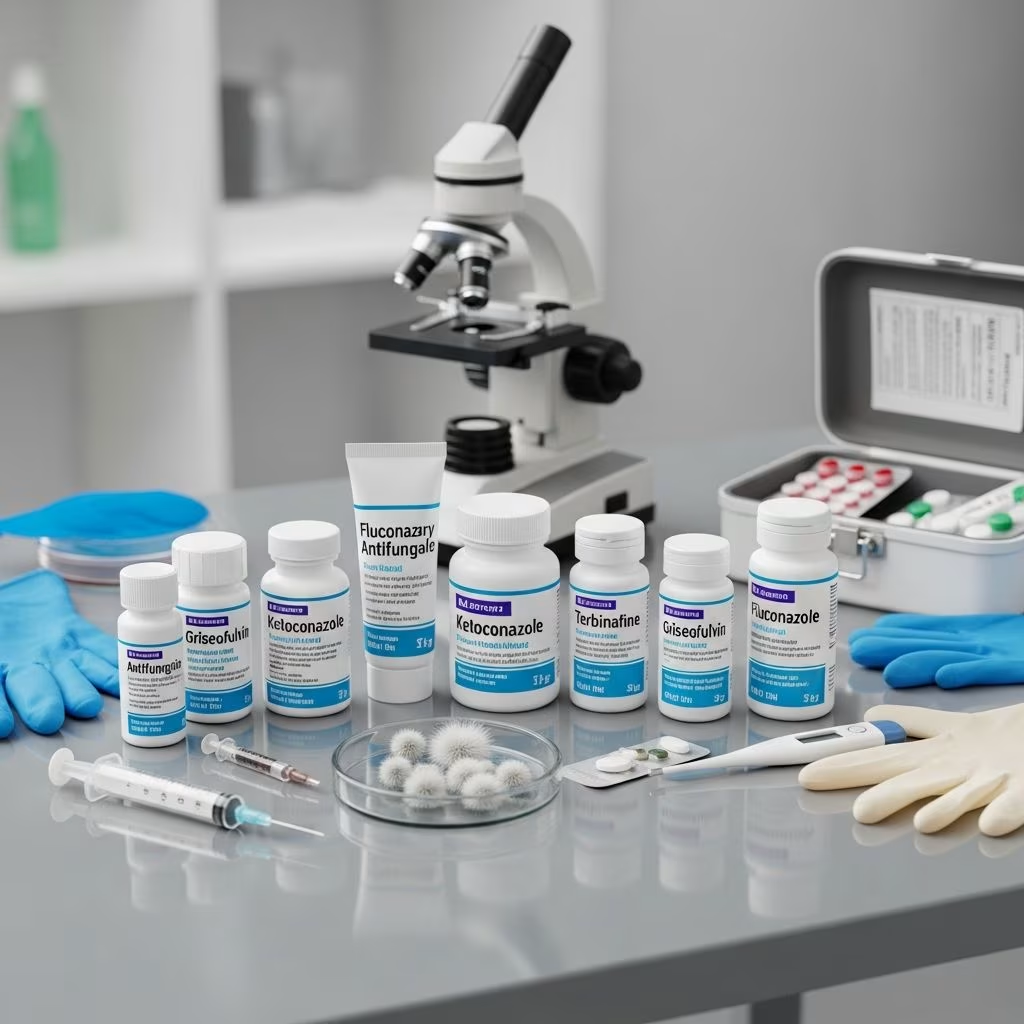
Fungal infections pose significant challenges in veterinary medicine, affecting a wide range of animals from companion pets to livestock. These infections, known as mycoses, can involve superficial skin issues or deep systemic diseases that threaten life if untreated. Antifungal agents target the fungal cell structure, disrupting growth and replication. This guide examines major classes of these drugs, their applications across species, pharmacological properties, and clinical considerations for optimal outcomes.
Understanding Fungal Infections in Animals
Fungi thrive in various environments and can infect animals through inhalation, skin contact, or ingestion. Common pathogens include dermatophytes causing ringworm, yeasts like Malassezia in skin disorders, and systemic threats such as Blastomyces, Histoplasma, Cryptococcus, and Aspergillus species. Dogs and cats frequently encounter blastomycosis in endemic areas, while horses may suffer from guttural pouch mycosis. Early diagnosis via culture, biopsy, or serology guides therapy selection.
Treatment success hinges on drug penetration to infection sites, fungal susceptibility, and host factors like immune status. Chronic cases often require prolonged therapy, sometimes exceeding six months, with monitoring for resistance emergence.
Primary Classes of Antifungal Medications
Veterinarians rely on several drug families, each with unique mechanisms and spectra. Azoles dominate due to oral availability and broad efficacy, while polyenes serve as potent injectables for severe cases.
Azole Antifungals: Cornerstone of Therapy
Azoles inhibit ergosterol synthesis in fungal membranes by blocking lanosterol 14α-demethylase, a cytochrome P450 enzyme. This weakens cell integrity, leading to leakage and death. Divided into imidazoles (e.g., ketoconazole) and triazoles (e.g., itraconazole, fluconazole), triazoles offer better safety and potency.
- Ketoconazole: First oral azole, effective against dermatophytes, Blastomyces, and Histoplasma. Limited by gastrointestinal upset and hepatotoxicity; rarely first-line now.
- Itraconazole: Broad-spectrum triazole excelling in blastomycosis, sporotrichosis, and histoplasmosis. Preferred over ketoconazole for fewer side effects and superior activity against Aspergillus (though resistance noted).
- Fluconazole: Highly bioavailable, excels in CNS cryptococcosis due to blood-brain barrier penetration. Weaker against Aspergillus and Microsporum; useful for Malassezia and Leishmania.
Advanced Triazoles for Resistant Cases
Second-generation azoles like voriconazole and posaconazole address limitations of predecessors. Voriconazole provides fungicidal action against Aspergillus and Fusarium, ideal for invasive mold infections. Posaconazole covers zygomycetes and resistant strains, often as salvage therapy. These require therapeutic monitoring due to variable pharmacokinetics in animals.
Polyene Antifungals: Rapid-Acting Rescue Option
Amphotericin B binds ergosterol, forming membrane pores. Lipid formulations (e.g., liposomal) reduce nephrotoxicity, allowing higher doses. Administered intravenously every 48-72 hours after hydration, it’s reserved for life-threatening infections like cryptococcosis or aspergillosis.
Allylamines and Other Agents
Terbinafine inhibits squalene epoxidase, accumulating toxic squalene in fungi. Effective topically and systemically against dermatophytes, Malassezia, and some systemic pathogens like Sporothrix. Often combined with azoles for synergy. Griseofulvin, FDA-approved for veterinary use, targets dermatophytosis in cats but is less favored due to side effects.
Spectrum of Activity and Clinical Indications
Drug selection matches pathogen susceptibility. The table below summarizes key indications:
| Pathogen | First-Line Drugs | Alternatives |
|---|---|---|
| Blastomycosis | Itraconazole | Fluconazole, Amphotericin B |
| Cryptococcosis (CNS) | Fluconazole | Itraconazole, Posaconazole |
| Aspergillosis | Voriconazole, Posaconazole | Terbinafine, Amphotericin B |
| Dermatophytosis | Terbinafine, Itraconazole | Griseofulvin (cats) |
| Histoplasmosis | Itraconazole | Fluconazole |
Data drawn from clinical reviews showing itraconazole’s versatility in dogs. For Leishmania, fluconazole may outperform itraconazole.
Pharmacokinetics Across Species
Absorption varies: Fluconazole achieves near-100% bioavailability unaffected by food; itraconazole needs fat for optimal uptake. Dogs metabolize azoles via liver enzymes, risking drug interactions (e.g., with cyclosporine). Cats handle fluconazole well but risk accumulation with renal impairment.
Dosing emphasizes AUC/MIC ratios for azoles, prioritizing total daily dose over frequency. Voriconazole’s short half-life in dogs necessitates twice-daily administration. Therapeutic drug monitoring via plasma levels ensures efficacy and minimizes toxicity.
Safety Profiles and Adverse Effects
Azoles commonly cause anorexia, vomiting, and elevated liver enzymes; ketoconazole adds endocrine disruption (e.g., reduced cortisol). Amphotericin B demands renal monitoring, with lipid forms safer. Terbinafine is generally well-tolerated, occasionally causing taste perversion or hepatopathy.
- Monitor: ALT/AST weekly initially, then monthly.
- Contraindications: Pregnancy (teratogenic), severe liver disease.
- Interactions: Azoles inhibit CYP450, elevating levels of chemo drugs or anticoagulants.
Practical Treatment Strategies
Step-down therapy starts with amphotericin B for rapid control, transitioning to oral azoles. Duration: 3-6 months minimum, guided by clinical response and negative cultures. Combine with surgery for localized lesions (e.g., nasal aspergillosis). Supportive care includes hydration and nutrition.
In livestock, topical enilconazole treats ringworm in cattle; systemic use is limited. Poultry and horses benefit from targeted azoles for specific mycoses.
Emerging Challenges: Resistance and New Horizons
Fungal resistance, akin to antibacterial trends, drives azole evolution. Multi-drug resistant Aspergillus necessitates voriconazole. Future agents like isavuconazole lack veterinary data but hold promise. Antifungal stewardship—susceptibility testing and minimal durations—curbs resistance.
Frequently Asked Questions (FAQs)
What is the best antifungal for dog blastomycosis?
Itraconazole at 5-10 mg/kg/day orally is first-line, with high success rates.
Can cats safely take fluconazole long-term?
Yes, with renal function monitoring; excels for cryptococcosis.
How to prevent amphotericin B kidney damage?
Use lipid formulations and pre-hydrate intravenously.
Is terbinafine effective alone for ringworm?
Often, especially in cats; 30-40 mg/kg/day for 4-6 weeks.
When to use posaconazole in veterinary patients?
For refractory molds like aspergillosis after itraconazole failure.
This guide equips veterinarians with evidence-based tools for managing mycoses, improving animal health outcomes through informed choices.
References
- A review of selected systemic antifungal drugs for use in dogs and cats — dvm360. 2023. https://www.dvm360.com/view/review-selected-systemic-antifungal-drugs-use-dogs-and-cats
- Antifungal Therapy – Past, Present, and Future — MiraVista Veterinary Diagnostics. 2021-04. https://miravistavets.com/wp-content/uploads/2021/04/miravista-veterinary-diagnostics-antifungal-therapy-past-present-future.pdf
- Antifungal agents of use in animal health–practical applications — PubMed (Veterinary Research Communications). 2003. https://pubmed.ncbi.nlm.nih.gov/12603775/
- Antifungal Drugs — Veterian Key. N/A. https://veteriankey.com/antifungal-drugs-2/
- Which antifungal should I use for my veterinary patients? — VetGirl on the Run. N/A. https://vetgirlontherun.com/which-antifungal-should-i-use-for-my-veterinary-patients-vetgirl-veterinary-continuing-education-blog/



