

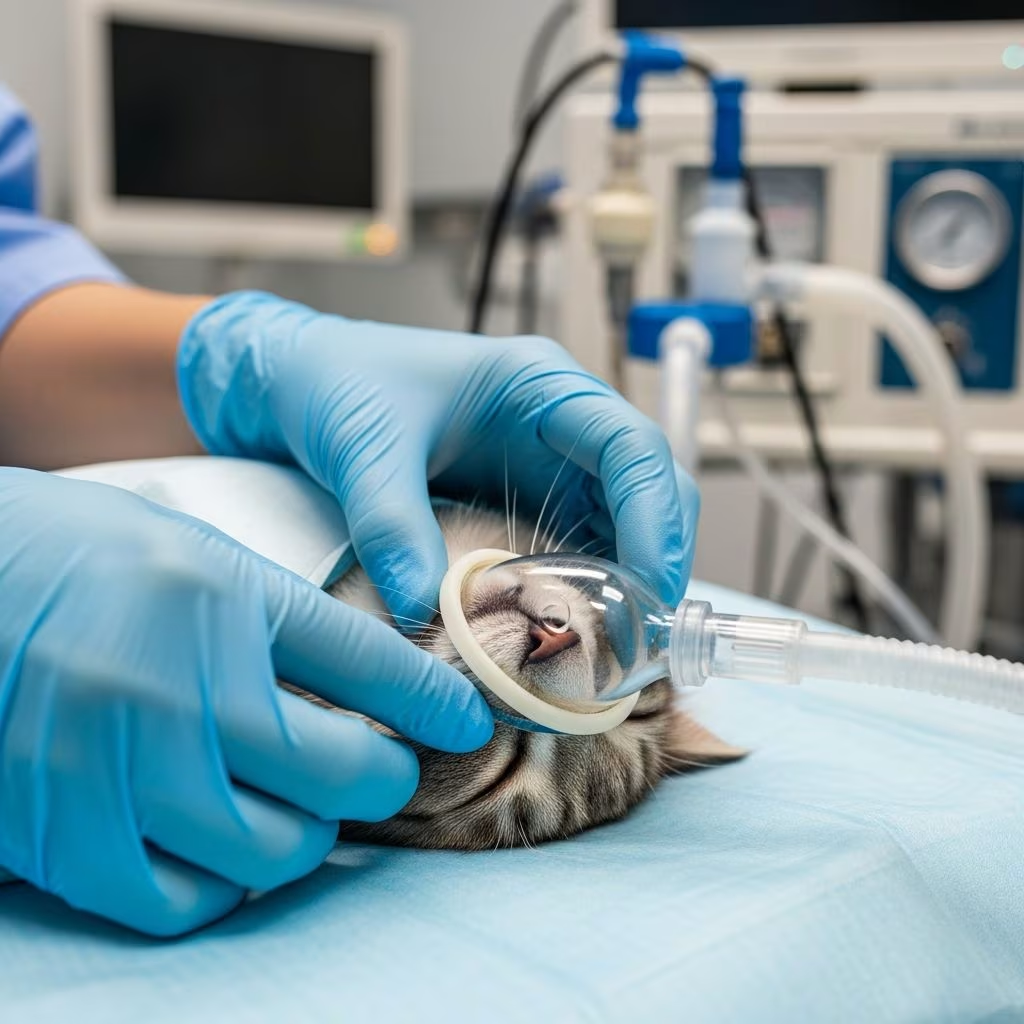
Veterinary anesthesia is a critical component of modern pet care, enabling safe surgical interventions and diagnostic procedures while minimizing discomfort and risks for animals. This process encompasses meticulous planning, precise administration, continuous oversight, and thoughtful recovery to safeguard patient well-being across species.
Understanding the Phases of Anesthesia
The administration of anesthesia in veterinary practice follows a structured sequence: pre-anesthesia preparation, induction, maintenance, and recovery. Each phase demands specific protocols tailored to the animal’s physiology, procedure type, and health profile to achieve cardiopulmonary stability and optimal outcomes.
- Pre-anesthesia: Initial assessment to identify risks.
- Induction: Transition to unconsciousness.
- Maintenance: Sustained sedation during the procedure.
- Recovery: Safe return to alertness.
Pre-Anesthesia Patient Evaluation
Before any anesthetic procedure, veterinarians conduct thorough evaluations to customize protocols. This involves reviewing medical history, performing physical exams, and running diagnostics like bloodwork to detect underlying conditions such as heart disease or organ dysfunction.
Key evaluation elements include:
- Age, breed, and species-specific vulnerabilities, e.g., brachycephalic dogs prone to respiratory issues.
- Cardiovascular and respiratory assessments via auscultation and pulse oximetry.
- Fasting guidelines to prevent aspiration, typically 8-12 hours for food and 2-4 for water in healthy pets.
These steps allow for risk stratification, informing agent selection and supportive care needs. Informed owner consent is obtained, detailing potential complications and benefits.
Induction Techniques in Practice
Induction initiates general anesthesia, rapidly achieving unconsciousness. Intravenous (IV) routes are preferred for titration to effect, often using propofol for smooth onset in dogs and cats.
| Method | Agents | Advantages | Considerations |
|---|---|---|---|
| IV Induction | Propofol, ketamine combinations | Rapid, controllable depth | Requires catheter placement |
| Intramuscular (IM) | Opioids + benzodiazepines | Simple for fractious animals | Slower, less titratable |
| Inhalant Mask | Isoflurane, sevoflurane | Non-invasive start | Less precise for maintenance |
For hemodynamically unstable patients, low-dose opioids like fentanyl paired with midazolam provide gentle induction, easing into maintenance.
Maintaining Stable Anesthesia
Once induced, anesthesia is sustained to ensure immobility and analgesia. Inhalants like isoflurane or sevoflurane, delivered via precision vaporizers, dominate due to adjustable depth and rapid elimination.
Balanced techniques integrate:
- Multi-modal analgesia: Opioids, lidocaine infusions to spare inhalant use.
- Regional blocks: Local anesthetics for targeted pain control, e.g., infraorbital for dental work.
- Supplements: Ketamine or dexmedetomidine for deeper planes in prolonged surgeries.
Adjustments respond to real-time data, preventing overdose or awareness.
Advanced Monitoring Protocols
Continuous monitoring is non-negotiable, tracking vital signs to preempt complications. Standards from AAHA emphasize multiparametric devices.
Essential parameters:
- Cardiorespiratory: ECG, blood pressure, pulse oximetry (SpO2), capnography (EtCO2).
- Temperature: Hypothermia prevention via warming blankets.
- Depth assessment: Eye position, jaw tone, reflexes.
Advanced systems offer CO2 waveform analysis and oxygenation optimization, improving outcomes. Veterinary teams log data systematically for post-procedure review.
Types of Anesthetic Agents
Agent selection hinges on procedure duration, patient status, and species. Inhalants excel in controllability; injectables in speed.
- Inhalants (Isoflurane, Sevoflurane): Precise depth control, quick recovery; ideal for maintenance.
- Injectables (Propofol, Ketamine): Fast induction; propofol favored for minimal hangover effects.
- Local/Regional: Lidocaine, bupivacaine for blocks, reducing systemic needs.
Species variations matter: equines may need standing sedation with locals for colic.
Post-Anesthesia Recovery Strategies
Recovery demands vigilant oversight in a controlled environment to avert issues like hypothermia or respiratory depression.
Core strategies:
- Quiet space: Dimly lit, padded areas minimizing stress.
- Vital checks: Hourly heart rate, respiration, temperature until stable.
- Supportive care: IV fluids, analgesics (e.g., buprenorphine), gradual feeding.
- Pain scoring: Using scales like Glasgow CMPS to guide therapy.
Owners receive discharge instructions on signs warranting return visits, such as lethargy or vomiting.
Innovations Enhancing Safety
Technological strides include mechanical ventilators for precise respiratory support and AI-assisted monitoring for anomaly detection. Closed-loop systems automate inhalant delivery based on vitals, reducing human error.
Regional anesthesia expands options, enabling standing procedures in large animals and multimodal pain control.
Species-Specific Considerations
Anesthesia protocols adapt to anatomical and behavioral differences:
- Dogs/Cats: Standard inhalant maintenance post-IV induction.
- Exotics/Zoo: Behavioral training plus sedation; epidurals rare due to handling risks.
- Large Animals: Standing locals for abdominal work, minimizing general risks.
Common Risks and Mitigation
Hypotension, hypothermia, and regurgitation pose threats. Mitigation via fluid therapy, warming, and intubation secures airways. Pre-op antiemetics curb nausea.
Owner Education and Involvement
Transparent communication builds trust. Vets explain fasting, risks (e.g., 1-2% mortality in healthy pets), and home care, empowering owners.
Frequently Asked Questions (FAQs)
What should I withhold before my pet’s anesthesia?
Typically, no food 8-12 hours prior, water until 2 hours before, per AAHA guidelines.
How do vets monitor my pet during surgery?
Using ECG, capnography, oximetry, and blood pressure for comprehensive oversight.
Is anesthesia safe for senior pets?
Yes, with tailored evaluations mitigating risks like organ decline.
What happens right after the procedure?
Monitored recovery in a warm, quiet area with fluids and pain relief as needed.
Can all procedures use local anesthesia?
Viable for minor work; generals required for invasives.
This mastery of veterinary anesthesia underscores a commitment to evidence-based, patient-centered care, continually evolving with research and technology.
References
- Essential Guide to Veterinary Anesthesia Administration — Mallard Medical. 2023. https://mallardmedical.com/essential-guide-to-veterinary-anesthesia-administration/
- Regional Anesthesia and Pain Management in Veterinary Medicine — ASRA. 2020-04-30. https://asra.com/news-publications/asra-newsletter/newsletter-item/asra-news/2020/04/30/regional-anesthesia-and-pain-management-in-veterinary-medicine
- A Comprehensive Guide to Veterinary Anesthesia & Pain Management — VERG Brooklyn. 2023. https://verg-brooklyn.com/blog/a-comprehensive-guide-to-veterinary-anesthesia-pain-management/
- Anesthesia Management of Dogs and Cats — Veterian Key. 2017. https://veteriankey.com/anesthesia-management-of-dogs-and-cats/
- Anesthesia — Cornell University College of Veterinary Medicine. 2023. https://www.vet.cornell.edu/departments-centers-and-institutes/cornell-feline-health-center/health-information/feline-health-topics/anesthesia
- 2020 AAHA Anesthesia and Monitoring Guidelines for Dogs and Cats — AAHA. 2020. https://www.aaha.org/wp-content/uploads/globalassets/02-guidelines/2020-anesthesia/anesthesia_and_monitoring_guidelines_final.pdf



