

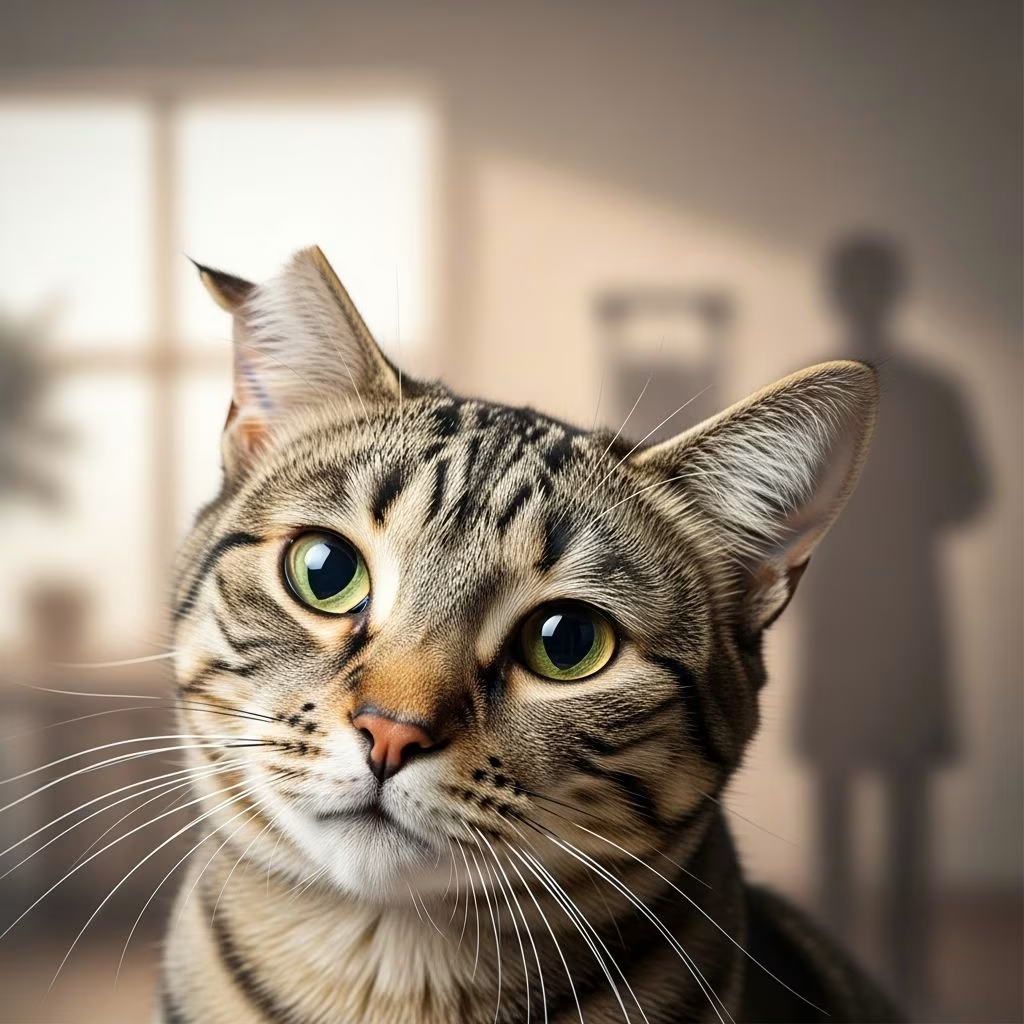
Vestibular disease in cats disrupts the balance system, causing sudden symptoms like head tilting, circling, and nausea. This condition affects cats of all ages but is more common in seniors and certain breeds like Siamese and Burmese. While alarming, most cases resolve with supportive care.
What Is Vestibular Disease in Cats?
The vestibular system maintains balance, spatial orientation, and eye coordination in cats. It includes inner ear structures (peripheral) and brain components (central). When disrupted, cats experience vertigo, making it hard to distinguish up from down, leading to falls and disorientation.
Symptoms appear abruptly, often overnight. Idiopathic cases (no known cause) are common, especially in older cats, and typically self-resolve. However, underlying issues like infections or tumors require specific treatment.
Symptoms of Vestibular Disease in Cats
Recognizing symptoms early aids prompt veterinary care. Common signs include:
- Head tilt: Cat holds head cocked to one side, often permanently if unresolved.
- Nystagmus: Rapid, involuntary eye movements, jerking horizontally, vertically, or rotationally.
- Ataxia: Loss of balance, stumbling, falling, or circling toward the affected side.
- Nausea and vomiting: Due to vertigo, leading to decreased appetite.
- Horner’s syndrome: Facial drooping, constricted pupil, third eyelid protrusion on affected side.
Severe cases may involve inability to stand, requiring assistance. Symptoms peak in 24-48 hours.
Causes of Vestibular Disease in Cats
Vestibular disease divides into peripheral (inner ear) and central (brain) types, each with distinct causes.
Peripheral Vestibular Disease
Affects inner ear or nerve. Common causes:
- Idiopathic (unknown, most frequent in seniors).
- Middle/inner ear infections (bacterial, fungal).
- Ear polyps or tumors.
- Otitis externa/media.
- Trauma or toxins.
Siamese and Burmese breeds have congenital forms.
Central Vestibular Disease
Serious, brain-related. Causes include:
- Tumors (e.g., brainstem).
- Infections (encephalitis).
- Thiamine deficiency, hypothyroidism.
- Trauma, strokes, or inflammatory diseases.
Central cases show worse neurological signs like proprioceptive deficits (abnormal limb positioning).
How Is Vestibular Disease in Cats Diagnosed?
Vets start with history and physical/neurological exam to differentiate peripheral from central.
Key diagnostics:
- Otoscopy: Checks ear canal for infections, polyps.
- Neurological exam: Tests nystagmus, ataxia, cranial nerves.
- Bloodwork: Screens for infections, organ function, thyroid, electrolytes.
- Imaging: Skull X-rays, CT/MRI for tumors, brain issues.
- CSF analysis: Rules out infections.
- Ear cytology/culture: Identifies pathogens.
Idiopathic diagnosis follows ruling out treatable causes.
Treatment for Vestibular Disease in Cats
Treatment targets underlying cause if identified; otherwise, supportive.
| Type/Cause | Treatment |
|---|---|
| Ear infection | Antibiotics, antifungals. |
| Polyp/Tumor | Surgery, anti-inflammatories. |
| Inflammation | Steroids (glucocorticoids). |
| Idiopathic | Supportive: anti-nausea (Cerenia/marpitant), IV fluids, motion sickness meds. |
Supportive care: Confine to safe area, assist with eating/litter, prevent injury. Hospitalization if severe.
Recovery and Management of Vestibular Disease in Cats
Idiopathic cases improve dramatically in 2-3 days, full recovery in 2-4 weeks. Mild head tilt or ataxia may persist.
Home management:
- Provide low-sided food/water bowls, litter boxes.
- Keep in padded, stair-free room.
- Assist positioning to prevent bedsores.
- Monitor appetite, hydration.
Prognosis excellent for peripheral/idiopathic; guarded for central. Relapses rare but possible.
Prevention of Vestibular Disease in Cats
No sure prevention for idiopathic cases. Minimize risks:
- Regular vet checkups for early ear infection detection.
- Avoid toxins, trauma.
- Balanced diet to prevent thiamine deficiency.
- Breeders screen Siamese/Burmese for congenital issues.
When to See a Vet for Suspected Vestibular Disease
Seek immediate care for sudden head tilt, nystagmus, ataxia. Delays risk injury or miss serious causes like tumors.
Frequently Asked Questions (FAQs)
What causes sudden head tilt in cats?
Most often vestibular disease from inner ear issues or idiopathic. Central causes like tumors rarer but serious.
How long does vestibular disease last in cats?
Acute phase 24-72 hours; full recovery 2-3 weeks. Some residual tilt possible.
Can vestibular disease kill cats?
Rarely directly; untreated central causes can. Supportive care yields good outcomes.
Is vestibular disease painful for cats?
Not typically painful but distressing due to vertigo and nausea.
What breeds get vestibular disease?
Siamese, Burmese prone to congenital; seniors any breed.
References
- Diagnosis and treatment of vestibular syndrome — Veterinary Practice. 2023. https://www.veterinary-practice.com/article/diagnosis-treatment-vestibular-syndrome
- Vestibular Disease in Cats — PetMD. 2024. https://www.petmd.com/cat/conditions/urinary/vestibular-disease-cats
- Vestibular Disease in Cats: Symptoms & Treatments — VMSG. 2024-08-15. https://www.vmsg.com/site/blog/2024/08/15/vestibular-disease-cats
- Symptoms of Vestibular Disease in Cats & How It’s Treated — Carolina Vet. 2022-09-15. https://www.matthews.carolinavet.com/site/pet-health-blog/2022/09/15/vestibular-disease-cat
- VESTIBULAR DISEASE IN CATS EXPLAINED — Vet Neuro Chesapeake. 2023. https://www.vetneurochesapeake.com/vnioc-blog/vestibular-disease-in-cats-explained
- Vestibular Disease in Cats: Causes, Symptoms & Treatment — Carolina Vet Rock Hill. 2020-12-30. https://www.rock-hill.carolinavet.com/site/blog/2020/12/30/vestibular-disease-cats
- Vestibular Syndrome — Cornell University College of Veterinary Medicine. 2024. https://www.vet.cornell.edu/departments-centers-and-institutes/cornell-feline-health-center/health-information/feline-health-topics/vestibular-syndrome
- Current definition, diagnosis, and treatment of canine and feline idiopathic vestibular syndrome: an international web-based survey study — PMC (PubMed Central). 2023-10. https://pmc.ncbi.nlm.nih.gov/articles/PMC10556701/



