

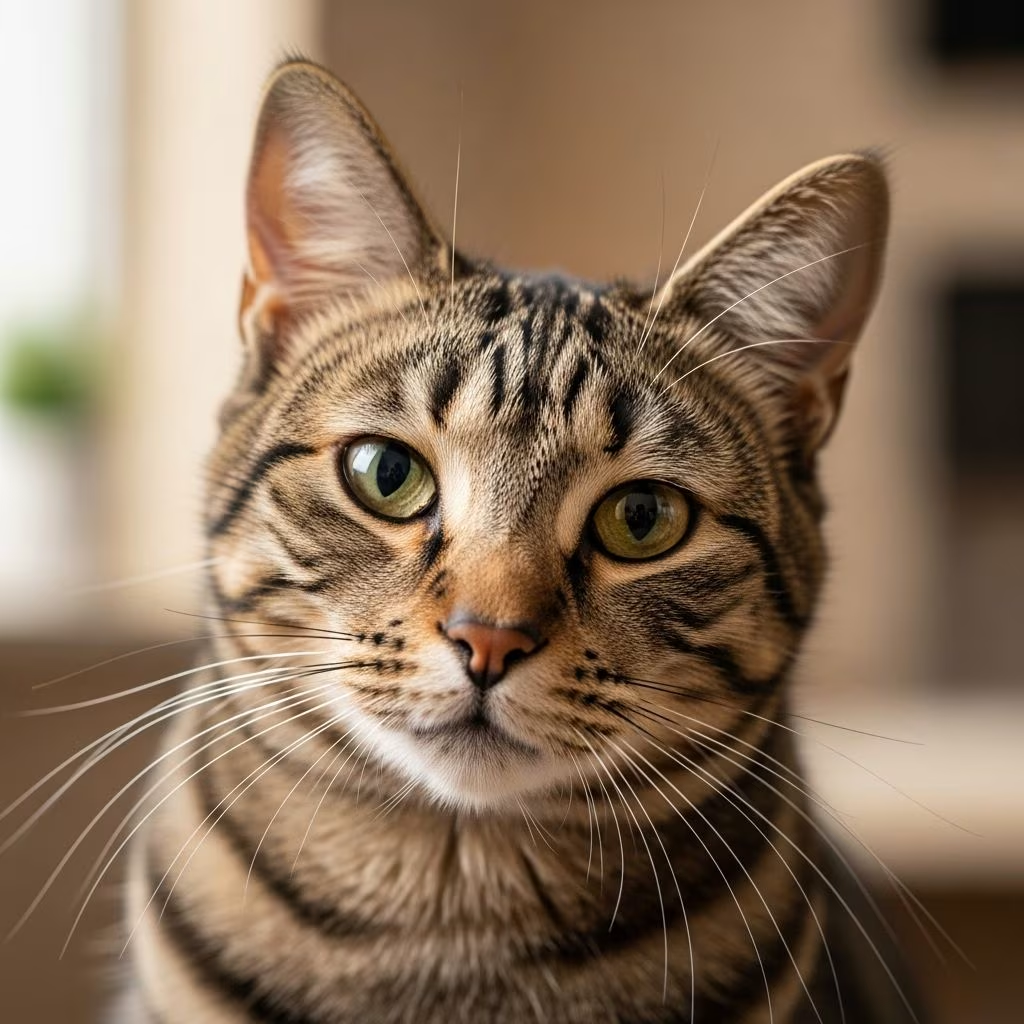
Vestibular disease in cats disrupts the balance system, causing sudden symptoms like head tilting, circling, and nausea. This condition, often idiopathic in older cats, typically resolves with supportive care, though identifying underlying causes is crucial for effective management.
What Is Vestibular Disease in Cats?
The vestibular system maintains balance and spatial orientation in cats, involving the inner ear, brainstem, and cerebellum. When disrupted, cats experience vertigo, making it hard to distinguish up from down, leading to dramatic symptoms. This disease is more common in senior cats but can affect any age, especially Siamese and Burmese breeds prone to congenital forms.
Peripheral vestibular disease affects the inner ear, while central involves the brain. Idiopathic cases, with no identifiable cause, are frequent and self-limiting.
Symptoms of Vestibular Disease in Cats
Symptoms onset abruptly, often overnight, alarming owners. Key signs include:
- Head tilt: Cat holds head cocked to one side.
- Nystagmus: Rapid, involuntary eye movements, jerking side-to-side or up-down.
- Ataxia: Loss of coordination, stumbling, falling, or circling toward the affected side.
- Nausea and vomiting: Due to vertigo, often with drooling and appetite loss.
- Horner’s syndrome: Facial drooping, constricted pupil, third eyelid protrusion on the affected side.
Severity peaks in 24-48 hours, with cats unable to stand or walk straight. Some vocalize distress from disorientation.
Causes of Vestibular Disease in Cats
Causes divide into peripheral (inner/middle ear) and central (brain):
Peripheral Causes
- Idiopathic vestibular syndrome: Most common, especially in seniors; cause unknown, resolves spontaneously.
- Ear infections (otitis interna/media): Bacterial, fungal, or yeast; common trigger.
- Nasopharyngeal polyps: Benign growths in young cats, surgically removable.
- Ototoxicity: Certain ear cleaners or medications damaging inner ear.
Central Causes (More Serious)
- Inflammatory/infectious: FIP, toxoplasmosis, fungal meningitis.
- Neoplasia: Brain tumors, lymphoma.
- Trauma: Head injury affecting brainstem.
- Thiamine deficiency: Rare, from poor diets.
- Cerebrovascular events: Strokes in older cats.
Siamese/Burmese may have congenital defects. Differentiating peripheral (better prognosis) from central is vital.
How Is Vestibular Disease in Cats Diagnosed?
Vets start with history and physical/neurological exam, checking for head tilt direction, nystagmus, proprioception (limb positioning), and cranial nerve deficits. Peripheral cases show normal mentation and vertical/horizontal nystagmus resolving in light; central may have altered consciousness, vertical nystagmus, or proprioceptive deficits.
Diagnostics include:
- Otoscopy: Ear exam for infection/polyps.
- Bloodwork: CBC, chemistry, thyroid, electrolytes for systemic issues.
- Imaging: Skull X-rays, CT/MRI for tumors/masses.
- CSF tap: Analyzes spinal fluid for infection/inflammation.
- Ear cytology/culture: Identifies pathogens.
If no cause found, it’s idiopathic. Central signs warrant advanced imaging.
Treatment for Vestibular Disease in Cats
Treatment targets underlying cause if identified; otherwise, supportive:
- Antibiotics/antifungals: For ear infections.
- Surgery: Polyp/tumor removal.
- Anti-inflammatories: Steroids for inflammation.
Supportive Care (Essential):
- Anti-nausea: Cerenia (maropitant), meclizine for vertigo.
- IV fluids: If dehydrated/not eating.
- Assisted feeding/water: Soft food, elevated bowls.
- Environment: Confine to small, padded room; no stairs; litter nearby.
- Motion sickness meds: Support walking.
Hospitalization may be needed initially. Improvement often in 2-3 days.
Recovery and Prognosis for Cats with Vestibular Disease
Idiopathic cases: Worst symptoms 24-48 hours, major improvement 2-3 days (slightly longer in cats), near-normal in 2-4 weeks. Mild head tilt/ataxia may persist or relapse rarely.
Peripheral causes resolve fully with treatment. Central (e.g., tumors) have guarded prognosis; surgery/radiation possible.
Monitor for recurrence signaling serious issue. Full recovery common.
Prevention of Vestibular Disease in Cats
Idiopathic unpreventable, but minimize risks:
- Regular vet checkups, ear cleaning for infection-prone cats.
- Avoid ototoxic meds; use vet-approved cleaners.
- Balanced diet prevents thiamine deficiency.
- Prevent head trauma; supervise high places.
- Control infections like upper respiratory early.
Frequently Asked Questions (FAQs)
What causes sudden head tilt in cats?
Sudden head tilt often signals vestibular disease from idiopathic syndrome, ear infections, or central issues like tumors. Vet exam differentiates.
Do cats recover from vestibular disease?
Yes, most recover fully, especially idiopathic/peripheral cases within weeks. Central causes vary.
How long does vestibular disease last in cats?
Acute phase 24-72 hours; full resolution 2-4 weeks. Support hastens recovery.
Is vestibular disease painful for cats?
Not directly painful, but nausea/vertigo causes distress. Anti-nausea meds help comfort.
Can kittens get vestibular disease?
Rare, but polyps or congenital issues in young cats possible. Usually seniors.
When to See a Vet for Suspected Vestibular Disease
Seek immediate care for sudden balance loss, head tilt, nystagmus, vomiting. Rule out life-threatening central causes. Delaying risks dehydration/injury.
References
- Diagnosis and treatment of vestibular syndrome — Veterinary Practice. 2023. https://www.veterinary-practice.com/article/diagnosis-treatment-vestibular-syndrome
- Vestibular Disease in Cats — PetMD. 2024-01-15. https://www.petmd.com/cat/conditions/urinary/vestibular-disease-cats
- Vestibular Disease in Cats: Symptoms & Treatments — Ventura Vets. 2024-08-15. https://www.vmsg.com/site/blog/2024/08/15/vestibular-disease-cats
- Symptoms of Vestibular Disease in Cats & How It’s Treated — Carolina Vet. 2022-09-15. https://www.matthews.carolinavet.com/site/pet-health-blog/2022/09/15/vestibular-disease-cat
- VESTIBULAR DISEASE IN CATS EXPLAINED — Vet Neuro Chesapeake. 2023. https://www.vetneurochesapeake.com/vnioc-blog/vestibular-disease-in-cats-explained
- Vestibular Disease in Cats: Causes, Symptoms & Treatment — Carolina Vet Rock Hill. 2020-12-30. https://www.rock-hill.carolinavet.com/site/blog/2020/12/30/vestibular-disease-cats
- Vestibular Syndrome — Cornell University College of Veterinary Medicine. 2023. https://www.vet.cornell.edu/departments-centers-and-institutes/cornell-feline-health-center/health-information/feline-health-topics/vestibular-syndrome



