
Vesicular Exanthema Of Swine: A Historical Guide For Producers
Understanding the historical vesicular disease in pigs: causes, symptoms, transmission, and eradication strategies for modern swine farming.
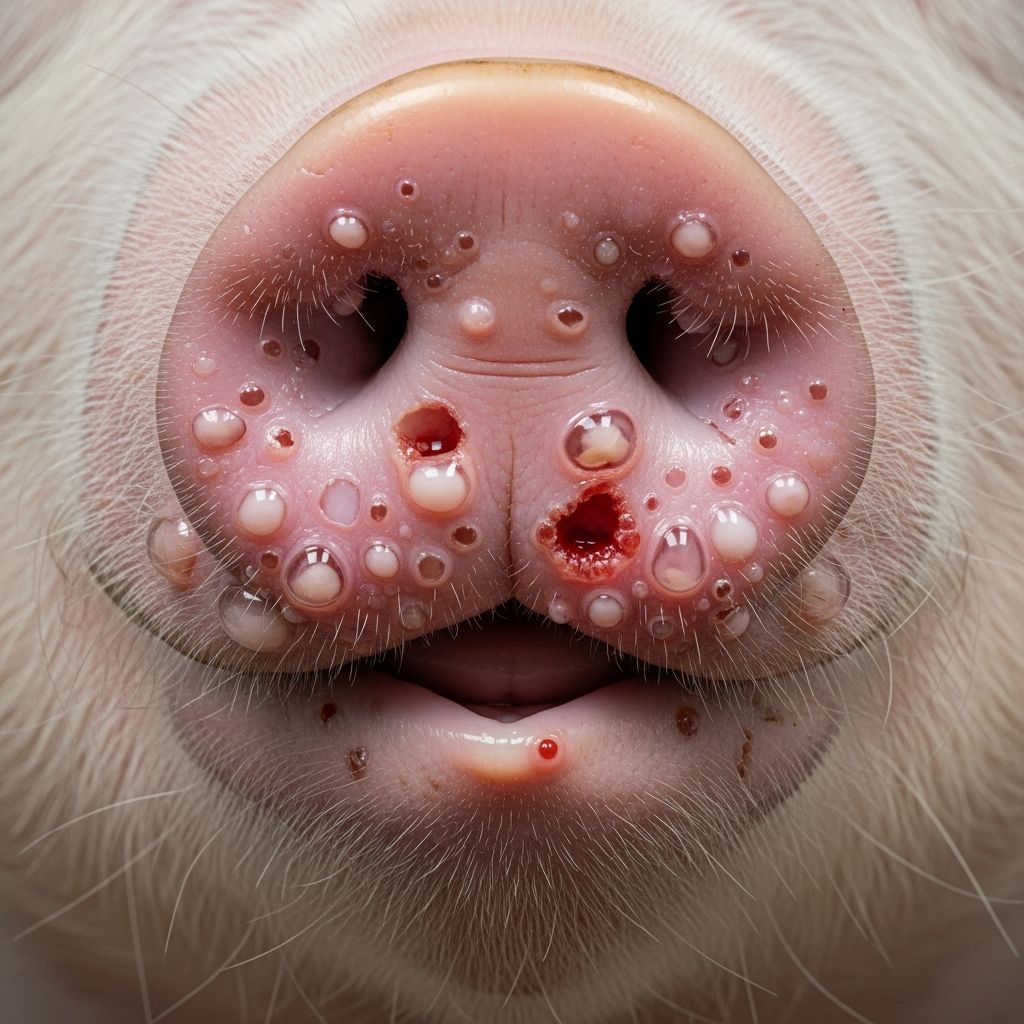
Vesicular exanthema of swine (VES) represents a significant chapter in veterinary history, characterized by blister-forming lesions in pigs that closely resemble more dangerous transboundary diseases. Caused by a calicivirus, VES primarily affected U.S. swine populations in the mid-20th century but was effectively controlled through stringent biosecurity and regulatory measures.
Origins and Viral Characteristics
The
vesicular exanthema of swine virus (VESV)
belongs to the family Caliciviridae, genus Vesivirus, and is a non-enveloped, single-stranded RNA virus with approximately 40 known serotypes. These viruses, often termed marine vesiviruses, originate from Pacific coast marine mammals and fish, including the San Miguel sea lion virus, which shares morphological similarities with VESV. The virus’s genome is about 7900 nucleotides long, featuring a VPg protein at the 5′ end and a poly(A) tract at the 3′ end, making its nucleic acid infectious in vitro. VESV thrives in neutral pH but inactivates in acidic conditions (pH 3–5).Historically, VES emerged in 1932 in Southern California, linked to feeding pigs uncooked garbage containing fish scraps or infected pork. This practice allowed marine-origin viruses to jump to swine, establishing herd infections. Unlike human pathogens, VESV affects only pigs and marine species, posing no zoonotic risk.
Transmission Pathways in Swine Herds
VESV spreads efficiently within herds via direct contact with vesicular fluid, oral/nasal secretions, or ruptured vesicle sloughs. Primary outbreaks initiate from contaminated feed, such as raw seafood waste or garbage from mink farms fed fish. Once introduced, the virus rapidly disseminates through pig-to-pig contact, achieving morbidity rates up to 90% in susceptible populations.
- Feed-borne introduction: Uncooked pork scraps or marine products serve as the main entry point.
- Direct contact: Vesicle fluids and exudates from infected animals.
- Indirect spread: Contaminated fomites, equipment, or personnel in farm settings.
Experimental studies show infection occurs through skin abrasions, allowing epithelial cell invasion. The virus’s stability in the environment exacerbates transmission risks in intensive swine operations.
Clinical Manifestations and Disease Progression
VESV induces fever up to 107°F (42°C), salivation, inappetence, and lameness, with lesions appearing 1–5 days post-exposure. Vesicles (blisters <2 cm initially) form on non-haired skin: snout, lips, nostrils, tongue, coronary bands, interdigital spaces, sole, and teats. These evolve rapidly—thick-walled at 24 hours post-infection (hpi), fluid-filled and thin-walled by 48 hpi, rupturing by 72–96 hpi, leading to ulcers that heal by 10–15 days.
| Stage | Timeline | Key Features |
|---|---|---|
| Incubation | 1–5 days | Fever, malaise |
| Vesicle Formation | 24 hpi | Small, thick-walled blisters |
| Rupture/Ulceration | 3–7 days | Fluid release, secondary lesions |
| Healing | 10–15 days | Epithelial regeneration |
Mortality is low, but suckling piglets face higher risks. Secondary issues include reproductive failure and mild encephalitis, with histopathology revealing perivascular lymphocytic cuffs in the brain and dermal edema.
Differential Diagnosis Challenges
VES lesions are clinically identical to those from
foot-and-mouth disease (FMD)
,swine vesicular disease (SVD)
,Senecavirus A (Seneca Valley virus)
, andvesicular stomatitis (VS)
, complicating field diagnosis. All produce vesicles on mouth, snout, and feet, often with rapid onset in febrile pigs.- FMD: Highly contagious, affects multiple species; reportable globally.
- Senecavirus A: Emerging U.S. concern, identical presentation.
- SVD: Porcine coxsackievirus B5 variant.
- VS: Affects ruminants too.
Presumptive diagnosis favors FMD or Senecavirus A for snout vesicles due to indistinguishability. Confirmation requires lab tests: virus isolation, PCR for nucleic acids, antigen detection (ELISA), or serology (VN, CF tests). Histopathology shows intracytoplasmic inclusions and ballooning degeneration.
Pathogenesis and Host Response
Post-infection, VESV targets stratified squamous epithelium via minor skin breaks. Viral replication in keratinocytes leads to vesicle formation within 24 hours. Rupture spreads virus to tonsils and draining lymph nodes, causing edema and necrosis. Secondary vesicles arise from fluid spread. In the CNS, mild gliosis and perivascular cuffing indicate neuroinvasion, though rarely clinical.
Swine mount humoral immunity, but serotype diversity hinders cross-protection. No systemic lesions occur, distinguishing VES from some mimics.
Eradication Efforts and Historical Control
U.S. outbreaks peaked 1952–1959, prompting aggressive measures: total depopulation, quarantine, disinfection, and 30-day restocking bans. Garbage cooking regulations (mandatory since 1950s) eliminated the source, eradicating VES from commercial swine by 1959. California farmers faced repeated slaughters until feed controls.
Today, VES is a historical curiosity, absent from global swine populations due to these interventions. Marine reservoirs persist, underscoring feed biosecurity’s role.
Prevention Strategies for Modern Swine Production
Though eradicated, vigilance prevents re-emergence:
- Feed management: Cook garbage to 170°F (77°C) for 30 minutes.
- Biosecurity: Restrict visitor access, disinfect equipment.
- Surveillance: Report vesicles immediately to authorities.
- Vaccination: None available; rely on exclusion.
Multi-species farms note VES’s pig-specificity, unlike FMD.
Economic and Public Health Implications
VES caused substantial losses via trade embargoes and culls, mimicking FMD’s impacts. Low mortality belies high morbidity, reducing growth rates. No human transmission risk exists, prioritizing animal health.
FAQs
What causes vesicular exanthema in pigs?
VESV, a marine calicivirus introduced via uncooked garbage.
How do you differentiate VES from FMD?
Clinically indistinguishable; lab confirmation needed.
Is VES still a threat today?
Eradicated in swine since 1959 via feed regulations.
Can VES affect other animals?
Only pigs and marine mammals.
What are the first signs of VES?
Fever, vesicles on snout/mouth/feet.
References
References
- Vesicular diseases in swine — University of Minnesota. Accessed 2026. https://open.lib.umn.edu/swinedisease/chapter/vesicular-diseases-in-swine/
- VESICULAR EXANTHEMA OF SWINE VIRUS Factsheet — Center for Food Security and Public Health, Iowa State University. 2015-09. https://www.cfsph.iastate.edu/pdf/shic-factsheet-vesicular-exanthema-swine-virus
- Vesicular exanthema of swine virus — Wikipedia (informed by primary sources). Accessed 2026. https://en.wikipedia.org/wiki/Vesicular_exanthema_of_swine_virus
- Vesicular Exanthema — The Pig Site. Accessed 2026. https://www.thepigsite.com/disease-guide/vesicular-exanthema-fmd
Similar Articles








Read full bio of medha deb


