

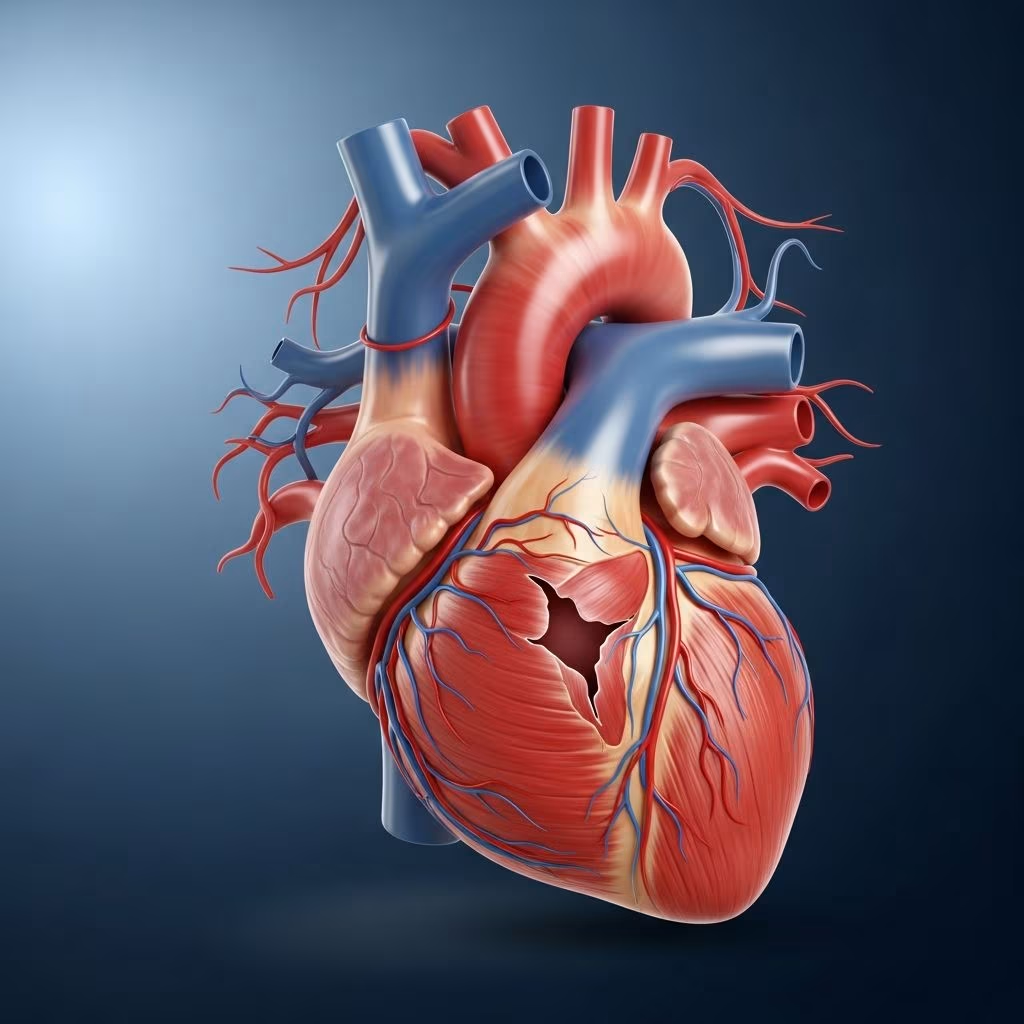
What Is a Ventricular Septal Defect?
A ventricular septal defect represents an abnormal opening in the muscular wall that separates the heart’s two lower chambers, known as the ventricles. This structural defect develops during fetal development when the dividing wall fails to form completely, resulting in a hole of varying sizes between the left and right ventricles. The condition represents one of the most common congenital heart defects, affecting how blood circulates through the heart and lungs.
How Blood Flow Changes With VSD
In a healthy heart, oxygen-poor blood returns from the body to the right ventricle, which pumps it to the lungs for oxygenation. Oxygen-rich blood then returns from the lungs to the left ventricle, which pumps it throughout the body. When a ventricular septal defect exists, this organized flow becomes disrupted.
Because the left ventricle maintains higher pressure than the right ventricle, oxygen-rich blood abnormally flows backward through the hole into the right ventricle. This redirected blood mixes with the oxygen-poor blood that should be going to the lungs, creating several problematic effects. The heart must work harder to compensate, the lungs receive excess blood volume, and the body receives less oxygen-rich blood than necessary. This increased workload on the heart and lungs can trigger various symptoms and complications depending on the defect’s size.
Size Matters: How Defect Magnitude Influences Symptoms
The dimension of the hole between the ventricles plays a critical role in determining whether a patient experiences symptoms. Small ventricular septal defects may produce no noticeable effects, and many close naturally as the child grows without requiring intervention. These minor defects allow minimal blood to pass through abnormally, so the heart and lungs don’t face significantly increased demands.
Medium to large defects, however, permit substantial blood flow through the opening, forcing the heart to pump considerably harder and the lungs to handle excess blood volume. This elevated workload creates recognizable symptoms and potential complications that typically require medical management and often surgical repair.
Recognizing Symptoms in Infants and Young Children
Infants with significant ventricular septal defects often display characteristic warning signs within the first weeks or months of life:
- Feeding difficulties: Poor eating patterns, fatigue while nursing or bottle-feeding, and excessive sweating during meals
- Growth challenges: Slow weight gain or failure to thrive, as the infant’s body demands exceed nutritional intake
- Respiratory indicators: Fast or labored breathing, shortness of breath, and difficulty maintaining normal breathing patterns
- General fatigue: Unusual tiredness, lethargy, and reduced activity levels compared to healthy infants
- Cardiac manifestations: Heart murmurs detected during physical examination, rapid heart rate, and pale or bluish skin tone
- Physical signs: Enlarged liver, swelling, and general poor appearance
How Symptoms Present in Older Children and Adults
As children mature, the presentation of ventricular septal defect symptoms changes. Older children and adults with unrepaired defects typically experience symptoms primarily during physical exertion:
- Shortness of breath during exercise or strenuous activity
- Exercise intolerance and reduced stamina compared to peers
- Heart murmurs detected by healthcare providers
- Chest discomfort or unusual chest sensations during activity
- Fatigue disproportionate to the level of exertion
Some individuals with small defects may experience no symptoms throughout their lives, discovering the condition only incidentally during medical evaluations for unrelated reasons.
Understanding the Causes and Risk Factors
Ventricular septal defects develop during pregnancy as the fetal heart forms, specifically when the muscular wall between the ventricles fails to develop completely. The exact cause remains unclear in most cases, though research suggests both genetic and environmental factors contribute to the defect’s development.
Certain genetic conditions increase the likelihood of ventricular septal defects. Down syndrome and other chromosomal abnormalities show strong associations with congenital heart defects. Additionally, maternal factors during pregnancy—such as maternal infections, certain medications, or maternal diabetes—may influence fetal heart development.
In extremely rare cases, ventricular septal defects can develop in adulthood following severe heart attacks or certain cardiac procedures, though this represents an unusual presentation of the condition.
Potential Complications From Untreated VSD
When left unrepaired, significant ventricular septal defects can develop serious complications over time:
Heart Failure
The increased workload on the heart from pumping excess blood eventually exhausts the cardiac muscle. Without repair before age two, moderate to large defects carry substantial risk of developing heart failure.
Pulmonary Hypertension and Eisenmenger Syndrome
Excess blood pumped into the lungs through large defects increases pressure in the lung’s blood vessels. Over years, this chronic high pressure causes the lung arteries to become stiff and narrow in a condition called Eisenmenger syndrome. This complication causes permanent, irreversible damage to the lung’s delicate blood vessels.
Arrhythmias
The extra blood flowing through the heart stretches and enlarges cardiac tissue, disrupting the heart’s electrical system. This can produce irregular heartbeats ranging from minor to life-threatening.
Endocarditis
Although rare, bacterial infection of the heart’s inner lining represents a serious complication of untreated VSD. This life-threatening condition requires immediate medical intervention.
Additional Complications
Patients with unrepaired defects may develop valve disease, narrowing beneath the aortic or pulmonary valves, aortic valve leakage, and increased stroke risk.
Diagnostic Approaches and Testing
Healthcare providers typically identify ventricular septal defects through multiple diagnostic methods. Physical examination often reveals a characteristic heart murmur—a whooshing sound heard with a stethoscope—as blood flows abnormally through the hole. However, not all heart murmurs indicate serious defects, as many healthy individuals have innocent murmurs.
More definitive diagnosis requires imaging studies such as echocardiography, which uses ultrasound to visualize heart structure and blood flow patterns. Chest X-rays may show signs of heart enlargement or lung congestion in significant defects. Electrocardiography records electrical activity and can detect arrhythmias.
Management and Treatment Options
Conservative Monitoring
Small ventricular septal defects that produce no symptoms often require only periodic monitoring without intervention. Healthcare providers perform regular examinations and imaging studies to ensure the defect isn’t causing problems and to detect potential closure without treatment.
Medical Management
For infants and children with moderate defects causing symptoms but not requiring immediate surgery, medications may manage symptoms and reduce the heart’s workload. Diuretics help remove excess fluid from the lungs and body, while other medications optimize heart function.
Surgical Repair
Moderate to large ventricular septal defects causing symptoms typically require surgical closure. During surgery, the cardiac surgeon closes the hole with a patch or by direct suturing. Most children undergo repair in infancy or early childhood to prevent complications.
Catheter-Based Interventions
For certain types of defects, minimally invasive catheter-based procedures can close the hole without open-heart surgery. This approach involves inserting a device through blood vessels to seal the defect.
Long-Term Outlook and Follow-Up Care
Children with repaired ventricular septal defects generally have excellent long-term outcomes and normal life expectancies. However, they require ongoing cardiac monitoring to ensure the repair remains intact and to detect potential complications such as arrhythmias or valve problems.
Adults with congenital heart defects benefit from evaluation at specialized adult congenital heart disease centers to confirm their diagnosis and verify that previous repairs continue functioning properly. Even patients with small unrepaired defects benefit from periodic assessment to monitor for slow-developing complications.
Frequently Asked Questions
Can a ventricular septal defect close on its own?
Yes, many small ventricular septal defects close spontaneously as the child’s heart develops and grows. However, larger defects rarely close without surgical intervention.
What is the prognosis for children with VSD?
With appropriate medical and surgical management, children with ventricular septal defects have excellent prognoses and normal life expectancies. Early diagnosis and timely treatment of significant defects prevent serious complications.
Can adults live with an unrepaired VSD?
Adults with small unrepaired ventricular septal defects can live normal lives without significant problems. However, they require periodic monitoring for complications like infections or valve disease.
Is VSD hereditary?
While genetics may contribute to VSD development, the condition is not strictly hereditary. Environmental factors during pregnancy also play important roles.
Key Takeaways
Ventricular septal defects represent the most common congenital heart defects, ranging from asymptomatic small holes to significant defects requiring intervention. Symptom severity correlates directly with defect size, with small defects often causing no problems while large defects can trigger heart failure and other serious complications. Early diagnosis through cardiac evaluation and imaging allows healthcare providers to implement appropriate management strategies, whether conservative monitoring, medical therapy, or surgical repair. Modern cardiac care has made ventricular septal defect outcomes excellent, particularly when defects are identified and managed appropriately during childhood. Ongoing cardiac follow-up ensures long-term health and prevents late-developing complications in this population.
References
- Ventricular Septal Defect Symptoms and Causes — Abbott Structural Heart. 2026. https://www.structuralheart.abbott/patients/congenital-heart-disease/ventricular-septal-defect
- Ventricular Septal Defect (VSD) – Symptoms & Causes — Mayo Clinic. 2024. https://www.mayoclinic.org/diseases-conditions/ventricular-septal-defect/symptoms-causes/syc-20353495
- Ventricular Septal Defect (VSD) in Children — Stanford Medicine Children’s Health. 2024. https://www.stanfordchildrens.org/en/topic/default?id=ventricular-septal-defect-vsd-in-children-90-P01829
- Ventricular Septal Defect (VSD): Types & Causes — Cleveland Clinic. 2024. https://my.clevelandclinic.org/health/diseases/17615-ventricular-septal-defects-vsd
- Ventricular Septal Defect — Centers for Disease Control and Prevention. 2024. https://www.cdc.gov/heart-defects/about/ventricular-septal-defect.html
- Ventricular Septal Defect — UCSF Department of Surgery. 2024. https://pedctsurgery.ucsf.edu/condition/ventricular-septal-defect
- Ventricular Septal Defect — Adult Congenital Heart Association (ACHA). 2024. https://www.achaheart.org/your-heart/educational-qas/types-of-heart-defects/ventricular-septal-defect/



