
Vascular Disorders of the Spinal Cord in Animals
Understanding blood flow disruptions that compromise animal spinal cord function
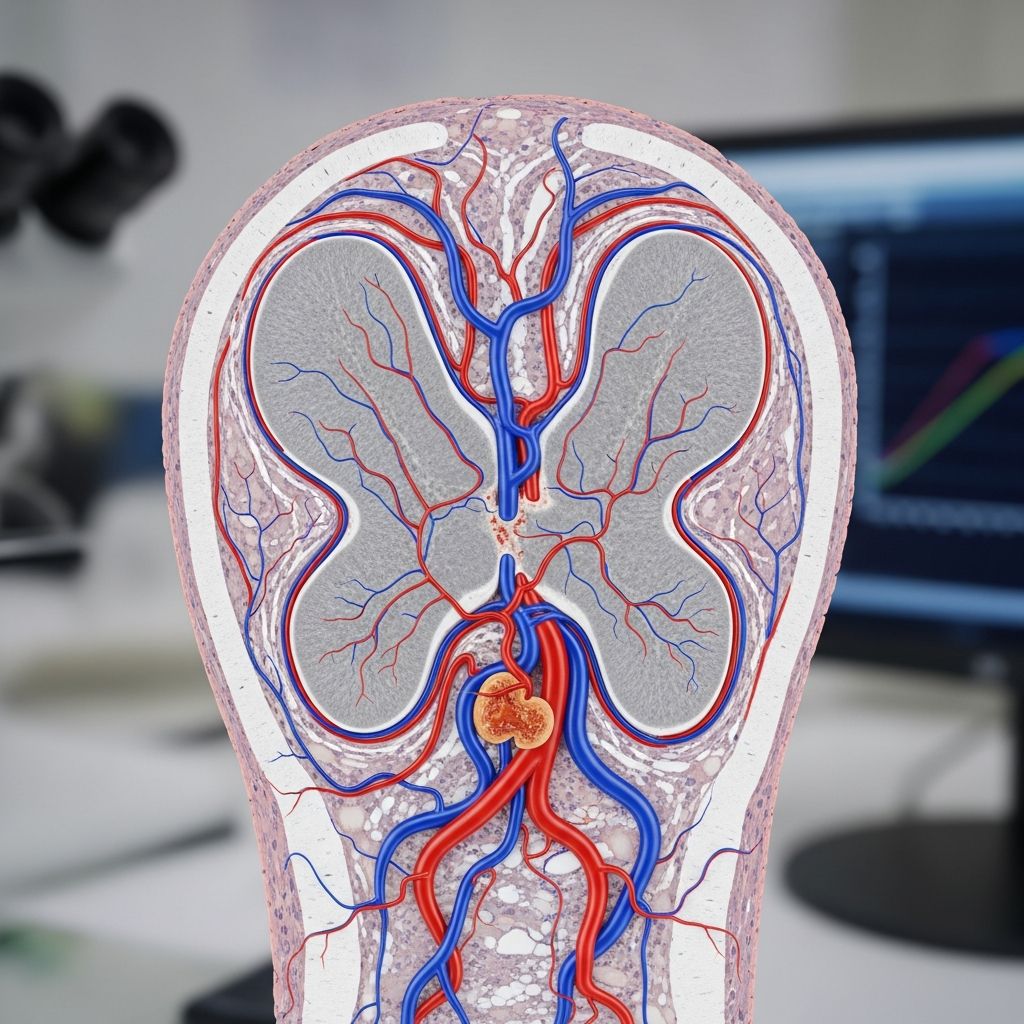
The spinal cord relies on a sophisticated network of blood vessels to deliver oxygen and essential nutrients to its tissue. When blood flow to the spinal cord becomes compromised, the consequences can be severe and rapid. Vascular diseases of the spinal cord represent a distinct category of neurological disorders that differ significantly from degenerative, inflammatory, or traumatic conditions. These conditions can strike suddenly, leaving animals with debilitating neurological deficits that require immediate veterinary attention and specialized management.
Understanding Spinal Cord Circulation and Vascular Compromise
The spinal cord receives its blood supply through a complex arterial system that includes the ventral spinal artery, dorsal spinal arteries, and segmental arteries that branch from major vessels along the vertebral column. This intricate vascular network ensures that all regions of the spinal cord receive adequate oxygen and nutrient delivery. When any disruption occurs in this system—whether through blockage, reduced flow, or vessel damage—the affected spinal cord tissue begins to deteriorate within minutes.
Ischemic myelopathy, the broader category encompassing vascular compromise of the spinal cord, often progresses rapidly to local infarction. During infarction, the affected tissue dies due to prolonged oxygen deprivation. The severity of neurological signs depends on the extent of blood flow obstruction and the location of the affected spinal cord region. Some vascular events affect multiple spinal cord levels, which is frequently observed in detailed post-mortem examinations.
Fibrocartilaginous Embolism: The Most Common Vascular Emergency
Among vascular diseases affecting the spinal cord, fibrocartilaginous embolism (FCE) stands as the most frequently encountered condition in veterinary practice. This condition develops when cartilaginous material—typically originating from the nucleus pulposus of an intervertebral disc—breaks free and enters the bloodstream. Once in circulation, this fragment travels through the vascular system until it lodges in a small blood vessel supplying the spinal cord, creating an obstruction that cuts off blood flow to the affected tissue.
The pathophysiology of FCE resembles a stroke occurring within the spinal cord itself. The obstruction may be small, affecting only a limited area of tissue, or it may block major arteries that supply extensive regions of the spinal cord. The clinical consequences depend entirely on the size and location of the embolic material and which vessels it occludes.
Breed and Age Susceptibility
FCE demonstrates clear predisposition patterns across different animal populations. Large-breed and giant-breed dogs represent the highest-risk groups, including breeds such as German Shepherds, Great Danes, and Labrador Retrievers. However, smaller breeds also show vulnerability to this condition, particularly Miniature Schnauzers and Shetland Sheepdogs. The condition typically manifests in adult dogs, though young adult animals can also be affected.
Interestingly, FCE remains relatively uncommon in cats despite sharing similar spinal anatomy. When cats do experience vascular spinal cord disease, other underlying causes such as hyperthyroidism, renal disease, heart disease, chronic pancreatitis, coagulopathy, or diabetes mellitus frequently contribute to the vascular compromise. The cervical region appears to be a common location for feline vascular myelopathy.
Typical Presentation and Onset
The hallmark characteristic of FCE is its sudden onset, typically occurring during periods of vigorous physical activity. Dogs may vocalize sharply in pain at the moment the embolism occurs, experiencing acute distress. However, this initial pain subsides rapidly and does not persist as a chronic symptom. Within minutes to hours, the condition becomes non-progressive and non-painful, distinguishing it from progressive inflammatory or degenerative conditions.
Animals affected by FCE typically present with asymmetrical neurological deficits, meaning one side of the body is more severely affected than the other. The clinical signs vary widely depending on which spinal cord region is damaged and the extent of tissue involvement. Some animals experience mild coordination problems, while others develop complete paralysis of affected limbs.
Clinical Manifestations and Severity Spectrum
The neurological signs associated with vascular spinal cord disease range from subtle to profoundly disabling. Understanding the spectrum of possible presentations helps veterinarians recognize these conditions and initiate appropriate diagnostic protocols.
Common Clinical Signs
- Loss of coordination and stumbling — Animals may appear uncoordinated or stumble when walking, particularly when turning or navigating obstacles
- Acute weakness in one or more limbs — Sudden onset of weakness affects limbs on one side of the body more severely than the other
- Difficulty walking or complete inability to ambulate — Depending on severity, animals may walk with difficulty or lose the ability to stand and walk entirely
- Loss of bladder and bowel control — In severe cases, animals may become incontinent, unable to voluntarily control elimination
- Loss of deep pain perception — The most severe indicator, representing profound spinal cord damage that affects the deepest nerve fibers
- Behavioral changes and anxiety — Affected animals may exhibit anxiety or behavioral changes following the acute event
The progression pattern of FCE differs notably from other spinal conditions. The condition may deteriorate slightly over the initial couple of hours as additional tissue becomes affected, but this deterioration plateaus relatively quickly. Within minutes to hours, the condition stabilizes and becomes non-progressive, meaning further neurological decline does not occur.
Diagnostic Approaches and Imaging Modalities
Accurate diagnosis of vascular spinal cord disease requires a systematic diagnostic approach combining clinical history, physical examination findings, and advanced imaging techniques.
Clinical Assessment
Veterinarians begin by obtaining a detailed history emphasizing the onset of signs, any precipitating events such as jumping or running, and the progression pattern. The sudden onset of signs, particularly in association with vigorous activity, raises strong suspicion for vascular disease. Physical examination focuses on assessing neurological function across different spinal cord regions, determining the severity of deficits, and identifying asymmetrical involvement.
Advanced Imaging Studies
Magnetic resonance imaging (MRI) represents the gold standard for confirming vascular spinal cord disease and ruling out alternative diagnoses. MRI can visualize the spinal cord tissue directly, revealing areas of infarction that appear as regions of abnormal signal intensity on specific imaging sequences. The imaging findings help determine the extent and location of tissue damage, which provides prognostic information.
Computed tomography (CT) may be employed in some cases, particularly when MRI is unavailable, though it provides less detailed visualization of spinal cord tissue than MRI. Plain radiographs offer limited information about vascular disease but may be performed initially to rule out fractures or obvious structural abnormalities.
Cerebrospinal Fluid Analysis
Analysis of cerebrospinal fluid (CSF) obtained through spinal tap can help differentiate vascular disease from inflammatory or infectious conditions. In vascular disease, CSF analysis typically shows minimal abnormalities or nonspecific changes, whereas inflammatory conditions produce characteristic CSF changes.
Differential Diagnosis Considerations
Several other conditions can mimic vascular spinal cord disease clinically, making differential diagnosis important for directing appropriate management. Intervertebral disc extrusion can produce sudden neurological signs but typically causes pain, distinguishing it from the non-painful presentation of FCE. Spinal cord trauma from fractures or luxations presents with a clear history of trauma. Inflammatory and infectious spinal cord diseases progress more gradually and often produce systemic signs such as fever. Neoplastic disease typically develops insidiously over weeks to months rather than acutely.
Management Strategies and Recovery Approaches
Currently, no specific treatment exists that reverses the initial vascular occlusion or restores blood flow to infarcted tissue. Instead, management focuses on supporting the animal through the acute phase and optimizing recovery through rehabilitation.
Supportive Care Foundations
During the acute phase, appropriate supportive care is critical. Animals with severe deficits may require assistance with mobility, frequent turning to prevent decubital ulcers (pressure sores), and careful management of bladder and bowel function. Pain management, while not typically a long-term concern in FCE, may be necessary during the initial period. Physical therapy and rehabilitation become increasingly important as the acute phase resolves.
Physical Rehabilitation Protocols
Structured rehabilitation programs support neurological recovery by stimulating spinal cord plasticity and promoting functional recovery. Therapeutic exercises, controlled ambulation, and hydrotherapy can help animals regain function over the recovery period. Early initiation of rehabilitation, once the acute phase has stabilized, may enhance recovery outcomes.
Long-Term Management Considerations
Animals with persistent neurological deficits require ongoing management to optimize their quality of life. This may include environmental modifications to accommodate mobility limitations, assistance devices such as wheeled carts for rear limb paralysis, and continued rehabilitation efforts. Many animals achieve good functional recovery even with persisting minor neurological deficits.
Prognosis and Recovery Expectations
The prognosis for animals with vascular spinal cord disease depends critically on the severity and extent of spinal cord damage at the time of diagnosis.
Prognostic Indicators
Animals with mild to moderate deficits generally demonstrate better recovery potential. Many such animals begin showing improvement within five to fourteen days following the acute event. Dogs with relatively preserved motor function at presentation—those that retain some ability to walk despite weakness—have higher recovery rates compared to nonambulatory animals.
Conversely, animals presenting with severe deficits, particularly those with loss of deep pain perception or complete paralysis, carry a more guarded prognosis. Severe spinal cord infarction results in irreversible tissue death that cannot be restored regardless of management intensity.
Recovery Timeline and Patterns
Recovery from vascular spinal cord disease typically follows a predictable timeline in animals that improve. Mildly affected animals may show substantial improvement within one to two weeks. Moderately affected animals may continue improving over several weeks. The most dramatic recovery often occurs in the first two to four weeks, though continued improvement can occur for several months.
Some animals achieve complete functional recovery and return to normal activity levels. However, many animals retain some neurological deficits even after recovery has plateaued. These persistent deficits may include subtle coordination problems, mild weakness, or altered gait, but they often do not substantially impact quality of life with appropriate management.
Prevention and Risk Mitigation
While vascular disease cannot be entirely prevented, certain measures may reduce risk. Preventing excessive jumping and high-impact activities, particularly in at-risk breeds during periods of vigor, may reduce FCE occurrence. Maintaining appropriate body weight and conditioning supports overall spinal health. For animals with underlying conditions that increase vascular disease risk—such as thyroid disease, renal disease, or cardiac disease—appropriate medical management of the underlying condition may reduce stroke risk.
Special Considerations in Different Species
While dogs represent the primary veterinary population affected by vascular spinal cord disease, cats and other species may experience these conditions with different prevalence patterns and manifestations. Feline vascular myelopathy often involves multiple spinal cord levels and frequently has underlying systemic causes rather than simple embolic disease. Affected cats may present with difficulty holding their heads up, weakness affecting all four limbs, and altered reflexes.
Frequently Asked Questions About Vascular Spinal Cord Disease
How quickly does FCE occur?
FCE develops extremely rapidly, typically within seconds to minutes. The embolic material lodges in a vessel, blood flow ceases, and tissue damage begins immediately. However, the clinical signs may continue worsening for the first couple of hours as additional tissue becomes affected through secondary mechanisms.
Is pain a permanent feature of vascular spinal cord disease?
No. While animals may vocalize sharply at the moment of the embolic event, pain subsides quickly and is not a persistent symptom. This distinguishes vascular disease from inflammatory conditions that cause ongoing pain.
Can animals with complete paralysis recover?
Recovery from complete paralysis is possible but less likely than recovery from partial deficits. The severity of underlying tissue damage determines recovery potential. Animals with complete loss of deep pain perception face particularly poor prognoses, as this indicates extensive spinal cord infarction.
How long does recovery typically take?
Most improvement occurs within the first four weeks, with initial signs of improvement often visible within five to fourteen days. Some animals continue showing gradual improvement for several months, but the most dramatic recovery typically occurs early.
What is the long-term quality of life for affected animals?
With appropriate care and management, many animals with vascular spinal cord disease achieve good quality of life even with persisting neurological deficits. Environmental modifications and rehabilitation support can enable animals to function well despite limitations.
References
- Fibrocartilaginous Embolism (FCE) in Dogs — Cornell University College of Veterinary Medicine, Riney Canine Health Center. https://www.vet.cornell.edu/departments-centers-and-institutes/riney-canine-health-center/canine-health-topics/fibrocartilaginous-embolism-fce-dogs
- Disorders of the Spinal Column and Cord in Dogs — Merck Veterinary Manual, Dog Owners Section. https://www.merckvetmanual.com/dog-owners/brain-spinal-cord-and-nerve-disorders-of-dogs/disorders-of-the-spinal-column-and-cord-in-dogs
- Degenerative Diseases of the Spinal Column and Cord in Animals — MSD Veterinary Manual. https://www.msdvetmanual.com/nervous-system/diseases-of-the-spinal-column-and-cord/degenerative-diseases-of-the-spinal-column-and-cord-in-animals
- Common Canine Spinal Disease Simplified — DVM360. https://www.dvm360.com/view/common-canine-spinal-disease-simplified
- Spinal Cord Diseases in Cats — Veterinary Neurology of the Chesapeake. https://www.vetneurochesapeake.com/vnioc-blog/spinal-cord-diseases-in-cats
- Disorders of the Spinal Cord — PubMed Central, National Center for Biotechnology Information. https://pmc.ncbi.nlm.nih.gov/articles/PMC7152056/
- Non-Referral Spinal Cord Disease — University of Illinois College of Veterinary Medicine. https://vetmed.illinois.edu/2020/10/15/non-referral-spinal-cord-disease/
Similar Articles








Read full bio of medha deb


