

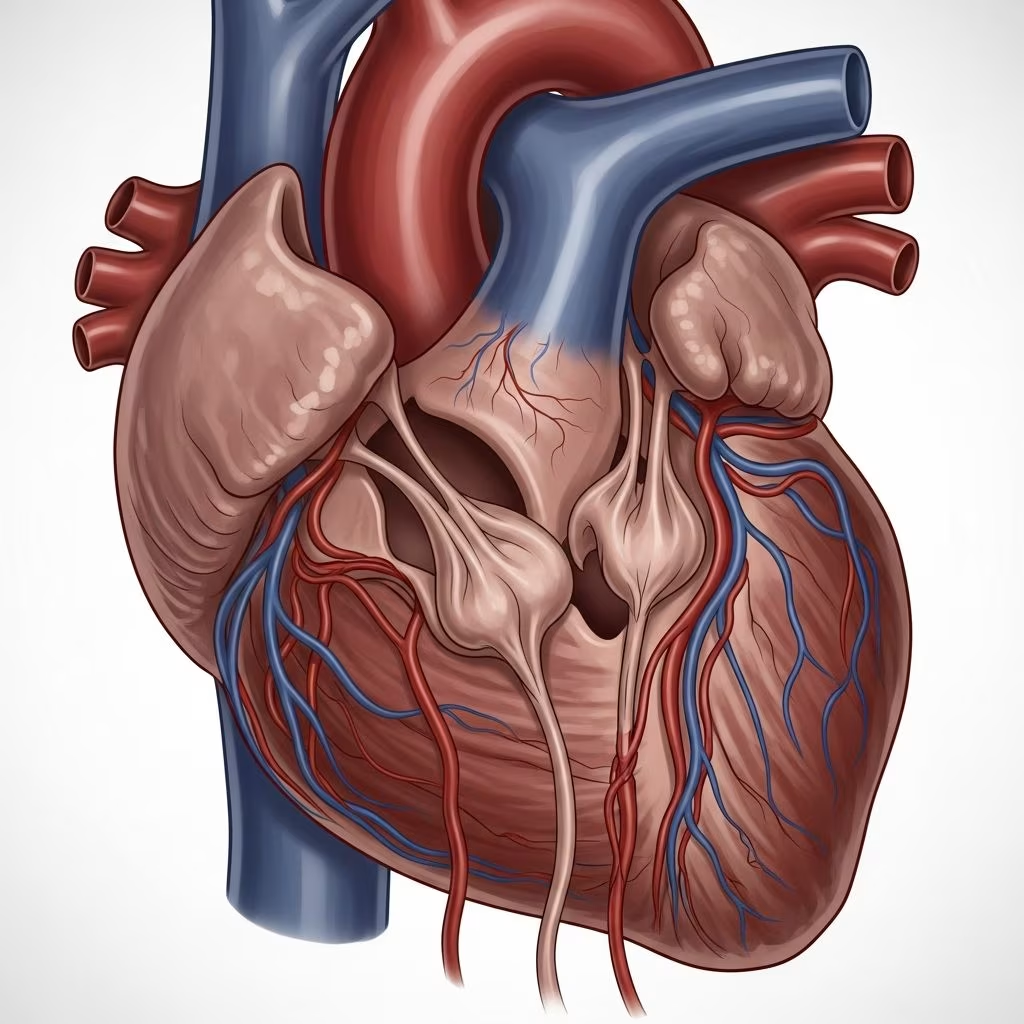
The cardiovascular system represents one of the most critical physiological networks in dogs and cats, and when dysfunction occurs within the heart’s chambers, serious health consequences can develop. Among the various cardiac conditions affecting companion animals, progressive degeneration of the heart’s atrioventricular valves stands as the most frequently encountered pathology in clinical veterinary practice. This condition reflects a complex interplay between structural deterioration, hemodynamic compensation, and the body’s ultimate inability to sustain normal cardiac function as disease advances.
The Nature of Progressive Valve Deterioration
Myxomatous valve degeneration represents a degenerative process affecting the structural integrity of the atrioventricular valves—specifically the mitral and tricuspid valves—resulting in valve prolapse and functional insufficiency. The condition involves the breakdown of the fibrous structural components of these valves, which normally maintain tight closure during the heart’s contractions. As the fibrous layer degenerates, the valve leaflets become thickened and irregular, losing their ability to form a complete seal between the heart’s chambers.
The supporting structures of these valves, known as chordae tendineae, also undergo degenerative changes that make them increasingly vulnerable to rupture. This progressive weakening of both the valve leaflets and their supporting apparatus creates a cascade of hemodynamic changes that can ultimately overwhelm the body’s compensatory mechanisms.
Disease Prevalence and At-Risk Populations
The prevalence of myxomatous valve degeneration varies significantly across species and within specific populations. In canine patients, this condition represents the predominant cardiac pathology encountered in veterinary medicine, accounting for approximately 75% of all cardiovascular disease cases. The distribution of valve involvement follows a predictable pattern: roughly 60% of affected dogs present with isolated mitral valve disease, 30% demonstrate involvement of both the mitral and tricuspid valves, while less than 10% experience isolated tricuspid valve pathology.
Disease susceptibility correlates strongly with age and breed characteristics. Senior dogs, particularly those of smaller body size, demonstrate substantially elevated incidence rates. Certain breeds show inherited predisposition to the condition, with Cavalier King Charles Spaniels and Dachshunds exhibiting a genetic component to disease development. In feline patients, myxomatous valve degeneration occurs with considerably lower frequency compared to dogs, though it does affect the mitral valve when it develops.
Pathophysiological Changes and Hemodynamic Consequences
When atrioventricular valve insufficiency develops, the normal unidirectional flow of blood becomes disrupted. During ventricular contraction, instead of all blood flowing forward into the arterial circulation, a portion regurgitates backward through the incompetent valve into the atrial chamber. This retrograde flow creates turbulent blood patterns that produce the characteristic heart murmur detected during physical examination.
The volume of blood accumulating in the affected atrium increases progressively with valve dysfunction severity. This volume overload causes chamber enlargement and elevation of pressure within the atrial cavity. For mitral valve insufficiency, the elevated left atrial pressure transmits backward into the pulmonary circulation, increasing capillary pressures within the lungs. When these pressures exceed 20 mm Hg, fluid accumulates within lung tissue, precipitating cardiogenic pulmonary edema—a hallmark manifestation of congestive heart failure.
Tricuspid valve insufficiency produces different clinical consequences. Severe regurgitation through the tricuspid valve elevates systemic venous pressure, leading to increased pressure transmission throughout the venous system. In dogs, this typically manifests as ascites—the accumulation of fluid within the abdominal cavity—representing right-sided heart failure.
The chronic high-velocity jet of regurgitant blood through the mitral valve physically damages the delicate inner lining of the left atrium, creating characteristic injury lesions visible during pathological examination. In cases with severe regurgitation, the sustained pressure elevation within the left atrium combined with progressive chamber dilation can ultimately result in atrial rupture and acute cardiac tamponade—a life-threatening emergency often culminating in sudden death.
The Heart’s Remarkable Compensatory Capacity
The cardiovascular system possesses extraordinary adaptive capabilities that allow it to sustain function despite substantial valve dysfunction. This compensation mechanism operates with remarkable efficiency: small-breed dogs can completely compensate for regurgitation involving up to 75% of the left ventricular output, meaning three-quarters of the blood returning to the left atrium while only one-quarter flows forward into systemic circulation. Due to this robust compensation, approximately 70% of dogs with mitral regurgitation never develop clinical congestive heart failure.
This physiological adaptation enables the heart to function adequately during the intermediate stages of disease progression, which may span years or even decades in some individuals. Eventually, however, the progressive structural deterioration overwhelms these compensatory mechanisms, resulting in clinical disease manifestation.
Clinical Presentation and Physical Examination Findings
During the early and middle stages of myxomatous valve degeneration, affected animals typically exhibit no clinical signs despite ongoing valve deterioration. The characteristic finding on physical examination is a systolic heart murmur—audible as an abnormal heart sound during the heart’s contraction phase—with maximal intensity detected at the left apex of the heart. The murmur grade may vary from mild (grade 1) to severe (grade 6) depending on the regurgitation magnitude.
As disease progression overwhelms compensatory mechanisms and congestive heart failure develops, clinical signs become apparent:
- Rapid or labored breathing (tachypnea and dyspnea)
- Persistent coughing, particularly during rest periods or nighttime
- Syncope (fainting episodes) due to reduced cardiac output
- Lethargy and reduced exercise tolerance
- Abdominal distension (in right-sided heart failure)
Sudden death, while uncommon, may occur secondary to acute complications such as left atrial rupture or rupture of the primary mitral valve supporting structures (chordae tendineae).
Diagnostic Approach and Imaging Findings
Clinical diagnosis often begins with suspicion based on historical and physical examination findings: an older, small-breed animal presenting with a left-sided systolic murmur warrants further investigation. However, confirming the diagnosis and assessing disease severity requires objective diagnostic testing.
Thoracic Radiography provides valuable structural information. Left atrial enlargement represents the characteristic radiographic finding in mitral valve degeneration, and the degree of enlargement correlates directly with regurgitation severity in smaller dogs. An exception occurs when acute heart failure develops secondary to ruptured chordae tendineae—in this scenario, the left atrium may not be markedly enlarged despite severe acute decompensation.
Echocardiography delivers comprehensive assessment of valve morphology and function. Ultrasound examination reveals thickened and irregularly contoured valve leaflets with variable echogenicity. When chordae tendineae rupture, the affected leaflet tips may protrude abnormally into the atrium during ventricular contraction—a finding termed “flailing leaflets.” Color flow Doppler echocardiography provides definitive documentation of the regurgitant jet, demonstrating blood flowing retrograde through the insufficient valve.
Electrocardiography offers complementary electrical information. In mild to moderate valve disease without heart failure, the ECG typically shows normal sinus rhythm or sinus arrhythmia. When congestive heart failure develops, sympathetic nervous system activation usually eliminates sinus arrhythmia and produces sinus tachycardia. Left atrial enlargement predisposes to atrial arrhythmias including atrial premature complexes and atrial fibrillation, though ventricular arrhythmias occur infrequently.
Disease Staging and Therapeutic Decisions
Modern veterinary cardiology employs standardized staging systems to guide therapeutic decisions and establish prognosis. This systematic approach categorizes patients based on structural cardiac changes and clinical manifestations:
| Stage | Clinical Characteristics | Treatment Approach |
|---|---|---|
| Stage A | At risk for disease development; no cardiac changes present | No medical therapy; monitoring and lifestyle counseling |
| Stage B1 | Structural cardiac disease present; normal or mildly enlarged cardiac silhouette | No medical therapy required; periodic monitoring |
| Stage B2 | Structural disease with sufficient cardiac remodeling to warrant intervention | Medication therapy proven effective in clinical trials |
| Stage C | Currently experiencing congestive heart failure or history of CHF on medication | Intensive medical management with diuretics and vasodilators |
| Stage D | Congestive heart failure refractory to standard therapy | Advanced medication combinations; guarded prognosis |
Research trials including SVEP, VETPROOF, EPIC, and DeLAY have demonstrated that pimobendan—a positive inotropic agent—effectively delays the onset of congestive heart failure in Stage B2 patients by approximately 15 months on average.
Medical Management Strategies
Treatment protocols vary considerably based on disease stage and individual patient response. For animals with mild to moderate disease showing no clinical signs, conservative management with periodic monitoring takes precedence. Once congestive heart failure develops or structural changes reach Stage B2 severity, pharmaceutical intervention becomes indicated.
Common Medication Classes Include:
- Diuretics: Reduce fluid overload by promoting urine output, alleviating pulmonary congestion and reducing preload on the heart
- ACE Inhibitors: Reduce systemic vasoconstriction and decrease the pressure gradient favoring regurgitation
- Positive Inotropes: Enhance cardiac contractility and forward blood flow
- Vasodilators: Reduce afterload and pulmonary vascular resistance, improving oxygen availability to lung tissue
- Beta-Blockers: Control heart rate and reduce myocardial oxygen demand
Most dogs tolerate cardiac medications well, with minimal adverse effects. The most frequently observed side effects include increased thirst and urination from diuretic therapy or occasional gastrointestinal upset. Ongoing monitoring through physical examinations, blood work, and cardiac imaging ensures medications remain safe and effective as disease progresses.
Acute Heart Failure Management requires more aggressive intervention. Oxygen supplementation combined with high-dose intravenous furosemide administration addresses acute pulmonary edema. Nitroprusside, a potent vasodilator, may provide additional benefit by reducing myocardial workload and improving perfusion. With appropriate treatment, many dogs survive longer than one year following heart failure diagnosis, though survival duration exhibits considerable individual variability. If a patient demonstrates control of left heart failure for more than two years, clinicians should reassess the diagnosis to exclude other contributing conditions.
Frequently Asked Questions
Q: Can small-breed dogs live normal lifespans with valve degeneration?
A: Many dogs with myxomatous valve disease never develop clinical heart failure and maintain normal quality of life for years. Those that do develop congestive heart failure can still survive one or more years with appropriate medical management, though individual outcomes vary considerably.
Q: Is myxomatous valve disease preventable?
A: In breeds with inherited predisposition, genetic screening and selective breeding practices may reduce disease prevalence. In acquired cases, maintaining ideal body weight and managing blood pressure may help slow disease progression, but the condition cannot be prevented once degeneration begins.
Q: Does my cat with valve disease need the same treatment as dogs?
A: While cats can develop myxomatous valve degeneration, the condition is uncommon in felines. Treatment approaches may differ based on species-specific physiology and tolerance to medications, so veterinary guidance tailored to feline patients is essential.
Q: What happens if medications no longer control my dog’s symptoms?
A: Dogs with refractory congestive heart failure (Stage D) represent therapeutic challenges requiring advanced medication combinations and intensive management. Prognosis becomes more guarded, emphasizing quality-of-life considerations in conjunction with veterinary guidance.
Key Takeaways for Pet Owners
Myxomatous valve degeneration represents a slowly progressive condition that may remain undetected for years in companion animals. Early detection through regular veterinary examinations—particularly important for older, small-breed dogs—allows intervention before severe complications develop. While the condition cannot be reversed, modern medical management significantly improves quality of life and prolongs survival in affected animals. Understanding the disease’s progressive nature helps owners maintain realistic expectations while ensuring their pets receive appropriate care at each disease stage.
References
- Myxomatous Atrioventricular Valve Degeneration in Dogs and Cats — Merck Veterinary Manual. Accessed February 2026. https://www.merckvetmanual.com/circulatory-system/various-heart-diseases-in-dogs-and-cats/myxomatous-atrioventricular-valve-degeneration-in-dogs-and-cats
- ACVIM Consensus Guidelines for the Diagnosis and Treatment of Myxomatous Mitral Valve Disease in Dogs — Journal of Veterinary Internal Medicine. American College of Veterinary Internal Medicine. https://pmc.ncbi.nlm.nih.gov/articles/PMC6524084/
- Canine Myxomatous Valve Disease: Diagnosis, Outcomes, and Staging — Vermont Veterinary Medical Association. https://www.vtvets.org/assets/docs/1%20Canine%20Myxomatous%20Valve%20Disease-VermontVMA.pdf
- Mitral Valve Disease in Companion Animals — One Health Institute, Colorado State University. December 2020. https://onehealth.colostate.edu/2020/12/14/mitral-valve-disease/
- Myxomatous Mitral Valve Disease (MMVD) in Dogs: Clinical Management — The Animal Care Center of Castle Pines. https://taccvets.com/post/myxomatous-mitral-valve-disease-mmvd-in-dogs



