

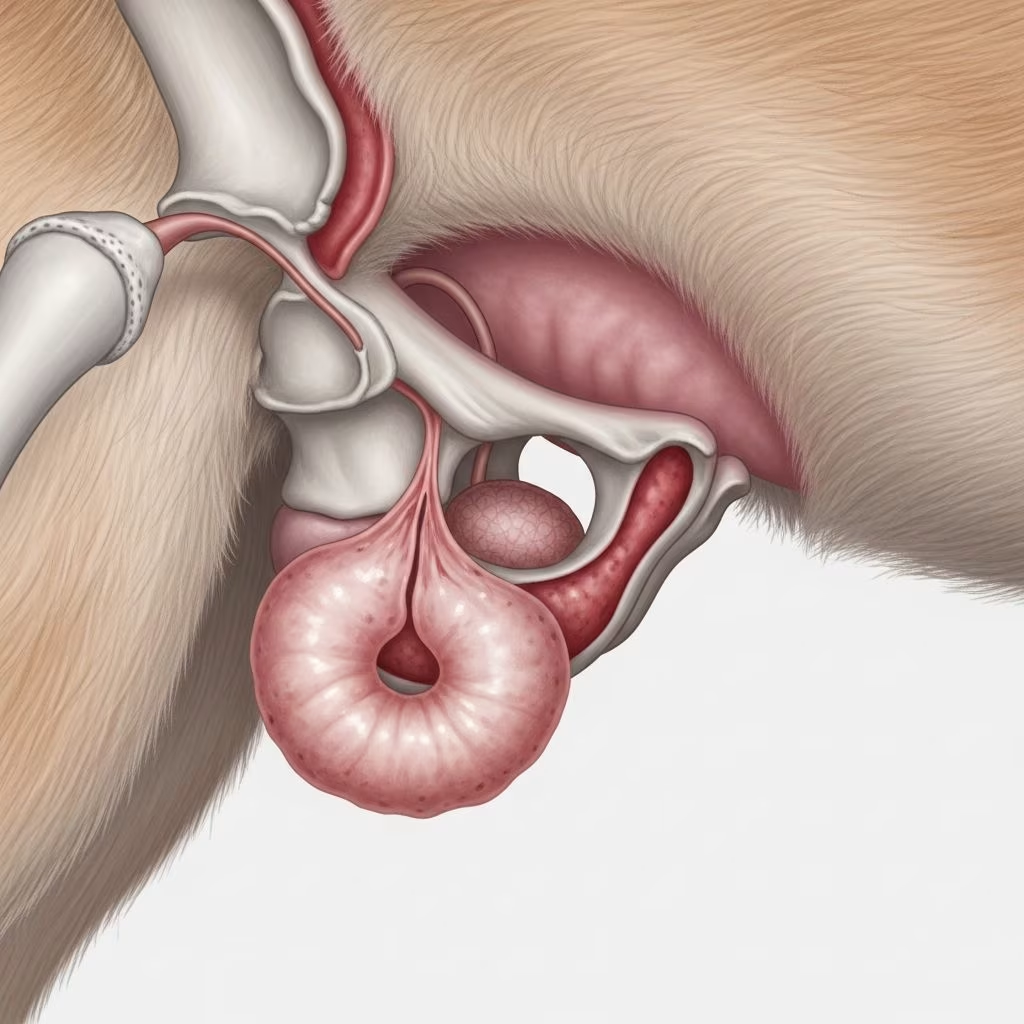
This condition involves the excessive growth and swelling of the vaginal tissue in intact female dogs, primarily triggered by elevated estrogen levels during their reproductive cycle. It manifests as a protruding mass from the vulva, which can cause discomfort and complications if untreated.
Understanding the Physiology Behind the Condition
The reproductive cycle in female dogs, known as estrus, features distinct phases including proestrus and estrus, where estrogen hormones surge to prepare the body for potential mating. This hormonal shift normally causes mild thickening of the vaginal mucosa, but in susceptible dogs, it leads to pronounced edema and proliferation, resulting in hyperplasia.
Large breeds and those with short noses, such as Boxers, Bulldogs, and Retrievers, show higher susceptibility due to anatomical factors like weaker perivulvar tissues. Young dogs, particularly those under three years and in their initial heat cycles, face elevated risks as their bodies respond more dramatically to hormonal changes.
Recognizing Clinical Signs Early
Owners often first notice a pinkish, fleshy mass emerging from the vulva, which varies in size from small folds to a fully everted structure. Additional indicators include excessive licking at the area, bloody or mucoid discharge, straining to urinate, and behavioral shifts like reluctance to mate or sit comfortably.
In advanced cases, the mass may ulcerate, become dry, or obstruct urination, turning it into a veterinary emergency. Differentiating from tumors or infections requires professional evaluation, as similar appearances can stem from neoplasms or trauma.
Classifying the Severity of Prolapse
Veterinarians categorize vaginal hyperplasia into types based on protrusion extent to guide treatment:
- Type I: Swelling confined within the vagina, not visible externally.
- Type II: Partial protrusion through the vulva, often regressing naturally.
- Type III: Complete eversion of vaginal mucosa beyond the vulvar lips, requiring intervention.
This staging, confirmed via physical exam and cytology, helps predict outcomes and select therapies.
Diagnostic Approaches for Accurate Assessment
Diagnosis begins with a thorough history, focusing on heat cycle timing, breed, and prior episodes. A gentle vaginal exam under sedation reveals tissue condition—moist and viable or dry and necrotic. Cytology smears show cornified epithelial cells, affirming estrogen influence, while ultrasound rules out uterine issues.
Blood tests assess overall health, and biopsies exclude malignancy in persistent cases. Early detection via these methods improves prognosis significantly.
Conservative Management Strategies
For milder Type I or II cases, monitoring suffices as tissues often recede post-estrus. Supportive care includes cleaning the area with mild antiseptics, applying lubricating ointments, and using cones to deter licking. Inducing ovulation with hormones like GnRH shortens the cycle, reducing swelling duration.
In non-breeding pets, immediate spaying eliminates recurrence risk by halting estrogen production.
Surgical Interventions for Severe Cases
Type III prolapses demand prompt reduction under general anesthesia. A urinary catheter ensures bladder emptying, especially if the urethra is involved. The Bühner suture technique, adapted from livestock medicine, secures prolapsed tissue using a tape and special needle around the vulva, leaving a small gap for urination.1
This method excels in medium-to-large dogs without ulceration, preventing re-prolapse until spaying two months later. Alternative surgeries like episiotomy allow mass excision and biopsy but carry higher risks.
Breeding Considerations and Alternatives
For valuable breeding females, conservative measures preserve fertility. Artificial insemination bypasses physical mating, avoiding trauma to hyperplastic tissue. Timing breeds post-resolution or using chilled semen minimizes complications.
| Management Option | Best For | Pros | Cons |
|---|---|---|---|
| Conservative Care | Type I-II, breeding dogs | Non-invasive, preserves fertility | High recurrence risk |
| Bühner Suture | Type III, large breeds | Effective temporary fix | Requires anesthesia, follow-up |
| Spaying | Non-breeders | Permanent prevention | Ends breeding capability |
| Episiotomy | Traumatized tissue | Allows biopsy | Invasive, scarring risk |
Home Care Tips for Recovery
- Maintain hygiene with daily gentle washes using saline or vet-approved solutions.
- Prevent self-trauma via Elizabethan collars or bodysuits.
- Monitor for infection signs: foul odor, pus, fever.
- Restrict activity to leashed walks; avoid stairs or jumping.
- Follow suture checks or medication schedules diligently.
Preventing Recurrence in At-Risk Dogs
Spaying remains the gold standard for pet dogs, eliminating hormonal triggers.5 Breeders should track cycles meticulously, intervening early in predisposed lines. Genetic screening for tissue weakness, though not standardized, aids selective breeding. Regular vet check-ups during heats catch issues proactively.
Potential Complications and Prognosis
Untreated hyperplasia risks necrosis, infection, or infertility from scarring. With timely care, most dogs recover fully, though recurrence hits 66-100% in intact bitches without sterilization.4 Bühner application shows low complication rates in studies of 14 cases, all resolving post-ovariectomy.1
Prognosis excels in non-traumatized tissues; breeding success post-treatment mirrors unaffected dogs.
FAQs on Vaginal Hyperplasia
Is vaginal hyperplasia painful for my dog?
Typically mild discomfort from swelling and protrusion; severe cases with ulcers cause significant pain.
Can it happen outside of heat?
Rarely; almost exclusively tied to proestrus/estrus estrogen peaks.
Should I breed a dog with this history?
Possible with management, but consult a repro specialist for risks.
How effective is the Bühner suture?
Highly reliable for Type III in suitable breeds, preventing re-prolapse until spay.1
What’s the cost of treatment?
Varries; conservative care $100-300, surgical $500-2000+ including anesthesia.
Recent Advances in Canine Reproductive Health
Telehealth enables remote monitoring of early signs, while refined hormone assays pinpoint cycle stages accurately. Studies advocate Bühner for conservatives cases, reducing radical surgeries.1 Ongoing research explores genetic markers for predisposition.
References
- Management of Vaginal Hyperplasia in Bitches by Bühner Suture — Animals (PMC). 2022-12-15. https://pmc.ncbi.nlm.nih.gov/articles/PMC9774832/
- Vet’s 2025 Guide to Vaginal Hyperplasia & Prolapse in Dogs — Ask A Vet. 2025-01-01. https://askavet.com/blogs/news/vet-s-2025-guide-to-vaginal-hyperplasia-prolapse-in-dogs-%F0%9F%90%BE
- Vaginal Hyperplasia in a Dog — VetGirl on the Run. 2023-05-10. https://vetgirlontherun.com/vaginal-hyperplasia-in-a-dog-vetgirl-veterinary-ce-videos-blog/
- Mass Protrusion from the Vaginal Area in Cats — PetMD. 2024-02-20. https://www.petmd.com/cat/conditions/reproductive/c_ct_vaginal_hyperplasia_and_prolapse
- Vaginal Fold Prolapse in Bitches — Vet Times. 2017-10-23. https://www.vettimes.com/news/vets/small-animal-vets/vaginal-fold-prolapse-in-bitches



