

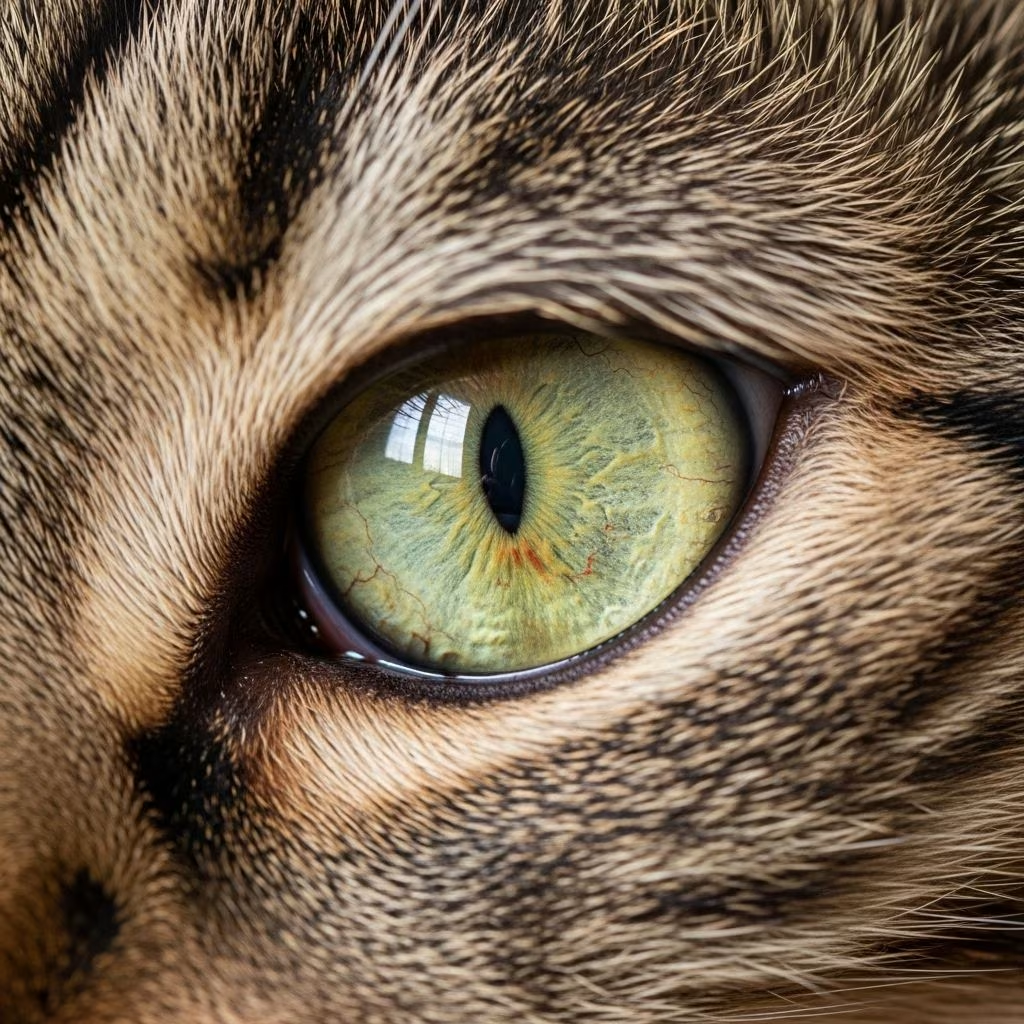
Feline uveitis represents a critical inflammation within the eye’s middle layer, potentially leading to pain and vision impairment if not addressed swiftly. This condition affects the uveal tract, encompassing vital structures that maintain eye function, and requires immediate veterinary intervention to mitigate risks like glaucoma or blindness.
Understanding the Eye’s Uveal Tract
The uveal tract forms the eye’s vascular middle layer, consisting of the iris, ciliary body, and choroid. The **iris** regulates light entry by adjusting pupil size, the **ciliary body** produces aqueous humor and controls lens focus, and the **choroid** nourishes the retina. Inflammation here disrupts these processes, causing discomfort and functional deficits.
Recognizing Key Symptoms
Cats with uveitis often display subtle yet telling signs of ocular distress. Common indicators include:
- Intense squinting or keeping eyes closed due to pain.
- Redness around the sclera or conjunctiva.
- Excessive tearing or ocular discharge.
- Cloudy cornea or bluish haze over the eye.
- Frequent pawing or rubbing at the affected eye.
- Photophobia, where bright light causes avoidance.
- Altered pupil size, often constricted or irregular.
- Visible blood or pus within the anterior chamber.
These symptoms can appear suddenly, signaling an emergency. Indoor cats may show behavioral changes like hiding or reduced activity, masking the issue until it worsens.
Primary Causes Behind Feline Uveitis
Uveitis in cats stems from ocular or systemic origins. Ocular triggers involve direct eye insults, while systemic ones link to broader health issues.
Direct Eye-Related Factors
Trauma, such as scratches from fights or accidents, tops the list. Corneal ulcers erode the surface, provoking inflammatory responses. Lens issues like cataracts or tumors can also initiate uveitis by irritating surrounding tissues.
Systemic Infectious Culprits
Infections dominate systemic causes, particularly viruses weakening immunity:
| Pathogen | Transmission | Associated Risks |
|---|---|---|
| Feline Leukemia Virus (FeLV) | Saliva, grooming, bites | Immune suppression, cancer, early uveitis sign |
| Feline Immunodeficiency Virus (FIV) | Bites primarily | Secondary infections, chronic progression |
| Feline Infectious Peritonitis (FIP) | Fecal-oral via FeCV | Systemic inflammation, high mortality |
| Feline Herpesvirus-1 (FHV-1) | Respiratory droplets | |
| Toxoplasma, Bartonella, Mycoplasma | Contaminated sources | Ocular involvement in disseminated disease |
Fungal infections and lymphoma further contribute, especially in compromised felines.
Veterinary Diagnostic Approach
Diagnosis begins with a thorough history, noting exposures, vaccination status, and concurrent symptoms like fever or weight loss. A full physical exam follows, emphasizing ophthalmology.
Key tests include:
- Schirmer tear test for production levels.
- Tonometry to measure intraocular pressure (IOP), as uveitis elevates glaucoma risk.
- Fluorescein staining to detect corneal defects.
- Bloodwork: CBC, biochemistry, viral titers (FeLV/FIV), and serology for toxoplasmosis.
- PCR on ocular fluids or biopsies for precise pathogen ID.
- Aqueous humor tap or imaging for deeper insights.
These steps pinpoint primary versus secondary uveitis, guiding therapy.
Comprehensive Treatment Strategies
Treatment targets inflammation control, pain relief, and root causes. No one-size-fits-all exists; protocols tailor to severity and etiology.
Anti-Inflammatory and Pain Management
Topical agents form the cornerstone:
- Corticosteroids like prednisolone acetate (q4-6h initially).
- Non-steroidal anti-inflammatories (NSAIDs) for steroid contraindications.
- Atropine (1% ointment q12-24h) for ciliary spasm relief and pupil dilation, using ointment in cats to avoid bitter taste salivation.
Systemic options address severe cases or hypertension.
Addressing Underlying Conditions
Antivirals combat FHV-1; antibiotics tackle bacteria. Immunosuppressants manage idiopathic or immune-mediated forms. Surgical excision applies to tumors, while supportive care aids chronic virals like FIV/FeLV.
Monitoring Recovery and Complications
Rechecks every 1-2 weeks initially track progress via tonometry and slit-lamp exams. Long-term management for recurrent cases involves q3-6 month monitoring. Complications include:
- Secondary glaucoma from pressure spikes.
- Cataract formation or phthisis bulbi (eye shrinkage).
- Retinal detachment in posterior involvement.
- Vision loss if delayed.
Prognosis improves with early action; fungal or neoplastic cases demand prolonged therapy.
Preventive Measures for Cat Owners
Vaccination against FeLV and FHV-1 reduces risks, though not foolproof. Limit multi-cat exposure, especially outdoors. Routine wellness exams catch subclinical issues. Maintain hygiene to curb parasites like Toxoplasma.
Frequently Asked Questions (FAQs)
Is uveitis in cats an emergency?
Yes, due to pain and complication risks; seek care within hours of symptoms.
Can home remedies treat cat uveitis?
No, professional meds are essential; avoid OTC drops risking worsening.
How long does recovery take?
Days to weeks for acute cases; months for systemic triggers.
Does uveitis cause permanent blindness?
Possible if untreated, but many recover fully with prompt intervention.
Are certain cats more prone?
Outdoor, unvaccinated, or multi-cat household felines face higher odds.
Long-Term Eye Health Tips
- Administer meds precisely; clean eyes gently.
- Dim lights during photophobia episodes.
- Track appetite, behavior for systemic clues.
- Follow-up consistently to taper treatments safely.
Empowering owners with knowledge fosters better outcomes, preserving feline vision.
References
- Viral Uveitis in Cats — Veterinary Vision Center. 2023. https://veterinaryvisioncenter.com/viral-uveitis-in-cats/
- Uveitis in Cats: Symptoms, Causes, Treatment — PetMD. 2024. https://www.petmd.com/cat/conditions/eyes/c_ct_anterior_uveitis
- Managing Uveitis in Dogs and Cats — Today’s Veterinary Practice. 2023. https://todaysveterinarypractice.com/ophthalmology/managing-uveitis-in-dogs-and-cats/
- Uveitis in Dogs & Cats — MedVet. 2024. https://www.medvet.com/uveitis-dogs-cats/
- Anterior Uveitis in Cats: Vet Ophthalmic Diagnosis & 2025 Treatment Guide — Ask A Vet. 2025. https://askavet.com/blogs/news/anterior-uveitis-in-cats-vet-ophthalmic-diagnosis-2025-treatment-guide-%F0%9F%90%B1%F0%9F%91%81%EF%B8%8F
- Feline Uveitis: Diagnosis and Treatment — PMC – PubMed Central. 2020. https://pmc.ncbi.nlm.nih.gov/articles/PMC7110830/
- Feline Uveitis FAQs — University of Tennessee College of Veterinary Medicine. 2023. https://vetmed.tennessee.edu/wp-content/uploads/sites/4/UTCVM_FelineUveitis_FAQs.pdf



