
UV Lights for Detecting Dog Urine Stains
Discover hidden dog pee spots with UV black lights and master effective cleanup techniques for a fresh home.
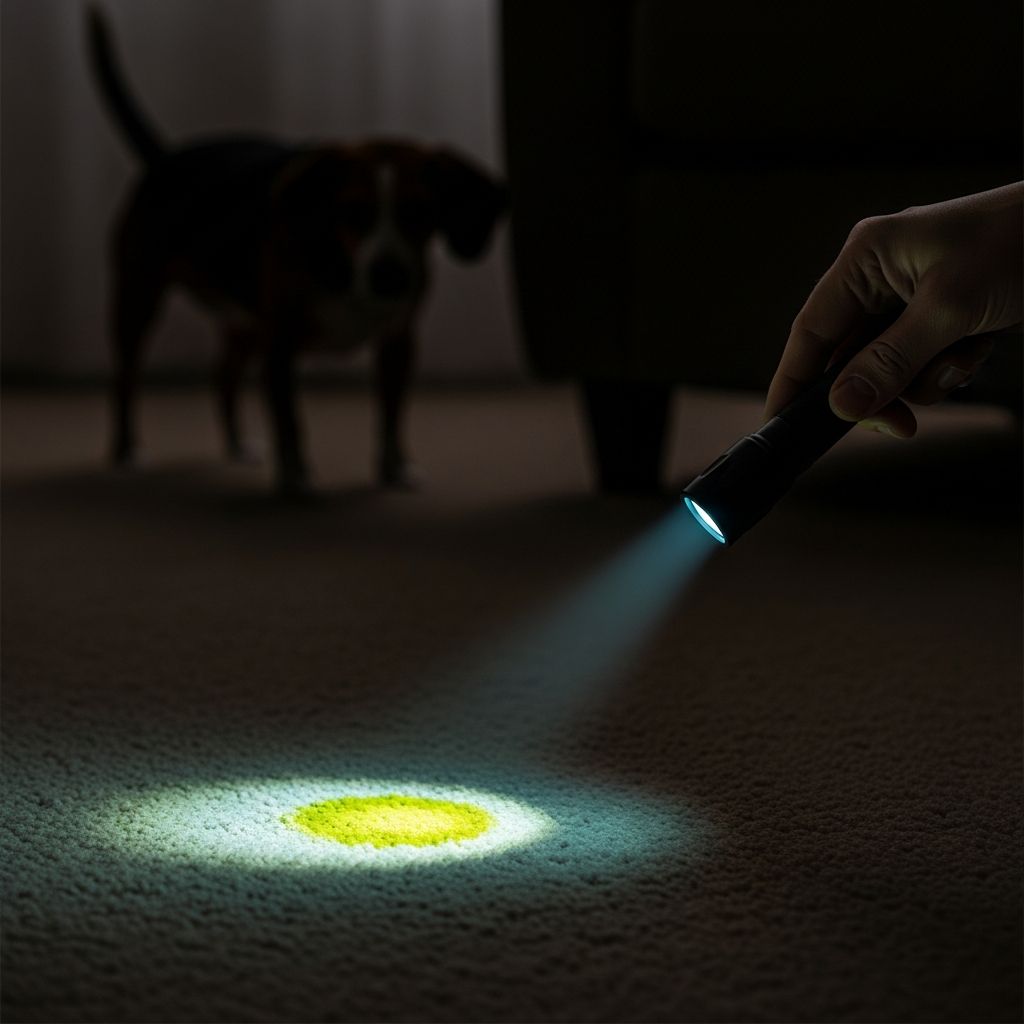
UV black lights, also known as blacklights, offer pet owners a powerful tool to uncover hidden dog urine accidents that escape the naked eye. These devices emit ultraviolet wavelengths that make dried urine fluoresce, typically in a yellowish glow, revealing spots responsible for persistent odors.
How Black Lights Reveal Invisible Pet Accidents
Black lights operate by shining short-wavelength UV light, around 365 to 395 nanometers, which excites phosphorus and proteins in dried pet urine, causing it to reflect light back visibly. This fluorescence occurs because urine contains compounds like urobilin, a natural pigment from urochrome, that produce a distinctive yellow shine under UV exposure. Unlike regular light, which fails to highlight these stains, black lights make them stand out clearly in dark conditions.
Pet urine dries and leaves behind crystalline residues that retain fluorescent properties. Fresh or wet urine does not glow effectively, as moisture interferes with the reaction. This makes black lights ideal for spotting old, embedded accidents on carpets, upholstery, or hard floors where smells linger without visible marks.
Choosing the Right UV Tool for Pet Stain Detection
Not all black lights perform equally for urine detection. Select models specifically designed for pet stains, with wavelengths in the 365-395 nm range for optimal fluorescence. Handheld flashlights are portable and practical for home use, often compact enough to store easily or carry during travel.
Before purchase, verify the light’s strength by testing on white paper in a dark room; it should produce a strong purple hue. Avoid generic UV lights meant for parties or forensics, as they may lack the precise spectrum needed for reliable pet urine detection.
| Feature | Recommended Specs | Benefits |
|---|---|---|
| Wavelength | 365-395 nm | Targets urine phosphorus effectively |
| Power Source | Battery-operated handheld | Portable for whole-home scans |
| Safety | No protective eyewear needed | Safe for household use |
| Size | Compact (under 6 inches) | Easy storage and travel |
Step-by-Step Guide to Using a Black Light Effectively
To maximize results, follow these precise steps for scanning your home:
- Darken the area completely: Turn off all lights, close curtains, and wait for nightfall if possible. Ambient light drowns out the fluorescence.
- Ensure surfaces are dry: Wait 24-48 hours after any suspected accident. Humidity or moisture from cleaning reduces glow intensity.
- Hold close and sweep slowly: Position the light 1-3 inches from the surface, moving steadily across carpets, rugs, furniture, and baseboards.
- Look for yellow-green glow: Urine appears as bright yellow spots, not white as sometimes mythologized.
- Test the light first: Shine on white paper to confirm purple illumination; replace if dim.
Focus on high-risk zones like under furniture, behind doors, and along walls where dogs may mark territory.
Common Challenges and How to Overcome Them
Even with proper technique, issues arise. Older stains may fade due to bacterial breakdown or cleaning exposure, failing to fluoresce. High-traffic areas with heavy foot or vacuum use can dilute residues, making detection harder.
Surfaces like tile or wood may show weaker glows compared to porous carpets. Humidity in bathrooms or kitchens further hampers visibility. Solution: Combine black light with a moisture meter for wet spots or enzymatic cleaners that reactivate fluorescence post-application.
Non-urine fluorescents, such as laundry detergents or optical brighteners in fabrics, can mimic stains. Cross-check by smelling for ammonia or applying a pet-safe UV enhancer.
Effective Cleaning After Detection
Finding stains is step one; proper cleanup prevents recurrence. Avoid steam cleaners or ammonia-based products, which spread residues deeper.
- Blot excess: Use paper towels to absorb surface liquid without rubbing.
- Apply enzymatic cleaner: Products with proteases break down urine proteins. Saturate the spot and let dwell 10-15 minutes.
- Extract and dry: Use a wet vac or towels; ensure full drying with fans before rechecking with UV light.
- Repeat if needed: Multiple treatments may be required for deep-set stains.
For persistent odors, lift carpet to treat the padding underneath, as urine often soaks through.
Health Risks of Lingering Urine and Why Act Fast
Uncleared dog urine poses risks beyond smells. Ammonia vapors irritate eyes and lungs, especially in enclosed spaces. Bacterial growth in residues can lead to mold or allergens, worsening respiratory issues in sensitive individuals.
Phosphorus crystals attract dust and pathogens, creating unhygienic hotspots. Prompt detection and cleaning with UV tools mitigates these, promoting a healthier home environment.
Preventing Future Dog Pee Accidents
Address root causes to reduce UV hunts. Common triggers include incomplete house training, medical issues like UTIs, anxiety, or marking in unneutered males.
- Consult a vet for sudden changes in urination habits.
- Increase potty breaks and use pheromone diffusers for stress.
- Block access to problem areas during retraining.
- Employ belly bands for males during transition periods.
Consistent routines and positive reinforcement build habits, minimizing accidents over time.
Advanced Tips for Multi-Pet Households
In homes with multiple dogs or cats, differentiate urine types. Dog urine typically glows brighter yellow; cat urine may be subtler or absent under UV. Scan systematically room-by-room, logging spots for targeted cleaning schedules.
Invest in multi-tool kits combining UV lights with stain detectors for comprehensive coverage.
FAQs
Does wet dog urine glow under black light?
No, only fully dried urine fluoresces reliably. Wait until dry for best results.
What color does dog pee show up as?
It appears as a bright yellow or yellow-green glow, not white.
Can black lights detect cat urine?
Results vary; some models detect it weakly, but dog urine is more consistent.
Why doesn’t my black light work?
Check darkness, dryness, wavelength (365-395 nm), and test on paper. Replace if faulty.
Are UV black lights safe for pets?
Yes, pet-specific models are low-intensity and eye-safe without goggles.
Alternatives to Black Lights
While effective, UV isn’t foolproof. Moisture meters detect dampness in padding. Odor-neutralizing sprays with fluorescent enhancers or professional inspections using chemical tests provide backups for tough cases.
References
- Why Doesn’t My UV Black Light Make Pet Urine Glow? — Odorex NZ. Accessed 2026. https://odorex.co.nz/blogs/news/why-doesnt-my-uv-black-light-make-pet-urine-glow
- Using a Blacklight to Find Pet Urine — Tackle Tinkle. Accessed 2026. https://tackletinkle.com/blogs/helpful-resources/using-blacklights-to-find-pet-urine
- Stain Sniper UV Flashlight Stain Detector — Angry Orange. Accessed 2026. https://angryorange.com/products/uv-stain-pet-urine-detector
- Using the Black Light to Identify Urine Spots — Rendall’s Certified Cleaning Services (YouTube). Accessed 2026. https://www.youtube.com/watch?v=hITT52u-NGU
Similar Articles








Read full bio of Sneha Tete




