

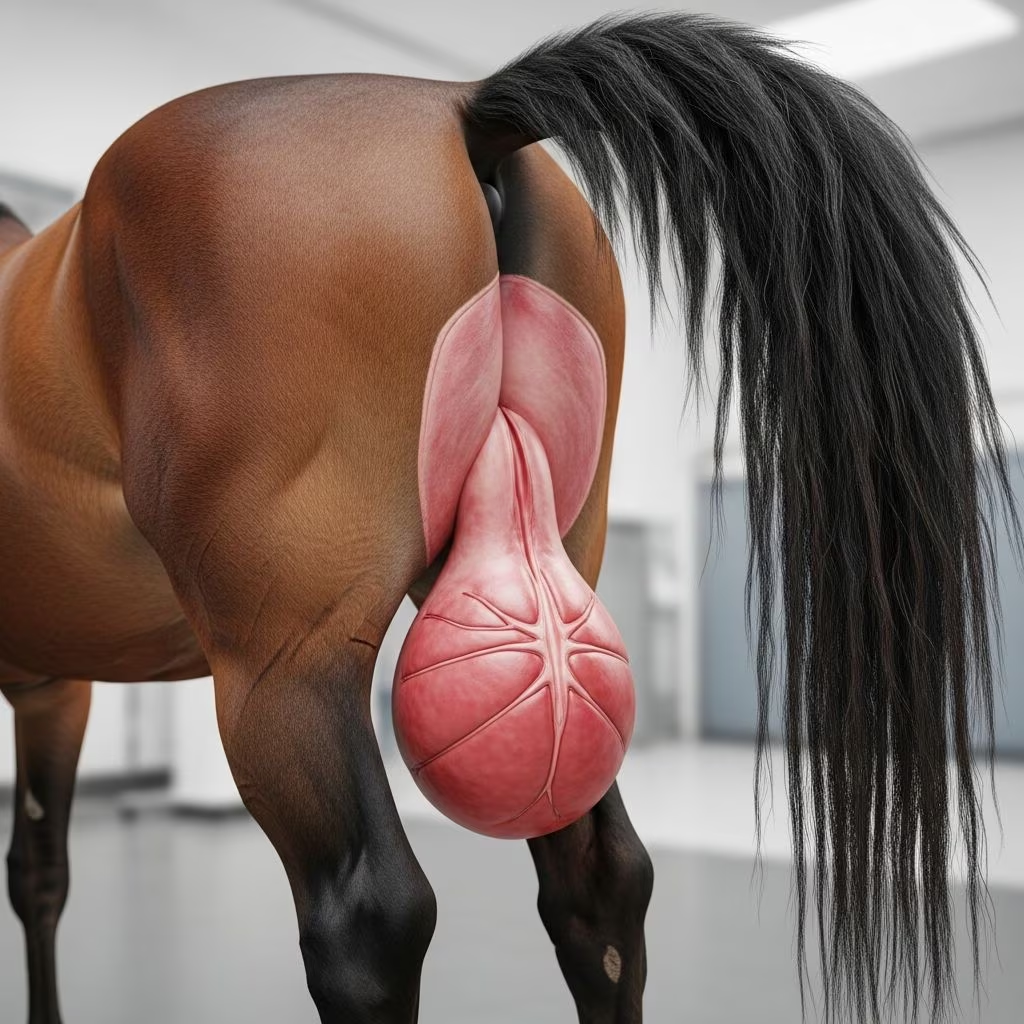
Uterine prolapse happens when a mare’s uterus inverts and protrudes from the vagina, typically right after or shortly following foal delivery. This uncommon condition demands swift veterinary intervention to avert fatal bleeding or severe infection. Horse owners must grasp its signs and management to protect their animals’ lives and future breeding potential.
Understanding the Anatomy and Mechanics of Prolapse
The equine uterus consists of two horns connected to the body, supported by ligaments and muscles that maintain position during pregnancy and birth. Post-foaling, hormonal shifts and muscle fatigue cause relaxation, opening a brief vulnerability window. If tone fails to return promptly, the uterus may evert, with one horn flipping inside out and emerging externally.
This inversion stretches vital vessels like the uterine arteries, risking rupture. Unlike more frequent vaginal prolapses, uterine cases involve deeper inversion, complicating repositioning. Factors weakening pelvic support, such as prolonged labor or nutritional deficits, heighten susceptibility.
Primary Causes and Risk Factors in Mares
Though rare in equines—occurring in under 1% of foalings—prolapse links to specific triggers. Dystocia, or difficult births, tops the list, as exhaustive straining exhausts uterine muscles. Hypocalcemia, common postpartum, impairs contraction by depleting calcium needed for muscle function.
- Difficult delivery: Extended labor fatigues supporting tissues.
- Calcium imbalance: Low levels hinder uterine involution.
- Retained placenta: Prolongs exposure, delaying tone recovery.
- Multiple foals or abortion: Excess distension in twin pregnancies or late-term losses strains structures.
- Nutritional gaps: Deficient diets weaken pelvic floor integrity.
Breeds with heavier foals or mares in poor condition face elevated risks. Unlike cattle, where incidence reaches 1%, equine cases remain sporadic but equally dire.
Spotting the Signs: Immediate Recognition is Key
Mares typically prolapse within hours of foaling, presenting a vivid red, fleshy mass dangling from the vulva, often 12-24 inches long. The organ appears swollen, slick with fluids, and may trail mucus or blood. Accompanying distress includes:
- Restlessness, frequent lying down, or straining.
- Pale gums signaling shock or blood loss.
- Rapid breathing and heart rate elevation.
- Reluctance to move, tail swishing.
Owners spotting this must isolate the mare, cover the prolapse loosely with a clean towel to curb contamination, and summon a vet urgently. Delay amplifies contamination risks from soil, feces, or bacteria, escalating infection odds.
Emergency Veterinary Response Protocols
Vets prioritize stabilization upon arrival. Sedation curbs straining, while epidural anesthesia numbs the region for painless manipulation. The prolapsed tissue undergoes meticulous cleaning with warm saline to eliminate debris.
| Step | Procedure | Purpose |
|---|---|---|
| 1. Assessment | Check vital signs, vessel integrity | Detect shock or rupture risk |
| 2. Cleaning | Warm saline lavage, sugar application | Reduce edema, remove contaminants |
| 3. Repositioning | Manual inversion with lubrication | Return to abdominal cavity |
| 4. Support | Oxytocin injection, calcium IV | Promote contraction, boost tone |
| 5. Retention | Vulvar sutures if needed | Prevent re-prolapse |
Sugar or hypertonic saline shrinks swelling for easier replacement. Oxytocin (20-40 IU) stimulates involution, while calcium corrects deficiencies. Antibiotics combat inevitable bacterial exposure, favoring broad-spectrum options like penicillin.
Post-Treatment Care and Monitoring
After repositioning, close monitoring prevents recurrence. Stall confinement for 48-72 hours minimizes activity. Daily checks for straining, discharge, or fever guide ongoing therapy.
- Medications: Oxytocin boluses 2-3 times daily; NSAIDs for pain; antibiotics 3-5 days.
- Nutrition: High-calcium feeds, electrolytes for hydration.
- Hygiene: Clean bedding, vulvar cleansing.
Retained placenta, frequent in 50%+ cases, requires separate management to avoid metritis. Ultrasound verifies uterine position and detects fluid pockets signaling infection.
Potential Complications and Prognosis Factors
Swift action yields 80-90% survival, but complications loom. Uterine tears invite peritonitis; vessel damage causes hemorrhage. Shock from blood loss or hypocalcemia demands fluids and supportive care.
Fertility prognosis hinges on damage extent. Minor cases allow breeding next cycle; severe scarring reduces conception rates by 20-30%. Early intervention preserves endometrium integrity.
Long-Term Fertility Implications for Affected Mares
Post-recovery, mares cycle normally within 10-14 days, but owners should assess via breeding soundness exam. Endometrial biopsies detect fibrosis; cultures rule out endometritis. Many resume successful pregnancies, though scarred uteri risk embryonic loss.
Breeding soundness evaluations include ultrasound for wall thickness and vascularity. High-risk mares benefit from progesterone support early gestation.
Preventive Measures for High-Risk Mares
Proactive steps slash risks:
- Balanced late-pregnancy rations with calcium 1-1.5% DM.
- Monitor for dystocia signs; assist early.
- Post-foaling calcium supplements.
- Retained placenta protocols: oxytocin promptly.
- Vigorous exercise programs maintain muscle tone.
Pre-foaling exams identify at-risk mares for tailored plans. Unlike bovines, equine vulvar sutures prove less effective, emphasizing uterine tone.
Case Studies: Real-World Insights
In one documented instance, a Thoroughbred mare prolapsed 12 hours post-twin abortion. After saline lavage, placenta removal, and suturing, she recovered fully, cycling normally despite Pseudomonas infection treated with cefapirin. Another report highlighted early surgical repositioning yielding full recovery without fertility loss. These underscore timing’s role.
FAQs on Uterine Prolapse in Horses
What should I do if I see a prolapse?
Cover gently, keep calm, call vet immediately—do not push back yourself.
How long after foaling does it occur?
Usually within 1-6 hours, rarely later.
Will my mare survive?
Yes, with prompt care; delays risk death from bleeding.
Can she foal again successfully?
Most do, but vet evaluation ensures optimal chances.
Is it hereditary?
No, linked to periparturient factors, not genetics.
When to Seek Specialist Consultation
Theriogenologists excel in complex cases with retained placenta or infection. Equine hospitals offer advanced imaging for precise diagnostics.
(Word count: 1678)
References
- Bovine uterine prolapses – causes, correction and care — Vet Times. 2023. https://www.vettimes.com/news/vets/livestock/bovine-uterine-prolapses-causes-correction-and-care
- Uterine Prolapse in Horses — Merck Veterinary Manual. 2023. https://www.merckvetmanual.com/horse-owners/reproductive-disorders-of-horses/uterine-prolapse-in-horses
- Uterine Prolapse and Eversion in Animals — MSD Veterinary Manual. 2023. https://www.msdvetmanual.com/reproductive-system/prolapses-of-the-reproductive-tract/uterine-prolapse-and-eversion-in-animals
- Reproductive Emergencies in Mares — Mad Barn. 2023. https://madbarn.com/reproductive-emergencies-in-mares/
- Abortion and uterine prolapse in a Thoroughbred mare with twin pregnancy — PMC (Peer-reviewed). 2020-12-01. https://pmc.ncbi.nlm.nih.gov/articles/PMC7750639/



