

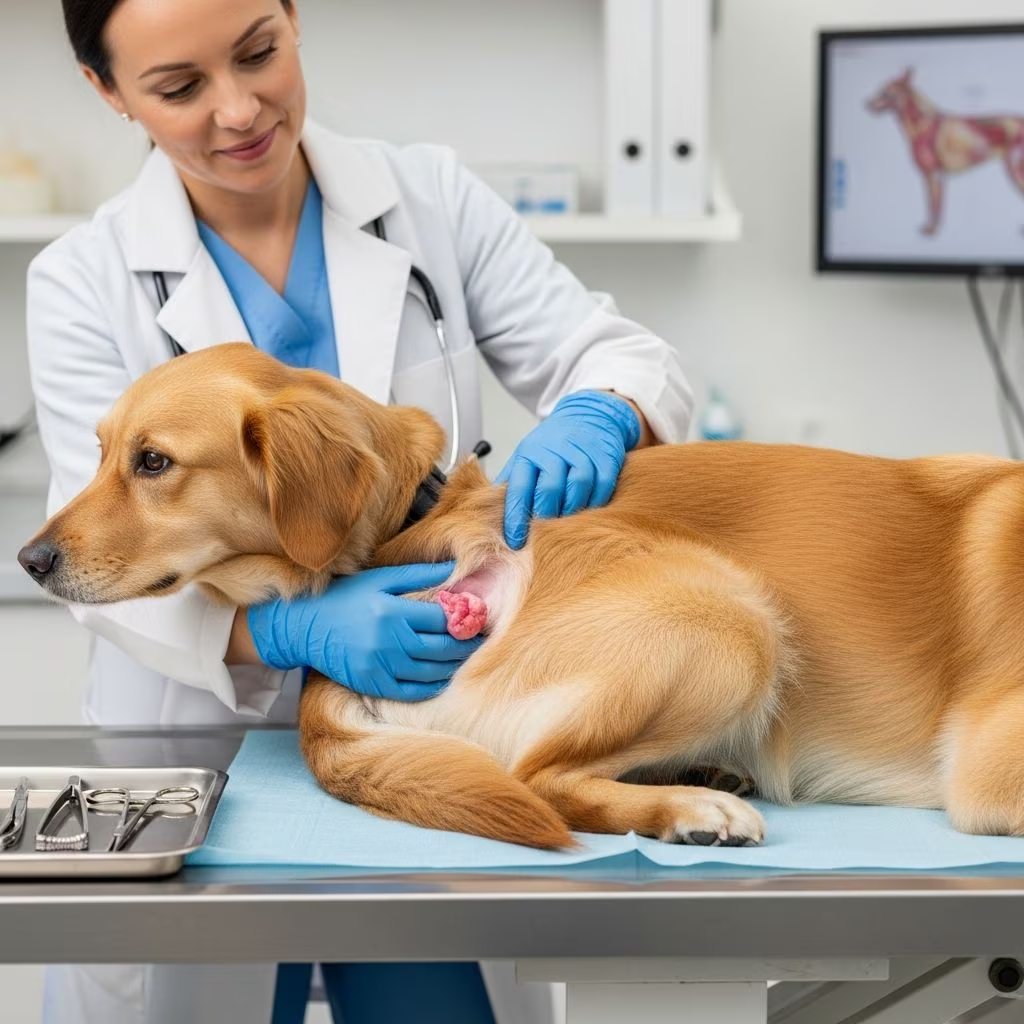
Uterine prolapse occurs when the uterus protrudes through the cervix and vulva, typically following whelping, presenting as a veterinary emergency that demands immediate attention to safeguard the dog’s life. This condition, though uncommon in canines compared to felines, can arise from birthing complications and requires swift diagnosis and intervention.
Understanding the Anatomy and Pathophysiology
The uterus serves as the organ housing developing fetuses during pregnancy in female dogs. During normal whelping, hormonal shifts facilitate expulsion of puppies and placentas. However, disruptions like prolonged labor can weaken uterine ligaments, leading to inversion and prolapse. Progesterone levels drop post-parturition, while estrogen rises, altering tissue integrity and increasing prolapse risk, especially after the last pup’s delivery or fetal membrane retention.
In severe cases, the prolapsed uterus becomes edematous, necrotic if blood supply is compromised, heightening infection risks akin to pyometra, where bacterial ascent causes pus accumulation. Differentiating this from vaginal prolapse is crucial, as the latter involves mucosal eversion without uterine exposure.
Primary Causes and Risk Factors
Several factors precipitate uterine prolapse:
- Dystocia: Difficult labor from large puppies, malposition, or uterine inertia forces excessive straining.
- Traumatic Extractions: Manual puppy removal or pulling on membranes during assisted births compromises uterine support.
- Metritis or Retained Tissue: Uterine inflammation or unexpelled placentas provoke straining, inverting the organ.
- Idiopathic Origins: Rare spontaneous occurrences without evident triggers.
Breeds of all sizes and ages are susceptible, but multiparous dogs face higher risks due to repeated pregnancies weakening pelvic structures. Nulliparous dogs rarely experience it outside estrus-related hyperplasia.
Recognizing Early Warning Signs
Owners must vigilantly monitor postpartum bitches. Key indicators include:
- A fleshy, elongated mass emerging from the vulva, often dark red or purple.
- Frequent vulvar licking and self-trauma to the hindquarters.
- Signs of distress: restlessness, abdominal contractions, and vocalization.
- Vaginal bleeding or discharge, potentially mucopurulent.
- Straining without productive defecation or urination.
Systemic symptoms like lethargy, fever, or collapse signal toxemia from necrosis or sepsis, mirroring pyometra presentations with polydipsia and anorexia. Prompt recognition prevents irreversible damage.
Diagnostic Approaches in Veterinary Practice
Veterinarians employ a systematic evaluation:
- Visual and Physical Exam: Confirms vulvar protrusion; distinguishes complete (full uterus) from partial prolapse.
- Digital Palpation: Assesses mass viability, detects cervical involvement.
- Vaginoscopy: Endoscopic visualization rules out vaginal prolapse or neoplasia.
- Imaging: Ultrasonography evaluates uterine contents, rules out retained pups; radiography identifies dystocia remnants.
- Laboratory Tests: CBC reveals leukocytosis from infection; chemistry assesses renal function amid dehydration.
Biopsy is advised in non-peripartum cases to exclude tumors. Differential diagnoses encompass vaginal hyperplasia, pyometra, and bladder retroflection.
Treatment Strategies: From Stabilization to Surgery
Management prioritizes life-saving measures:
| Stage | Interventions | Outcomes |
|---|---|---|
| Initial Stabilization | IV fluids, analgesics, antibiotics; lubricate prolapse with sugar/salt to reduce edema. | Stabilizes hemodynamics, aids manual reduction. |
| Manual Repositioning | Under sedation/anesthesia, cleanse and replace uterus; temporary retention sutures. | Successful in viable tissues; high recurrence risk. |
| Ovariohysterectomy (OVH) | Amputation of prolapsed uterus via celiotomy or colpotomy; standard for non-breeding dogs. | Curative, prevents pyometra recurrence. |
| Supportive Care | Post-op monitoring, e-collars, stool softeners. | Promotes healing, averts reinversion. |
For breeding animals, reduction and uterine suturing may preserve fertility, though complications like adhesions loom. Necrotic tissue mandates amputation to avert peritonitis.
Prognosis and Long-Term Outcomes
Success hinges on prolapse duration and tissue viability. Early intervention yields 80-90% survival; delayed cases suffer shock or sepsis. Post-surgical bitches recover fully within weeks, but fertility post-repositioning varies. Spaying eliminates recurrence risks and associated pathologies like mammary tumors.
Prevention: Proactive Reproductive Health Measures
Minimize risks through:
- Pre-Breeding Screening: Assess pelvic conformation, monitor heat cycles.
- Supervised Whelping: Avoid interventions unless trained; seek vet for dystocia signs.
- Spaying: Recommended post-final litter, curbing hormonal disorders.
- Nutrition and Parasite Control: Prevent constipation, diarrhea exacerbating straining.
Early spay (6-12 months) in non-breeding dogs averts estrus-related prolapses like vaginal fold eversion.
Related Conditions: Vaginal Prolapse and Hyperplasia
Vaginal prolapse mimics uterine but involves edematous mucosa protrusion during proestrus, prevalent in young large breeds. Hyperplasia stems from estrogen surges without hyperestrogenism, resolving post-estrus unless persistent. Treatment mirrors uterine: reduction or OVH for recalcitrant cases. Owners confuse these, underscoring differential diagnosis importance.
Frequently Asked Questions (FAQs)
Can uterine prolapse resolve without treatment?
No, spontaneous resolution is improbable; veterinary care is essential to prevent necrosis.
Is uterine prolapse painful for my dog?
Yes, it causes significant discomfort from straining and tissue exposure.
Should I breed a dog that had uterine prolapse?
Only after full recovery and vet clearance; spaying is safer for non-breeders.
How do I differentiate uterine from vaginal prolapse?
Uterine shows cervical os exposure; vaginoscopy confirms.
What is the cost of treating uterine prolapse?
Varies by case severity; expect $1,000-$5,000 for surgery and hospitalization.
Owner Experiences and Case Studies
Consider a Labrador post-whelping: noticed vulvar mass day 1, vet-replaced uterus successfully via OVH. Another: delayed care led to amputation but full recovery. These underscore urgency.
In summary, uterine prolapse, while rare, poses grave threats. Educated owners and prompt action save lives. Consult veterinarians for breeding plans.
References
- Causes and Prevention of Uterine Prolapse in Dogs — PetPlace.com. Accessed 2026. https://www.petplace.com/article/dogs/pet-health/uterine-prolapse-in-dogs
- Pyometra — Cornell University College of Veterinary Medicine. Accessed 2026. https://www.vet.cornell.edu/departments-centers-and-institutes/riney-canine-health-center/canine-health-topics/pyometra
- Vaginal fold prolapse in bitches — Vet Times. 2017-10-23. https://www.vettimes.com/news/vets/small-animal-vets/vaginal-fold-prolapse-in-bitches
- True vaginal prolapse associated with retroflection of the urinary bladder in a dog — PMC (NCBI). 2023. https://pmc.ncbi.nlm.nih.gov/articles/PMC9979747/
- Vaginal Prolapse In Dogs — WagWalking. Accessed 2026. https://wagwalking.com/condition/vaginal-prolapse
- Vaginal Hyperplasia in Small Animals — Merck Veterinary Manual. Accessed 2026. https://www.merckvetmanual.com/reproductive-system/reproductive-diseases-of-the-female-small-animal/vaginal-hyperplasia-in-small-animals



