

Nine Useful Tricks to Teach Your Dog
Many people dismiss dog tricks as purely frivolous entertainment, assuming that training time would be better spent on basic obedience. However, the reality is quite different. Tricks offer significant practical value that extends far beyond cute performances. While foundational commands like sit, lie down, heel, stay, and come are essential, there are numerous tricks that provide tangible benefits for both you and your dog. Dogs who learn to “wait” can sit patiently at doorways without bolting into traffic. Dogs trained to “leave it” won’t scarf up food from the floor. These practical skills transform everyday situations and can even prevent dangerous outcomes.
The key to understanding trick training lies in recognizing that tricks involve dogs moving their bodies and minds in varied ways. This diversity of movement and mental engagement is what gives dog tricks their practical value. Rather than physically manipulating your dog—grabbing, lifting, or pushing them—training allows you to communicate clearly what you want through cues. Your dog learns to perform behaviors on their own through positive reinforcement, making situations less stressful for both of you.
Why Practical Tricks Matter
Beyond the basics of obedience, practical tricks offer specific, real-world advantages that improve daily life with your dog. These tricks can serve medical, safety, grooming, and behavioral purposes. When your dog knows how to respond to specific cues, veterinary visits become less stressful, grooming at home becomes easier, and safety risks around your home significantly decrease. The variety of positions and movements required for tricks also provides excellent physical and mental stimulation for your dog, contributing to their overall well-being.
The Nine Essential Tricks Every Dog Should Learn
1. Crawl
The crawl trick teaches your dog to move forward while staying low to the ground. This seemingly simple trick has practical applications that many dog owners appreciate. If your dog enjoys muddy walks or gets dirty outdoors, asking them to crawl through snow or grass before coming inside helps them clean themselves off naturally. This reduces the amount of dirt tracked into your home and minimizes the need for constant cleanup. Teaching crawl also provides mental stimulation and strengthens the bond between you and your dog as they learn this unconventional movement pattern.
2. Handshake
Teaching your dog to shake or offer a paw on cue has genuine practical benefits, particularly during grooming and veterinary care. Once your dog masters the handshake, you can ask them to present a paw when it’s time for nail trimming, making the process significantly easier for both you and your pet. At the veterinarian’s office, a dog who knowingly offers their paw for blood draws or paw examinations is much easier to work with than a dog who must be physically restrained. This trick also comes in handy for checking paw pads for injuries or thorns, and for toweling off wet paws after a walk without struggle.
3. Wait
The “wait” cue is one of the most practically valuable tricks you can teach your dog. This command instructs your dog to pause and refrain from moving forward until given permission to proceed. At doors—both to your house and to your car—the wait command can literally be a lifesaver by preventing your dog from bolting into traffic or running off into unfamiliar territory. Beyond safety, the wait command is a sanity-saver when preparing for walks. Dogs who are excited about going outside often become chaotic and uncontrollable. Teaching wait helps manage this enthusiasm and creates order during the transition from inside to outside. This simple but powerful command reduces stress for everyone involved and prevents dangerous situations from developing.
4. Belly Up
Teaching the “belly up” cue tells your dog to lie on their back with their legs in the air. If you have a dog that loves belly rubs, this trick is relatively easy to teach and highly rewarding for your pup. Beyond the obvious pleasure of belly rubs, this position serves practical purposes during veterinary examinations. A dog who willingly assumes this position makes it much easier for a vet to perform abdominal examinations, check for skin issues, or perform other necessary medical procedures. The trick also allows you to inspect your dog’s belly area for any abnormalities or health concerns without having to physically manipulate them.
5. Beg
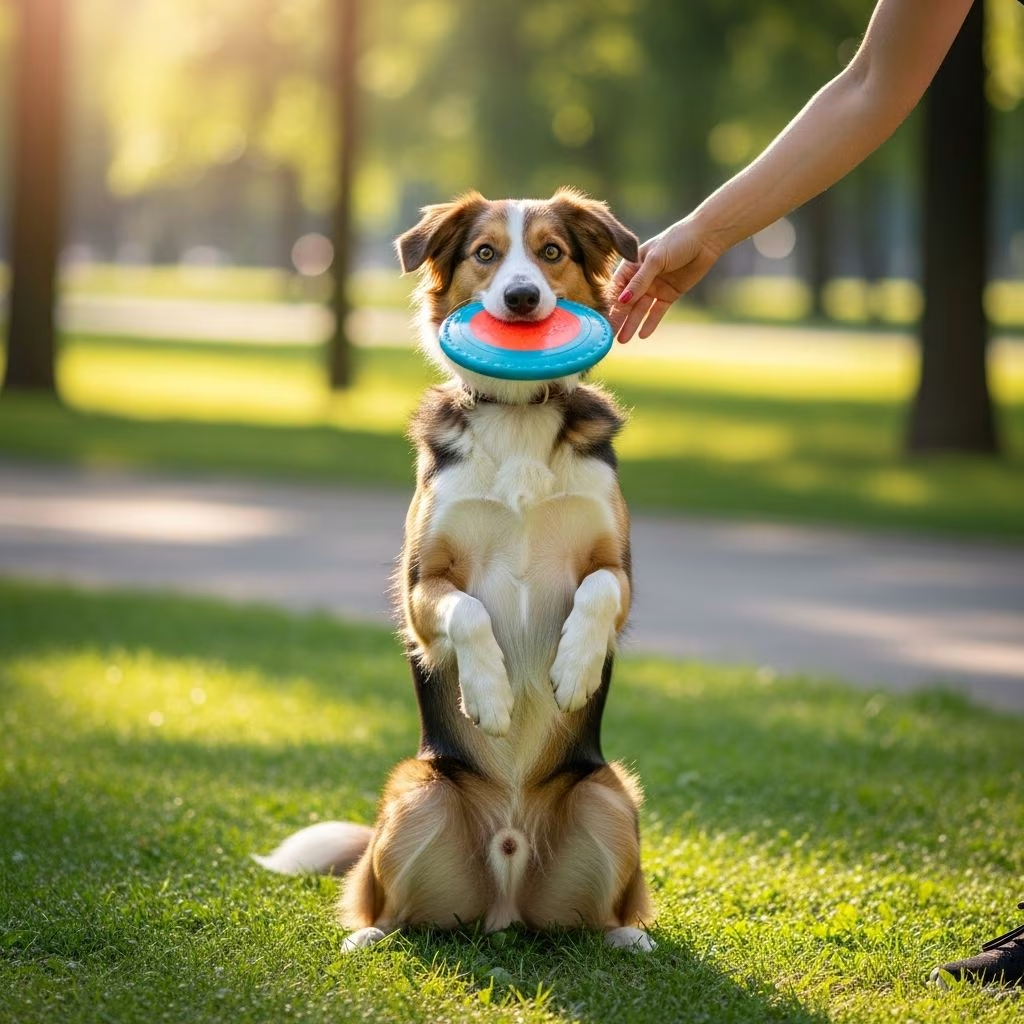
The “beg” trick, where your dog sits upright on their hind legs, is both cute and functionally useful. This trick provides another way for a dog to expose their belly area, which comes in handy when you need to pull off burrs, seeds, or other debris from their fur. If your dog has good balance, the beg position is an excellent way to position them for a quick brush of the belly fur without having to lay them down. This trick demonstrates how a seemingly entertainment-focused behavior can serve genuine grooming and maintenance purposes in everyday dog care.
6. What? (Head Tilt)
Teaching your dog to tilt their head on cue might seem like pure entertainment, but this trick has surprising practical value. The head tilt, performed in response to the “what?” cue, makes photos of dogs especially endearing and engaging. More importantly from a training perspective, the less time you spend trying to get dogs into specific poses, the more likely they are to have a friendly, natural expression on their face during handling or photography. This trick can also help during veterinary exams when the vet needs to examine your dog’s ears or face—a dog who tilts their head on cue cooperates more willingly than one who must be held in position.
7. Bow
Having your dog perform a play bow on cue is more than just an adorable trick; it serves genuine social and behavioral purposes. The play bow is a natural canine social signal that communicates “what follows is playful in nature.” A dog who can perform a play bow on cue near other dogs can help social interactions start off on the right paw, easing tensions caused by confusing or unexpected behavior. This trick is particularly valuable for dogs who are awkward or nervous around other dogs, as it gives them a clear way to communicate peaceful intentions. Teaching the bow command essentially gives your dog a vocabulary for positive social interaction.
8. Up
The “up” cue tells your dog to jump or step onto something, such as a scale, platform, or furniture. This trick is exceptionally handy for getting big dogs to stand on the vet’s scale without requiring the veterinarian or vet tech to physically lift or manipulate them. The command becomes even more useful when combined with a solid “stay” command, allowing your dog to remain on the scale long enough for an accurate weight reading. This trick also helps with other situations where you need your dog to access elevated surfaces safely and on command.
9. Dry Off
The “dry off” cue tells your dog to shake their whole body, similar to how they naturally shake after getting wet. This trick is incredibly practical for dogs who spend time in water or get bathed regularly. Teaching your dog to shake on command is helpful to have them shed excess water before coming inside after a walk in the rain or immediately after a bath. This reduces the amount of water tracked through your home and minimizes the mess associated with wet dogs. The shake command takes a natural behavior and makes it controllable and convenient for your lifestyle.
The Benefits of Training Beyond Basic Obedience
Tricks represent a bridge between entertainment and utility in dog training. Each of the nine tricks mentioned above demonstrates how what might appear to be pure performance can actually serve legitimate practical purposes. Teaching tricks provides several distinct advantages:
- Reduced Physical Manipulation: Rather than grab, lift, or push your dog around—however gently—you can simply tell your pup what you want and have them do it on their own through training.
- Stress Reduction: Being able to ask your dog to perform necessary behaviors makes many situations less anxiety-provoking for both you and your dog.
- Better Veterinary Care: Dogs trained to cooperate with specific positions and cues make veterinary examinations and procedures significantly easier and less stressful.
- Improved Safety: Commands like “wait” and “leave it” can literally prevent dangerous situations and potentially save your dog’s life.
- Enhanced Grooming: Tricks that position your dog appropriately make grooming and maintenance tasks much simpler and less time-consuming.
- Mental Stimulation: The variety of movement and behavior involved in tricks provides excellent mental engagement for your dog.
Training Principles for Success
Successfully teaching these tricks requires understanding effective dog training principles. Dogs learn best through positive reinforcement, which means rewarding desired behaviors consistently. When training tricks, keep sessions short, use high-value treats, and practice in low-distraction environments initially. Consistency is crucial—everyone in your household should use the same cues and reward the same behaviors. Training should always be fun and engaging for your dog, not a chore or source of stress.
Start with simpler tricks and build toward more complex ones. The foundational commands like sit and down provide a basis for learning more advanced tricks. Break complex tricks into smaller steps, rewarding your dog for progress toward the final behavior. With patience and positive reinforcement, most dogs can learn these practical tricks regardless of age or experience level.
Frequently Asked Questions
Q: How long does it take to teach a dog a new trick?
A: The timeline varies depending on the trick’s complexity and your dog’s learning ability. Simple tricks like “wait” or “shake” might take 1-2 weeks of consistent practice, while more complex tricks like “bow” may take several weeks. Consistency and daily short training sessions accelerate learning.
Q: Can older dogs learn new tricks?
A: Absolutely. Dogs of any age can learn new tricks. Older dogs may learn at a slightly different pace, but they’re perfectly capable. Starting with simple cues and low-impact tricks works well for senior dogs.
Q: What if my dog isn’t food motivated?
A: Use whatever motivates your individual dog. Some dogs respond better to praise, play, or toy rewards than food treats. Identify your dog’s highest-value rewards and use those during training sessions.
Q: Should I train one trick at a time?
A: Yes, focusing on one trick at a time typically produces faster learning. Once your dog has mastered one trick, you can begin teaching another. This prevents confusion and builds confidence.
Q: How often should I practice trick training?
A: Short, frequent sessions work better than long, infrequent ones. Aim for 5-10 minute training sessions several times per day. This maintains your dog’s focus and prevents boredom or frustration.
Q: Are treats necessary for training tricks?
A: While treats are highly effective, they’re not absolutely necessary. Praise, play, and access to favorite toys can also work as rewards. The most important factor is consistent, immediate reinforcement of desired behaviors.
Q: Can I train tricks if I don’t know where to start?
A: Yes. Starting with basic tricks that your dog may already know, like sit or down, builds confidence and establishes a training routine. You can then progress to the nine tricks outlined above or work with a professional dog trainer for personalized guidance.
References
- Nine Useful Tricks to Teach Your Dog — Kinship, authored by Karen B. London, PhD, CAAB, CPDT-KA. Accessed January 14, 2026. https://www.kinship.com/dog-behavior/useful-tricks-teach-your-dog
- Stop Puppy Zoomies! 6 Tricks to Calm Your Pup — Kinship. Video resource on puppy training and behavior management. Accessed January 14, 2026. https://www.kinship.com/dog-behavior/how-to-calm-puppy-down
- Can You Actually Teach an Old Dog New Tricks? — Adopt a Pet Blog. Resource on teaching tricks to dogs of all ages. Accessed January 14, 2026. https://www.adoptapet.com/blog/behavior-training/can-old-dogs-learn-tricks
- Dog Behavior – Training Resources — Kinship. Comprehensive dog training and behavior guidance. Accessed January 14, 2026. https://www.kinship.com/dog-behavior



