
U.S. Public Health Framework: 10 Essential Services Explained
Discover the layered structure of America's public health system, from federal oversight to local action, ensuring nationwide wellness and crisis response.
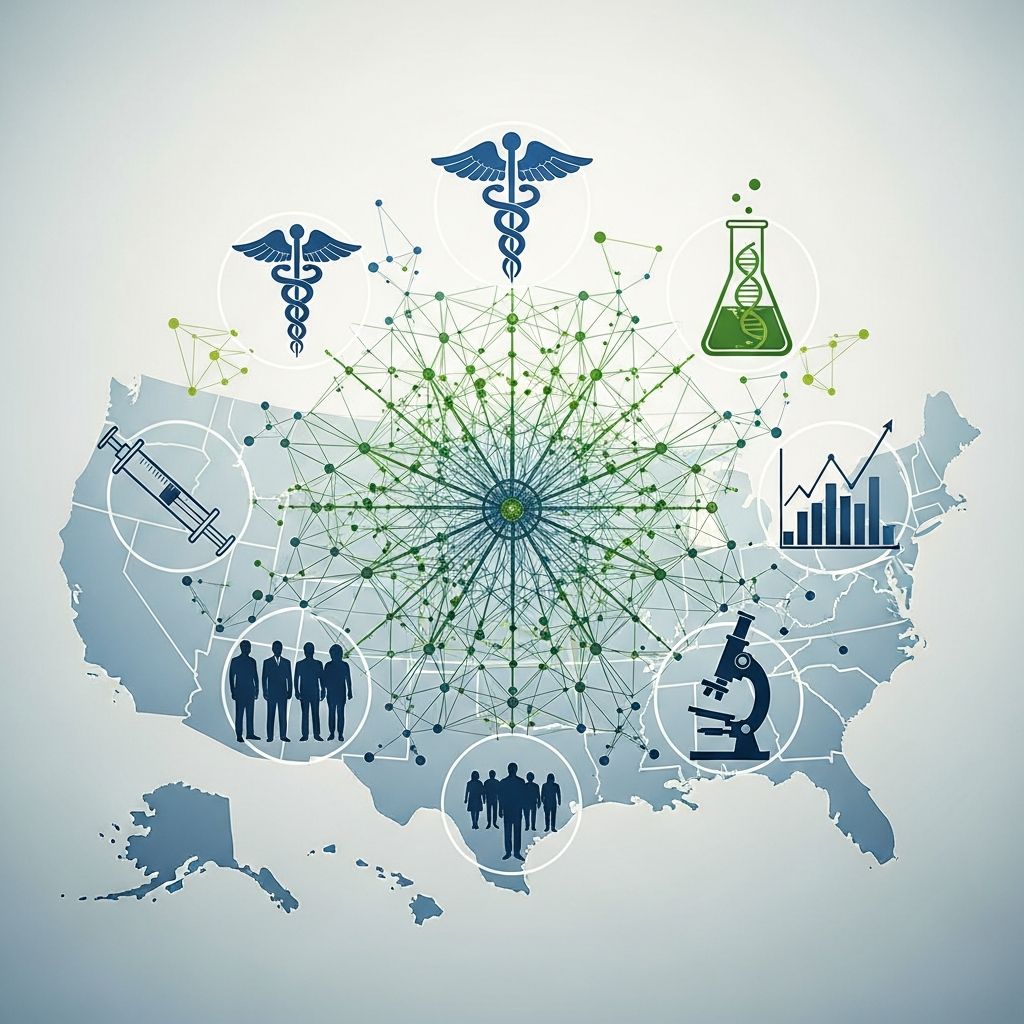
The United States operates a decentralized public health system that integrates federal guidance, state autonomy, and local execution to safeguard population health. This network involves governmental agencies across levels alongside private sector partners, addressing everything from disease outbreaks to environmental hazards.
Federal Foundations of Public Health
At the national level, the federal government establishes overarching strategies, conducts surveillance, and provides funding that shapes public health efforts nationwide. The Department of Health and Human Services (HHS) serves as the primary hub, housing key agencies like the Centers for Disease Control and Prevention (CDC), National Institutes of Health (NIH), Food and Drug Administration (FDA), and Health Resources and Services Administration (HRSA).
Leadership within HHS includes the Secretary, appointed by the President, who oversees broad policy, alongside the Assistant Secretary for Health and the Surgeon General, who advise on scientific and medical matters. These roles ensure coordinated responses to national threats, such as pandemics, while funding state programs through grants tied to specific priorities.
The CDC, for instance, leads in disease monitoring, vaccination campaigns, and emergency preparedness, disseminating data that informs state and local actions. Similarly, the FDA regulates food safety and pharmaceuticals, impacting public health through standards enforcement.
State-Level Health Governance
States hold primary constitutional authority for public health, executing a broad spectrum of duties from data collection and inspections to policy formulation and crisis management. Each of the 50 states, plus the District of Columbia and territories, maintains a health agency led by a commissioner or secretary, often with a designated state health officer as the chief medical authority.
Organizational models vary: about 55% of states feature independent health departments reporting directly to the governor, while 45% integrate them into larger “super-agencies” handling mental health, social services, or Medicaid administration. This structure influences efficiency; independent agencies can focus solely on health, whereas combined entities leverage shared resources.
Core state functions encompass policy development, enforcement of regulations, resource allocation, and inter-agency coordination. States also manage environmental health, maternal and child services, and emergency responses, often relying on federal funds that impose compliance requirements.
| State Health Department Model | Percentage | Key Characteristics |
|---|---|---|
| Freestanding/Independent | 55% | Direct gubernatorial oversight; focused on core health functions or expanded roles like Medicaid. |
| Umbrella/Super-Agency | 45% | Integrated with human services; broader resource sharing but potential for divided priorities. |
Local Public Health Operations
Over 3,000 local health departments operate under state delegation, adapting services to community needs in diverse structures: centralized (state-run), decentralized (locally governed), hybrid, or shared governance. Their authority stems from state laws, enabling tailored interventions like restaurant inspections, vaccination clinics, and contact tracing.
Local agencies assess community health risks, implement prevention programs, and respond to outbreaks. Funding mixes local taxes, state allocations, and federal pass-throughs, creating variability in capacity—urban areas often have robust departments, while rural ones face resource constraints.
- Centralized: State employees manage local operations for uniformity.
- Decentralized: Local governments control budgets and priorities.
- Hybrid/Shared: Collaborative state-local decision-making.
Core Public Health Services and Standards
The 10 Essential Public Health Services (EPHS) outline critical activities every community must perform, including monitoring health status, diagnosing issues, informing stakeholders, mobilizing partnerships, developing policies, enforcing laws, linking to care, assuring competence, evaluating effectiveness, and researching innovations.
Complementing this, the Foundational Public Health Services (FPHS) define a minimum package for governmental agencies, covering capabilities like assessment, emergency response, and communications, plus areas such as communicable disease control and environmental health. These frameworks guide accreditation and resource allocation.
States and localities align programs accordingly, ensuring equitable service delivery despite structural differences.
Funding Mechanisms and Resource Flows
Public health funding is fragmented, blending federal grants (e.g., via CDC block grants), state general funds, local taxes, and private contributions. Federal sources dominate, often with conditions promoting national goals like immunization or chronic disease prevention.
Medicaid, administered by states with federal matching, indirectly bolsters public health through coverage expansions. Philanthropy and user fees supplement, but chronic underfunding challenges persist, especially post-emergencies.
Interagency Collaboration and Partnerships
Success hinges on networks beyond government: nonprofits, hospitals, schools, and businesses contribute to surveillance, education, and service provision. Public-private partnerships amplify reach, as seen in vaccination drives or obesity initiatives.
Federal agencies like the Environmental Protection Agency (EPA) address cross-cutting issues, while education departments support school health programs.
Challenges in the Patchwork System
The system’s “patchwork” nature fosters flexibility but breeds inequities—varied capacities lead to disparate outcomes. Rural departments struggle with staffing, while funding volatility hampers long-term planning. Recent crises highlighted gaps in coordination and surge capacity.
Political influences and competing priorities within super-agencies can dilute focus. Accreditation efforts by bodies like the Public Health Accreditation Board aim to standardize excellence.
Responding to Crises and Emergencies
Preparedness involves stockpiles, training, and communication protocols. The CDC coordinates national responses, funneling resources to states, which activate local teams. Exercises simulate threats, building resilience.
Future Directions and Reforms
Ongoing efforts seek modernization: bolstering workforce, integrating data systems, and securing stable funding. Expanding FPHS implementation and accreditation could unify standards. Addressing social determinants like housing and equity remains pivotal.
Frequently Asked Questions
What is the role of the CDC in public health?
The CDC monitors diseases, provides outbreak guidance, and funds state programs to prevent health threats nationwide.
How do states fund their health departments?
Primarily through federal grants, state budgets, and local contributions, with federal funds often conditional on priorities.
Why is the U.S. public health system called a patchwork?
Due to varying state and local structures, funding, and capacities, creating inconsistencies in service delivery.
What are the 10 Essential Public Health Services?
A blueprint for core activities like assessment, policy development, enforcement, and evaluation.
How many local health departments exist?
Approximately 3,000, structured diversely under state authority.
References
- State & Local Public Health: An Overview of Regulatory Authority — Public Health Law Center. 2023. https://www.publichealthlawcenter.org/resources/state-local-public-health-overview-regulatory-authority
- Summary of the Public Health System in the United States — National Center for Biotechnology Information (NCBI), NIH. 1994 (authoritative historical overview). https://www.ncbi.nlm.nih.gov/books/NBK218212/
- Structure of Public Health in America — University of Cincinnati. 2024. https://www.uc.edu/content/dam/refresh/cont-ed-62/olli/winter24-handouts/burks%20class%206.pdf
- U.S. Public Health — Kaiser Family Foundation (KFF). 2023. https://www.kff.org/other-health/health-policy-101-u-s-public-health/
- United States | International Health Care System Profiles — Commonwealth Fund. 2024. https://www.commonwealthfund.org/international-health-policy-center/countries/united-states
- A layman’s guide to the U.S. health care system — PMC, NIH. 2013. https://pmc.ncbi.nlm.nih.gov/articles/PMC4193322/
- Introduction to the U.S. Healthcare System — California State University Pressbooks. 2023. https://pressbooks.calstate.edu/ushealthcaresystem2ndedition/chapter/__unknown__/
- 10 Essential Public Health Services — Centers for Disease Control and Prevention (CDC). 2024. https://www.cdc.gov/public-health-gateway/php/about/index.html
Similar Articles








Read full bio of Sneha Tete


