
Uroperitoneum In Foals: Signs, Emergency Care, 64% Survival
Essential guide to recognizing, diagnosing, and treating urine leakage in newborn foals for better outcomes.
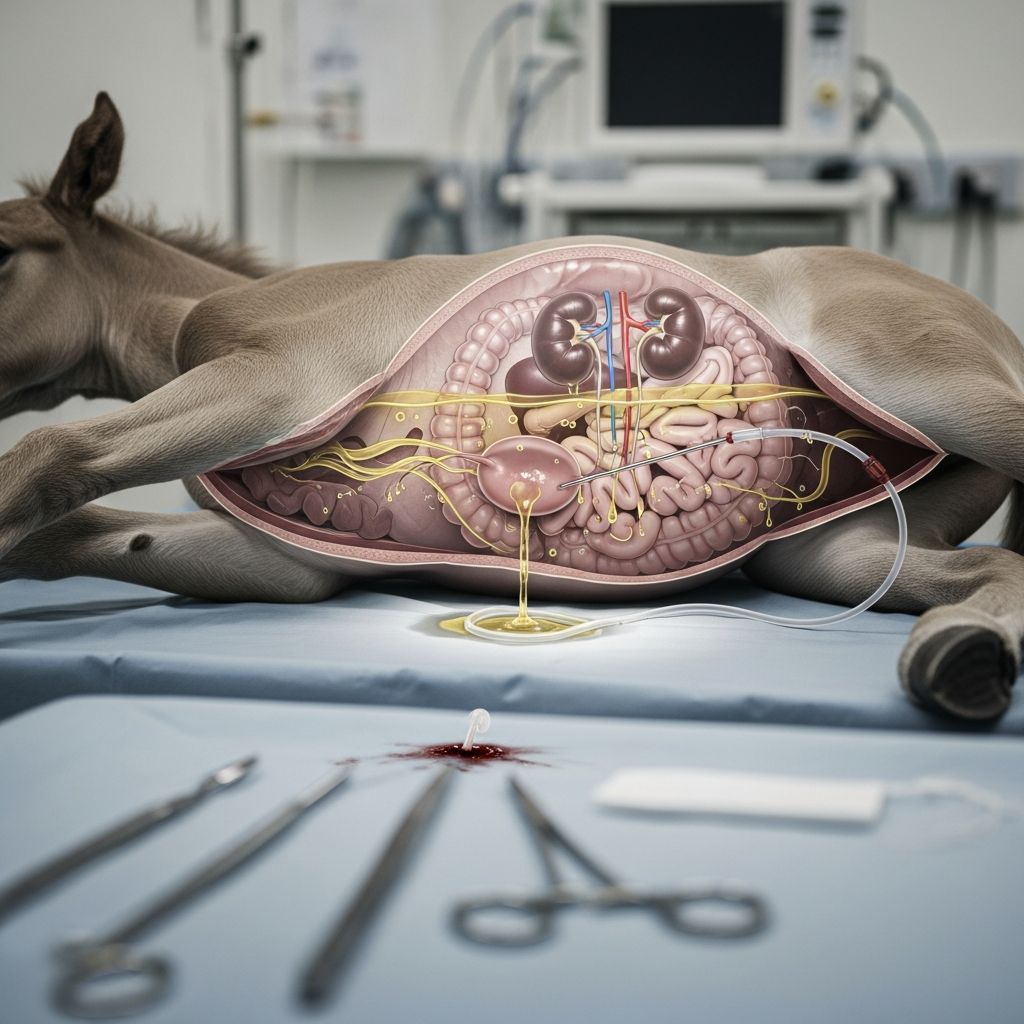
Urine accumulation within the abdominal cavity of newborn foals, known as uroperitoneum, poses a significant health threat in equine neonatology. This condition arises primarily from disruptions in the urinary tract, demanding swift veterinary intervention to mitigate life-threatening complications like electrolyte derangements and respiratory distress.
Understanding the Pathophysiology of Urine Leakage
The peritoneal cavity fills with urine when structural integrity of the bladder, urachus, or associated structures fails. In neonatal foals, this leakage disrupts normal fluid balance, leading to systemic imbalances that can rapidly escalate. The dorsal bladder wall is particularly vulnerable, often tearing due to pressure buildup from incomplete voiding or congenital weaknesses.
Urine reabsorption across the peritoneum alters blood chemistry, elevating potassium levels (hyperkalemia) and causing metabolic acidosis. These shifts impair cardiac function and overall homeostasis, turning a localized defect into a full-body crisis.
Primary Causes and Risk Factors
Several factors precipitate uroperitoneum, with congenital and acquired origins equally implicated.
- Congenital bladder defects: Incomplete fusion or thin dorsal walls rupture under normal filling pressures.
- Urachal remnants: Persistent patent urachus allows leakage, often linked to infection.
- Traumatic events: Dystocia, umbilical cord twisting, or handling trauma compromises vascular supply, causing necrosis.
- Sepsis and infection: Up to 78% of cases involve bacterial involvement, especially Escherichia coli, leading to abscesses or phlebitis.
- Meconium impaction: Straining elevates intra-abdominal pressure, indirectly stressing the urinary tract.
While early reports suggested male predominance due to urethral anatomy, recent data indicate equal risk for colts and fillies. Compromised neonates, including those from difficult births or with omphalitis, face heightened susceptibility.
Recognizing Clinical Manifestations
Early detection hinges on subtle cues progressing to overt distress. Foals may appear normal initially, urinating despite internal leakage.
| Stage | Common Signs | Associated Risks |
|---|---|---|
| Early | Mild depression, reduced nursing, pollakiuria mistaken for defecation strain | Electrolyte shifts begin |
| Moderate | Abdominal distension, colic, lordotic stance (ventroflexion) | Hyperkalemia risks arrhythmias |
| Advanced | Respiratory compromise, scrotal/umbilical edema, neurological signs | Cardiac arrest, pleural effusion |
Distinguish from meconium impaction by posture: kyphosis versus lordosis. Adult cases, rarer, often stem from postpartum bladder necrosis in mares or uroliths in stallions.
Diagnostic Approaches for Confirmation
Diagnosis integrates history, exam, and targeted tests. Ultrasonography reveals free fluid and defects; abdominocentesis provides definitive proof.
- Fluid analysis: Abdominal fluid creatinine >2x serum levels confirms urine.
- Hematology/biochemistry: Hyperkalemia (>8 mEq/L), hyponatremia, azotemia.
- Imaging: Ultrasound for bladder/urachus tears; contrast radiography if needed.
- Sepsis scoring: Positive in 45% of cases, guiding antibiotic choice.
Thoracic ultrasound checks for concurrent pleural urine.
Emergency Stabilization Protocols
Uroperitoneum constitutes a medical emergency, prioritizing life support before surgery.
- Indwelling urinary catheter to divert flow and monitor output.
- IV fluids (e.g., balanced polyionic) correct electrolytes; insulin-glucose for hyperkalemia.
- Abdominal drainage (trocarization) relieves pressure.
- Broad-spectrum antibiotics target sepsis (e.g., ampicillin, gentamicin).
Stabilize for 24-48 hours; monitor ECG for arrhythmias.
Surgical Interventions and Techniques
Once stable, celiotomy repairs defects. Two-layer closure of bladder tears yields high success; urachal resection for remnant issues.
Post-op care includes continued catheterization, antibiotics, and monitoring for suture failure, occurring in some cases. Prognosis reaches 63.6% survival with timely repair.
Prognosis and Long-Term Outcomes
Survival hinges on early intervention; untreated cases succumb to cardiotoxicity or pneumonia. Recovered foals often thrive without urinary sequelae, though monitoring is advised.
Prevention Strategies for Breeders
- Monitor high-risk foals (dystocia, sepsis signs) closely post-birth.
- Ensure proper foaling hygiene to avert urachal infections.
- Prompt meconium evacuation in straining neonates.
- Veterinary check-ups for compromised newborns.
Frequently Asked Questions (FAQs)
What is the most common cause of uroperitoneum in foals?
Dorsal bladder wall rupture, often congenital or from birth trauma.
Can foals with uroperitoneum still urinate?
Yes, many void normally despite leakage.
How is uroperitoneum diagnosed?
Via ultrasound, abdominocentesis (creatinine ratio), and bloodwork showing azotemia/hyperkalemia.
What is the survival rate?
Approximately 64% with stabilization and surgery.
Is uroperitoneum only in foals?
Primarily, but rare in adults from trauma or uroliths.
Key Takeaways for Equine Caregivers
Vigilance for abdominal swelling and depression in neonates can save lives. Collaborate with veterinarians for diagnostics and care.
References
- Uroperitoneum in neonatal foals – a review of the literature — PubMed. 2021-01-27. https://pubmed.ncbi.nlm.nih.gov/33588479/
- Uroperitoneum | Veterian Key — Veterian Key. N/A. https://veteriankey.com/uroperitoneum/
- Uroperitoneum | Ruptured Bladder in Horses — Cave Creek Animal Hospital. N/A. https://www.cahosp.com/post/uroperitoneum
- Uroperitoneum in foals – HuVetA — HuVetA. N/A. https://huveta.hu/items/5cbbcf97-a42c-4f6a-86ac-f2c5d2560668/full
- EP 267: Foal Uroperitoneum Explained | Pet Care Partners — YouTube. N/A. https://www.youtube.com/watch?v=QKXBQ1qoCJg
- Noninfectious Diseases of the Urinary System in Horses — MSD Veterinary Manual. N/A. https://www.msdvetmanual.com/horse-owners/kidney-and-urinary-tract-disorders-of-horses/noninfectious-diseases-of-the-urinary-system-in-horses
Similar Articles








Read full bio of Sneha Tete


