

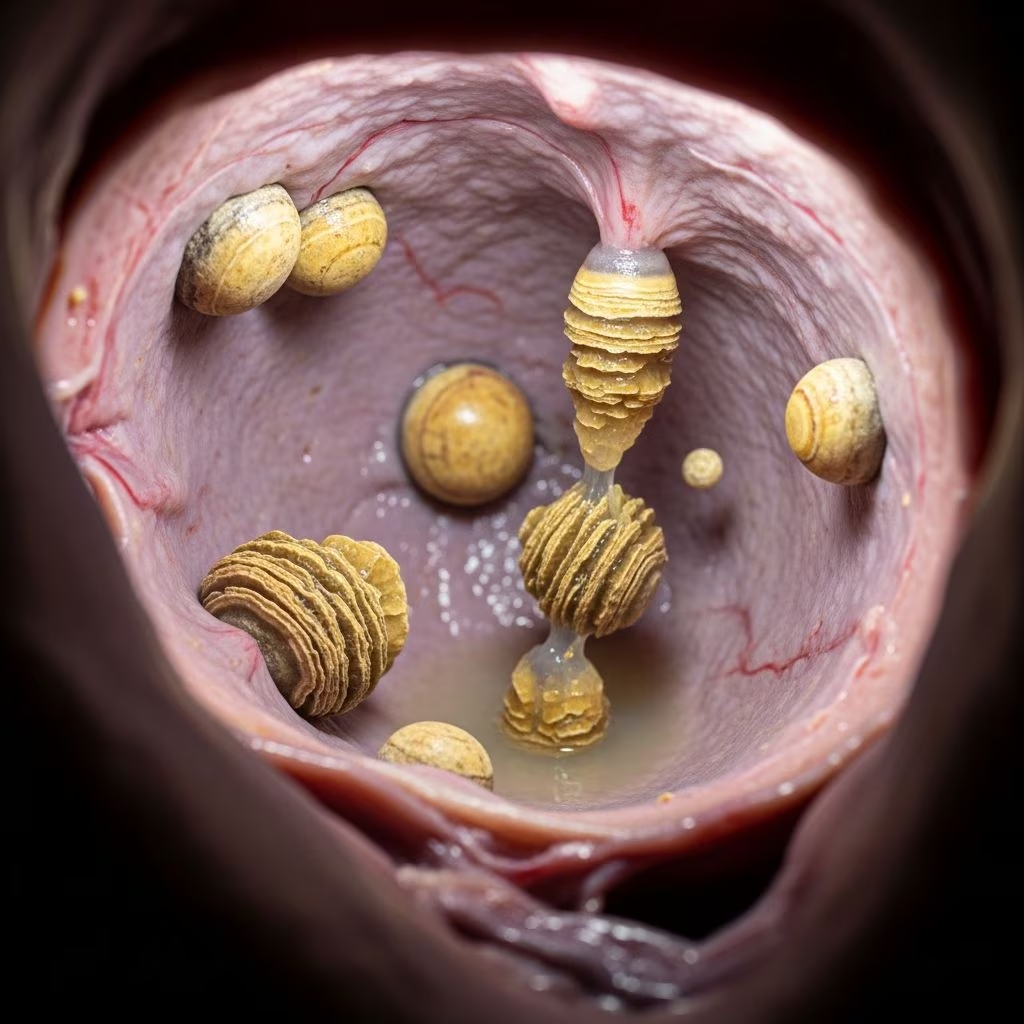
Urinary stones, known as uroliths, represent a significant health challenge for horses, primarily forming in the bladder and occasionally causing obstructions elsewhere in the urinary tract. These stones, predominantly composed of calcium carbonate, develop due to dietary imbalances, dehydration, and urinary stasis, leading to painful symptoms and potential complications like colic or renal issues.
Understanding the Formation of Urinary Stones
Horses are particularly susceptible to urolithiasis because their urine tends to be alkaline, creating an ideal environment for mineral crystals to aggregate. Excess calcium intake from feeds like alfalfa hay contributes to supersaturation of minerals in the urine, promoting crystal formation that evolves into solid stones. Dehydration exacerbates this by concentrating urine, while incomplete bladder emptying—often from neurological or musculoskeletal pain—allows crystals to settle and grow.
In the bladder, stones can remain asymptomatic until they shift into the urethra, where the narrower passage in males increases obstruction risk, especially at the ischial arch. Kidney or ureteral stones are rarer but can lead to chronic renal failure if fragments block urine flow from the kidneys.
Recognizing Symptoms in Affected Horses
Early detection hinges on observing behavioral and physical changes. Horses often exhibit straining during urination (dysuria), frequent small-volume urination (pollakiuria), and blood-tinged urine (hematuria), particularly post-exercise. Other signs include:
- Urine dribbling or incontinence, causing scalding on hindlimbs or perineum
- Colic-like restlessness, sweating, and abdominal pain
- Reduced appetite, weight loss, and hindlimb weakness
- Grunting or tail swishing while urinating
- Difficulty passing manure in severe cases
Males may extend their penis in attempts to urinate, while females show perineal scalding from leakage. Chronic cases might present subtle signs like intermittent colic, underscoring the need for vigilant monitoring.
Diagnostic Approaches for Accurate Identification
Veterinarians rely on a multi-faceted diagnostic process. Physical exams include rectal palpation to feel bladder or urethral stones, especially in mares where transurethral retrieval is feasible. Ultrasonography visualizes stones in the bladder or kidneys, while endoscopic evaluation of the urethra confirms obstructions.
Urinalysis reveals crystalluria, hematuria, or infection, and blood work assesses kidney function via elevated creatinine or BUN levels. Radiography aids in detecting radiopaque calcium carbonate stones. In complex cases, contrast studies or cultures identify concurrent infections.
Treatment Strategies: From Conservative to Surgical
Immediate relief of obstruction is critical, often starting with sedation, analgesics, and intravenous fluids to hydrate and flush the system. For small bladder stones in mares, manual transurethral removal may suffice, but most cases require surgery.
| Procedure | Suitable For | Advantages | Considerations |
|---|---|---|---|
| Cystotomy (Bladder incision) | Mares, geldings | Direct access, low recurrence if complete | Invasive, requires recovery time |
| Laser Lithotripsy | Small stones, endoscopic access | Minimally invasive, no incision | Equipment availability limited |
| Urethrotomy | Males with urethral obstruction | Quick relief | Higher stricture risk |
| Perineal Urethrostomy | Recurrent male cases | Palliative, widens outlet | Alters urination mechanics |
Post-removal, stones undergo lab analysis to identify composition, guiding prevention. Urine cultures check for infections treatable with antibiotics. Advanced options like shock wave lithotripsy are emerging but not widespread.
Preventive Measures and Long-Term Management
Prevention targets dietary and environmental factors. Balance calcium:phosphorus ratios (ideally 1.5-2:1), limiting high-calcium forages like alfalfa. Encourage water intake via clean, fresh sources or electrolytes to dilute urine.
Urine acidification agents like ammonium chloride (50-200 mg/kg daily) or methionine may help, but efficacy varies and long-term use risks osteoporosis, necessitating vet oversight. For sabulous (sludgy) uroliths, bethanechol chloride (0.25-0.75 mg/kg, 2-4 times daily) promotes bladder emptying. Regular exercise prevents stasis, and monitoring at-risk horses (older males, those with NSAID history) is essential.
Potential Complications and Prognosis
Untreated urolithiasis risks rupture, pyelonephritis, or end-stage renal disease. Recurrence is common without management, but surgical success rates exceed 90% with dietary changes. Kidney involvement worsens prognosis, often presenting with azotemia and weight loss.
Owners report high satisfaction post-treatment when prevention is followed, with fluid therapy aiding recovery in dehydrated cases.
FAQs on Equine Urolithiasis
What causes bladder stones in horses?
Primarily dietary excess calcium, alkaline urine, and dehydration lead to crystal formation.
Can urolithiasis be fatal?
Yes, if obstruction causes bladder rupture or kidney failure without prompt intervention.
How is surgery performed on male horses?
Urethrotomy or cystotomy removes stones, often laparoscopically for minimal invasion.
Is prevention possible?
Yes, through balanced diets, ample water, and acidification under veterinary guidance.
Do mares get uroliths more than stallions?
No, males face higher obstruction risk due to anatomy.
Case Studies and Real-World Insights
In one documented case, a 15-year-old gelding presented with post-exercise hematuria; ultrasound revealed a 6 cm bladder stone removed via cystotomy, with dietary overhaul preventing recurrence. Another involved bilateral ureteroliths causing renal failure, managed conservatively with fluids but highlighting early detection’s importance. These underscore tailored approaches based on stone location and horse condition.
Nutritional audits reveal many cases link to legume hays; switching to grass hay normalized urine pH in monitored herds.
References
- Urolithiasis (Bladder Stones) in Horses: Causes, Signs & Treatment — Mad Barn. 2023. https://madbarn.com/urolithiasis-in-horses/
- Urolithiasis in Horses – Urinary System — MSD Veterinary Manual. 2023-10-15. https://www.msdvetmanual.com/urinary-system/noninfectious-diseases-of-the-urinary-system-in-large-animals/urolithiasis-in-horses
- Kidney and Bladder Stones (Uroliths) in Horses — Vetster. 2024. https://vetster.com/en/conditions/horse/kidney-and-bladder-stones-uroliths
- Equine urolithiasis — PubMed (PubMed Central). 2007-12-01. https://pubmed.ncbi.nlm.nih.gov/18061853/



