

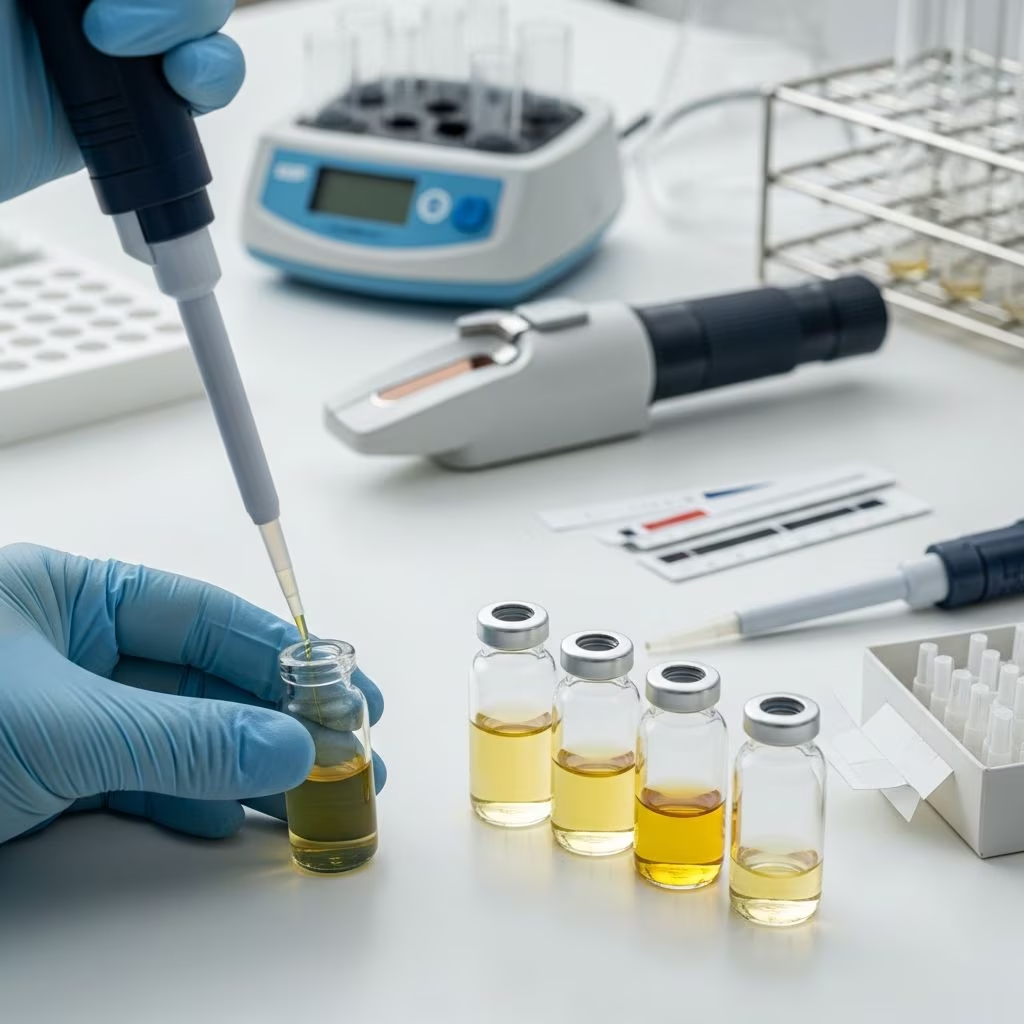
Understanding Urine Protein-Creatinine Ratios in Pets
The urine protein-to-creatinine (UPC) ratio is an important diagnostic tool used in veterinary medicine to measure the amount of protein being lost through the kidneys in your pet’s urine. This test plays a crucial role in identifying kidney disease, monitoring chronic conditions, and determining the overall health status of dogs and cats. Unlike a simple dipstick urinalysis that provides only qualitative results, the UPC ratio offers a quantitative measurement that helps veterinarians make more informed clinical decisions and provide appropriate treatment recommendations.
What is Protein-Creatinine Ratio?
The urine protein-creatinine ratio measures the concentration of protein relative to creatinine in a urine sample. Creatinine is a waste product produced by muscles during normal metabolism and is filtered through the kidneys into the urine at a relatively constant rate. By comparing protein levels to creatinine levels, the test normalizes for variations in urine concentration, making results more accurate and reliable regardless of how dilute or concentrated the urine sample is. This normalization factor makes the UPC ratio superior to measuring protein alone, as it accounts for individual differences in hydration status and kidney function.
Clinical Significance of Elevated Protein Levels
In healthy animals, proteins are generally too large to pass through the glomerular filtration barrier in the kidneys. When protein appears in the urine—a condition called proteinuria—it typically indicates a problem with the kidneys or urinary tract. Proteinuria can result from several different mechanisms, including glomerular disease where the kidney’s filtering units become damaged, tubular dysfunction where the kidneys fail to reabsorb filtered proteins, or lower urinary tract inflammation. The presence of protein in urine is often one of the first signs of kidney disease and can help veterinarians identify problems before other clinical signs become apparent.
UPC Ratio Interpretation Guidelines
Proper interpretation of the UPC ratio is essential for accurate diagnosis and appropriate clinical management. The reference values differ slightly between dogs and cats, and results should always be evaluated in the context of the individual animal’s health status and other diagnostic findings.
Dogs: Reference Values and Clinical Interpretation
For dogs, the interpretation of UPC ratios follows established guidelines that help classify the degree of proteinuria:
- Non-proteinuric: UPC ratio < 0.5 indicates normal kidney protein handling with no significant protein loss
- Borderline/Equivocal: UPC ratio between 0.5-1.0 in non-azotemic dogs warrants continued monitoring for progression
- Abnormal proteinuria: UPC ratio > 1.0 in non-azotemic dogs indicates abnormal protein loss and requires diagnostic evaluation
- Significant glomerular proteinuria: UPC ratio ≥ 2.0 suggests substantial glomerular disease
In azotemic dogs (those with elevated blood creatinine indicating kidney dysfunction), therapeutic intervention is recommended when the UPC ratio reaches 0.5 or higher, as proteinuria in this population indicates more severe kidney involvement.
Cats: Reference Values and Clinical Interpretation
Cats have slightly lower threshold values for proteinuria compared to dogs:
- Non-proteinuric: UPC ratio < 0.4 represents normal protein excretion
- Borderline proteinuric: UPC ratio between 0.4-0.6 may be normal in some healthy male cats but warrants monitoring
- Proteinuric: UPC ratio > 0.4 indicates clinically significant proteinuria requiring investigation
It is important to note that some healthy male cats naturally have UPC values on the higher end of the normal range, up to approximately 0.6, which should be considered when interpreting results in individual cats.
Sample Quality and Testing Requirements
The accuracy of UPC ratio results depends heavily on proper sample collection and handling. Urine samples used for UPC determination should have inactive sediment, meaning they should not contain significant numbers of cells, crystals, or bacteria that could interfere with protein measurements. Samples with active sediment or obvious signs of inflammation may produce unreliable results and should be recollected.
Additionally, the presence of blood in the urine sample can affect the interpretation of UPC ratios. While mild iatrogenic hematuria (blood introduced during collection by needle) is common when urine is collected by cystocentesis (needle aspiration of the bladder), this typically does not significantly alter results unless the urine is visibly bloody. Low-grade microscopic hematuria generally does not contraindicate UPC ratio determination.
Urine Collection Methods
There are several methods available for collecting urine samples for UPC ratio testing, each with specific advantages and considerations:
Cystocentesis
Cystocentesis, the collection of urine directly from the bladder using a needle, is considered the gold standard and most common method for obtaining urine for UPC ratio testing. This method provides the most reliable sample as it eliminates contamination from the lower urinary tract. However, this technique may carry risks or be contraindicated in patients with bleeding disorders or those on anticoagulation therapy. Mild bleeding into the urine sample is common with this method but typically does not significantly affect results.
Manual Bladder Compression (Voided Samples)
Manual compression of the urinary bladder to express urine is an alternative collection method that avoids needle puncture. Studies have demonstrated that UPC ratios obtained from voided urine samples collected by manual compression correlate well with cystocentesis results in both healthy cats and those with proteinuria. In healthy cats, UPC ratios from manually expressed samples also correlate appropriately with daily protein excretion in voided samples, suggesting this is a reliable alternative when cystocentesis is contraindicated.
Midstream Voided Samples
Collection of a midstream voided urine sample represents another viable alternative to cystocentesis. While this method may be more practical in some settings, it carries a higher risk of contamination from the lower urinary tract, which could potentially affect interpretation of results in some cases.
Clinical Applications and Significance
Chronic Kidney Disease Diagnosis and Monitoring
The UPC ratio plays a central role in the diagnosis and monitoring of chronic kidney disease (CKD) in both dogs and cats. Persistent proteinuria accompanied by inactive urine sediment is considered an important diagnostic and prognostic biomarker for CKD. The presence and degree of proteinuria helps veterinarians stage the severity of kidney disease according to International Renal Interest Society (IRIS) guidelines, which incorporate UPC ratio measurements as a key component of the staging system.
Prognostic Value
The UPC ratio provides valuable prognostic information in pets with kidney disease. The higher the UPC ratio in a CKD patient with inactive urine sediment, the greater the risk of progression of kidney disease and the poorer the overall prognosis. In cats specifically, studies have shown that the degree of proteinuria is predictive of survival times in cats with chronic kidney disease, with higher levels of proteinuria associated with shorter survival times.
Treatment Response Monitoring
The UPC ratio is valuable for monitoring a pet’s response to therapy for proteinuria. Serial UPC measurements over time can help determine whether prescribed treatments such as ACE inhibitors or other antiproteinuric medications are effectively reducing protein loss and slowing kidney disease progression.
Important Limitations and Considerations
While the UPC ratio is an excellent diagnostic tool, it has important limitations that must be understood for proper clinical interpretation:
- Normal kidney values do not guarantee healthy kidneys: Normal BUN and creatinine values do not necessarily indicate the kidneys are functioning normally when the UPC ratio is elevated, as proteinuria may be the earliest sign of kidney disease before significant elevation of waste products occurs.
- Other causes of proteinuria: Elevated UPC ratios may result from conditions other than primary kidney disease, including fever, exercise, urinary tract infection, lower urinary tract disease, or genital disease
- Sample quality matters: Results are only valid for urine samples with inactive sediment and require proper collection and handling
- Individual variation: Some healthy animals, particularly male cats, may have naturally higher UPC values that should not be misinterpreted as pathologic
When Further Investigation is Recommended
In urine samples without obvious blood or inflammation, a UPC ratio greater than 0.4 in a cat and greater than 0.5 in a dog indicates significant protein loss through the kidneys and warrants further investigation and treatment. Additional diagnostic tests should be considered in these situations, which may include blood chemistry panels to assess kidney function, blood pressure measurement to rule out hypertension, imaging studies to visualize the kidneys and urinary tract, and potentially kidney biopsy if the underlying cause remains unclear.
Relationship Between UPC and Azotemia
Azotemia, an elevation of nitrogen-containing waste products in the blood, often occurs concurrently with significant proteinuria. Studies have shown that cats with proteinuria have significantly higher serum creatinine values compared to non-proteinuric cats, with median creatinine values of 3.6 mg/dL in proteinuric cats versus 2.3 mg/dL in non-proteinuric cats. This correlation underscores the relationship between proteinuria and kidney disease severity.
Frequently Asked Questions
Q: What does a UPC ratio of 0.6 in my cat mean?
A: A UPC ratio of 0.6 in a cat indicates proteinuria above the generally accepted threshold of 0.4. However, if your cat is otherwise healthy, this may represent normal variation, particularly if your cat is male. Your veterinarian should evaluate this result in context with other clinical findings, physical examination, and blood work.
Q: Can a UPC ratio be normal if my dog has kidney disease?
A: Yes, it is possible for some dogs with early-stage kidney disease to have a normal UPC ratio. This is why the UPC ratio is used as one component of comprehensive kidney disease evaluation along with blood work, physical examination, and imaging studies rather than as a single diagnostic test.
Q: How often should my pet’s UPC ratio be monitored if it is elevated?
A: The frequency of monitoring depends on the degree of proteinuria, the underlying cause, and the treatments being administered. Your veterinarian will recommend an appropriate monitoring schedule, which may range from every few weeks to every few months.
Q: Is proteinuria in urine always caused by kidney disease?
A: No, proteinuria can result from multiple causes including kidney disease, urinary tract infection, fever, strenuous exercise, lower urinary tract inflammation, or genital disease. Your veterinarian must perform additional testing to determine the underlying cause.
Q: Can dietary changes help reduce proteinuria in my pet?
A: Dietary modifications, such as prescription kidney disease diets that are restricted in protein and phosphorus, may help manage some cases of proteinuria. However, medication such as ACE inhibitors are often necessary to effectively reduce protein loss. Your veterinarian can recommend the most appropriate treatment plan for your pet’s specific situation.
Q: Does a high UPC ratio mean my pet will definitely progress to kidney failure?
A: While a high UPC ratio indicates increased risk of kidney disease progression and poorer prognosis, it does not guarantee that your pet will progress to kidney failure. With appropriate treatment and monitoring, many pets with proteinuria can maintain good quality of life for extended periods.
References
- Urinalysis: Testing Protocols and Interpretations — Cornell University College of Veterinary Medicine. https://www.vet.cornell.edu/animal-health-diagnostic-center/testing/testing-protocols-interpretations/urinalysis
- Urine protein-creatinine ratios in cats by sampling method — International Society of Feline Medicine (EveryCAT). https://everycat.org/cat-health/urine-protein-creatinine-ratios-in-cats-by-sampling-method/
- Urinary Protein/Creatinine Ratio in Feline Medicine — National Institutes of Health (NIH/PMC). 2022. https://pmc.ncbi.nlm.nih.gov/articles/PMC9219505/
- A Veterinary Deep Dive into Proteinuria — The Vetiverse. https://www.thevetiverse.com/en/latest/a-veterinary-deep-dive-into-proteinuria/
- Urine Protein Creatinine Ratio — IDEXX Laboratories. https://www.idexx.co.uk/en-gb/veterinary/reference-laboratories/upc/



