Urine Protein Creatinine Ratios in Dogs and Cats
Understanding UPC ratios: A key diagnostic tool for detecting kidney disease in pets.
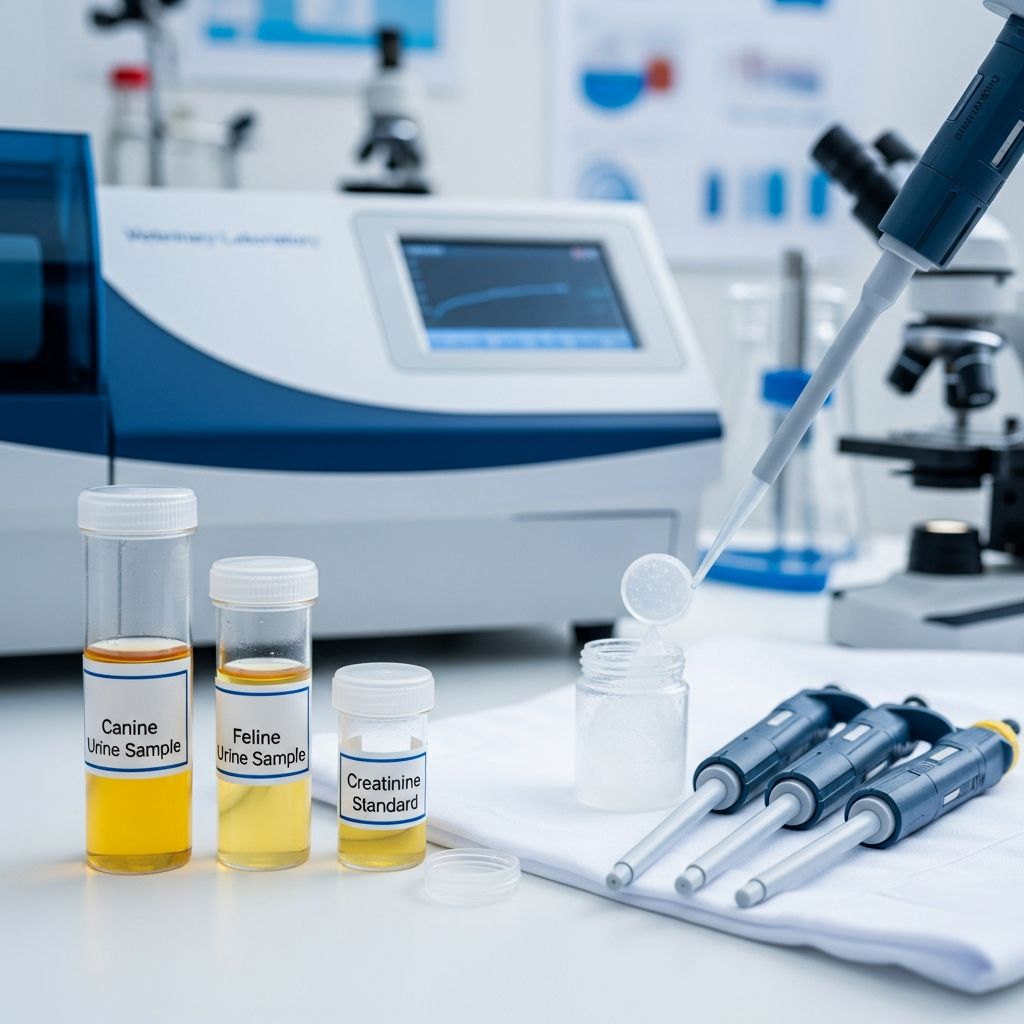
Understanding Urine Protein-Creatinine Ratios in Dogs and Cats
The urine protein-creatinine (UPC) ratio is an essential diagnostic tool used by veterinarians to quantify the amount of protein being lost through the kidneys in dogs and cats. This measurement helps identify potential kidney disease, monitor disease progression, and guide treatment decisions. Unlike simple urine dipstick tests that can produce false negatives or positives, the UPC ratio provides a more accurate and quantitative assessment of proteinuria, making it invaluable in veterinary practice.
Protein in the urine, known as proteinuria, can indicate various underlying health conditions ranging from urinary tract infections to serious kidney disease. By measuring the ratio of protein to creatinine in urine samples, veterinarians can normalize for variations in urine concentration and determine whether the level of protein loss poses a health risk for the pet. This measurement is particularly important for early detection of chronic kidney disease (CKD), one of the most common conditions affecting older cats and dogs.
What Is the Urine Protein-Creatinine Ratio?
The UPC ratio is a quantitative measurement that evaluates the concentration of protein relative to creatinine in urine. Creatinine is a waste product produced by muscle metabolism and filtered through the kidneys at a relatively constant rate. By using creatinine as a reference point, the UPC ratio accounts for differences in urine concentration that occur throughout the day, providing a more reliable assessment than measuring protein alone.
This test is recommended for any dog or cat with a trace or greater finding of protein on a urine dipstick test. The measurement involves collecting a urine sample and then measuring both the protein and creatinine concentrations in the laboratory. The ratio is calculated by dividing the protein concentration by the creatinine concentration, resulting in a simple numerical value that can be easily interpreted and compared over time.
How Is the Protein-Creatinine Ratio Interpreted?
Interpreting UPC ratios requires understanding the reference values that distinguish normal from abnormal protein loss. The interpretation differs slightly between dogs and cats, and the presence or absence of clinical signs and laboratory abnormalities must also be considered.
Normal Values and Healthy Pets
In urine samples without obvious blood or inflammation, a UPC ratio greater than 0.4 in a cat and greater than 0.5 in a dog indicates significant protein loss through the kidneys. However, normal values are considerably lower than these thresholds. Both dogs and cats with a UPC ratio less than 0.2 are classified as non-proteinuric, meaning they are not losing abnormal amounts of protein through their kidneys, which is the normal, healthy state.
Borderline Proteinuria
A gray zone exists between normal and abnormal protein loss. In cats, UPC ratios between 0.2 and 0.4 are considered borderline proteinuric, requiring close monitoring but not necessarily immediate intervention. In dogs, values between 0.5 and 1.0 in non-azotemic dogs (those without elevated kidney waste products in the blood) are considered equivocal, and continued monitoring for progression is recommended to determine if the proteinuria is persistent and clinically significant.
Abnormal Proteinuria
UPC ratios above the borderline range indicate abnormal protein loss that warrants further investigation and potential treatment. In cats, values greater than 0.4 are considered proteinuric. In dogs, values greater than 0.5 in non-azotemic dogs are abnormal and indicate that diagnostic evaluation is warranted. When dogs become azotemic (showing elevated kidney waste products), therapeutic intervention is recommended for those with a UPC ratio of 0.5 or greater. Glomerular proteinuria, which represents protein loss due to kidney filtration damage, is usually associated with UPC ratios of 2.0 or higher.
Clinical Significance of Elevated UPC Ratios
An important principle in interpreting UPC ratios is that normal BUN (blood urea nitrogen) and creatinine values do not necessarily indicate the kidneys are healthy when the urine protein-creatinine ratio is elevated. This means that proteinuria can exist as an early indicator of kidney disease before other blood values become abnormal, making the UPC ratio a sensitive marker for detecting kidney problems in their earlier stages.
Persistent proteinuria accompanied by an inactive urine sediment is an important diagnostic and prognostic biomarker in dogs and cats with chronic kidney disease. The higher the UPC ratio in a chronic kidney disease patient with an inactive sediment, the bigger the risk of progression of the disease and the poorer the prognosis. In fact, the degree of proteinuria is predictive of survival times in cats with renal disease—the higher the level of proteinuria, the shorter the survival time for a given feline patient.
Causes of Proteinuria
Protein in the urine can originate from three different locations in the urinary system, and understanding these distinctions helps guide diagnostic evaluation and treatment decisions.
Glomerular Proteinuria
Glomerular proteinuria occurs when the kidney’s filtration structures, called glomeruli, are damaged and allow proteins to leak into the urine. This is the most significant type of proteinuria and is often associated with chronic kidney disease, diabetes, or immune-mediated kidney disease. Glomerular damage represents true kidney dysfunction and typically results in higher UPC ratios.
Tubular Proteinuria
The kidney tubules, which reabsorb useful proteins filtered from the blood, may become damaged or dysfunctional, leading to increased protein in the urine. This type of proteinuria is often associated with certain medications, toxins, or tubular disease.
Prerenal and Postrenal Proteinuria
Prerenal proteinuria occurs when excessive protein in the blood overwhelms the kidney’s ability to reabsorb it, such as in cases of severe inflammation or hemolysis. Postrenal proteinuria results from protein entering the urine from the lower urinary tract or genital tract due to inflammation, infection, or bleeding in these areas. These types of proteinuria are typically less clinically significant than glomerular proteinuria but still warrant investigation.
Types of Proteins in Urine
Various types of proteins may be present in urine, each with different clinical implications. Albumin is the most common protein found in urine when proteinuria is present. Other proteins that may be detected include globulin, Bence-Jones proteins, and many others. The specific type of protein detected can sometimes provide clues about the underlying cause of proteinuria, though most routine UPC testing measures all proteins without distinguishing between types.
Urine Collection Methods for UPC Testing
The method used to collect urine can affect the results of the UPC ratio test, and veterinarians must choose the most appropriate collection method for each patient.
Cystocentesis
Cystocentesis, in which urine is collected directly from the bladder using a needle and syringe, is the most common method for obtaining urine for UPC ratio testing. This method provides an uncontaminated sample and is the gold standard for UPC determination. However, cystocentesis may carry some risks or be contraindicated in certain patients, such as those with bleeding disorders (coagulopathy).
Manual Compression
Manual compression of the urinary bladder to collect voided urine is an alternative method that is less invasive than cystocentesis. Studies have demonstrated that UPC ratios from voided urine samples in both healthy cats and those with proteinuria correlate well with 24-hour protein excretion determination and with UPC ratios obtained via cystocentesis. In most cats, the UPC ratios for samples obtained by cystocentesis and manual compression differ by less than 0.1, making manual compression a reliable alternative when cystocentesis is not feasible.
Natural Voiding
Midstream voided urine samples collected during natural urination can also be used for UPC determination and represent another reliable alternative to cystocentesis. This method is the least invasive but carries a slightly higher risk of contamination from the lower urinary tract.
Hematuria Considerations
Mild iatrogenic hematuria (blood in the urine) is common in samples obtained by cystocentesis. In dogs, the UPC ratio is only significantly influenced by hematuria when the urine is macroscopically bloody (appearing pink or red to the naked eye). Low-grade microscopic hematuria should not contraindicate the determination of the UPC ratio. This principle is believed to apply to cats as well, though veterinarians should always consider whether blood contamination may be affecting results, particularly if the UPC ratio seems inconsistent with the clinical picture.
The Role of UPC Ratios in Chronic Kidney Disease
The UPC ratio is an important part of the International Renal Interest Society (IRIS) guidelines for staging chronic kidney disease in dogs and cats. CKD staging helps veterinarians categorize the severity of kidney disease and guide treatment recommendations. Proteinuria is one of several factors considered in CKD staging, and the presence and degree of proteinuria can affect both the stage assignment and prognosis.
In CKD patients with inactive urine sediment, the UPC ratio provides valuable information about disease severity and progression risk. Cats with CKD that show overt proteinuria typically have worse outcomes at six and twelve months compared to non-proteinuric or borderline proteinuric cats. This prognostic significance makes the UPC ratio an essential monitoring tool throughout the course of chronic kidney disease management.
Monitoring and Treatment Recommendations
The UPC ratio serves dual purposes in veterinary practice: it helps establish an initial diagnosis of proteinuria-related kidney disease and allows monitoring of disease progression and response to treatment over time. When proteinuria is detected, further investigation into the underlying cause is warranted, which may include blood work, imaging studies, or specialized testing depending on the clinical context.
Treatment decisions are guided by the UPC ratio value and whether the patient is azotemic. Further investigation and treatment are recommended when the UPC ratio exceeds 0.4 in cats or 0.5 in dogs (in the absence of obvious blood or inflammation). For azotemic dogs, therapeutic intervention is recommended when the UPC ratio is 0.5 or greater. Treatment may include dietary modifications, medications to reduce proteinuria (such as ACE inhibitors or angiotensin receptor blockers), management of underlying diseases like diabetes or hypertension, and monitoring of kidney function.
Limitations of the UPC Ratio
While the UPC ratio is a valuable diagnostic tool, it is not without limitations. False negatives can be more common in acidic urine and particularly in feline patients when using dipstick testing alone. However, the quantitative nature of the UPC ratio testing performed in laboratories provides much greater accuracy than dipstick methods alone and overcomes many of these limitations.
Animals that likely have postrenal proteinuria based on the presence of lower urinary tract or genital disease, or those with active urine sediment suggesting inflammation or infection, should be evaluated carefully before attributing proteinuria solely to kidney disease. Similarly, if manual compression of the urinary bladder was difficult, it may affect the reliability of the sample. These factors should all be considered when interpreting results.
Frequently Asked Questions
Q: What does a normal UPC ratio mean for my pet?
A: A UPC ratio less than 0.2 in both dogs and cats is considered normal and indicates that your pet is not losing abnormal amounts of protein through their kidneys. This is a reassuring finding and suggests normal kidney function.
Q: Is my pet’s kidney disease if their UPC ratio is elevated?
A: An elevated UPC ratio indicates proteinuria, but does not definitively diagnose kidney disease on its own. Other causes of proteinuria, such as lower urinary tract inflammation, infection, or diabetes, must be ruled out. However, persistent proteinuria in the presence of an inactive urine sediment is highly suggestive of kidney disease and warrants further evaluation.
Q: How often should my pet’s UPC ratio be monitored?
A: The frequency of monitoring depends on the initial UPC value, whether kidney disease is diagnosed, and the treatments being used. Borderline values typically warrant rechecking in four to eight weeks, while significantly elevated values require more frequent monitoring, often every four to twelve weeks depending on the clinical situation and response to treatment.
Q: Can the UPC ratio predict how long my cat will live?
A: While the UPC ratio cannot precisely predict survival time, it is predictive of survival times in cats with kidney disease. Generally, cats with higher levels of proteinuria have shorter survival times compared to those with lower proteinuria levels. This prognostic information should be discussed with your veterinarian as part of overall care planning.
Q: What are normal BUN and creatinine levels if my pet has an elevated UPC ratio?
A: It is important to understand that normal BUN and creatinine values do not necessarily indicate that the kidneys are healthy if the UPC ratio is elevated. Proteinuria can be an early indicator of kidney disease that appears before other blood values become abnormal, making the UPC ratio a sensitive early detection marker.
Q: Which urine collection method is best for UPC testing?
A: Cystocentesis, where urine is collected directly from the bladder, is considered the gold standard and most common method. However, manual compression and midstream voided samples are reliable alternatives that correlate well with cystocentesis results, especially if cystocentesis cannot be performed due to patient factors like bleeding disorders.
References
- Urinalysis: Interpretation of UP:UC in Dogs & Cats — Cornell University College of Veterinary Medicine. 2024. https://www.vet.cornell.edu/animal-health-diagnostic-center/testing/testing-protocols-interpretations/urinalysis
- Urine Protein: Creatinine Ratios — VCA Animal Hospitals. 2024. https://vcahospitals.com/know-your-pet/urine-proteincreatinine-ratios
- Urine Protein-Creatinine Ratios in Cats by Sampling Method — Every Cat. 2024. https://everycat.org/cat-health/urine-protein-creatinine-ratios-in-cats-by-sampling-method/
- Urinary Protein/Creatinine Ratio in Feline Medicine — National Center for Biotechnology Information (NIH). 2022-09-14. https://pmc.ncbi.nlm.nih.gov/articles/PMC9219505/
- A Veterinary Deep Dive into Proteinuria — The Vetiverse. 2024. https://www.thevetiverse.com/en/latest/a-veterinary-deep-dive-into-proteinuria/
- Urine Protein Creatinine Ratio — IDEXX UK. 2024. https://www.idexx.co.uk/en-gb/veterinary/reference-laboratories/upc/
Similar Articles








Read full bio of medha deb