
Urinary System In Animals: 4 Key Components Explained
Discover the vital roles, anatomy, and functions of the animal urinary system in maintaining health and homeostasis.
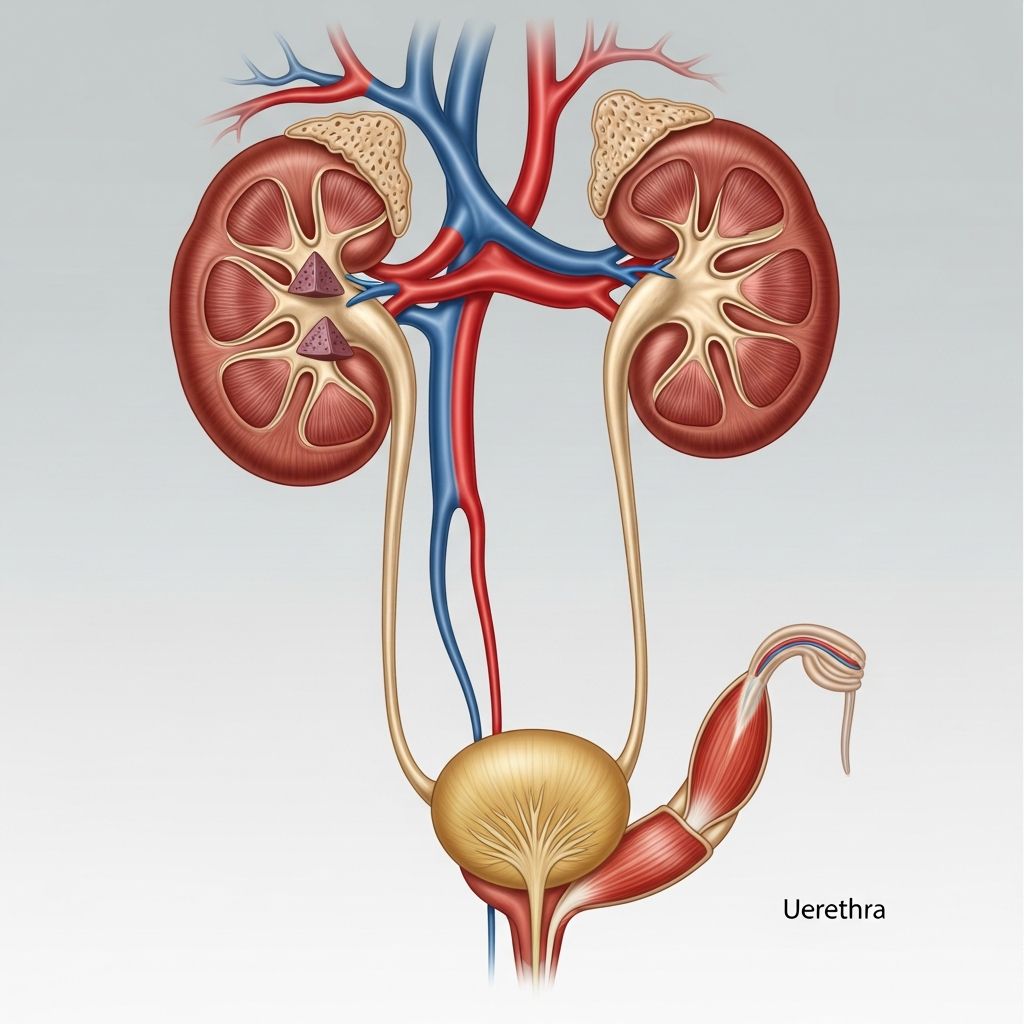
The urinary system in animals is a critical network responsible for filtering blood, eliminating metabolic wastes, and regulating essential bodily balances like fluid levels, electrolytes, and acid-base status. Comprising the kidneys, ureters, urinary bladder, and urethra, this system ensures homeostasis across diverse species from dogs and cats to livestock and wildlife.
Overview of Urinary System Components
At its core, the urinary system processes blood to produce urine, a byproduct carrying toxins away from vital organs. The kidneys act as primary filters, ureters transport the fluid, the bladder stores it temporarily, and the urethra facilitates expulsion. This coordinated effort prevents toxin buildup and supports overall metabolic health.
- Kidneys: Paired organs that filter blood and form urine.
- Ureters: Tubes conveying urine to the bladder.
- Urinary Bladder: Expandable sac for urine storage.
- Urethra: Passageway for urine release.
Kidney Structure and Organization
Kidneys are bean-shaped organs located retroperitoneally in most mammals, protected by fat and connective tissue. Externally, they feature a convex lateral border and a concave medial hilus where blood vessels, nerves, and ureters enter or exit. Internally, kidneys divide into the outer renal cortex and inner renal medulla, with a central renal pelvis collecting urine before it flows into ureters.
The cortex houses glomeruli and proximal tubules, initiating filtration. The medulla contains loops of Henle and collecting ducts, crucial for concentrating urine. Renal papillae project into calyces, funneling urine efficiently. This layered architecture optimizes blood processing and waste concentration.
| Region | Location | Key Features | Function |
|---|---|---|---|
| Cortex | Outermost | Glomeruli, proximal tubules | Blood filtration start |
| Medulla | Middle layer | Loops of Henle, collecting ducts | Urine concentration |
| Pelvis | Central cavity | Calyces, papillae | Urine collection |
Microscopic Anatomy of the Nephron
The nephron, the kidney’s functional unit, numbers millions per kidney and drives urine formation. Each nephron includes a glomerulus—a capillary tuft within Bowman’s capsule—for initial filtration, followed by renal tubules for reabsorption and secretion.
Blood enters via afferent arterioles, filters through glomerular capillaries, and exits via efferent arterioles. The filtrate, or ultrafiltrate, passes into proximal convoluted tubules lined with brush-border cells rich in mitochondria for active transport. Here, glucose, amino acids, and most water/electrolytes reabsorb.
The loop of Henle descends into the medulla, creating a concentration gradient via countercurrent multiplication. Ascending limbs reabsorb sodium and chloride, while descending limbs permit water loss, concentrating urine. Distal convoluted tubules fine-tune ion balance under hormonal influence, leading to collecting ducts.
Glomerular Filtration Mechanism
Filtration occurs at the glomerulus, where hydrostatic pressure forces plasma water and solutes through the glomerular basement membrane, excluding large proteins and cells. This selective barrier maintains blood colloid osmotic pressure, driving ~125 mL/min of filtrate in dogs.
The juxtaglomerular apparatus regulates this: juxtaglomerular cells release renin for blood pressure control, macula densa senses sodium levels, and mesangial cells support structure. Tubuloglomerular feedback autoregulates flow, ensuring stable filtration despite blood pressure changes.
Tubular Reabsorption and Secretion Processes
Proximal tubules reclaim 65-70% of filtrate: sodium-potassium pumps on basolateral membranes drive active transport, with paracellular water following. Brush borders amplify surface area for glucose and bicarbonate recovery via specific carriers.
In the loop of Henle, thick ascending limbs actively pump NaCl, diluting urine. Collecting ducts respond to antidiuretic hormone (ADH), inserting aquaporins for water reabsorption, and aldosterone, enhancing sodium retention. Urea recycling in the medulla bolsters the osmotic gradient for maximal concentration.
Role of Vascular Supply in Kidney Function
Renal arteries branch into interlobar, arcuate, and interlobular vessels, feeding afferent glomerular arterioles. Post-glomerular efferent arterioles form peritubular capillaries in the cortex and vasa recta in the medulla, paralleling loops of Henle for efficient solute exchange.
This dual supply supports high oxygen/nutrient delivery—kidneys receive 20-25% of cardiac output—while vasa recta preserve medullary gradients without washing them out.
Ureters: Transport Pathways
Ureters are muscular tubes ~20-30 cm long in large animals, extending from renal pelvis to bladder trigone. Peristaltic waves propel urine, aided by gravity in upright species. Wall layers include outer adventitia, middle muscularis (longitudinal/circular fibers), and inner mucosa with transitional epithelium for stretch.
- Adventitia: Fibroelastic support.
- Muscularis: Drives peristalsis.
- Mucosa: Protective lining.
Urinary Bladder: Storage and Expansion
The bladder, a muscular reservoir, expands from 10-20 mL empty to over 500 mL full. Divided into apex, body, and neck, its detrusor muscle (smooth) contracts for voiding, opposed by internal (smooth) and external (skeletal) sphincters for continence.
Layers include serosa, detrusor, submucosa, and urothelium topped by a glycosaminoglycan (GAG) layer repelling bacteria and urine irritants. Sensory nerves signal fullness via stretch receptors.
Urethra: Exit and Control
The urethra varies by sex: short in females, long in males with prostate integration. Internal sphincter maintains tone; external allows voluntary control. Mucosa transitions from transitional to stratified squamous epithelium.
Key Functions Beyond Waste Removal
Besides excreting urea, creatinine, and drugs, the system regulates:
- Fluid Volume: Via ADH and thirst mechanisms.
- Electrolytes: Na+, K+, Ca2+ balance.
- Acid-Base: Bicarbonate reabsorption, H+ secretion.
- Blood Pressure: Renin-angiotensin-aldosterone system (RAAS).
- Erythropoiesis: Erythropoietin production.
Species Variations in Urinary Anatomy
Dogs have simple kidneys without multi-papillary medulla; cats concentrate urine highly. Horses feature large bladders; ruminants have urethral diverticula. Avian systems use cloacas, with salt glands supplementing.
| Species | Kidney Type | Unique Feature |
|---|---|---|
| Dog | Unipapillary | Cortical nephrons dominant |
| Cat | Unipapillary | Superior concentration |
| Horse | Multilobar | Large bladder capacity |
Common Disorders and Clinical Relevance
Issues like chronic kidney disease impair filtration; urinary tract infections exploit GAG defects; stones block ureters. Diagnostics include urinalysis, imaging, and bloodwork assessing creatinine/BUN.
FAQs
What is the main function of animal kidneys?
They filter blood to remove wastes, regulate fluids, and maintain electrolyte balance.
How does urine travel from kidneys to outside?
Via ureters to bladder, then urethra, propelled by peristalsis and muscle contraction.
Why is the GAG layer important?
It protects bladder mucosa from urine toxins and bacterial adhesion.
What hormones control urine concentration?
ADH for water reabsorption; aldosterone for sodium.
How do species differ in urinary systems?
Varies in nephron arrangement, bladder size, and urethra length.
References
- The vet nurse’s guide to renal and urinary tract disease — Veterinary Internal Medicine Nursing. 2023. https://www.veterinaryinternalmedicinenursing.com/blog/the-vet-nurses-guide-to-renal-and-urinary-tract-disease
- Anatomy of the Canine Urinary System — Veterinary Anatomy (YouTube). 2021-03-22. https://www.youtube.com/watch?v=-Z7EJlEniXs
- The Urinary System — Veterian Key. N/A. https://veteriankey.com/the-urinary-system-3/
- A Brief Guide to The Canine Urinary System — My Pet Nutritionist. N/A. https://mypetnutritionist.com/post/a-brief-guide-to-the-canine-urinary-system/
- The Urinary System in Animals — Merck Veterinary Manual. N/A. https://www.merckvetmanual.com/urinary-system/urinary-system-introduction/the-urinary-system-in-animals
Similar Articles








Read full bio of Sneha Tete


