

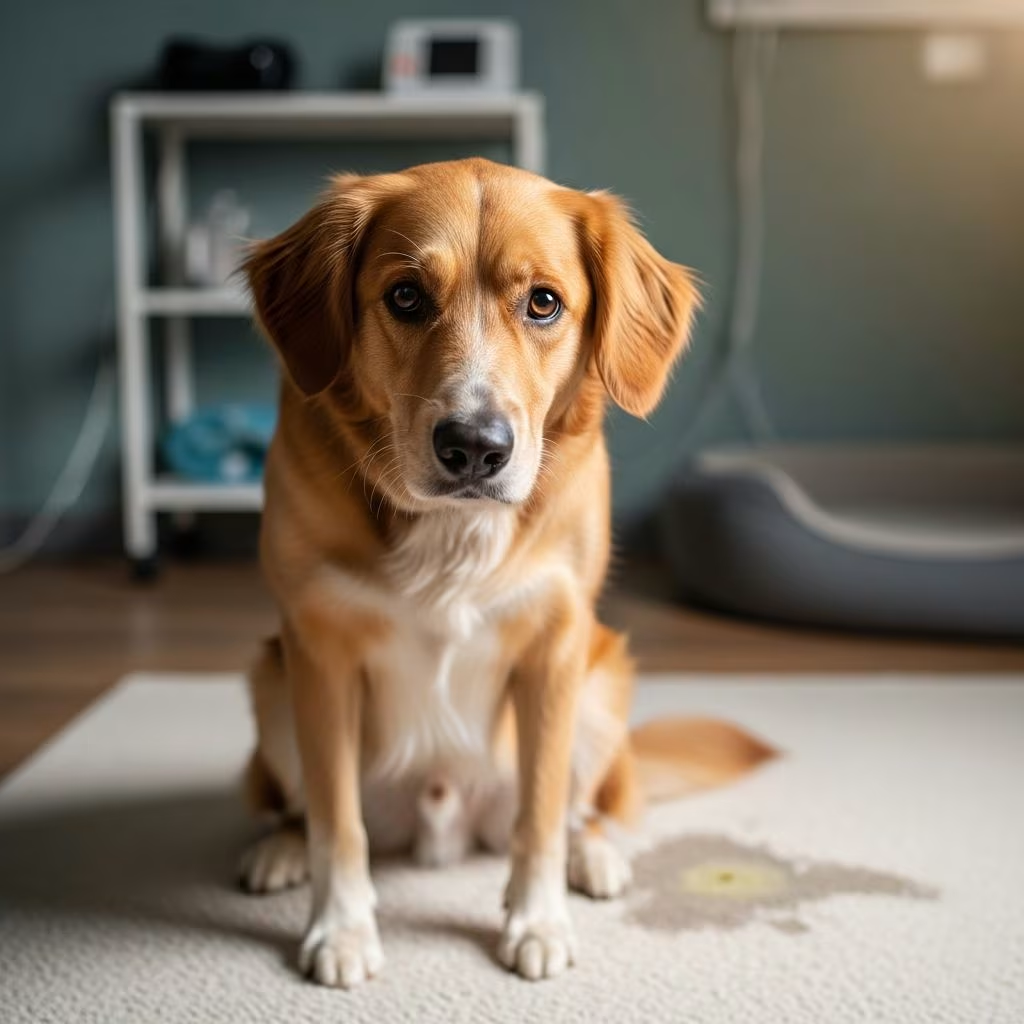
Understanding Urethral Incontinence in Dogs
Urethral incontinence is a common condition affecting dogs of all ages, though it is particularly prevalent in older dogs and spayed females. This condition involves involuntary leakage of urine due to a weakened or incompetent urethral sphincter mechanism. Unlike other forms of urinary incontinence that may result from urinary tract infections, bladder stones, or congenital abnormalities, urethral incontinence specifically reflects a dysfunction in the dog’s ability to maintain adequate pressure within the urethra to prevent urine from leaking out during daily activities, rest, or sleep. Understanding this condition is crucial for pet owners to seek appropriate veterinary care and implement effective management strategies.
What Is Urethral Incontinence?
Urethral incontinence, also known as urethral sphincter mechanism incompetence (USMI), occurs when the muscles surrounding the urethra fail to maintain sufficient pressure to prevent urine leakage. The urethral sphincter is composed of smooth muscle fibers that contract to seal the urethra and prevent urine from flowing out of the bladder. When this mechanism becomes compromised, dogs experience involuntary urine loss, which can occur while sleeping, during excitement, or throughout the day depending on the severity of the condition.
This condition differs from other types of incontinence because it does not involve bacterial infection, bladder stones, or structural abnormalities of the urinary system. Instead, it represents a functional problem with the muscles responsible for maintaining urethral closure pressure.
Causes of Urethral Incontinence in Dogs
Urethral incontinence can develop for several reasons, and understanding the underlying cause is essential for determining the most appropriate treatment approach.
Spaying-Related Incontinence
The most common cause of urethral incontinence in female dogs is spaying. During the spaying procedure, the ovaries and uterus are removed, which results in decreased estrogen production. Estrogen plays a critical role in maintaining the strength and robustness of the pelvic and periurethral tissues. The hormone enhances glandular function, impacts collagen strength, and increases the number and sensitivity of adrenergic alpha-receptors in the smooth muscle of the urethra. When estrogen levels drop significantly after spaying, these tissues lose tone and elasticity, leading to reduced urethral closure pressure and subsequent incontinence.
Age-Related Changes
As dogs age, natural hormonal changes occur that can affect urethral function. Senior dogs may develop incontinence due to degenerative changes in the urethral sphincter mechanism and declining levels of hormones that support urethral tissue integrity.
Neurological Disorders
Certain neurological conditions can affect the nerves that control the urethral sphincter, leading to incontinence. Spinal cord disease, cauda equina syndrome, and other neurological disorders can impair the nerve signals necessary for proper sphincter function.
Congenital Abnormalities
Some dogs are born with structural or functional abnormalities of the urethra or urethral sphincter. Ectopic ureters, where one or both ureters enter the urethra or bladder neck abnormally, can cause incontinence. The standard treatment for dogs with ureteral ectopia is surgical correction, with reported success rates between 50-75%.
Other Contributing Factors
Certain medications, obesity, and chronic urinary tract infections may also contribute to the development of urethral incontinence. Additionally, some dogs experience worsening clinical signs when stressed or anxious, suggesting an emotional component to the condition in certain cases.
Recognizing the Symptoms
Pet owners should be aware of the signs that may indicate their dog has developed urethral incontinence. Common symptoms include:
- Involuntary urine leakage during sleep or rest
- Wet spots on bedding or furniture where the dog has been lying
- Damp fur around the genital area or inner thighs
- Urinary accidents during excitement or exercise
- Constant low-level urine dripping throughout the day
- Increased frequency of urination
- Behavioral changes or anxiety related to accidents
The severity and pattern of incontinence can vary significantly between individual dogs. Some may only experience occasional leakage during sleep, while others may have more frequent or continuous urine loss. It is important to note that incontinence should not be confused with inappropriate elimination due to behavioral issues or house-training problems.
Diagnosis of Urethral Incontinence
Proper diagnosis is essential to confirm urethral incontinence and rule out other conditions that may cause similar symptoms.
Veterinary Examination
The diagnostic process typically begins with a thorough physical examination. Your veterinarian will review your dog’s medical history, including the age at spaying (if applicable), onset of incontinence, and any other health issues. During the physical examination, your veterinarian will palpate the perineum to check for masses that could result in urethral obstruction and perform a rectal examination to assess the urethral and prostatic areas.
Laboratory Tests
A urinalysis is performed to evaluate urine composition and rule out urinary tract infections. Urine culture may be recommended to identify bacterial infections that could contribute to incontinence. A complete blood count and biochemistry panel provide information about your dog’s overall health and kidney function.
Imaging Studies
Ultrasound or radiography may be used to visualize the bladder, urethra, and surrounding structures. These imaging techniques can help identify abnormalities such as bladder stones, masses, or structural problems. Contrast radiography or advanced imaging may be necessary in some cases to evaluate urethral function.
Urodynamic Testing
In complex cases, urodynamic studies may be performed to measure urethral pressure and bladder function. These specialized tests provide detailed information about how the urethral sphincter is functioning and can help guide treatment decisions.
Medical Treatment Options
Medical therapy is considered the first-line treatment for urethral incontinence in dogs, and medications are highly effective for most affected dogs.
Alpha-Agonist Medications
Phenylpropanolamine (PPA) is the most commonly prescribed medication for urethral incontinence. This alpha-agonist drug stimulates alpha-receptors in the smooth muscle of the urethra, increasing muscle contraction and urethral closure pressure. Clinical response to PPA administration ranges from 75% to 90%, making it highly effective for many dogs. The medication can be administered orally, typically once or twice daily, and most dogs tolerate it well with minimal side effects. Male dogs with urethral incontinence can also be treated with PPA, though the response rate is typically lower (less than 50%) in males, possibly due to misdiagnosis of functional urethral obstruction.
Estrogen Therapy
Estrogen supplementation has been used for decades to treat incontinence and remains one of the most effective options for spayed female dogs. Common estrogen medications include:
- Incurin (estriol): This medication provides a very low dose of estrogen to increase urethral tone and relieve urinary incontinence. It is typically administered once or twice daily.
- Diethylstilbestrol (DES): Though not commercially available in the United States, DES can sometimes be obtained through compounding pharmacies. One advantage of using DES is the convenience of treating a patient on a weekly basis rather than daily, with treatment frequency adjustable based on individual response.
Estrogen enhances glandular function, strengthens collagen in periurethral tissues, and increases both the number and sensitivity of alpha-receptors in the smooth muscle of the urethra. There is strong evidence that estrogen increases baseline resting urethral pressure.
Testosterone Therapy
Testosterone may be given to male dogs with urinary incontinence, though evidence for its effectiveness is limited compared to PPA. Some studies suggest that testosterone cypionate may provide improvement in select cases, though overall response rates remain lower than those achieved with alpha-agonists.
Combination Therapy
Medications often need to be adjusted over time, and sometimes a combination of medications can be more helpful than one on its own. For example, depot GnRH analogs, such as depot deslorelin acetate, which decrease LH and FSH, have been investigated in incontinent spayed females and were found to be 54% effective when used alone and 92% effective when combined with PPA.
Medications for Other Types of Incontinence
When overflow incontinence results from urinary retention, antimuscarinic drugs such as oxybutynin and imiprimine may be prescribed. These medications help relax the bladder and allow complete emptying.
Management of Anxiety-Related Symptoms
Some dogs exhibit worsening incontinence when stressed or anxious. These patients may benefit from anxiolytic medications such as trazodone or fluoxetine to help reduce stress-related exacerbations.
Surgical and Interventional Treatment Options
For dogs that do not respond adequately to medical therapy or are intolerant of medications, several surgical and minimally invasive procedures are available.
Urethral Bulking Agents
Injectable urethral bulking agents, particularly bovine crosslinked collagen, have been used to increase resting urethral pressure in dogs with urethral incontinence. The material is injected submucosally into the proximal urethra via cystoscopy. The theory behind injectable bulking agents is to increase stretch in the sphincter muscle fibers, leading to increased resting closure pressure in the urethra, and the implant may also narrow the urethral lumen diameter, allowing the sphincter to close more effectively.
Based on long-term reviews, postprocedure continence in female dogs with urethral incontinence was 66% to 68%; of those who were not continent, 46% to 60% achieved continence with the addition of medical therapy. The collagen acts as a bulking agent to create mechanical urethral obstruction and improve incontinence. Some dogs still require medications after this procedure, but greater continence is usually gained when drugs were previously ineffective. A second series of implants may be needed to improve continence in some dogs. In one recent study, 27 of 40 (68%) dogs were continent for a mean of 17 months, with a range of 1-64 months.
The largest drawback of this procedure is the variability in duration of effect. The median duration of continence without additional medical therapy ranged from 8 months to 2 years. Retreatment with collagen is usually easier and often successful in gaining continence in dogs that deteriorate after initial success.
Artificial Urethral Sphincter
Surgical placement of an artificial urethral sphincter represents an important option for male dogs and female dogs that fail medical therapy and do not respond to other interventions. Continence was maintained for up to 2 years in early cases, and in a more recent review, 27 of 27 dogs had significantly improved continence scores after placement of the sphincter, with only 2 dogs experiencing complications involving partial urethral obstruction. Surgical placement of an artificial urethral sphincter appears to have good success in male dogs that fail medical therapy.
Other Surgical Approaches
Surgical management of urethral incontinence has traditionally focused on increasing the transmission of intra-abdominal pressure to the proximal urethra or improving the stability and pressure within the urethra. Alternative treatments in males that fail medical therapy include urethral collagen injections, which may be performed antegrade through a cystotomy incision or retrograde via perineal urethrotomy.
Long-Term Management and Monitoring
Once your dog is diagnosed with urethral incontinence and started on treatment, it is important to continue monitoring urination closely. Medications often need to be adjusted over time to maintain effectiveness. Your veterinarian may recommend:
- Regular follow-up examinations to assess response to treatment
- Periodic adjustments to medication dosage or frequency
- Monitoring for side effects or complications
- Reassessment of the treatment plan if symptoms worsen or medications become less effective
- Additional diagnostic testing if new symptoms develop
Prognosis and Quality of Life
The prognosis for dogs with urethral incontinence is generally favorable. Medications for incontinence are highly effective, with success rates up to 95 percent, completely resolving urine leakage for most affected dogs. Even dogs that do not fully respond to medication alone have access to advanced non-surgical and surgical procedures that can help achieve continence. Most dogs can maintain good quality of life with appropriate treatment and management.
Frequently Asked Questions
Q: At what age do dogs typically develop urethral incontinence?
A: While urethral incontinence can occur at any age, it is most common in older dogs and spayed female dogs. The condition frequently develops within the first few years after spaying due to reduced estrogen levels.
Q: Can urethral incontinence be prevented?
A: While urethral incontinence cannot always be prevented, maintaining a healthy weight, providing regular exercise, and monitoring your dog’s health can support overall urinary tract function. However, spaying-related incontinence cannot be prevented.
Q: How long will my dog need to take medication?
A: Most dogs with urethral incontinence require long-term or lifetime medication management. Some dogs may require medications adjusted over time as their condition evolves.
Q: What should I do if my dog has urinary accidents in the house?
A: If your dog develops sudden or worsening urinary accidents, contact your veterinarian. Provide additional opportunities for outdoor bathroom breaks, use waterproof bedding, and consider cleaning accidents with enzymatic cleaners to remove odors.
Q: Are there dietary changes that can help with incontinence?
A: While diet alone cannot cure urethral incontinence, maintaining proper nutrition and hydration supports overall urinary tract health. Your veterinarian may recommend dietary adjustments if other underlying conditions contribute to incontinence.
Q: Can male and female dogs both develop urethral incontinence?
A: Yes, both male and female dogs can develop urethral incontinence, though it is more common in spayed females. Treatment approaches may differ between males and females, with alpha-agonists typically being more effective in females.
References
- Urinary Incontinence in Dogs: Signs, Causes, Treatments — Best Friends Animal Society. 2024. https://bestfriends.org/pet-care-resources/urinary-incontinence-dogs-signs-causes-treatments
- Urethral Incompetence in Dogs: Updates in Management — Today’s Veterinary Practice. 2024. https://todaysveterinarypractice.com/urology-renal-medicine/canine-urethral-incontinence/
- Canine Urinary Incontinence — DVM360. 2024. https://www.dvm360.com/view/canine-urinary-incontinence
- Urinary Incontinence in the Dog — UC Davis School of Veterinary Medicine. 2024. https://www.vetmed.ucdavis.edu/hospital/animal-health-topics/canine-incontinence
- Treating Canine Urinary Incontinence — Oklahoma State University. 2024. https://news.okstate.edu/articles/communications/2019/treating-canine-urinary-incontinence.html
- ACVIM Consensus Statement on Diagnosis and Management of Canine Urinary Incontinence — PubMed Central/National Institutes of Health. 2024. https://pmc.ncbi.nlm.nih.gov/articles/PMC10937496/



