

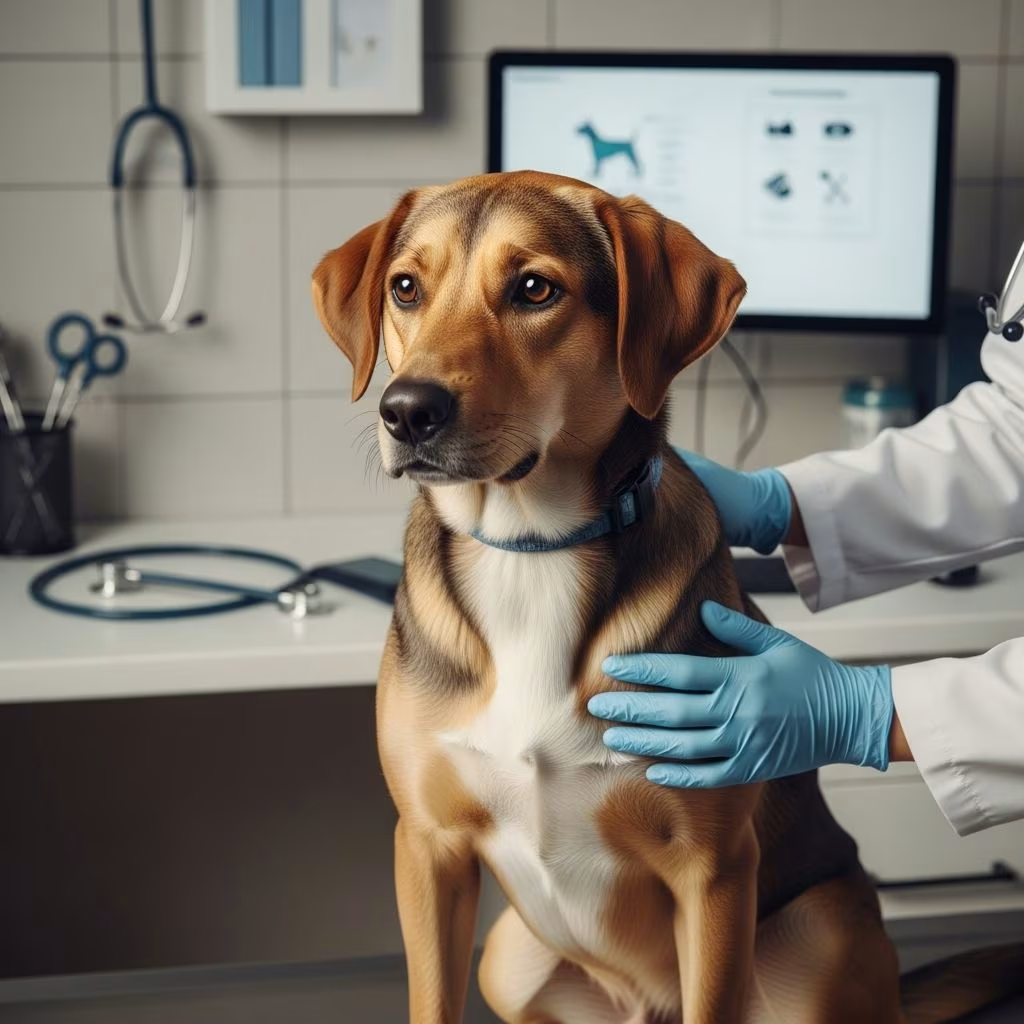
Understanding Urethral Incontinence in Dogs
Urethral incontinence is a condition that affects many dogs, causing involuntary loss of urine. This can be distressing for both pet owners and their canine companions. Unlike house-training accidents or behavioral issues, urethral incontinence occurs when a dog cannot control the release of urine due to physical or physiological factors. The good news is that this condition is highly treatable, and most dogs can regain continence with proper medical intervention. Understanding the underlying causes, recognizing the symptoms, and exploring available treatment options can help dog owners make informed decisions about their pet’s care.
What Is Urethral Incontinence?
Urethral incontinence refers to the involuntary leakage of urine caused by weakness or dysfunction of the urethral sphincter—the muscle responsible for controlling urine flow. The urethra is the tube that carries urine from the bladder to the outside of the body. When the urethral sphincter weakens, it cannot maintain sufficient pressure to hold urine, resulting in continuous or intermittent leakage. This is distinct from other forms of urinary problems such as urinary tract infections or behavioral incontinence.
The urethral sphincter functions through a complex mechanism involving muscle tone, nerve signals, and hormonal influences. When this mechanism fails, urine can leak without warning, often while the dog is resting, sleeping, or during excitement. This condition can occur in dogs of any age, though it is more commonly seen in middle-aged to older spayed females.
Common Causes of Urethral Incontinence
Several factors can contribute to the development of urethral incontinence in dogs. Understanding these causes is essential for proper diagnosis and treatment planning.
Urethral Sphincter Mechanism Insufficiency (USMI)
Urethral sphincter mechanism insufficiency is the most common cause of urinary incontinence in dogs. USMI occurs when the urethral sphincter is not strong enough to retain urine, leading to involuntary leakage. Multiple factors contribute to USMI development, including estrogen deficiency, obesity, genetic predisposition, and age-related changes. In female dogs, spaying often leads to USMI because the procedure removes the source of estrogen, which plays a crucial role in maintaining urethral tone. The good news is that USMI is generally treated easily with long-term medication.
Ectopic Ureters
Ectopic ureters are abnormally positioned tubes that carry urine from the kidneys to the bladder. When ureters are ectopic, they may bypass the bladder entirely and empty directly into the urethra or other structures, causing continuous urine leakage. This congenital condition is more common in certain breeds and typically manifests in young dogs, often within the first year of life.
Detrusor Instability
Detrusor instability, also called an overactive bladder, occurs when the bladder muscle contracts involuntarily and inappropriately. This can cause frequent urination and incontinence, particularly during sleep or at rest. The bladder essentially empties itself without the dog’s voluntary control.
Functional Urethral Obstruction
In some cases, the urethra becomes functionally obstructed, meaning that it closes during bladder filling rather than relaxing to allow urine to flow. This condition is more common in male dogs and can lead to urine retention and overflow incontinence.
Other Contributing Factors
Additional factors that may contribute to urethral incontinence include hormonal imbalances, urinary tract infections, obesity, neurological disorders, spinal disease, and certain medications. Identifying the underlying cause is critical for determining the most appropriate treatment approach.
Recognizing Symptoms of Urethral Incontinence
The signs of urethral incontinence can vary depending on the severity and underlying cause. Common symptoms include:
- Involuntary urine leakage during sleep or rest
- Dribbling of urine while walking or lying down
- Wet spots on bedding or furniture
- Increased frequency of urination
- Difficulty with normal urination patterns
- Genital area dampness or skin irritation from constant urine exposure
- Behavioral changes such as anxiety or depression related to accidents
It is important to distinguish urethral incontinence from behavioral issues or house-training problems. In true urethral incontinence, the dog has no voluntary control over the leakage, and it occurs even in well-trained animals. If you notice these symptoms, consulting with a veterinarian is essential for proper diagnosis and treatment planning.
Diagnosis of Urethral Incontinence
Accurately diagnosing urethral incontinence involves a comprehensive evaluation by a veterinary professional. The diagnostic process typically includes:
Medical History and Physical Examination
The veterinarian will begin by gathering detailed information about the dog’s age, sex, spaying or neutering status, medications, and the history of incontinence. A thorough physical examination, including palpation of the abdomen and perineum, helps identify any masses or abnormalities that could contribute to urinary problems.
Urinalysis and Urine Culture
Testing the urine helps rule out urinary tract infections or other abnormalities. A urinalysis examines the urine’s composition, while a urine culture identifies any bacterial infections that may be contributing to incontinence.
Blood Work
Laboratory tests assess kidney function, electrolyte levels, and other parameters to ensure the dog’s overall health and identify any systemic issues that might contribute to incontinence.
Imaging Studies
Ultrasound or radiography can visualize the bladder, urethra, and surrounding structures. Contrast cystourethrography, which involves injecting contrast dye into the bladder, allows for detailed visualization of the urinary tract and can help identify ectopic ureters or other anatomical abnormalities.
Cystoscopy
In some cases, a veterinary specialist may perform cystoscopy, inserting a small camera into the bladder to directly visualize the internal structures and identify abnormalities.
Treatment Options for Urethral Incontinence
The treatment approach for urethral incontinence depends on the underlying cause. Multiple options are available, ranging from medical management to surgical interventions.
Medical Management
Medications are often the first line of treatment and are highly effective for many dogs. Medications for incontinence are up to 95 percent effective and can completely resolve urine leakage for most affected patients.
Alpha-Agonist Medications
Phenylpropanolamine (Proin) is the most commonly prescribed medication for USMI, as it works by stimulating alpha-adrenergic receptors in the urethral sphincter, increasing muscle tone and contraction. This medication is particularly effective in female dogs. Side effects may include restlessness, anxiety, increased blood pressure, and increased heart rate, so it is not recommended for dogs with cardiac disease or hypertension.
Estrogen Therapy
For female dogs, estrogen supplementation can be highly effective. Medications containing estriol (Incurin) or diethylstilbestrol (DES) provide a low dose of estrogen to increase urethral tone and relieve incontinence in many dogs. These medications work by upregulating estrogen receptors in the urethral tissue, enhancing the sphincter’s ability to retain urine. Diethylstilbestrol is available only through compounding pharmacies in the United States.
Testosterone Therapy
Male dogs with urinary incontinence may benefit from testosterone supplementation, though this is less commonly used and less effective than other options. Testosterone cypionate may provide some improvement in male dogs with USMI.
Anticholinergic Medications
For detrusor instability (overactive bladder), antimuscarinic drugs such as oxybutynin and imipramine are used to relax the bladder muscle and reduce involuntary contractions. These medications help the bladder retain urine by preventing inappropriate muscle contractions.
Combination Therapy
In cases where single-agent therapy is ineffective, combining medications can provide better results. For example, an alpha-agonist and an estrogen compound may be used together for improved continence.
Surgical and Minimally Invasive Procedures
For dogs that do not respond adequately to medical therapy or for owners who prefer to avoid long-term medication, several surgical options are available.
Urethral Collagen Injections
Submucosal urethral collagen injections are available for animals that are refractory to medications. During this procedure, performed under general anesthesia, three to four deposits of cross-linked collagen are injected in a circular pattern approximately 1.5 centimeters distal to the trigone (the area where the ureters enter the bladder) via a cystoscope. The collagen acts as a bulking agent to create mechanical urethral obstruction and improve continence. Studies show that 68% of dogs achieved continence for a mean of 17 months after the procedure, with a range from 1 to 64 months. While some dogs still require medication after this procedure, greater continence is usually gained when drugs were previously ineffective. A second series of implants may be needed for some dogs, and retreatment with collagen is usually easier and often successful in gaining continence in dogs that deteriorate after the initial procedure.
Artificial Urethral Sphincter Placement
Surgical placement of an artificial urethral sphincter can restore continence in cases refractory to medical management. This device works by replacing the function of the weakened natural sphincter and can be adjusted as needed. Success rates for this procedure are generally good, though it is more invasive than collagen injections.
Laser Treatment for Ectopic Ureters
Newer minimally invasive techniques for treating ectopic ureters involve the use of laser technology. Although this technique has only been performed in a few animals, results are promising and recovery is very quick. This represents an advancement over traditional surgical reimplantation procedures.
Surgical Correction of Ectopic Ureters
For ectopic ureters, the standard treatment is surgical correction, with reported success rates between 50-75% after surgery. Extramural ectopic ureters must be surgically reimplanted to restore normal urinary function. Even after successful surgical correction, some dogs may develop USMI and require medical management.
Managing Urinary Incontinence at Home
While medical and surgical treatments address the underlying cause, several management strategies can help minimize the impact of incontinence on the dog and home environment:
- Using doggie diapers or belly bands designed for incontinent dogs
- Walking the dog more frequently to reduce urine accumulation
- Using waterproof pads under bedding and furniture
- Maintaining proper hygiene to prevent skin infections resulting from constant urine exposure
- Regularly washing bedding and using enzymatic cleaners to eliminate odor
- Placing food and water bowls on easy-to-clean surfaces
- Establishing consistent bathroom schedules
These strategies provide comfort and dignity for the affected dog while protecting the home environment.
Monitoring and Long-Term Management
After a dog is diagnosed with urinary incontinence and started on treatment, it is important to continue monitoring urination closely. Medications often need to be adjusted over time, and sometimes a combination of medications can be more helpful than one on its own. Regular veterinary check-ups allow the veterinarian to assess the effectiveness of treatment and make necessary adjustments. Most dogs require long-term or lifelong medication to maintain continence, so establishing a sustainable management routine is essential. Keeping detailed records of any accidents or changes in symptoms helps guide treatment modifications.
Prognosis and Outlook
The prognosis for dogs with urethral incontinence is generally favorable. Fortunately, most causes of urinary incontinence can be treated, and many dogs require medication that they often need to stay on for the rest of their lives. With appropriate medical or surgical intervention, the majority of dogs can achieve significant improvement or complete continence. A few dogs will not fully respond to medication alone, but advanced non-surgical and surgical procedures can help virtually any dog achieve continence. Early diagnosis and treatment typically result in better outcomes and improved quality of life for affected dogs.
Frequently Asked Questions
Q: Is urethral incontinence painful for my dog?
A: Urethral incontinence itself is not typically painful, though the constant moisture on the skin can lead to irritation and secondary infections. Proper hygiene and management help prevent discomfort.
Q: Can urethral incontinence be prevented?
A: While some causes like ectopic ureters are congenital and cannot be prevented, maintaining a healthy weight, providing regular exercise, and monitoring for early signs can help manage the condition in spayed females prone to USMI.
Q: How long does it take for medications to work?
A: Most dogs show improvement within the first few weeks of starting medication, though it may take several weeks to determine the optimal dosage and whether combination therapy is needed.
Q: Can my dog ever stop taking medication?
A: Most dogs require ongoing medication to maintain continence. However, your veterinarian may periodically assess whether dose adjustments are needed or if your dog’s condition has changed.
Q: What should I do if my dog is incontinent and has developed skin infections?
A: Contact your veterinarian immediately. Skin infections require treatment with antibiotics or antifungal medications, and your management routine should be adjusted to keep the skin dry and clean.
References
- Urinary Incontinence in Dogs: Signs, Causes, Treatments — Best Friends Animal Society. 2024. https://bestfriends.org/pet-care-resources/urinary-incontinence-dogs-signs-causes-treatments
- Canine Urinary Incontinence — DVM360. 2024. https://www.dvm360.com/view/canine-urinary-incontinence
- Urinary Incontinence in the Dog — UC Davis School of Veterinary Medicine. 2024. https://www.vetmed.ucdavis.edu/hospital/animal-health-topics/canine-incontinence
- Treating Canine Urinary Incontinence — Oklahoma State University. 2019-11-28. https://news.okstate.edu/articles/communications/2019/treating-canine-urinary-incontinence.html
- Urinary Incontinence in Dogs: Causes and Treatment — WebMD Pets. 2024. https://www.webmd.com/pets/dogs/urinary-incontinence-dogs
- Disorders of Micturition in Dogs and Cats — Merck Veterinary Manual. 2024. https://www.merckvetmanual.com/urinary-system/noninfectious-diseases-of-the-urinary-system-in-small-animals/disorders-of-micturition-in-dogs-and-cats



