

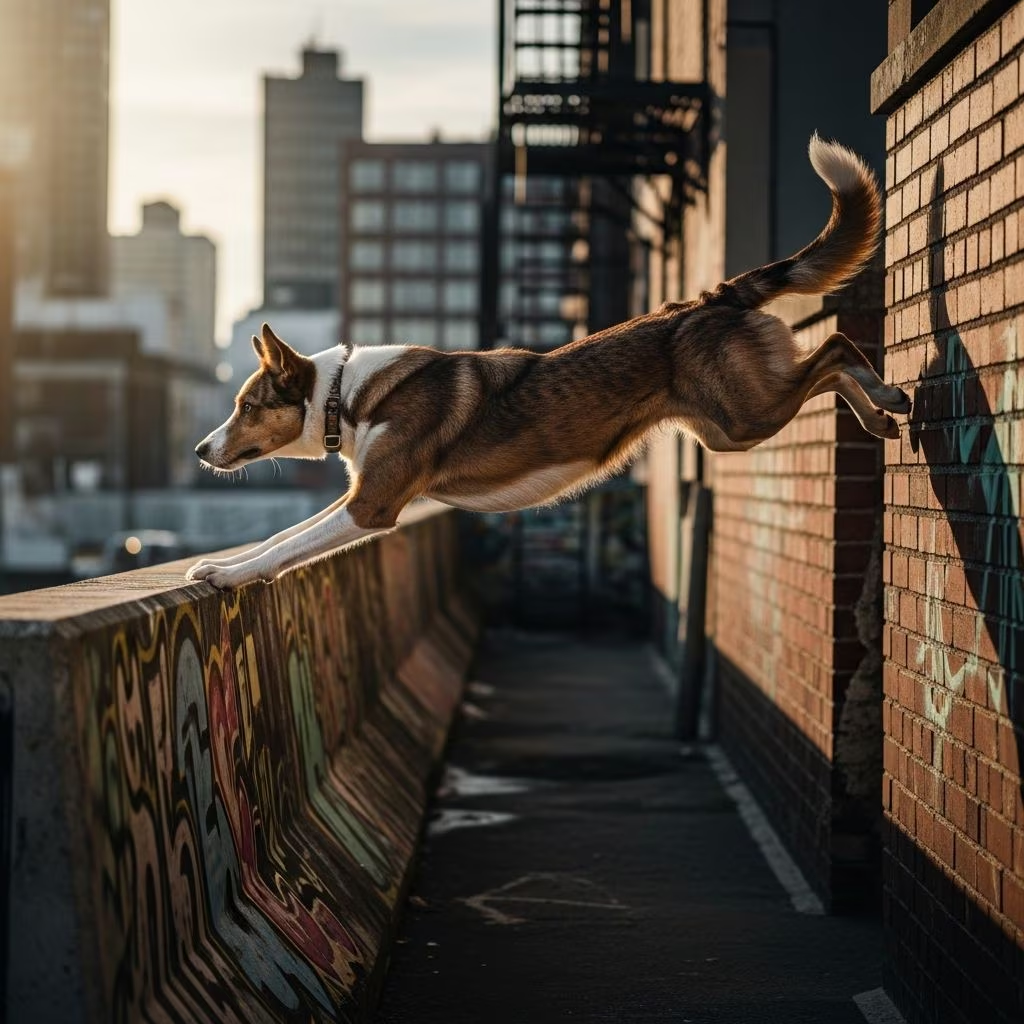
Urban canine parkour redefines how dogs interact with their surroundings, turning ordinary cityscapes into playgrounds of physical challenge and mental stimulation. This innovative activity draws from human parkour principles, adapting them for dogs to navigate, balance, and leap over environmental features with precision and enthusiasm. Unlike traditional agility courses that require specialized gear, dog parkour leverages benches, walls, curbs, and railings found in everyday settings, making it accessible for urban dwellers and promoting a deeper connection between handler and pet.
The Rise of Dog Parkour as a Modern Dog Sport
Dog parkour emerged as an extension of human freestyle movement, evolving into a structured sport that emphasizes safety, creativity, and reward-based learning. Handlers guide their dogs to perform fluid sequences on natural obstacles, fostering not just athleticism but also problem-solving skills. Organizations like the International Dog Parkour Association have formalized levels from novice to expert, providing clear benchmarks for progression. This sport stands out for its portability—no need for arenas or equipment—allowing sessions in parks, alleys, or backyards.
Participants report heightened engagement from their dogs, as the activity taps into innate predatory and exploratory drives. Videos showcase dogs executing seamless routines, from precise jumps to intricate balances, demonstrating what’s achievable with consistent, positive training.
Core Benefits for Dogs and Their Handlers
Engaging in urban canine parkour offers multifaceted advantages. Physically, it enhances core strength, coordination, and proprioception—the dog’s awareness of its body in space—without the high-impact strain of some sports. Mentally, it boosts confidence, reduces anxiety, and sharpens focus through rewarding challenges tailored to the dog’s pace.
- Physical Fitness: Low-impact movements build muscle tone and flexibility, ideal for dogs of varying ages and breeds.
- Mental Enrichment: Problem-solving obstacles prevent boredom and destructive behaviors.
- Bonding Enhancement: Handlers learn to read subtle cues, strengthening trust and communication.
- Accessibility: Adaptable for seniors or mobility-limited dogs by lowering heights or simplifying tasks.
For handlers, it promotes outdoor activity and mindfulness, turning routine walks into purposeful adventures.
Essential Gear and Safety Protocols
Minimalism defines dog parkour equipment: a sturdy harness, standard leash, high-value treats or toys, and poop bags suffice. Avoid collars that could cause injury during slips; opt for flat buckles or harnesses that distribute pressure evenly.
Safety is paramount. Always spot your dog—position yourself to assist if balance falters. Limit jump heights: adults to shoulder level maximum, puppies to block-of-wood height (about 4-6 inches) to protect developing joints. Assess surfaces for slipperiness, especially wet wood or metal, and train progressively to avoid overwhelm.
| Height Guideline | Adult Dogs | Puppies |
|---|---|---|
| Jump Down From | Shoulder height max | Block height (4-6″) |
| Balance On | Gradual incline | Flat, stable low objects |
| Gap Jumps | 1.5x body length | Short distances only |
Monitor for fatigue signs like heavy panting or hesitation, and end sessions positively.
Mastering Beginner-Level Skills
Novice training focuses on foundational behaviors using simple cues like ‘up,’ ‘over,’ or ‘around.’ Start in low-distraction areas with familiar objects.
- Paw Targeting: Lure front paws onto a curb or step with treats, rewarding all four paws eventually.
- Over Obstacles: Encourage jumping over low items taller than elbow height without paw contact.
- Around Maneuvers: Guide circling a pole or bench at least 3 feet away, returning to you with a 180-degree turn, both directions.
- Moving Objects: Place paws on a wobbly board or swinging item, rewarding adjustment.
- Backing Up: On flat ground, cue three steps backward to build rear awareness.
Use shaping: reward approximations, fading lures over time for independent execution. Sessions of 5-10 minutes keep enthusiasm high.
Advancing to Intermediate Challenges
Once basics solidify, introduce dynamic elements. Prop boards against walls to teach inclined paw placement, gradually verticalizing for direct wall jumps. Practice ‘send-outs’—cueing the dog to an obstacle from 10 feet away, targeting two paws.
Build endurance with sequences: chain 4-6 behaviors without repetition, ensuring smooth transitions. Incorporate ‘under’ and ‘through’ for variety, using benches or low branches.
Expert Techniques for Elite Performance
Expert parkour demands precision and flow. Key skills include:
- Advanced Balance: Traverse narrow ledges twice shoulder height, with 180-degree turns without dismounting.
- Gap Jumps: Leap between elbow-high platforms 1.5 times body length apart.
- Tic Tacs (Rebounds): Quick four-paw contact on vertical surfaces, rebounding both ways without lingering.
- Long Sequences: 7-10 unique obstacles in 90 seconds, showcasing hesitation-free flow.
Competition videos highlight teams navigating urban mazes flawlessly, often with dramatic music underscoring athletic feats.
Training Progressions: A Step-by-Step Framework
Structure practice with deliberate escalation:
| Level | Focus Skills | Duration | Success Metric |
|---|---|---|---|
| Novice | Paws on, over, around | 5-10 min | 80% accuracy |
| Intermediate | Balance, send-outs | 15 min | Chained sequences |
| Expert | Tic tacs, full runs | 20-30 min | Timed fluency |
Incorporate play breaks and vary locations to generalize skills.
Common Pitfalls and Troubleshooting
Avoid rushing heights, which erodes confidence. If refusal occurs, regress to easier versions. Wet conditions demand caution—postpone balance work. Breed considerations: brachycephalics (short-nosed) may tire faster; adapt accordingly.
Real-World Applications Beyond Sport
Parkour skills translate to daily life: confident street-crossing, obstacle navigation on hikes, or therapy dog versatility. It empowers reactive dogs by channeling energy positively.
Frequently Asked Questions (FAQs)
Is dog parkour suitable for all breeds?
Yes, with modifications. Small dogs excel at precision; larger ones at power jumps. Tailor to physical limits.
How often should I train?
3-5 sessions weekly, 10-20 minutes each, prioritizing quality over quantity.
Can puppies participate?
Start with low, flat objects post-teething (around 6 months), emphasizing fun over challenge.
What if my dog is fearful?
Build slowly with hand-targeting and rewards; consult a force-free trainer if needed.
Are competitions available?
Yes, through associations offering virtual judging via video submissions.
Getting Started Today
Scout your neighborhood for safe features: start with a low bench for paws-up. Arm with treats, patience, and enthusiasm—your dog’s urban adventure awaits.
References
- How To Train Your Dog To Jump Off A Wall (Parkour) // Percy the Papillon Dog — YouTube. Circa 2021. https://www.youtube.com/watch?v=hs79Hmz-kV8
- Expert Level | International Dog Parkour Association — dogparkour.org. Accessed 2026. https://www.dogparkour.org/expert-level
- How to Turn Anything Into a Parkour Dog Agility Course — PetMD. Recent update. https://www.petmd.com/dog/pet-lover/how-turn-anything-parkour-dog-agility-course
- Dog Parkour: Fun For Pups and People — American Kennel Club (AKC). Recent. https://www.akc.org/expert-advice/sports/dog-parkour-fun-for-pups-and-people/
- Novice Level – International Dog Parkour Association — dogparkour.org. Accessed 2026. https://www.dogparkour.org/novice-level
- Beginner’s guide to Dog Parkour — Tug-E-Nuff. Recent. https://www.tug-e-nuff.com/blogs/news/dog-parkour-everything-you-need-to-know
- Most People Don’t Know This Dog Sport Exists… But Any Dog Can Do It! — YouTube (Pawsome Connection). Recent. https://www.youtube.com/watch?v=UeTgfNgStrU



