
Urate Deposits In Poultry: A Practical Guide For Producers
Comprehensive guide to recognizing, preventing, and managing urate buildup in chickens and other birds for optimal flock health.
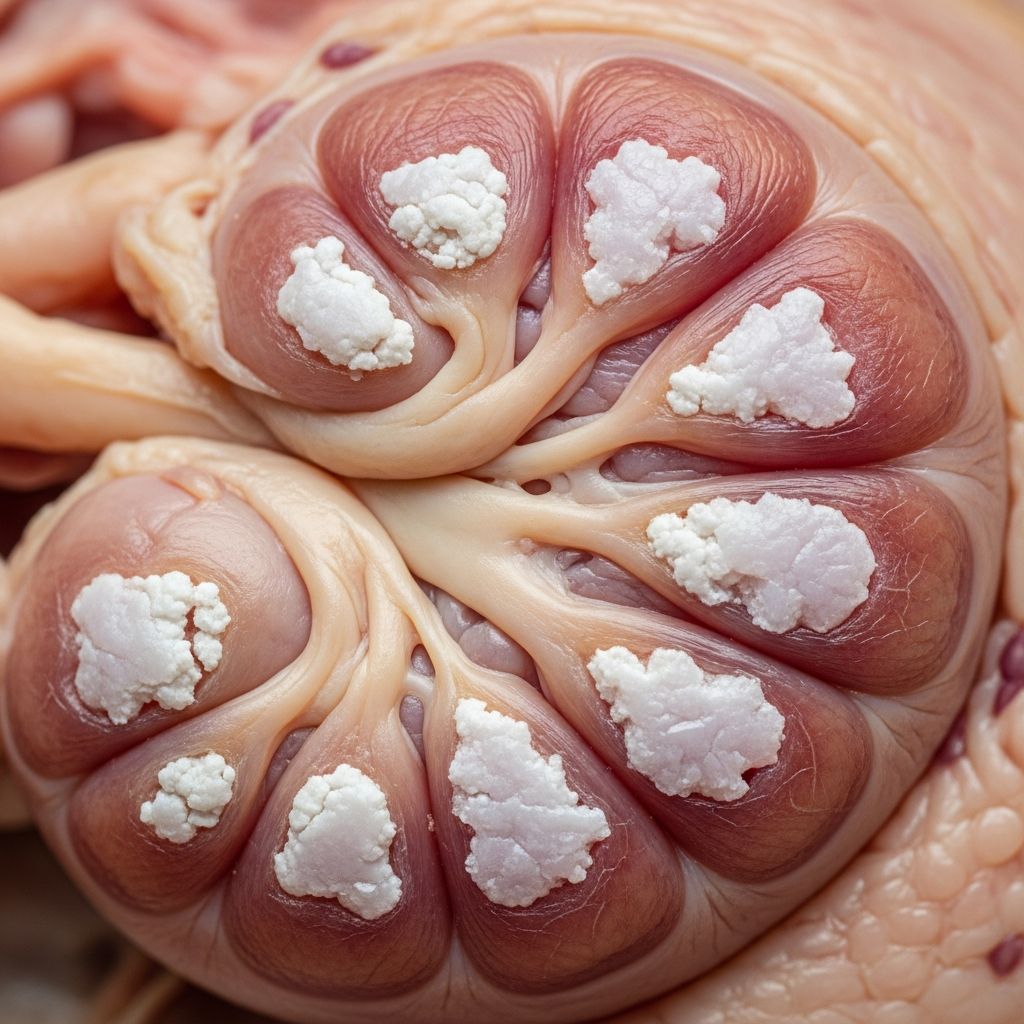
Poultry producers frequently encounter urate deposits, a condition where uric acid crystals accumulate in tissues, leading to significant health issues and production losses. This disorder manifests in two primary forms: visceral deposits affecting internal organs and articular deposits impacting joints. Understanding its mechanisms is crucial for effective management in commercial and backyard flocks.
Understanding the Physiology of Uric Acid in Birds
Birds differ from mammals in nitrogen waste excretion, converting ammonia primarily into uric acid, which appears as a semisolid paste in droppings. Healthy kidneys filter this waste efficiently, preventing buildup in the bloodstream. When renal function falters, hyperuricemia develops, causing urates to precipitate in tissues. This process mirrors uremia in other animals but progresses rapidly due to birds’ high metabolic rates.
Uric acid solubility depends on urine pH and hydration levels. Alkaline conditions or dehydration reduce solubility, promoting crystal formation. In laying hens, increased calcium demands during egg production can exacerbate risks if prior kidney damage exists.
Types of Urate Accumulation: Visceral vs. Articular
Visceral Urate Deposits represent the acute form, often a terminal sign of kidney failure. White, chalky materials coat organs like the liver, heart sac, and abdominal lining. These deposits arise from sudden renal shutdown, frequently linked to infections or toxins, with minimal inflammation due to the swift progression.
Articular Urate Deposits develop chronically from prolonged hyperuricemia. Tophi—urate tophi—form in joint synovium, especially toes and wings, causing swelling, deformation, and granulomatous responses. Kidneys may appear normal externally, pointing to metabolic rather than destructive causes.
| Aspect | Visceral Form | Articular Form |
|---|---|---|
| Onset | Acute, rapid | Chronic, gradual |
| Primary Sites | Organs, serous surfaces | Joints, synovial membranes |
| Kidney Appearance | Atrophied or obstructed | Often normal |
| Common Triggers | Infections, dehydration | High protein, genetics |
Key Causes and Risk Factors
Numerous factors contribute to urate accumulation, categorized into infectious, nutritional, toxic, and management-related issues.
Infectious Contributors
- Infectious bronchitis virus damages renal tubules, leading to persistent nephritis that manifests as gout during lay.
- Avian nephritis virus and cryptosporidia impair filtration directly.
- These pathogens often strike young birds, with symptoms delayed until maturity.
Nutritional Imbalances
- Diets exceeding 3% calcium in non-layers promote urolithiasis.
- High protein elevates uric acid production; low phosphorus with high calcium favors precipitation.
- Sodium excess from fish meal or bicarbonate alkalinizes urine, forming stones.
Toxic and Environmental Factors
- Mycotoxins like oosporein and heavy metals reduce renal function.
- Aminoglycoside antibiotics and copper sulfate nephrotoxicity common in treatments.
- Dehydration from water restriction halves urate solubility, critical in hot climates.
Genetic predispositions, such as in New Hampshire breeds, affect uric acid transport, leading to spontaneous articular gout.
Recognizing Clinical Signs
Symptoms vary by type but share renal distress indicators. Affected birds show depression, reduced appetite, ruffled feathers, weight loss, and emaciation. Visceral cases feature polydipsia, polyuria, diarrhea, and sudden mortality. Articular gout causes lameness, swollen joints, and foot deformities, impairing mobility and feed access.
In flocks, monitor for increased cull rates due to poor performance. Dirty vents signal metabolic upset. Early detection hinges on consistent health checks.
Diagnostic Approaches
Diagnosis combines gross pathology, histopathology, and blood analysis. Necropsy reveals white urate tophi on viscera or joints, distinguished from fibrin by solubility in water (urates dissolve, fibrin does not). Microscopically, feathery crystals or basophilic spherules confirm.
Blood uric acid levels above normal (5-10 mg/dL) indicate hyperuricemia. Rule out infections via PCR or serology. Urolithiasis shows ureteral calculi, staghorn-shaped.
- Gross exam: Organ coatings, kidney atrophy.
- Histology: Crystal deposits sans heavy inflammation.
- Biochem: Elevated uric acid, altered electrolytes.
Prevention Strategies for Flock Health
Proactive measures target root causes. Implement strict biosecurity against nephropathogens; vaccinate for bronchitis. Balance rations: limit calcium to 0.8-1% pre-lay, phosphorus 0.4-0.6%, protein 16-18%. Ensure constant clean water, especially in heat.
Avoid nephrotoxins; test feed for mycotoxins. Monitor genetics in breeding stock. Regular blood screening in layers detects subclinical issues.
| Prevention Tactic | Target Risk | Implementation Tip |
|---|---|---|
| Vaccination | Infections | Bronchitis at day-old. |
| Diet Formulation | Imbalances | Phase feeding for layers. |
| Water Management | Dehydration | Nipple systems, 2x body weight daily. |
| Toxin Screening | Mycotoxins |
Treatment Options and Management
Treatment success is limited post-diagnosis; focus on supportive care. Allopurinol lowers uric acid but risks toxicity. Hydration via electrolytes aids clearance. Remove affected birds to curb spread. For articular cases, anti-inflammatories ease pain, though permanent damage persists.
In outbreaks, adjust feed downward in protein/calcium; supplement phosphorus. Cull chronic sufferers to protect productivity.
Impact on Poultry Production
Urate deposits slash egg output by 20-50% in layers, elevate mortality 5-15%, and hike culls. Economic losses stem from veterinary costs and downgraded carcasses. Breeds like Leghorns show higher susceptibility during peak lay.
Research models using high-calcium diets replicate conditions, aiding drug trials. Recent studies link early bronchitis to late-life gout, urging integrated health programs.
FAQs on Urate Deposits in Poultry
What distinguishes urate deposits from infections?
Urate tophi dissolve in water and show minimal inflammation; infections yield yellow pus or fibrin.
Can gout be reversed in laying hens?
Acute visceral cases are often fatal; early intervention with diet tweaks may salvage flocks.
How does diet trigger this condition?
Excess calcium/phosphorus imbalance or protein overloads kidneys, promoting crystal formation.
Is articular gout hereditary?
Yes, certain lines exhibit transport defects; selective breeding mitigates risk.
What water intake prevents dehydration-related gout?
Provide 1.5-2 times body weight daily, adjusted for temperature.
Advanced Research and Future Directions
Ongoing studies model hyperuricemia via diets or viruses, testing urate oxidase mimics. Precision nutrition with phosphorus binders shows promise. Genomic screening identifies at-risk birds pre-outbreak.
Integrating AI for early symptom detection via camera monitoring enhances control. Collaborative efforts between vets and nutritionists yield tailored protocols, reducing incidence below 2%.
References
- Urate Deposition (Gout) in Poultry — MSD Veterinary Manual. 2023. https://www.msdvetmanual.com/poultry/miscellaneous-conditions-of-poultry/urate-deposition-gout-in-poultry
- Avian Urolithiasis (Visceral Gout): An Overview — The Poultry Site. 2023. https://www.thepoultrysite.com/articles/avian-urolithiasis-visceral-gout-an-overview
- Progress in modeling avian hyperuricemia and gout (Review) — Spandidos Publications. 2024-10-15. https://www.spandidos-publications.com/10.3892/br.2024.1879
- Visceral Gout — Hendrix Genetics Laying Hens. 2023-12-14. https://layinghens.hendrix-genetics.com/en/articles/visceral-gout/
- Gout Management in Poultry — IVSA Nepal. 2023. https://www.ivsanepal.org/sites/default/files/Gout_Management_in_Poultry.pdf
Similar Articles








Read full bio of Sneha Tete


