

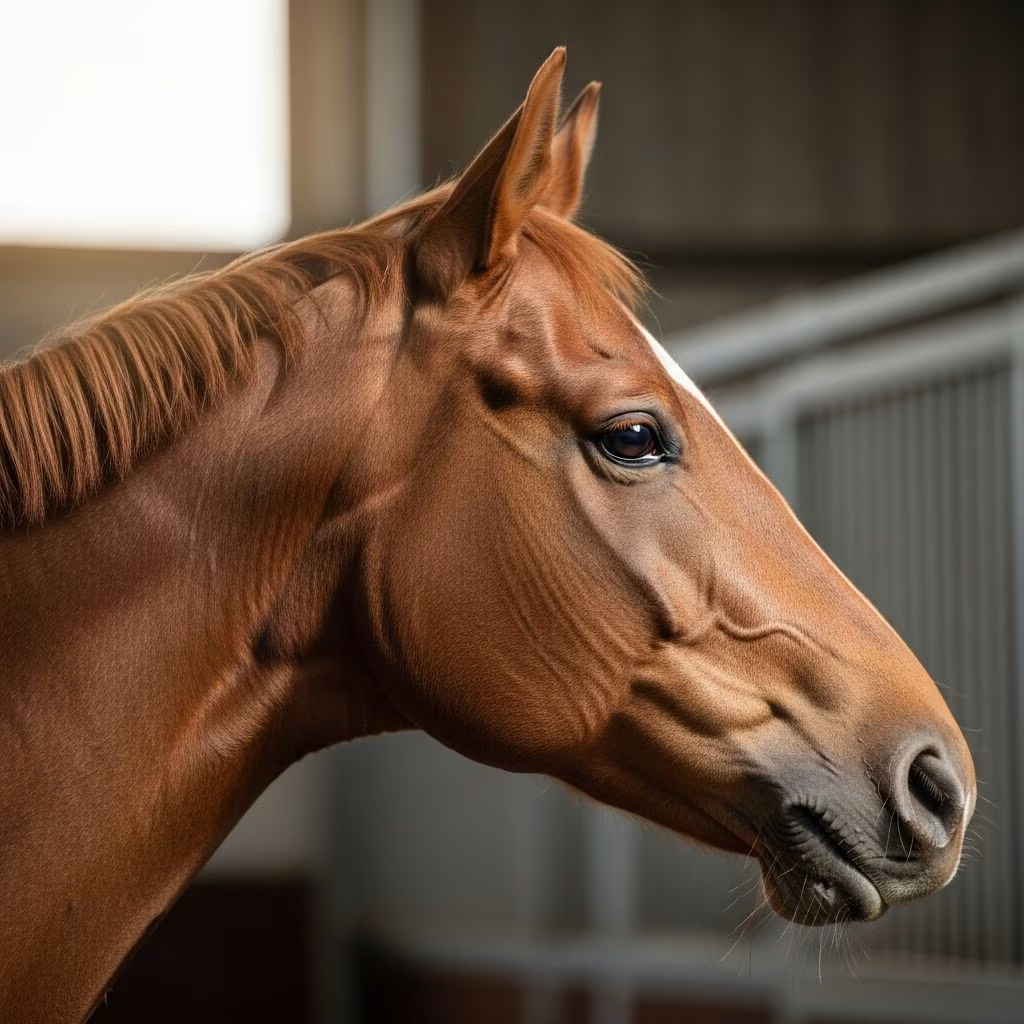
Dorsal displacement of the soft palate represents one of the most prevalent respiratory conditions affecting equine athletes, particularly those engaged in high-speed exercise and performance activities. This condition occurs when the soft palate, a muscular structure located in the roof of the horse’s mouth and throat, moves upward from its normal position and becomes positioned above the epiglottis, thereby obstructing the airway during exhalation. The consequences of this displacement range from mild performance decrements to severe exercise intolerance, making it a significant concern for horse owners, trainers, and veterinary professionals.
Recognizing the Problem: Clinical Manifestations
Horses experiencing soft palate displacement typically present with a constellation of clinical signs that become apparent during or immediately after physical exertion. The most characteristic symptom is the development of unusual respiratory sounds, which owners and trainers frequently describe as gurgling, snoring-like noises, or growling sounds that emerge during the breathing cycle. These distinctive sounds occur primarily during the exhalation phase and result from vibration of the displaced palatal tissue as air passes through the partially obstructed airway.
Beyond auditory abnormalities, affected horses commonly demonstrate progressive exercise intolerance, wherein they exhibit reduced performance capacity relative to their previous athletic baseline. A horse may perform normally during the initial phases of exercise but will unexpectedly “choke down” during high-intensity efforts, whereby the palatal displacement becomes more pronounced and creates greater airway obstruction. This phenomenon often catches riders and handlers off-guard, as the horse appears to suddenly lose cardiovascular capacity or willingness to perform at expected levels.
The relationship between displacement severity and clinical signs is not always proportional; some horses with intermittent displacement may show minimal symptoms during low-intensity activity but experience pronounced difficulties during competitive efforts or galloping. This variability underscores the importance of comprehensive diagnostic evaluation to distinguish soft palate displacement from other potential causes of poor performance.
The Diagnostic Process: From Clinical Suspicion to Confirmation
Establishing a definitive diagnosis of soft palate displacement requires a methodical approach that combines clinical assessment with advanced imaging technology. The diagnostic process typically begins with a thorough history and physical examination, during which veterinarians evaluate the horse’s overall respiratory health and performance patterns.
Endoscopic Examination: The Gold Standard
Endoscopic evaluation represents the most reliable diagnostic tool available to veterinarians. This technique involves the insertion of a flexible camera into the nasal passages, allowing direct visualization of the larynx, soft palate, and surrounding structures. Two primary endoscopic approaches exist, selected based on the clinical presentation and the presumed nature of the displacement.
Static endoscopy, performed at rest or immediately following exercise, proves beneficial when the displacement is believed to be permanent or consistently present. During this examination, the veterinarian can observe the palatal position relative to the epiglottis and assess for any anatomical abnormalities or masses that might contribute to the condition.
Dynamic endoscopy represents the preferred diagnostic method for suspected intermittent displacement, as it allows visualization of airway structures during active exercise when the displacement is most likely to occur. The horse exercises on a treadmill or performs overground galloping while the endoscope captures real-time footage of the palatal position during respiratory cycles. This approach proves particularly valuable because the horse’s head position and exercise intensity directly influence whether displacement occurs, making exercise-induced assessment essential for accurate diagnosis.
Complementary Imaging Modalities
Radiography and ultrasonography may be employed as supplementary diagnostic tools to evaluate the laryngeal and hyoid apparatus anatomy. These imaging techniques help identify structural abnormalities or muscular dysfunction that might predispose the horse to palatal displacement. However, endoscopy remains the definitive diagnostic procedure.
Underlying Mechanisms: Why Displacement Occurs
The precise etiopathogenesis of soft palate displacement remains incompletely understood, yet current research and clinical observations have identified several contributing factors. The condition appears to result from a combination of anatomical, muscular, and functional abnormalities rather than a single causative mechanism.
One leading theory involves dysfunction of the muscles responsible for maintaining the larynx in its normal position during exercise. The laryngeal position is actively controlled by a complex system of muscles including the thyrohyoideus and sternothyrohyoideus muscles, which stabilize the larynx and epiglottis relative to the soft palate. When these muscles weaken or fail to function optimally, the larynx may retract caudally (backward), allowing the soft palate to slip dorsally above the epiglottis.
Inflammation within the upper respiratory tract can contribute significantly to displacement risk. When the pharyngeal branch of the vagus nerve experiences inflammation or irritation, it may impair the neurological signals responsible for coordinating pharyngeal muscular function. This nerve dysfunction can compromise the mechanisms that normally stabilize the palate during exercise.
Additionally, some equine athletes may possess inherent anatomical variations that predispose them to displacement. These variations might include excessive palatal length, abnormal soft palate elasticity, or structural relationships between the epiglottis and soft palate that create biomechanical disadvantages during high-intensity exercise.
Treatment Pathways: Conservative Approaches First
A logical treatment algorithm typically begins with conservative management strategies, reserving surgical intervention for cases that fail to respond to non-invasive approaches or for horses requiring rapid return to competition. Conservative management addresses underlying factors that may precipitate or exacerbate displacement.
Rest and Inflammation Control
Initial management focuses on providing complete or partial rest from intense exercise to allow inflammatory conditions to resolve. During this period, veterinarians may administer anti-inflammatory medications, antibiotics (if respiratory tract infection is present), and topical throat preparations designed to reduce mucosal inflammation. Regular vaccination against influenza and rhinopneumonitis viruses is important, as these conditions can precipitate upper airway inflammation that exacerbates displacement.
Mechanical Stabilization Devices
Several mechanical devices have proven beneficial by counteracting the caudal retraction forces that contribute to laryngeal positioning problems:
- Tongue-tie devices function by preventing excessive caudal (backward) movement of the tongue, thereby maintaining forward positioning of the laryngeal structures
- Figure-eight nosebands apply gentle pressure to modify the horse’s head carriage and support optimal palatal positioning
- Specialized bitwork involving bits designed to maintain the tongue in a lower, forward position within the mouth
- Laryngeal support collars (such as the Cornell collar) apply external pressure to maintain laryngeal elevation and prevent caudal displacement
These conservative approaches demonstrate efficacy in approximately 50-60% of affected horses, making them valuable first-line interventions. Proper application and fitting of these devices proves critical to their success, as improper use may prove ineffective or cause discomfort.
Training Modifications and Equipment Adjustments
Altering the horse’s customary head carriage during riding or driving may reduce displacement frequency. Some horses benefit from maintaining a slightly lower head position during exercise, as this can optimize laryngeal positioning. Equipment changes and training technique modifications should be implemented systematically, allowing adequate time to assess their effectiveness before pursuing more invasive interventions.
Surgical Solutions: When Conservative Measures Prove Insufficient
For horses that fail to respond adequately to conservative management or those requiring expedited return to competition, surgical intervention offers several evidence-based options with varying success rates and complexity.
Laryngeal Tie-Forward Procedure
The laryngeal tie-forward procedure represents the gold standard surgical approach and demonstrates the highest success rates among currently available techniques. During this procedure, performed under general anesthesia, permanent sutures are strategically placed to connect the larynx and hyoid apparatus structures, effectively drawing the larynx and base of the tongue in a rostral and dorsal direction. This repositioning moves the epiglottis closer to the soft palate’s caudal border, creating a more effective seal that prevents palatal displacement during high-intensity exercise.
The tie-forward approach mimics the natural function of the thyrohyoideus muscle, essentially providing permanent muscular support to structures that may be functionally compromised. Success rates associated with this procedure reach approximately 80%, representing substantially superior outcomes compared to alternative surgical approaches. Following surgery, horses typically require a three-week rest period before returning to competitive activities, with appropriate post-operative management including anti-inflammatory medications and antibiotics for several days.
Soft Palate Stiffening Techniques
Alternative surgical approaches focus on increasing soft palate rigidity to prevent dorsal displacement. These techniques work on the principle that a stiffer palate resists displacement forces more effectively than a more pliable structure.
Staphylectomy involves surgical trimming of the palate’s free caudal margin, with subsequent scar tissue formation providing increased palatal stiffness. While approximately 60% of treated horses show improvement, this procedure proves most suitable for horses with masses or significant tissue abnormalities along the palate’s posterior border. Excessive tissue removal risks dysphagia (difficulty swallowing), necessitating conservative resection techniques.
Palatoplasty represents a more refined approach to palatal stiffening. This procedure utilizes surgical laser technology to create multiple small burns along the soft palate’s caudal aspect, inducing therapeutic fibrosis that stiffens the tissue without removing significant palatal substance. Success rates of 25-50% have been reported, making this approach moderately effective for selected cases. Injectable sclerotherapy, involving injection of stiffening agents into the soft palate tissue, provides similar outcomes through a comparable mechanism.
Laryngeal Muscle Surgery
Procedures targeting the laryngeal musculature directly address the underlying muscular dysfunction believed to contribute to displacement. A sternothyrohyoideus myectomy involves surgical removal of a segment (typically 4 inches) of the strap muscles located on the neck’s ventral surface, just posterior to the lower jaw. By eliminating a portion of muscle tissue responsible for laryngeal retraction, this procedure prevents excessive caudal movement of laryngeal structures.
The myectomy procedure demonstrates approximately 65% success, with some studies reporting rates as high as 86%. Recovery involves post-operative stall confinement with neck bandaging and hand-walking for approximately two weeks, followed by gradual return to training. A more recent refinement, the tenectomy procedure, achieves similar functional outcomes by removing only the muscle’s tendon insertion rather than excising muscle tissue, potentially offering reduced complications and faster recovery compared to full myectomy.
Comparative Effectiveness and Treatment Selection
| Treatment Approach | Success Rate | Invasiveness Level | Recovery Time | Best Suited For |
|---|---|---|---|---|
| Conservative Management (rest, anti-inflammatories, devices) | 50-60% | Non-invasive | Minimal | Mild cases, initial management |
| Staphylectomy | ~60% | Surgical | 2-3 weeks | Horses with palatal masses |
| Palatoplasty (laser or sclerotherapy) | 25-50% | Surgical | 2-3 weeks | Moderate cases |
| Myectomy | 65-86% | Surgical | 2-3 weeks | Muscular dysfunction |
| Laryngeal Tie-Forward | ~80% | Surgical | 3 weeks | Severe cases, high-performance athletes |
Post-Operative Management and Rehabilitation
Regardless of the surgical approach selected, appropriate post-operative management significantly influences outcome success. Most surgical procedures necessitate anti-inflammatory and antibiotic administration for several days following surgery. The horse should remain confined to a stall with neck support through appropriate bandaging, combined with hand-walking exercise to promote healing while preventing complications.
Feeding height proves important during recovery; providing feed and water at shoulder height minimizes stress on surgical sites and sutures. Following the initial two to three-week recovery period and suture removal, gradual return to light exercise and training can commence, with progressive advancement based on the horse’s response and healing progress.
Prognosis and Long-Term Outcomes
The prognosis for horses with soft palate displacement varies considerably based on the underlying cause, the severity of the condition, the horse’s age, and the selected treatment approach. Younger horses typically respond more favorably to conservative management compared to older individuals, likely due to better healing capacity and improved muscular adaptation.
The existence of multiple treatment options underscores the reality that the complete pathophysiology of soft palate displacement remains incompletely understood. This incomplete understanding emphasizes the importance of individualized treatment planning, wherein veterinarians discuss all available options with horse owners and develop tailored management protocols based on specific patient factors.
Frequently Asked Questions About Equine Soft Palate Displacement
At what age does soft palate displacement typically develop?
While the condition can affect horses of various ages, it most commonly becomes clinically apparent in young to middle-aged athletic horses during their competitive careers. The condition appears more frequently in horses subjected to high-intensity exercise, suggesting that performance demands unmask underlying structural or functional vulnerabilities.
Can soft palate displacement resolve without treatment?
Some horses, particularly those with mild intermittent displacement, may show improvement with rest alone, especially if underlying respiratory inflammation contributes to the condition. However, permanent or severe displacement typically requires active intervention to restore normal airway function and competitive performance.
Will my horse be permanently sound following surgical treatment?
Success rates for modern surgical approaches, particularly the laryngeal tie-forward procedure, offer substantial likelihood of return to previous performance levels. However, no procedure offers 100% guarantee, and individual outcomes vary based on multiple factors including overall health status, proper post-operative management, and the horse’s inherent healing capacity.
Can environmental factors influence soft palate displacement severity?
Yes, upper respiratory infections, allergies, and environmental dust or irritants can trigger inflammation that precipitates or exacerbates displacement. Managing environmental exposure and preventing respiratory infections through vaccination and appropriate stable management can reduce displacement frequency.
Conclusion: Moving Forward with Equine Respiratory Health
Soft palate displacement represents a significant yet manageable respiratory condition affecting equine athletes. Through systematic diagnostic evaluation, thoughtful consideration of available treatment modalities, and diligent post-operative management, veterinarians and horse owners can effectively restore respiratory function and athletic capability. The multitude of available treatment approaches reflects ongoing evolution in equine respiratory medicine, with evidence-based techniques continually improving outcomes and reducing complications. Success requires collaboration between the veterinary team and horse owners, clear communication regarding treatment expectations, and commitment to appropriate rehabilitation protocols.
References
- Dorsal Displacement of the Soft Palate in Horses – Respiratory System — MSD Veterinary Manual. 2024. https://www.msdvetmanual.com/respiratory-system/respiratory-diseases-of-horses/dorsal-displacement-of-the-soft-palate-in-horses
- Dorsal Displacement of the Soft Palate in Horses — LSU AgCenter. 2024. https://www.lsuagcenter.com/topics/livestock/animal_health/horses/dorsal-displacement-of-the-soft-palate-in-horses
- Palatal Sclerotherapy: A Potentially Useful Treatment of Intermittent Dorsal Displacement of the Soft Palate in Juvenile Standardbred Racehorses — National Center for Biotechnology Information (NCBI). 2008. https://pmc.ncbi.nlm.nih.gov/articles/PMC2387264/
- Dorsal Displacement of the Soft Palate (DDSP) — Texas A&M Veterinary Medical Teaching Hospital. 2024. https://vethospital.tamu.edu/large-animal/equine-soft-tissue-surgery/dorsal-displacement-of-the-soft-palate/
- Dorsal Displacement of the Soft Palate — American College of Veterinary Surgeons (ACVS). 2024. https://www.acvs.org/large-animal/dorsal-displacement-of-the-soft-palate/
- Soft Palate Displacement in Horses — British Veterinary Association Journal. 2024. https://bvajournals.onlinelibrary.wiley.com/doi/10.1136/inp.h4531



