Rat Intelligence Unveiled: Key Insights Into Their Smart Skills
Discover the surprising cognitive prowess of rats through scientific studies on memory, problem-solving, and social skills that rival higher mammals.
Unveiling Rat Intelligence: Smarter Than You Think
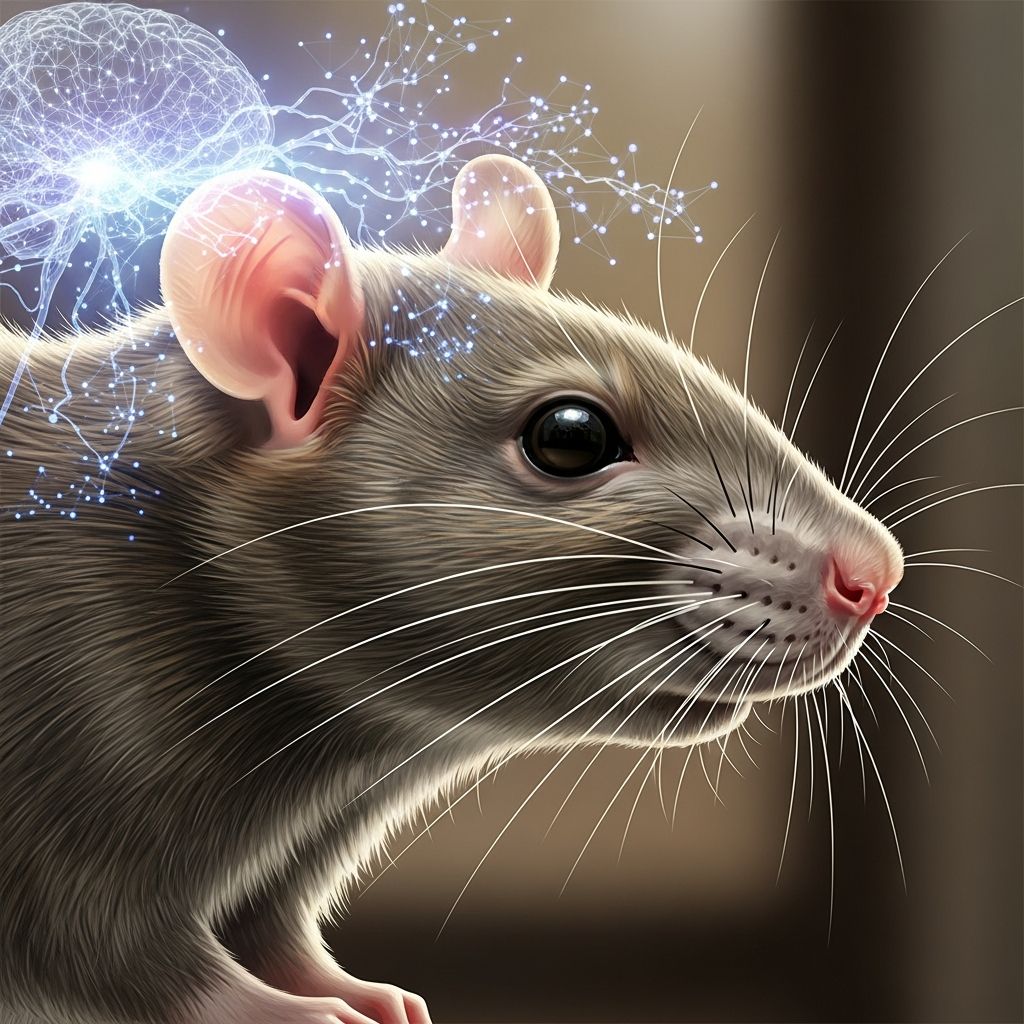
Rats possess cognitive abilities that often surpass expectations, demonstrating skills in memory, problem-solving, and even self-awareness of their knowledge through experiments designed to test complex behaviors. These small rodents outperform humans in certain pattern recognition tasks and show nuanced understanding of spatial navigation, numerical sequences, and social cues.
The Foundations of Rodent Brainpower
Rodents like rats serve as key models in neuroscience due to their brain structures that mirror primitive human neural pathways, enabling studies on behavior, learning, and disease. Their larger brains compared to mice allow for more sophisticated psychological experiments, revealing intelligence that includes habit formation and impulse control.
Research highlights rats’ adaptability in dynamic environments. In radial arm mazes, rats remember visited arms to avoid repetition, selecting up to six unique paths out of eight without reinforcement, though performance dips with more options due to increased cognitive load.
Mastering Mazes and Spatial Memory
One hallmark of rat cognition is their prowess in spatial tasks. In digging experiments, rats use proportional distance cues to locate hidden food without relying on smell, quickly adapting to new enclosures and digging precisely where rewards are buried.
- Rats associate locations with rewards efficiently, showcasing place learning.
- They maintain accuracy even when olfactory cues are controlled, proving reliance on visual and spatial processing.
- Performance remains consistent over trials, indicating robust long-term memory.
These findings underscore rats’ ability to form cognitive maps, a skill essential for survival in complex habitats.
Logical Reasoning and Deductive Skills
Rats excel in logic tests involving scent preferences. Trained to prefer one odor over another in sequences, they deduce the correct choice even without prior exposure to certain scents, performing comparably to chimpanzees. When novel scents appear, their accuracy drops, mirroring human logical processing uncertainties.
| Task Type | Rat Performance | Comparison |
|---|---|---|
| Scent Sequence Logic | High accuracy without reinforcement | Matches chimpanzee results |
| Novel Scent Introduction | Decline in success | Similar to human logic limits |
| Preference Training | Individualized sequences | Controls for innate biases |
This demonstrates rats’ capacity for transitive inference, applying learned rules to novel scenarios.
Numerical Abilities and Counting Shocks
Rats can count discrete events, as shown in shock anticipation studies. After experiencing predictable shock sequences, they increase lever-pressing post the final shock, signaling recognition of safety periods. This behavior requires optimal session lengths for replication and persists without time-based cues, relying instead on event tallying.
Long-term retention shines in ordinal position tasks, where rats recall sequences accurately even 18 months later, indicating strong numerical memory spanning their lifespan.
Metamemory: Knowing What They Know
Rats exhibit metamemory, assessing memory strength before decisions. In spatial tasks, they make temporal bets—staying longer in choice ports when confident—correlating with accuracy. Computational models confirm these bets reflect internal confidence estimates, akin to primate behaviors.
- Rats adjust bet duration based on memory clarity.
- Performance follows a monotonic increase with choice correctness.
- Models simulate rat decisions using probability densities of memory traces.
This bridges rodents to higher cognition, enabling Type 2 decisions about their own knowledge.
Social Intelligence and Human Recognition
Rats distinguish familiar humans from strangers using olfactory cues, even with minimal bonding time and no feeding involved. This recognition highlights their social acuity and sensory precision.
Comparative Smarts: Rats vs. Humans
In visual discrimination tasks varying by orientation and spacing, rats outperform humans when patterns involve multiple dimensions, suggesting superior flexibility in complex learning.
Individual differences in maze navigation correlate with general learning ability, stabilizing strategies within few trials.
Applications in Research and Beyond
Rat models advance medicine, from cardiovascular studies to neural regeneration, leveraging their genetic similarities to humans—nearly all disease-linked genes have rat counterparts. Behavioral insights inform psychology, with rats modeling habits via amygdala-striatum circuits.
Innovative experiments, like teaching rats to drive tiny cars, reveal joy-linked persistence, enriching welfare understanding.
FAQs
Are rats smarter than some humans in specific tasks?
Yes, rats excel over humans in multi-dimensional pattern discrimination.
Can rats count?
Rats tally shocks to predict safety, demonstrating numerical competence.
Do rats recognize people?
They identify familiar handlers via smell.
What is rat metamemory?
Rats bet on memory confidence through decision timing.
Why study rat intelligence?
It models human cognition and disease.
References
- Rats Can Be Smarter Than People — Harvard Business Review. 2015-01-01. https://hbr.org/2015/01/rats-can-be-smarter-than-people
- Modeling Intelligence in Rodents — Maze Engineers, Conduct Science. N/A. https://maze.conductscience.com/modeling-intelligence-in-rodents/
- Metamemory: Rats know the strength of their memory — PMC – NIH. 2022-05-26. https://pmc.ncbi.nlm.nih.gov/articles/PMC9188825/
- Rats — University of Cambridge. N/A. https://www.cam.ac.uk/research/research-at-cambridge/animal-research/what-types-of-animal-do-we-use/rats
- Individual differences: Case studies of rodent and primate intelligence — PMC – NIH. 2017-10-12. https://pmc.ncbi.nlm.nih.gov/articles/PMC5646700/
- What teaching rats to drive taught me about joy | Kelly Lambert — YouTube. N/A. https://www.youtube.com/watch?v=BYwdt-gpyks
Similar Articles




Read full bio of medha deb