

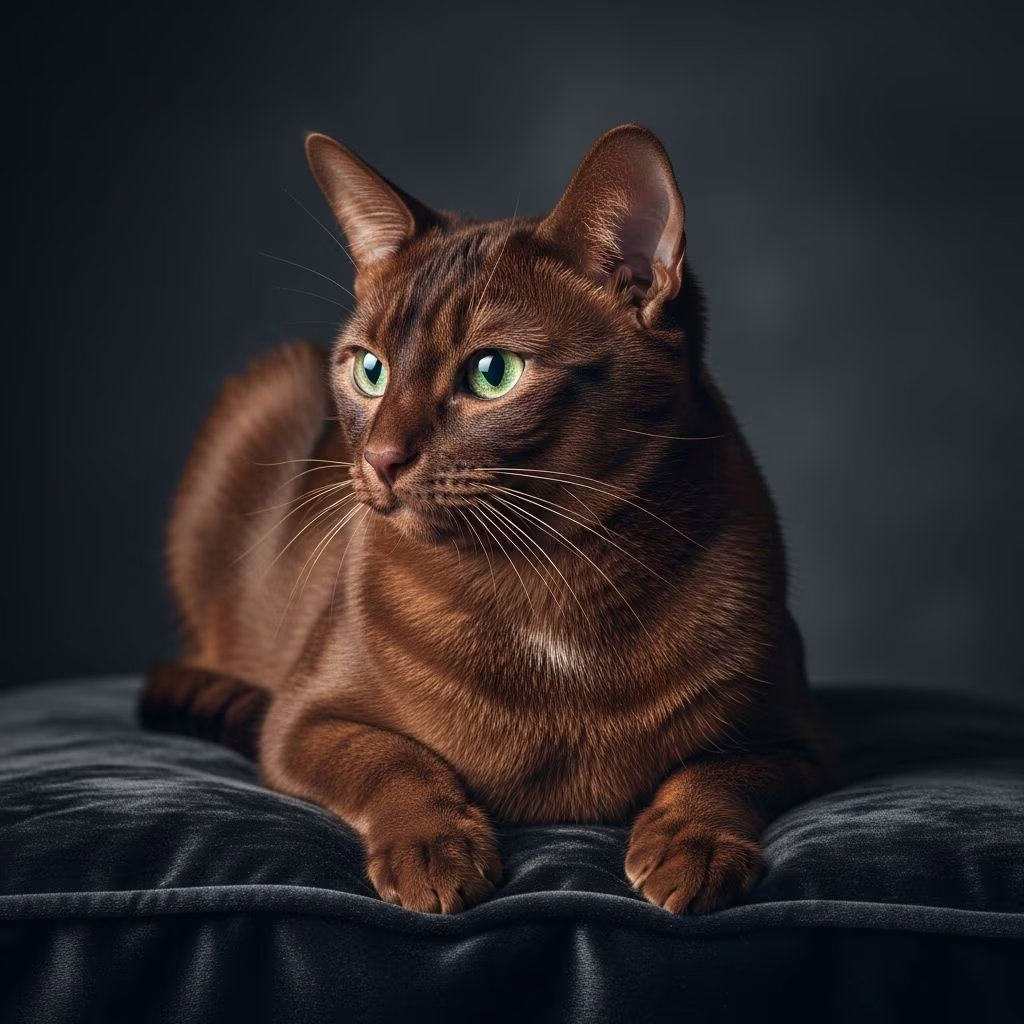
Brown cats, with their rich chocolate-like coats, captivate cat enthusiasts due to their scarcity in the feline world. Unlike the prevalent black, tabby, or white varieties, true brown felines emerge only under specific genetic conditions, making them a prized sight for owners and breeders alike.
The Science Behind Brown Fur in Cats
Cat coat colors stem from complex genetic interactions, primarily involving melanin pigments—eumelanin for dark tones and pheomelanin for reds. Brown arises as a modification of eumelanin, specifically through the TYRP1 gene at the B locus, which dictates black pigment intensity. The dominant allele B produces deep black, while the recessive b allele lightens it to chocolate brown, and b^l (cinnamon) yields a lighter reddish-brown.
For a cat to display brown, it must inherit two recessive b alleles (bb genotype), as even one dominant B masks the trait. This recessive nature explains the color’s infrequency; carrier cats (Bb) appear black but can pass the gene onward. Additional modifiers, like dilution (D/d locus), can further alter shades—bb with dd becomes lilac—but solid brown requires precise gene alignment.
Genetic Probability and Inheritance Patterns
Inheritance follows Mendelian principles. When two carriers (Bb) mate, offspring probabilities are: 25% BB (black), 50% Bb (black carriers), and 25% bb (brown). Cinnamon follows suit with b^l, rarer still as b dominates over b^l.
Other loci influence expression:
- Agouti (A locus): Determines if color is solid or banded (tabby).
- Dilution (MLPH, D locus): Lightens brown to lilac or fawn.
- Colorpoint (C locus): Can restrict brown to points, as in Siamese variants.
These interactions mean pure solid brown demands homozygous recessives across multiple sites, slashing occurrence rates.
Breeds Featuring Brown Coats
Though rare in mixed breeds, selective breeding preserves brown in pedigrees. Notable examples include:
| Breed | Coat Shade | Key Traits |
|---|---|---|
| Havana Brown | Rich chocolate | Playful, affectionate, mahogany eyes |
| Oriental Shorthair | Chocolate variants | Sleek, vocal, almond-shaped eyes |
| Burmese | Sable (dark brown) | Robust, social, rounded head |
| Tonkinese | Champagne/natural | Hybrid of Burmese/Siamese, pointed or solid |
Havana Browns, developed post-WWII from Siamese crosses, epitomize solid chocolate, recognized by CFA for their warm glow. Burmese sable, technically dark brown, borders on black-brown, showcasing genetic subtlety.
Distinguishing Brown from Similar Hues
Brown cats often get mistaken for black in dim light or with rusting fur. True brown gleams warm under sunlight, lacking black’s cool undertone.
- Black: Intense ebony (B-), no red/brown sheen.
- Tortoiseshell: Black-red patches, female-linked (X-chromosome).
- Seal: Very dark brown in pointed breeds.
- Mahogany: Barrington Brown dilution (rare, unverified).
Photos help: chocolate uniformly lightens the base, unlike tabby stripes or silver tipping.
Health Considerations for Brown Cats
Color genes tie to health risks. TYRP1 mutations (brown locus) link to no major disorders in cats, unlike dogs’ chocolate Labrador issues. However:
- Havana Browns: Prone to corneal issues, hip dysplasia.
- Burmese: Congenital facial defects in some lines.
- General recessives: Inbreeding raises hypertrophic cardiomyopathy risk.
Annual vet checks, genetic screening for breeders, ensure vitality. Nutrition with taurine supports coat sheen.
Cultural Significance and Famous Brown Cats
Brown cats symbolize rarity and mystery across lore. In Egyptian art, cats appear tawny-brown, revered as Bastet’s kin. Modern media features them sparingly—think subtle cameos versus ubiquitous orange tabbies.
Owners cherish their exotic vibe; social media hashtags like #ChocolateCat trend modestly, reflecting scarcity. Famous examples include celebrity pets, though most icons skew ginger (e.g., Garfield proxies).
Caring for Your Brown Cat
Maintenance mirrors standards, with tweaks:
- Grooming: Weekly brushing prevents matting; chocolate fur shows dirt vividly.
- Diet: High-protein for pigment health; omega-3s enhance luster.
- Environment: UV protection—sun fades brown unevenly.
- Socialization: Breeds like Orientals crave interaction; loneliness spurs mischief.
Lifespan averages 12-15 years with care, matching peers.
FAQs About Brown Cats
Are brown cats truly rare?
Yes, due to double recessive genes needed; less than 1% of domestic cats.
Can brown cats have green eyes?
Typically amber or gold in solids; odds vary by breed.
Do brown cats shed more?
No, shedding ties to coat length, not color.
What’s the difference between chocolate and cinnamon?
Chocolate (bb) is richer; cinnamon (b^l b^l) lighter, reddish.
Can tabby cats be brown?
Yes, brown tabby exists but patterns obscure solidity.
Breeding Brown Cats Responsibly
Aspiring breeders test for carriers via DNA kits (e.g., bb locus). Ethical pairing avoids health pitfalls; registries like TICA guide standards. Demand outstrips supply, but prioritize welfare over profit.
Adoption trumps breeding—shelters occasionally house chocolate gems from carrier mixes.
References
- Are Brown Cats Rare? Why This Coat Color Is Unique — Kinship. 2023. https://www.kinship.com/cat-health/are-brown-cats-rare
- Cat Coat Colour Genetics — Belle Ayr Cats. 2024. https://www.belleayr.com/articles/cat-coat-colour-genetics
- How Rare Are Brown Cats? Vet-Verified Cat Genetics — Catster. 2024. https://www.catster.com/lifestyle/how-rare-are-brown-cats/
- Cat Genetics 2.0: Colours — Laboratoire de génétique vétérinaire. 2023. https://labgenvet.ca/en/cat-genetics-2-0-colours/
- Cat coat genetics — Wikipedia (citing primary genetic research). 2024. https://en.wikipedia.org/wiki/Cat_coat_genetics



