Pet Food Prices: Dogs Vs Cats Cost Breakdown 2025
Discover the real reasons behind high pet food costs and compare expenses for dogs and cats to make smarter buying choices.
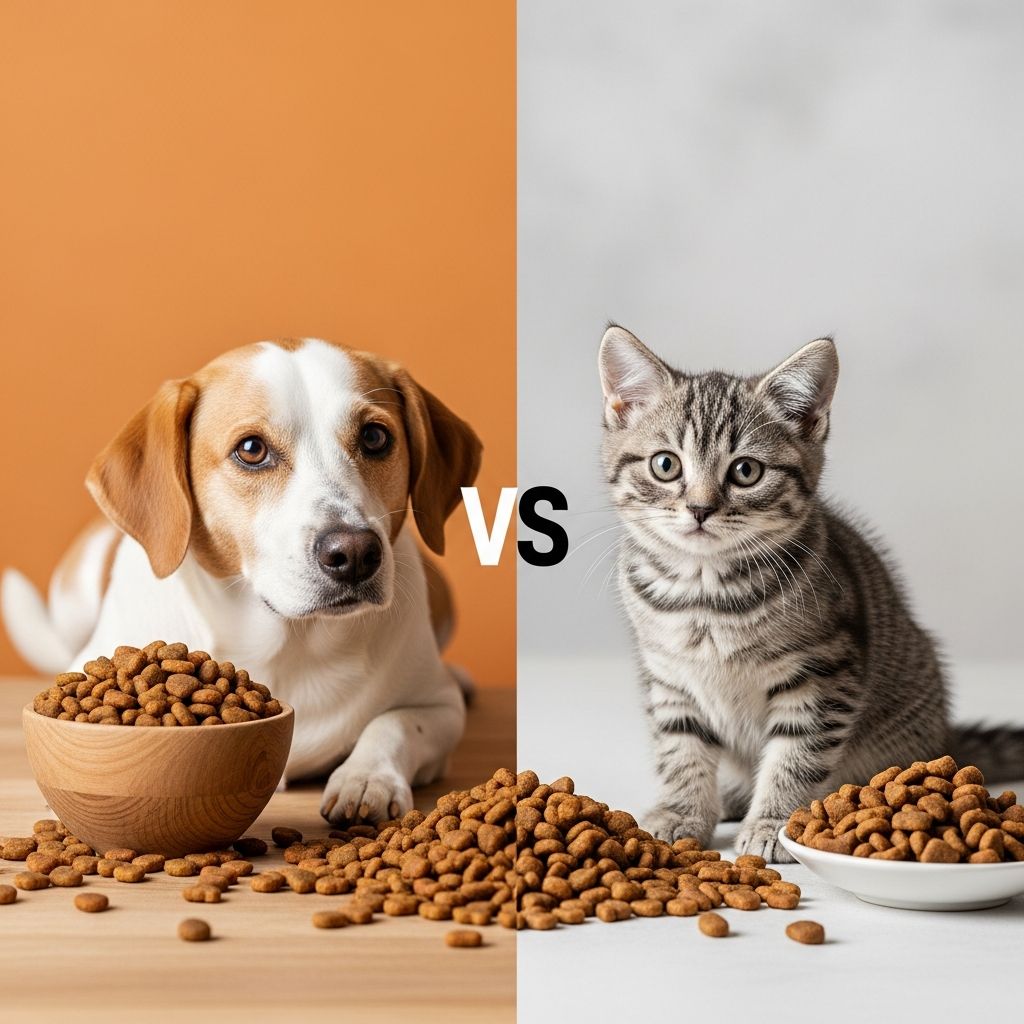
Unveiling Pet Food Prices: Dogs vs Cats
Pet food prices have surged in recent years, leaving many owners wondering why a simple bag of kibble or can of wet food carries such a hefty tag. This article breaks down the multifaceted costs involved in pet food manufacturing, with a special focus on differences between dog and cat formulations. From massive production setups to premium ingredients, understanding these elements helps pet parents budget effectively while ensuring quality nutrition.
The Hidden Economics of Pet Food Manufacturing
Creating pet food is a complex industrial process that mirrors human food production but tailored for animal needs. Costs begin with establishing production lines, which can range from $50,000 for basic setups to over $1,000,000 for advanced systems. These lines handle everything from mixing raw materials to final packaging, and their scale directly impacts retail prices.
Small-scale operations producing 500-1,000 kg per hour might suffice for niche brands, costing $50,000-$100,000, while large facilities outputting 5,000+ kg/hour demand $500,000-$1,500,000+ investments. Automation levels further escalate expenses: semi-automated lines run $50,000-$300,000, but fully automated ones with control systems hit $300,000-$1,500,000+ for efficiency and consistency.
| Production Scale | Output (kg/hour) | Cost Range |
|---|---|---|
| Small | 500-1,000 | $50,000 – $100,000 |
| Medium | 1,000-5,000 | $100,000 – $500,000 |
| Large | 5,000+ | $500,000 – $1,500,000+ |
These upfront capital expenditures (CAPEX) for a full pet food manufacturing startup can total $710,000, including mixers, extruders, and packaging gear. Monthly fixed overheads add another layer, starting at around $61,000, covering leases, salaries, and utilities.
Key Equipment Breakdown and Cost Drivers
Pet food production relies on specialized machinery, each piece contributing significantly to overall expenses. Extruders, vital for shaping kibble, cost $20,000-$150,000 depending on capacity. Dryers to reduce moisture follow at $15,000-$100,000, while packaging systems range from $10,000-$200,000.
For dry kibble—common for both dogs and cats—lines need extruders, dryers, and coaters, totaling $100,000-$800,000. Wet food production demands mixers, cookers, and canning gear, pushing costs to $150,000-$1,000,000+. Treats or freeze-dried options require even pricier ovens or vacuum systems, from $50,000-$1,500,000+.
| Equipment Type | Cost Range | Primary Use |
|---|---|---|
| Mixer | $5,000-$30,000 | Blending ingredients |
| Extruder | $20,000-$150,000 | Kibble formation |
| Dryer | $15,000-$100,000 | Moisture removal |
| Packaging | $10,000-$200,000 | Sealing and labeling |
Customization adds more: custom dies for unique shapes cost $5,000-$50,000, and multi-flavor systems $20,000-$150,000. Installation, training ($5,000-$20,000), and annual maintenance (5-10% of equipment value) compound these.
Ingredient Expenses: The Largest Slice
Raw materials dominate costs, accounting for 60-70% in pet food plants. High-quality proteins like chicken or beef, grains, vitamins, and veggies drive this up. Monthly ingredient procurement for small operations: $10,000-$25,000.
Dogs, being omnivores, often get formulas with more grains and veggies for bulk energy, slightly lowering protein costs. Cats, obligate carnivores, require higher animal-based proteins (e.g., 40-50% vs. dogs’ 20-30%), inflating expenses by 20-30% per unit. Specialized needs like grain-free or hypoallergenic recipes further hike prices due to premium sourcing.
- Proteins: Meats and fish—core for cat food, variable for dogs.
- Carbs/Fillers: Cheaper grains for dog formulas reduce overall cost.
- Additives: Vitamins, minerals, preservatives add 5-10%.
Volatility in commodity prices, as seen in producer price indices for dog/cat food holding steady around 300 in late 2025, reflects ongoing pressures.
Operational Overheads and Labor Factors
Beyond gear and ingredients, utilities ($1,000-$3,000/month), marketing ($2,000-$8,000), and labor eat into margins. Skilled operators for complex extruders command higher wages, especially in automated setups.
Energy-intensive processes like extrusion and drying spike utility bills. Total operating costs for startups: $621,000 cash buffer needed for first year losses. Breakeven often takes 27 months.
Dog Food vs. Cat Food: A Direct Cost Comparison
Dog food tends to be cheaper per pound due to larger portion sizes and less protein density. A 30-lb bag of premium dog kibble might cost $50-70, while equivalent cat food (smaller bags, higher protein) hits $60-90.
| Factor | Dog Food | Cat Food | Cost Impact |
|---|---|---|---|
| Protein Requirement | 20-30% | 40-50% | Cats +20-30% |
| Typical Bag Size | 20-40 lbs | 3-15 lbs | Dogs economies of scale |
| Production Type | Mostly dry kibble | Dry + wet common | Wet cats +higher |
| Retail Price/lb | $1.50-$3 | $3-$6 | Cats 2x more |
Dogs eat more volume (2-4 cups/day for medium breeds) but cheaper per calorie. Cats (1/4-1 cup/day) demand nutrient-dense food, raising effective cost. Wet cat food, popular for hydration, costs 3-5x dry equivalents due to canning.
Supply Chain and Market Pressures
Global supply chains amplify costs: ingredient sourcing, transportation, and tariffs add 10-15%. Recent stability in pet food prices (flat 0.01% YTD 2025) masks underlying volatility from prior decades.
Regulatory compliance for safety standards (e.g., AAFCO guidelines) requires testing labs and certifications, another hidden expense passed to consumers.
Quality Tiers and Premium Pricing
Economy food skips premium proteins, cutting costs 30-50%, but risks nutrition gaps. Mid-tier balances cost/quality; super-premium (organic, novel proteins) doubles prices via specialized production.
- Economy: $0.50-$1/lb, basic nutrition.
- Premium: $2-$4/lb, better ingredients.
- Ultra-Premium: $5+/lb, custom formulations.
Strategies for Pet Owners to Save
Buy in bulk for dry food to leverage economies. Compare protein guarantees vs. price—cats need taurine-rich options. Consider vet-recommended store brands matching premium nutrition at half cost.
Monitor sales, subscribe for discounts, and portion control to extend bags. Homemade toppers with safe veggies can supplement without breaking bank.
Frequently Asked Questions (FAQs)
Why is cat food more expensive than dog food?
Cats require higher animal protein levels as obligate carnivores, plus smaller, specialized packaging increases per-unit costs.
How much does it cost to start a pet food business?
Expect $710,000+ CAPEX plus $621,000 working capital for viability.
Are production costs rising?
Producer prices stable ~300 index in 2025, but ingredients fluctuate.
What’s the biggest cost in pet food?
Raw materials at 60-70%, followed by equipment.
Can I save by buying generic pet food?
Yes, if AAFCO-approved, often similar nutrition at lower prices.
References
- What Is the Cost of a Pet Food Production Line? — Darin Machinery. 2023. https://petreatsmachine.com/what-is-the-cost-of-a-pet-food-production-line/
- What Are the Costs of Pet Food Production Equipment? — Darin Machinery. 2023. https://petreatsmachine.com/what-are-the-costs-of-pet-food-production-equipment/
- What is the Cost Analysis of Pet Food Production? — FinModelsLab. 2024. https://finmodelslab.com/blogs/operating-costs/pet-food-production
- Pet Food Manufacturing Startup Costs — Financial Models Lab. 2024. https://financialmodelslab.com/blogs/startup-costs/pet-food-manufacturing
- Pet Food Manufacturing Running Costs — Financial Models Lab. 2026. https://financialmodelslab.com/blogs/operating-costs/pet-food-manufacturing
- Stability to Chaos: 4 Decades of Pet Food Production Costs — Petfoodindustry.com. 2025. https://www.petfoodindustry.com/regions/us-and-canada/article/15772800/stability-to-chaos-4-decades-of-pet-food-production-costs
- Producer Price Index by Industry: Dog and Cat Food Manufacturing — Federal Reserve Bank of St. Louis (FRED). 2025-11-01. https://fred.stlouisfed.org/series/PCU311111311111
- Pet Food Manufacturing Cost Analysis — IMARC Group. 2024. https://www.imarcgroup.com/insight/pet-food-manufacturing-cost-analysis
Similar Articles






Read full bio of Sneha Tete