

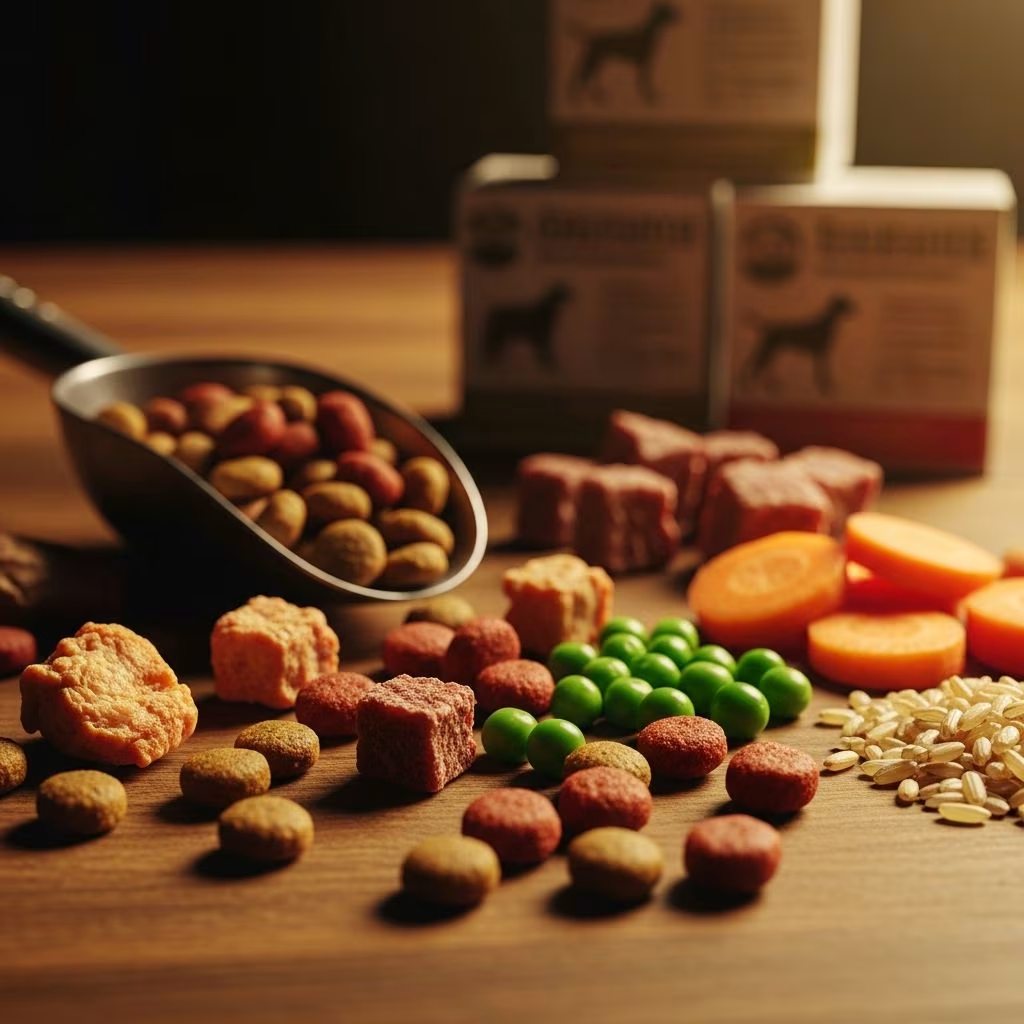
Many dog owners select food based on brand names they trust, unaware that numerous popular labels do not manufacture their own products. Instead, they partner with specialized contract manufacturers or co-packers who handle production in large-scale facilities. This arrangement allows brands to focus on marketing while leveraging expertise in pet food processing. Understanding this landscape empowers pet parents to make better choices for their dog’s nutrition.
The Rise of Contract Manufacturing in Pet Food
Contract manufacturing has become a cornerstone of the pet food industry due to its efficiency and scalability. Major brands outsource production to facilities equipped with advanced extrusion lines, drying ovens, and sterilization units capable of producing millions of kibble pieces daily. These factories adhere to strict standards set by organizations like the Pet Food Institute to ensure consistency and safety.
Smaller brands benefit by accessing high-tech equipment without the capital investment, while large ones scale production to meet demand. However, this model raises questions about oversight, ingredient traceability, and quality variation between batches.
Step-by-Step: How Commercial Dog Food is Produced
Dog food manufacturing follows a precise sequence designed to transform raw materials into shelf-stable, nutritious products. The process varies slightly for dry kibble, wet canned food, or treats, but core steps remain consistent across types.
1. Sourcing and Ingredient Preparation
Everything starts with carefully selected ingredients. Dry components like grains (corn, rice, wheat) are ground into fine powders, while proteins from meat meals, organs, and vegetables are processed separately. Wet elements such as fats, oils, and moisture are measured precisely to meet nutritional formulas. Quality checks at this stage test for contaminants, ensuring compliance with AAFCO guidelines for complete and balanced diets.
- Grains provide carbohydrates for energy.
- Meat sources deliver proteins and amino acids.
- Vitamins and minerals are added to fortify the mix.
2. Precision Mixing and Blending
Ingredients enter massive industrial mixers where they form a uniform dough or slurry, often called “meat ice cream” in factories for its creamy texture. This phase ensures every kibble piece contains the exact nutrient balance, preventing deficiencies or excesses. Mixers operate for set durations, blending under controlled conditions to avoid clumping.
3. Extrusion: The Heart of Kibble Creation
For dry dog food, the mixture feeds into an extruder—a high-pressure cooker that gelatinizes starches and denatures proteins. Temperatures reach 180-194°F (82-90°C) as a rotating screw pushes the dough through a die plate, forming ribbons cut into shapes suited for different breeds. Expansion occurs upon pressure release, creating the airy kibble structure.
Extrusion kills pathogens like Salmonella while enhancing digestibility. Post-extrusion, kibble enters drying tunnels to reduce moisture to 10-12%, preventing spoilage.
4. Coating, Cooling, and Enrichment
Dried kibble is sprayed with fats, oils, and palatants (flavor enhancers) using vacuum coaters for deep absorption. This step boosts palatability and adds omega fatty acids for skin and coat health. Cooling stabilizes the product before packaging.
5. Packaging for Wet and Alternative Formats
Wet food skips extrusion; instead, pre-cooked ingredients fill cans or pouches, which are sealed and sterilized in retorts at over 120°C (248°F). This high-heat process ensures long shelf life without preservatives. Baked or air-dried options use gentler methods to preserve nutrients.
Who Are the Major Dog Food Producers?
Several powerhouse manufacturers dominate, producing for dozens of brands under their own facilities. Here’s a comparison:
| Manufacturer | Specialties | Notable Brands They Produce For | Capacity Insight |
|---|---|---|---|
| Big Heart Pet Brands | Dry kibble, treats | Various private labels | Millions of lbs daily |
| Mars Petcare | Wet & dry extrusion | Pedigree, Cesar | Global facilities |
| Nestlé Purina | Extruded kibble | Purina Pro Plan | Advanced QC labs |
| Private Co-Packers | Custom formulas | Indie brands | Flexible batch sizes |
These facilities often run 24/7, with automated lines for efficiency.
Quality Control: Safeguarding Your Dog’s Meals
From raw intake to final packaging, labs test for pathogens, nutrient levels, and aflatoxins. Hazards Analysis Critical Control Points (HACCP) protocols identify risks at each stage. Sterilization and drying eliminate bacteria, while seals prevent post-production contamination.
Reputable factories conduct microbial swabs and shelf-life trials, sharing results via transparency programs.
Transparency Challenges and Red Flags
Not all brands disclose their manufacturers, complicating choices. Look for:
- Clear labeling: “Manufactured by [Company]” on packaging.
- Ingredient sourcing details: Avoid vague terms like “meat meal.”
- Third-party audits: Certifications from USDA or AAFCO.
Red flags include frequent recalls or hidden co-packers, signaling potential quality dips.
Tips for Selecting the Best Dog Food
1. Match to your dog’s life stage, breed, and health needs.
2. Prioritize named meat as the first ingredient.
3. Check for AAFCO approval statements.
4. Research the manufacturer’s reputation via industry reports.
5. Transition slowly to avoid digestive upset.
Fresh or gently processed foods may suit picky eaters or those with sensitivities.
FAQs
Is extruded kibble safe for dogs?
Yes, when properly manufactured, extrusion cooks ingredients thoroughly, improving digestibility and safety.
Why don’t brands make their own food?
Cost efficiency and expertise; specialized factories excel at scale.
How can I find who makes my dog’s food?
Check packaging, contact the brand, or use pet food directories.
What’s the difference between dry and wet food production?
Dry uses extrusion and drying; wet involves canning and retorting.
Are there risks in contract manufacturing?
Minimal with strong oversight, but demand transparency.
Future Trends in Dog Food Production
Innovation drives sustainable sourcing, plant-based proteins, and 3D-printed kibble. AI monitors extrusion for precision, while upcycled ingredients reduce waste. Expect more traceable, customized nutrition via blockchain.
References
- Dog Food Manufacturing Process: Expert Insights — Levapack. 2023. https://www.levapack.com/ultimate-dog-food-manufacturing-process/
- How dry pet food is made — FEDIAF (European Pet Food Industry Federation). 2024. https://europeanpetfood.org/pet-food-facts/fact-sheets/quality-and-safety/how-dry-pet-food-is-made/
- Inside the Factory That Makes Millions of Dog Kibble Every Day — YouTube (Pet Food Factory Video). 2023. https://www.youtube.com/watch?v=rAFmAyMa6NU
- How Dog Food Is Made — YouTube. 2022. https://www.youtube.com/watch?v=-aP4b5q7ULM
- Different processing methods — UK Pet Food. 2024. https://www.ukpetfood.org/pet-care-advice/other-advice/how-pet-food-is-made/different-pet-food-processing-methods.html
- How Pet Food Is Made — Pet Food Institute. 2024. https://www.petfoodinstitute.org/how-pet-food-is-made/



