
Unveiling Dog Food Makers
Discover who really manufactures your dog's food, from brand owners to hidden factories, and how to choose wisely for your pet's health.
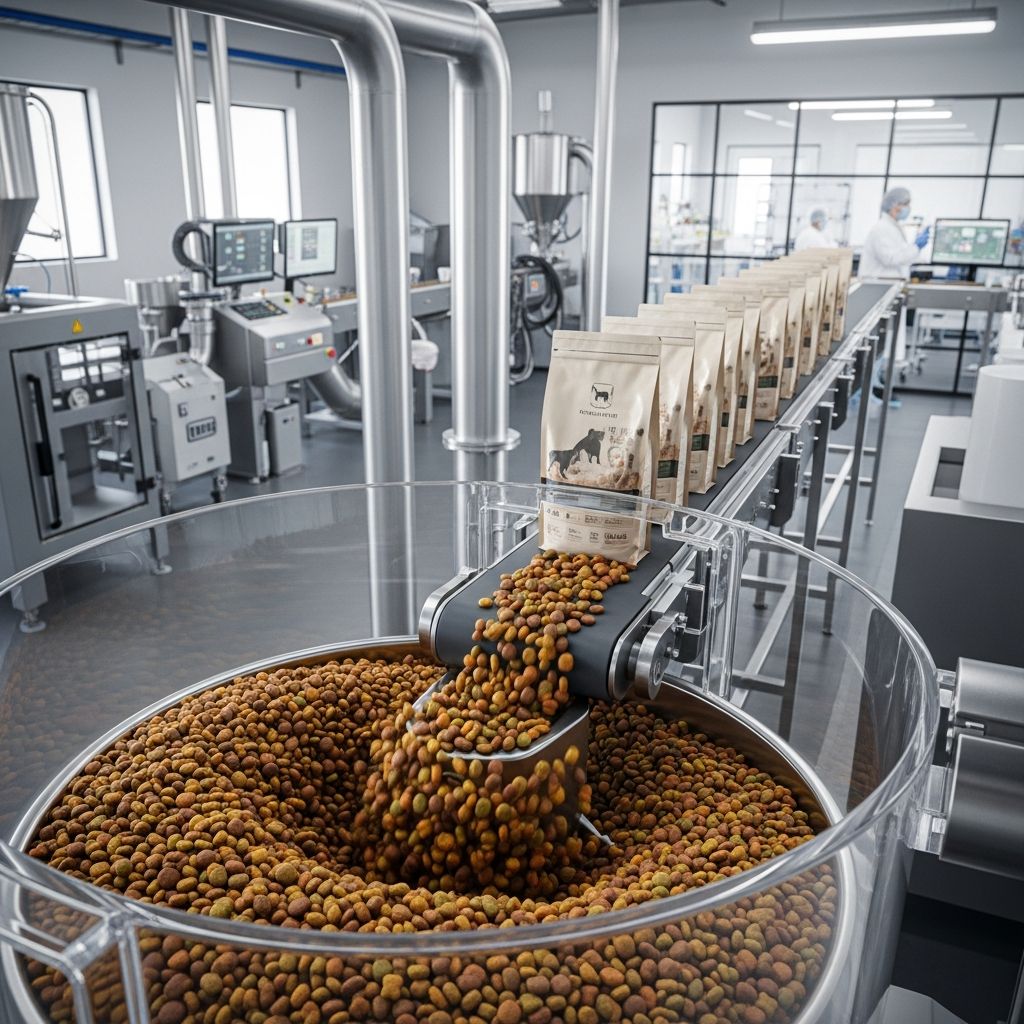
Dog food brands promise premium nutrition, but many are produced by a handful of large manufacturers supplying multiple labels. Understanding this landscape helps pet owners make informed choices for their dogs’ health and well-being.
The Rise of Contract Manufacturing in Pet Food
The pet food industry has evolved into a web of brand owners, private label producers, and co-packers. Major companies like Mars Petcare and Nestlé Purina operate their own facilities but also outsource to specialized manufacturers. Smaller brands often rely on contract packers to scale production without massive capital investment. This model allows innovation in flavors and formulas while leveraging economies of scale.
Contract manufacturing ensures consistency through standardized processes, but it raises questions about transparency. Labels might tout ‘family-owned’ or ’boutique’ status, yet the kibble could come from the same lines as mass-market products. Pet owners benefit from diverse options, but vigilance is key to avoid misleading claims.
Decoding the Production Pipeline: From Raw Materials to Ready Kibble
Dog food production follows rigorous steps to guarantee safety and nutrition. It begins with sourcing ingredients like proteins, grains, fats, and micronutrients, all vetted against standards from bodies like the Association of American Feed Control Officials (AAFCO).
Grinding and Blending: Building the Base Formula
Raw materials arrive at facilities in bulk. Grains such as corn, rice, and barley are ground in hammer or roller mills to uniform particle sizes, typically under 1mm for optimal mixing. Proteins from meat meals or by-products join fats and preservatives in massive industrial mixers. This blending phase ensures every batch delivers precise nutrient ratios, preventing deficiencies in essential amino acids or vitamins.
- Key ingredients: Animal proteins (chicken meal, beef), carbohydrates (corn, wheat), fats/oils, and additives like taurine for heart health.
- Quality checks: Moisture content, microbial testing, and aflatoxin screening at intake.
- Technology: Automated weighers and ribbon blenders for homogeneity.
Extrusion: The Core of Dry Dog Food Creation
For kibble, the mixture enters a preconditioner where steam raises moisture to 25-30% and temperature to 70-90°C, softening starches. It then feeds into extruders—twin-screw machines applying 20-30 bar pressure and 110-160°C heat. Shear forces gelatinize starches, denature proteins, and eliminate pathogens like Salmonella.
The hot dough extrudes through dies, forming shapes tailored to breed sizes. Rotary knives cut it into kibble, which expands upon pressure release. This step makes dry food shelf-stable and digestible, with up to 90% starch gelatinization enhancing energy availability.
| Extrusion Parameter | Typical Range | Purpose |
|---|---|---|
| Temperature | 110-160°C | Cooks ingredients, kills bacteria |
| Pressure | 20-30 bar | Shapes and expands kibble |
| Moisture | 20-30% | Facilitates gelatinization |
| Residence Time | 30-60 seconds | Ensures complete processing |
Drying, Cooling, and Coating for Final Texture
Extruded kibble, at 30% moisture, moves to multi-zone dryers reducing it to 10-12% over 20-30 minutes with hot air at 90-120°C. Coolers stabilize temperature, preventing condensation. Finally, vacuum coaters spray animal fats and flavors, drawing them into porous kibble for palatability without greasiness.
Wet Food Production: A Different Path to Nutrition
Unlike dry kibble, wet dog food retains high moisture (75-85%) for hydration benefits. Production starts similarly with grinding meats and veggies, then mixing with water, thickeners, and nutrients. Batches cook in steam-jacketed kettles to 95°C, fill cans or pouches aseptically, seal, and sterilize in retorts at 120°C for 60-90 minutes. This kills spores, ensuring room-temperature stability without heavy preservatives.
- Advantages: Higher palatability, better for seniors or picky eaters.
- Challenges: Shorter shelf life post-opening, higher production costs.
Major Players: Who Supplies Your Favorite Brands?
A few giants dominate: Mars (Pedigree, Royal Canin), Nestlé Purina (Pro Plan, Fancy Feast), and General Mills (Blue Buffalo acquisition). They own factories in the US, Europe, and Asia. Contract manufacturers like Schell & Kampeter (Diamond Pet) produce for premium independents. Private labels for stores like Costco or Walmart often come from these same facilities, sharing equipment but with segregated formulas.
Transparency varies; some brands disclose manufacturers on sites or labels, others don’t. Tools like the Open Farm Transparency Project or Pet Food Institute directories reveal connections.
Quality Control: Safeguarding Every Batch
Regulations from FDA, USDA, and AAFCO mandate HACCP plans. Labs test for pathogens, heavy metals, and nutrient profiles at multiple stages. Finished products undergo sensory evaluations and shelf-life trials. Recalls, though rare (under 1% annually), highlight the system’s rigor—e.g., grain-free diets linked to DCM prompted formula reforms.
Trends Shaping Future Dog Food Production
Sustainability drives insect proteins and upcycled grains. Fresh, human-grade options use gentler cooking like high-pressure processing (HPP) to retain nutrients. Personalization via DNA-tested formulas emerges, with manufacturers adapting extrusion for novel ingredients like pulses.
How to Choose the Right Dog Food for Your Pet
Look beyond marketing: Verify AAFCO statements for life-stage completeness. Prioritize named meat meals over ‘by-products.’ Check for recalls via FDA databases. Consult vets for breed-specific needs, like large joints for giants or hypoallergenic for allergies.
| Label Claim | What It Means | Red Flags |
|---|---|---|
| ‘Natural’ | No artificial colors/preservatives | Vague sourcing |
| ‘Grain-Free’ | No grains; legume-heavy | Potential heart risks |
| ‘Holistic’ | Marketing term; no regulation | Unsubstantiated health claims |
Frequently Asked Questions (FAQs)
Is expensive dog food always better?
Not necessarily; quality hinges on ingredients and testing, not price. Mid-tier brands often match premiums in nutrition.
Can I visit a dog food factory?
Few allow public tours due to hygiene, but virtual ones from Pet Food Institute offer insights.
What’s the difference between extruded and baked kibble?
Extruded uses high heat/pressure for puffing; baked is gentler, like oven-drying, yielding denser pieces with less expansion.
How often should I switch brands?
Only if health issues arise; abrupt changes cause digestive upset. Transition over 7-10 days.
Are raw diets safer than commercial?
Raw risks bacterial contamination; commercial follows kill-step processes for safety.
Empowering Pet Owners: Your Next Steps
Research brands via independent reviews like Dog Food Advisor. Feed trials confirm suitability. Ultimately, a happy, healthy dog guides your choice amid manufacturing complexities.
References
- How Is Dog Food Made Step by Step? A Detailed Technical Guide — Petreats Machine. 2023. https://petreatsmachine.com/how-dog-food-made-step-by-step/
- Dog Food Manufacturing Process: Expert Insights — Levapack. 2023. https://www.levapack.com/ultimate-dog-food-manufacturing-process/
- How dry pet food is made — FEDIAF (European Pet Food Industry Federation). 2024. https://europeanpetfood.org/pet-food-facts/fact-sheets/quality-and-safety/how-dry-pet-food-is-made/
- How Pet Food Is Made — Pet Food Institute. 2024. https://www.petfoodinstitute.org/how-pet-food-is-made/
- Different processing methods — UK Pet Food. 2023. https://www.ukpetfood.org/pet-care-advice/other-advice/how-pet-food-is-made/different-pet-food-processing-methods.html
- A Comprehensive Guide to Pet Food Manufacturing — SafetyCulture. 2024. https://safetyculture.com/topics/pet-food-safety/pet-food-manufacturing
Similar Articles








Read full bio of Sneha Tete




