

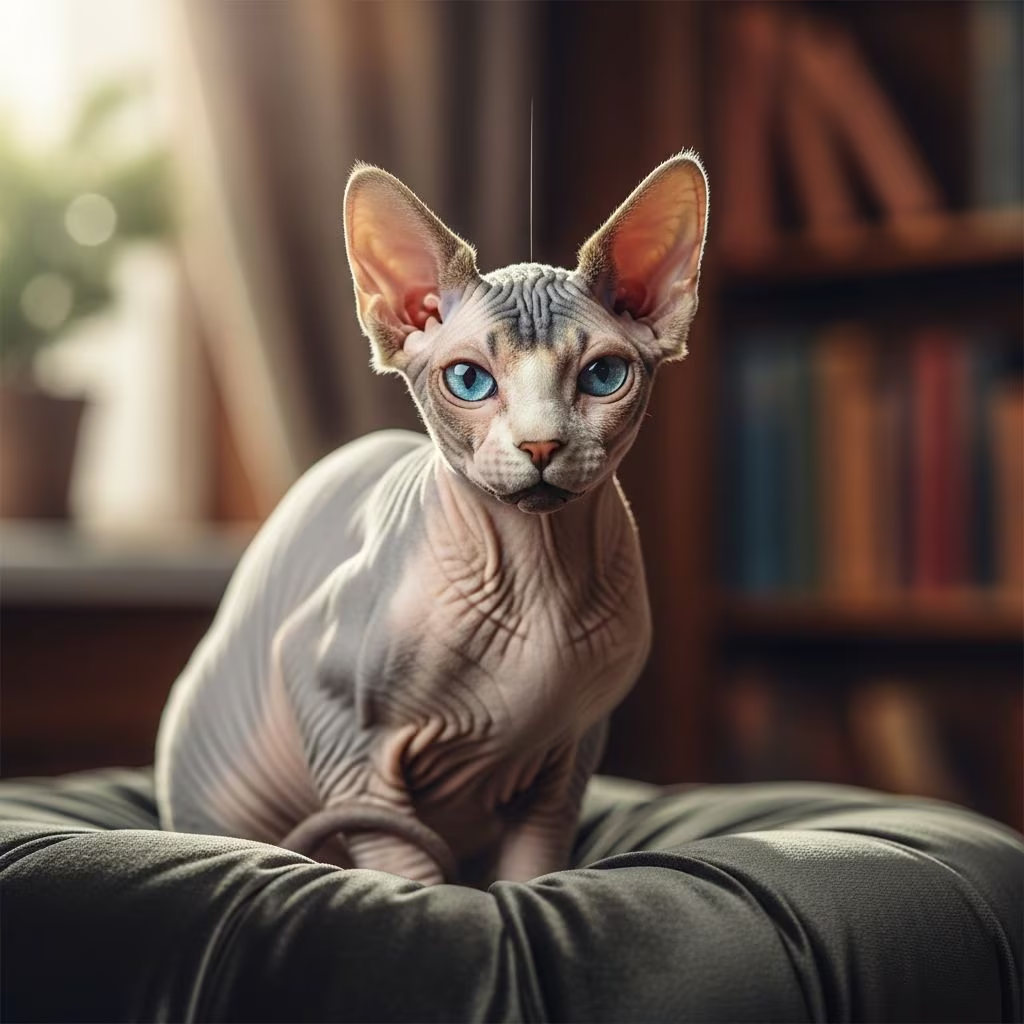
Cat lovers often seek out companions that stand out from the ordinary tabby or Siamese. Certain breeds possess features so distinctive they seem otherworldly, drawing attention with hairless skins, bent ears, or miniature statures. These unusual cat breeds combine eye-catching aesthetics with engaging personalities, making them ideal for those desiring a truly one-of-a-kind pet. This article delves into their histories, physical traits, temperaments, and practical considerations for ownership.
Origins of Distinctive Feline Features
Many peculiar cat appearances stem from spontaneous genetic mutations rather than deliberate breeding for aesthetics. For instance, the Scottish Fold emerged in Scotland during the 1960s when a barn cat gave birth to a kitten with forward-folding ears due to a cartilage mutation. Similarly, the Munchkin cat’s short legs trace back to a natural genetic variation observed in the 1980s, reshaping how we view feline proportions.
Hairless breeds like the Peterbald and Donskoy originated from experimental crosses in Russia, where breeders aimed to enhance baldness while preserving athletic builds. The Peterbald, developed in 1994 from Don Sphynx and Oriental Shorthair lineage, features webbed toes and elongated bodies reminiscent of elegant aliens. The Donskoy, or Don Sphynx, loses its sparse kitten fur as it matures, revealing wrinkled, elastic skin that sets it apart from static hairless varieties.
Curly-coated breeds such as the LaPerm and Cornish Rex also owe their textures to mutations. The Cornish Rex appeared in 1950 in England from a recessive gene producing wavy, cornrow-like fur. LaPerms, named for their loose curls, arose in the 1980s on an Oregon farm, with tight ringlets framing the face and neck. These origins highlight how random genetic events, nurtured by dedicated fanciers, birthed breeds that challenge conventional cat imagery.
Physical Traits That Define Uniqueness
- Folded or Tufted Ears: Scottish Folds sport ears that fold forward due to mutated cartilage, giving a perpetually surprised expression. Highlanders display tufted ears curling outward horizontally, evoking wild lynx ancestry. Ukrainian Levkoys combine folded ears with hairlessness, their inward bends amplifying a sleek, elf-like silhouette.
- Hairless or Sparse Coats: Peterbalds range from bald to velvety down, with whip-like tails and angular heads. Donskoys develop pronounced wrinkles and can grow seasonal fluff. Lykoi cats mimic werewolves with partial baldness around the muzzle, exposing leathery skin beneath a roan guard hair.
- Short Limbs and Compact Builds: Munchkins’ stubby legs enable ferret-like agility despite reduced height, turning dashes into endearing waddles.
- Curly or Wavy Fur: Cornish Rex fur ripples softly without an undercoat, while LaPerms boast springy curls tightest at the throat.
These traits not only spark curiosity but also influence daily life, from grooming routines to play styles. A table summarizing key physical hallmarks aids quick comparison:
| Breed | Signature Feature | Coat Type | Body Build |
|---|---|---|---|
| Scottish Fold | Folded ears | Short, dense | Medium, rounded |
| Peterbald | Hairless, webbed feet | Bald to suede | Slender, elegant |
| Munchkin | Short legs | Varied | Low-slung, agile |
| Cornish Rex | Wavy fur | Soft waves | Slim, whippet-like |
| Donskoy | Wrinkled skin | Bald (seasonal coat) | Muscular, elastic |
| Highlander | Tufted ears | Short | Sturdy, wild-type |
| LaPerm | Curly coat | Loose curls | Medium, textured |
| Ukrainian Levkoy | Folded ears, bald | Hairless | Lean, elongated |
| Lykoi | Werewolf roan | Partial hairless | Compact, roan |
Temperaments and Family Compatibility
Appearances aside, these breeds shine through personalities that blend playfulness with devotion. Peterbalds crave laps and conversations, their intelligence fostering strong human bonds. Munchkins compensate leg length with boundless energy, mastering tricks and chasing toys with glee. Cornish Rexes demand cuddles, often leash-trainable for outdoor adventures.
Donskoys exude laid-back loyalty, greeting strangers warmly and thriving amid dogs or kids. Highlanders mask wild looks with gentle affection, perfect for social homes. LaPerms offer quiet liveliness, curling up post-play with families. Ukrainian Levkoys balance independence with playfulness, content solo yet affectionate. Lykoi blend hunting smarts with wary loyalty, warming slowly to newcomers.
Most suit active households but vary in vocalness. While not the chattiest, breeds like these engage via chirps and purrs, adapting to family dynamics. Ethical breeders screen for health, ensuring temperaments align with claims from bodies like the Cat Fanciers’ Association.
Health Considerations for Exotic Breeds
Unusual traits carry risks. Scottish Folds risk osteochondrodysplasia, causing painful joints; responsible ownership demands vet vigilance. Munchkins face spinal issues from their leg gene, though activity mitigates problems. Hairless types like Peterbalds and Donskoys need skin oils and warmth to prevent dryness or chills.
Genetic diversity combats issues in rare breeds; the CFA promotes testing. Prospective owners should verify pedigrees and prioritize health over rarity. Lifespans generally match domestics (12-15 years) with proper care.
Care Tips Tailored to Quirks
Grooming varies wildly. Rex and LaPerm coats shed minimally but benefit from brushing to enhance waves. Hairless breeds require weekly baths with cat-safe moisturizers, plus sweaters in cold. Munchkins excel at vertical jumps, so provide tall perches.
- Feed high-protein diets supporting lean builds.
- Enrich environments with puzzles for smart breeds like Lykoi.
- Schedule annual vet checks, emphasizing breed-specific screens.
Adopting from rescues expands access to these gems, often at lower costs than catteries.
Why Choose an Unusual Breed?
These cats offer visual intrigue matched by interactive companionship. Their stories—from mutations to championships—add depth to ownership. Whether drawn to a wrinkled Donskoy’s hospitality or a Lykoi’s mystique, they promise joy beyond norms.
Frequently Asked Questions
Are hairless cats hypoallergenic?
Partially; reduced dander helps, but proteins in saliva persist. Peterbalds and Donskoys suit milder allergies.
Do short-legged cats like Munchkins suffer mobility issues?
Not inherently; they navigate adeptly, though obesity risks amplify problems.
Can folded-ear cats hear normally?
Yes, Scottish Folds and Levkoys detect sounds well despite bends.
What’s the rarest unusual breed?
Lykoi and Ukrainian Levkoy remain scarce, with limited registrations.
Are these breeds good with children?
Many are, like friendly Donskoys and playful Highlanders; supervise interactions.
References
- 13 Unique, Weirdest Cat Breeds We Love — Cats.com. 2023. https://cats.com/weird-cat-breeds
- Scratching Post: Meet The World’s Most Unique Cat Breeds — Zippypaws. 2023-11-06. https://zippypaws.com/2023/11/06/scratching-post-meet-the-worlds-most-unique-cat-breeds/
- 25 Unique Cat Breeds You’ll Love — Woman’s Day. 2024. https://www.womansday.com/life/pet-care/g62735369/unique-cat-breeds/
- 7 Cat Breeds With Unusual Vocal Traits — World Animal Foundation. 2023. https://worldanimalfoundation.org/cats/cat-breeds-with-unusual-vocal-traits/
- Rare and Unusual Breeds — Cat Fanciers’ Association. 2023. https://cfa.org/cat-talk/rare-and-unusual-breeds/



