

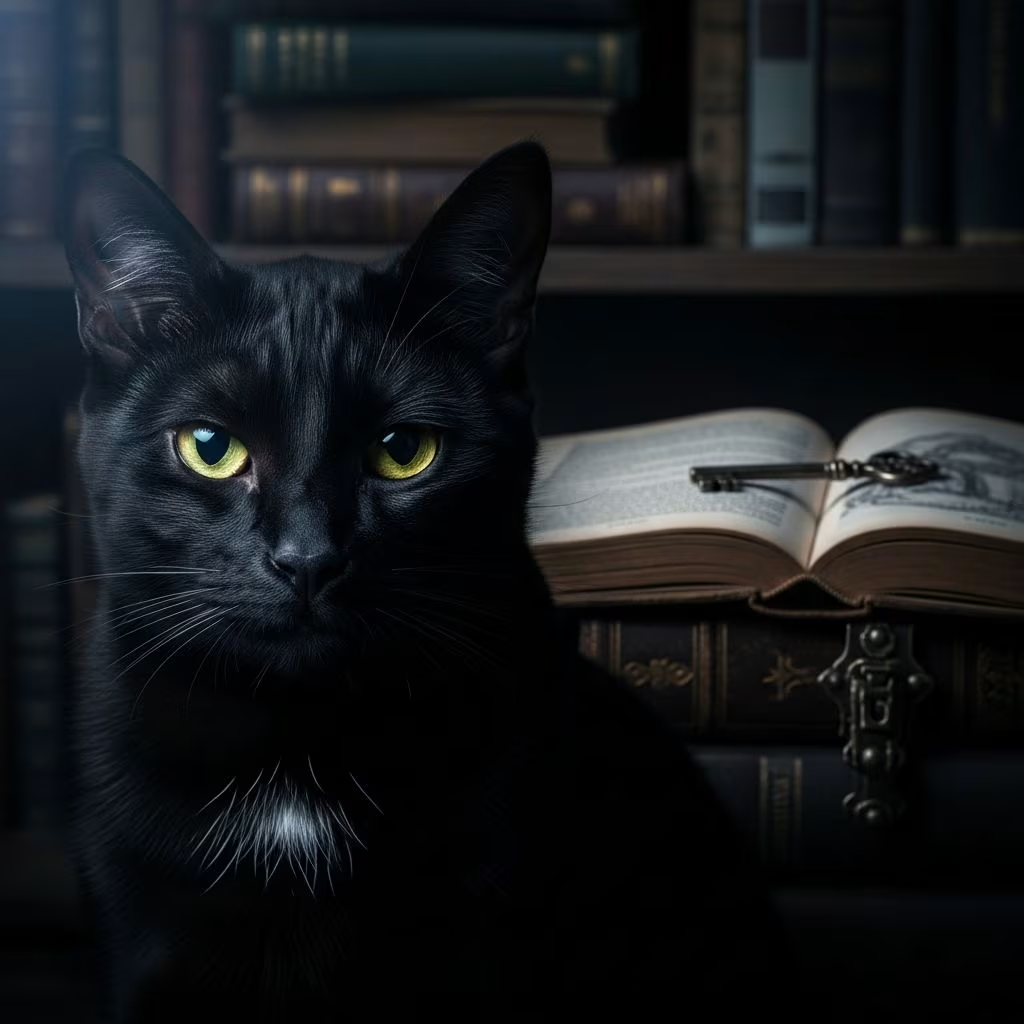
Cats captivate us with their graceful movements and enigmatic stares, but beneath their adorable exteriors lie behaviors that can send shivers down the spine. From involuntary jaw tremors mimicking a predator’s bite to obsessive scent rituals claiming ownership, these felines harbor instincts rooted in their wild ancestry. This exploration delves into the most disturbing feline quirks, backed by veterinary and behavioral science, revealing why your purring companion might be more savage than you imagine.
The Primal Jaw Chatter: A Hunter’s Frustrated Bite
Imagine your cat perched by the window, eyes locked on a fluttering bird, suddenly emitting a rapid, teeth-clacking sound like a machine gun. This chattering isn’t mere excitement; it’s a visceral echo of their predatory heritage. Behaviorists explain it as muscle preparation for the killing bite, a reflexive response blending frustration from unreachable prey with instinctive rehearsal of the death grip.
In the wild, this jaw movement sharpens the carnassial teeth designed to shear flesh. Domestic cats retain this trait, triggered by visual stimuli they can’t pursue. Studies note it’s most common in intact males or during high-arousal hunts, underscoring how even pampered pets are wired for savagery. If your cat chatters excessively, it might signal unmet hunting needs—consider interactive toys to channel this eerie impulse.
Scent of Possession: Bunting and Ownership Rituals
When your cat rubs its face against your legs or furniture, it’s not just affection—it’s bunting, a territorial declaration. Glands on their cheeks, lips, and head secrete pheromones, invisibly marking you as part of their domain. This behavior mirrors wild cats staking claim on rocks or trees, but in homes, it extends to humans and belongings.
- Head rubbing transfers unique scents, signaling to other cats: “This is mine.”
- Rubbing intensifies during stress, reinforcing bonds in multi-cat households.
- Failure to bunting can indicate health issues like dental pain blocking gland access.
This possessive marking feels loving but reveals a cat’s view of you as territory, not equal. Feline behavior experts emphasize it’s a sign of security, yet it hints at their solitary, dominant nature—always one step from reclaiming space.
Pica: The Disturbing Craving for Inedibles
Some cats obsessively chew wool, plastic, or plants, a condition called pica that evokes images of deranged hunger. Unlike playful nibbling, true pica risks blockages or poisoning, stemming from nutritional gaps, anemia, or genetic predispositions.
| Possible Causes | Symptoms | Solutions |
|---|---|---|
| Mineral deficiency | Chewing fabrics | Vet bloodwork, diet change |
| Boredom/stress | Ingesting plastics | Enrichment toys, Feliway diffusers |
| Hyperthyroidism | Obsessive plant eating | Medication, thyroid screening |
Breeds like Siamese show higher rates, possibly linked to early weaning trauma. Monitor closely; untreated pica can lead to fatal intestinal issues, exposing the fragility beneath a cat’s composed facade.
Knock-Off Kings: Curiosity’s Destructive Edge
Cats methodically push objects off tables, watching with cold detachment as glasses shatter. Far from malice, this stems from curiosity-driven testing: paws sense stability, and falls confirm physics lessons. Boredom amplifies it, turning homes into experimental labs.
Wild ancestors knocked prey from branches; domestics repurpose the instinct on human items. To deter, secure edges with double-sided tape or provide puzzle feeders. Persistent knocking signals understimulation—your cat craves mental hunts to quell this unnerving pastime.
Faucet Fascination: Ancestral Water Paranoia
Despite fresh bowls, cats lap from running faucets, evoking survival instincts from arid wilds where stagnant water bred disease. Their kidneys filter salt efficiently, a desert adaptation allowing safe river drinks.
This preference persists, with many ignoring bowls for drips. Install pet fountains to mimic flow, satisfying this primal caution. It reminds us: even hydrated pets distrust stillness, forever vigilant against invisible threats.
Tail Twitches: Silent Signals of Impending Pounce
A quivering tail tip while stalking shadows betrays intense focus or rising agitation. Twitchy tails precede hunts, escalating to full swishes signaling anger.
- Low twitch: Playful concentration.
- Rapid swish: Irritation buildup.
- Thrash: Attack imminent—back off.
Understanding these cues prevents scratches, highlighting cats’ hair-trigger responses honed for survival.
Box Obsessions: The Squeeze into Impossible Spaces
Cats wedge into tiny boxes or bags, defying physics for security. This cramming triggers euphoria via endorphins, mimicking den safety from predators.
Science links it to reduced stress; even flat boxes suffice if they fit head-first. Provide varied hides to harness this quirky armor against perceived dangers.
Kneading Nightmares: Bloody Paws of Comfort
Adult cats rhythmically press paws into laps or blankets, often drawing blood with claws. Rooted in kittenhood milk stimulation, it signifies trust yet retains savage edge.
Trim nails and offer soft pads to enjoy this without injury. It underscores duality: love laced with lethal tools.
Staring into Void: Supernatural Surveillance?
Cats fixate on empty corners, pupils dilating at unseen motes. Superior night vision and hearing detect ultrasonics or air currents humans miss.
Not ghosts, but hyper-awareness—eerie reminder of their alien senses.
Belly Exposures: Trust or Trap?
Flopping belly-up invites pets but rarely ends well—it’s supreme trust, not invitation. Retracted claws signal play; aggression follows misguided rubs.
Counter Conquests: Elevated Empires
Counter lounging claims heights for surveillance and snacks, instinctual predator-prey balance.
Cat trees redirect, preserving hygiene amid territorial bids.
Allogrooming: Invasive Intimacy
Cats lick humans or others, bonding via shared scent but risking allergies.
Face-Covering Sleep: Hidden Vulnerabilities
Paws over eyes conserve heat, blocking light in tight curls—a survival curl from exposure.
Meow Manipulations: Vocal Vampirism
Short meows beg; yowls demand, tailored to human ears from kitten cries.
FAQs
Why do cats chatter at birds?
Frustration mimics killing bite; provide hunt toys.
Is pica dangerous?
Yes, risks obstruction; vet check essential.
Do cats see ghosts?
No, acute senses detect subtleties.
How to stop knocking items?
Enrich environment, secure objects.
Why faucet water?
Instinct favors flow over still.
References
- 15 Strange Cat Behaviors Explained — The Drake Center. 2023-05-15. https://www.thedrakecenter.com/services/cats/blog/15-strange-cat-behaviors-explained
- Weird Cat Behaviors Explained — Hill’s Pet. 2024-02-10. https://www.hillspet.com/cat-care/behavior-appearance/weird-things-cats-do
- 101 Amazing Cat Facts — Charlottesville Cat Care Clinic. 2023-11-20. https://cvillecatcare.com/veterinary-topics/101-amazing-cat-facts-fun-trivia-about-your-feline-friend/
- Strange Cat Behaviors Explained (Compilation) — YouTube (Cat Body Language). 2022-08-05. https://www.youtube.com/watch?v=OdxjQsYRQwk



