

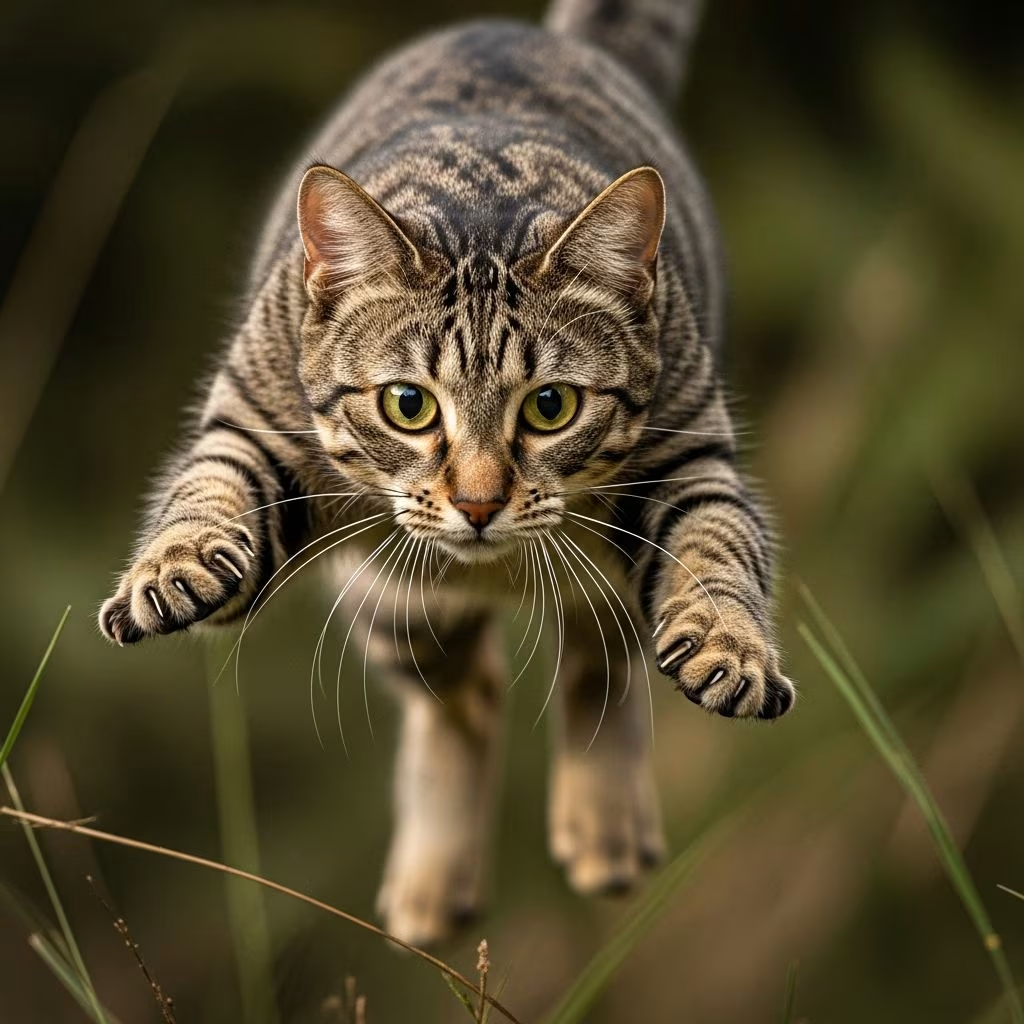
Cats possess an innate drive to stalk and leap, a behavior deeply embedded in their evolutionary history as solitary hunters. This explosive action, often directed at unsuspecting owners’ feet or hands, serves multiple purposes beyond mere whimsy. Understanding these motivations allows pet owners to respond appropriately, fostering a stronger bond while preventing misunderstandings that could lead to scratches or bites.
The Evolutionary Roots of the Ambush
Domestic cats descend from wild ancestors like the African wildcat, which relied on stealthy approaches followed by powerful bounds to capture prey. Even in comfortable homes with ample food, this predatory sequence persists as an instinctual pattern. Cats exhibit a stalk-crouch-wiggle-pounce routine, where the pre-leap wiggle calibrates muscles and enhances precision through sensory feedback from nerves in the hindquarters.
This behavior sharpens coordination and hones hunting skills from kittenhood. Observational learning plays a key role, as young cats mimic their mothers’ techniques, driven by hunger cues that trigger the full predatory response: spotting prey, pursuing, capturing, and consuming. In households, everyday movements like wiggling toes mimic these cues, inviting an instinctive reaction.
Playful Energy in Young Cats
Kittens embody the essence of pouncing as their primary occupation. From early weeks, they engage in roughhousing—swatting, biting, and leaping—to master body control, spatial awareness, and social limits. Veterinarians note this as normal development, building problem-solving abilities and physical prowess.
- Coordination building: Repeated pounces refine balance and timing.
- Social learning: Play with littermates teaches bite inhibition and appropriate force.
- Energy outlet: High activity levels demand outlets to prevent frustration.
As cats mature, this play instinct evolves but doesn’t vanish. Adults retain the need for stalk-and-pounce games, signaling a call for mental and physical stimulation if directed at humans.
When Pouncing Signals Affection or Boredom
Your cat may view you as the ultimate play companion, launching surprise attacks to initiate interaction. Behaviorists explain this as a sign of trust and fondness, albeit expressed through claws. Insufficient daily engagement often underlies regular ambushes, with boredom topping the list of triggers.
To address this:
- Schedule 15-20 minute play sessions twice daily using wand toys that simulate fleeing prey.
- Rotate toys to maintain novelty and prevent habituation.
- End sessions with feeding to mimic successful hunts, reinforcing satisfaction.
Such routines fulfill the cat’s inner wiring, reducing unwanted human-targeted pounces while boosting emotional well-being.
Overstimulation: The Sudden Switch from Pets to Pounces
A common scenario unfolds during cuddle time: gentle strokes turn into frantic attacks. Known as petting-induced aggression, this stems from sensory overload. Cats display warning signs like rippling skin, thrashing tails, flattened ears, or dilated pupils before escalating.
Sensitive zones, particularly the belly and tail base, heighten discomfort. Owners unknowingly push limits, prompting defensive swats to regain control. Respect these boundaries by:
| Sign | Meaning | Response |
|---|---|---|
| Tail flicking | Irritation building | Pause petting |
| Ear rotation backward | Alertness to threat | Give space |
| Skin twitching | Overload imminent | Withdraw hands slowly |
| Dilated pupils | Arousal spike | End interaction |
Observing these cues prevents escalation and teaches cats that humans respect their limits.
Fear-Driven Defenses and Aggression Red Flags
Not all pounces stem from fun; fear can provoke explosive reactions. Cornered cats lash out with growls, hisses, or bites alongside leaps, distinguishing this from play. Underlying issues like pain, anxiety, or environmental stress may contribute.
Consult a veterinarian if pouncing accompanies:
- Vocalizations like yowling or spitting.
- Avoidance of touch or hiding.
- Sudden changes in appetite or litter use.
Certified behaviorists recommend environmental enrichment—scratching posts, vertical spaces, and puzzle feeders—to alleviate anxiety. Punishment worsens fear, eroding trust; positive redirection proves far more effective.
Distinguishing Play from True Aggression
Play pounces feel controlled, with relaxed bodies, upright ears, and no vocal protests. Forward ears, purring, and mutual engagement confirm fun. Conversely, pinned ears, intense stares, and vocalizing indicate conflict.
For multi-cat homes, watch for wrestling without noise as play, but chasing with cries signals fights. Intervene gently by distracting with toys rather than hands.
Practical Strategies to Redirect Pouncing
Channel this energy constructively for a scratch-free home:
- Interactive toys: Feather wands and laser pointers encourage solo hunts.
- Timing play: Sessions before meals or bedtime tire cats naturally.
- Ignore ambushes: Freeze or walk away to withhold reinforcement.
- Enrich environment: Window perches, tunnels, and cat trees satisfy exploration drives.
- Training basics: Use clickers for desired behaviors like sitting on cue.
These methods build confidence and prevent compulsive patterns, where unchecked pouncing escalates to manic episodes or excessive grooming.
Health Checks for Persistent Issues
Ruling out medical causes remains crucial. Conditions like hyperthyroidism or neurological disorders mimic behavioral excesses, prompting frantic activity or aggression. Annual vet exams, including bloodwork for seniors, catch these early.
Cornell Feline Health Center emphasizes that sudden aggression shifts warrant professional evaluation to differentiate instinct from illness.
Building a Pounce-Proof Bond
Embrace pouncing as a window into your cat’s world. By providing outlets, reading signals, and avoiding punishment, owners transform potential conflicts into opportunities for connection. Regular play not only curbs ambushes but enhances trust, making cats associate humans with positive hunts.
Frequently Asked Questions
Is it normal for adult cats to pounce on people?
Yes, it’s a natural extension of hunting play, especially if understimulated. Daily interactive sessions resolve most cases.
How can I stop my cat from attacking my feet?
Redirect to toys, ignore the behavior, and increase enrichment. Never use hands as toys.
What if pouncing comes with biting and growling?
Seek vet advice to exclude health issues, then consult a behaviorist for fear or stress management.
Why do cats wiggle their butts before jumping?
This calibrates muscles via sensory nerves, boosting leap accuracy and power.
Can play help anxious cats?
Absolutely—pouncing games release endorphins, build confidence, and reduce compulsive tendencies.
References
- Feline Behavior Problems: Aggression — Cornell University College of Veterinary Medicine. 2023. https://www.vet.cornell.edu/departments-centers-and-institutes/cornell-feline-health-center/health-information/feline-health-topics/feline-behavior-problems-aggression
- Behavior Challenges: Overexcited and Energetic Cats — San Diego Humane Society. 2024. https://sdhumane.org/resources/behavior-challenges-overexcited-and-energetic-cats/
- Cat Behavior — Wikipedia (informed by primary studies). 2026. https://en.wikipedia.org/wiki/Cat_behavior
- Compulsive Behaviors in Cats: How to Recognize and Manage Them — Fear Free Pets. 2021-07-01. https://www.fearfree.com/2021/07/compulsive-behaviors-in-cats-how-to-recognize-and-manage-them/
- 4 Reasons Your Cat Loves to Pounce on You — Kinship (citing veterinary experts). 2024. https://www.kinship.com/cat-behavior/reasons-your-cat-loves-to-pounce-on-you
- Why Do Cats Wiggle Before They Pounce? — The Cat is in the Box. 2023. https://thecatisinthebox.com/blogs/kitty-contemplations/why-do-cats-wiggle-before-they-pounce
- Play Aggression (Cats) — San Francisco SPCA. 2024. https://www.sfspca.org/resource/play-aggression/



