

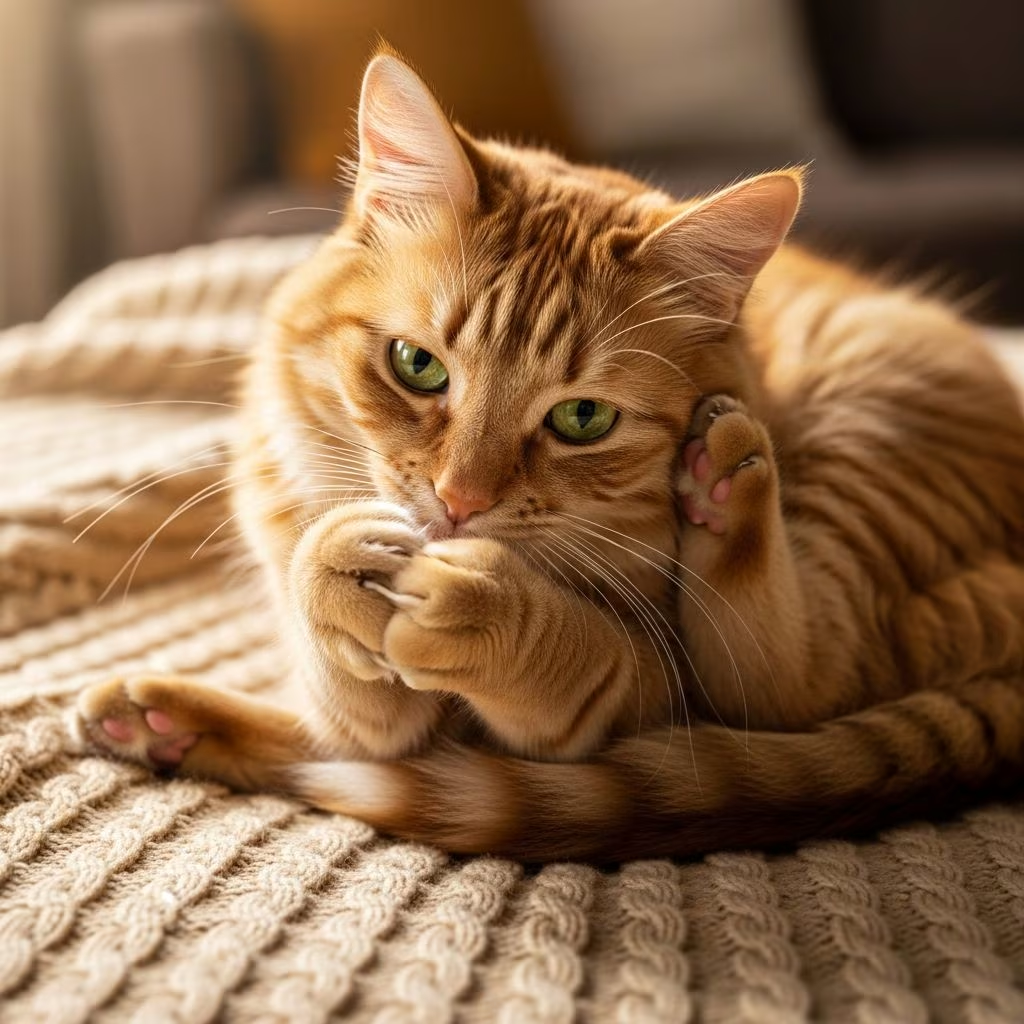
Cat kneading, that rhythmic pushing of paws against soft surfaces or laps, captivates pet owners worldwide. This endearing behavior, often accompanied by purring, reveals deep insights into feline psychology and history. Far from random, kneading connects to survival instincts, emotional bonds, and physical needs, persisting from kittenhood into adulthood.
The Instinctive Roots in Kittenhood
Kneading begins as kittens nurse from their mother. Tiny paws press alternately on her abdomen to stimulate milk letdown via oxytocin release, ensuring nourishment. This early action links comfort with survival, embedding it deeply in a cat’s neural pathways.
Domestic cats retain this neonatal trait through neoteny, where juvenile behaviors linger into maturity. This adaptation aids socialization with humans, making kneading a bridge between wild ancestry and household companionship.
- Nursing stimulation: Triggers milk flow, associating paw pressure with feeding security.
- Early bonding: Releases bonding pheromones, fostering mother-kitten ties.
- Neoteny persistence: Adult cats knead for reminiscent comfort, enhancing human interactions.
Scent Marking: Claiming Their World
Beyond nursing echoes, kneading deposits pheromones from interdigital scent glands in paw pads. These chemical signals mark territories subtly, signaling ownership to other cats without confrontation.
When cats knead blankets, furniture, or owners, they broadcast identity, health status, and familiarity. The ‘cat-appeasing pheromone’ from these glands promotes calm and reduces aggression in multi-cat homes.
| Purpose | Mechanism | Benefit |
|---|---|---|
| Territory Claim | Paw pad glands release scents | Establishes safe zones |
| Bonding Signal | Appeasing pheromones | Reduces household tension |
| Identification | Unique scent profile | Reinforces personal space |
Comfort, Relaxation, and Endorphin Rush
Kneading induces dopamine release, creating pleasure akin to nursing bliss. Cats often knead before sleep, mimicking wild ancestors flattening grass nests for rest.
This self-soothing ritual eases stress, stretches muscles, and signals contentment. Purring frequently accompanies it, amplifying relaxation for both cat and observer.
Affection and Trust Toward Humans
Directed at owners, kneading signifies profound trust. Treating humans as surrogate mothers, cats revert to kitten-like vulnerability, exposing bellies or curling close.
This behavior strengthens bonds, communicating ‘you are family.’ It differentiates favored people, as cats selectively knead those evoking safety.
When Kneading Signals Health or Stress
Normal kneading is joyful, but excess may flag issues. Compulsive kneading with wool-sucking suggests anxiety or nutritional gaps like weaning deficiencies.
Arthritis or injuries prompt kneading for limb relief. Sudden increases warrant veterinary checks for pain, hyperesthesia, or behavioral disorders.
- Excessive frequency: Possible stress, compulsion, or medical pain.
- Accompanied by aggression: Redirect to toys to protect skin.
- New in adults: Rule out arthritis or neurological concerns.
Variations Across Cats and Contexts
Not all cats knead identically. Some drool or suckle fabrics, intensifying nursing simulation. Others prefer specific textures like wool, triggering stronger responses.
Wild felines knead less overtly, focusing on practical nest-making. Domestication amplified emotional kneading, tying it to human-centric affection.
Encouraging Healthy Kneading Habits
Embrace kneading with precautions. Provide dedicated blankets to spare laps and furniture. Trim claws regularly to minimize scratches.
Interactive toys and scratching posts channel instincts. Vertical spaces reduce territorial stress, curbing over-kneading.
| Strategy | Goal | Tools |
|---|---|---|
| Dedicated surfaces | Protect home items | Cat blankets, pads |
| Claw maintenance | Prevent injury | Nail clippers, caps |
| Enrichment | Reduce stress | Towers, puzzles |
FAQs: Common Questions on Cat Kneading
Is cat kneading always a good sign?
Typically yes, indicating happiness. Monitor for extremes signaling discomfort.
Why do some cats knead and bite?
Overstimulation during bliss can lead to play-biting. Gently disengage.
Can I stop my cat from kneading me?
Redirect to objects; punishment erodes trust. Use soft alternatives.
Do all cats knead?
Most do, but ferals or stressed cats may suppress it.
Is kneading linked to purring?
Often, both express contentment via endorphins.
Debunking Kneading Myths
Myth: Kneading means cats still seek milk. Reality: It’s comfort retention, not hunger.
Myth: Only kittens knead. Reality: Adults do for multiple reasons.
Myth: It’s dominance. Reality: Primarily affection and self-soothing.
Scientific Gaps and Future Research
Though well-observed, kneading lacks deep studies. Experts like Dr. Lauren Finka note potential undiscovered functions, urging more ethology work.
Understanding pheromonal nuances could yield anxiety treatments, building on appeasing pheromone therapies.
References
- Understanding why cats knead and bunt: The science behind feline behaviors — COAPE. 2023. https://coape.org/understanding-why-cats-knead-and-bunt-the-science-behind-feline-behaviors/
- The Science of Affection That Makes Cats Knead You — ScienceAlert. 2023. https://www.sciencealert.com/the-science-of-affection-that-makes-cats-knead-you
- Why do cats knead? | Expert Insights — The Cat Behavior Clinic. 2024. https://www.thecatbehaviorclinic.com/why-do-cats-knead/
- Why Do Cats Knead? — PetMD. 2024-01-15. https://www.petmd.com/cat/behavior/why-do-cats-knead
- The (very cute) science of why cats knead — BBC Science Focus. 2023. https://www.sciencefocus.com/nature/why-do-cats-knead
- Kneading (cats) — Wikipedia (references primary ethology). N/A. https://en.wikipedia.org/wiki/Kneading_(cats)
- Why Do Cats Knead? — AAHA. 2024. https://www.aaha.org/resources/is-my-cats-kneading-normal/



