

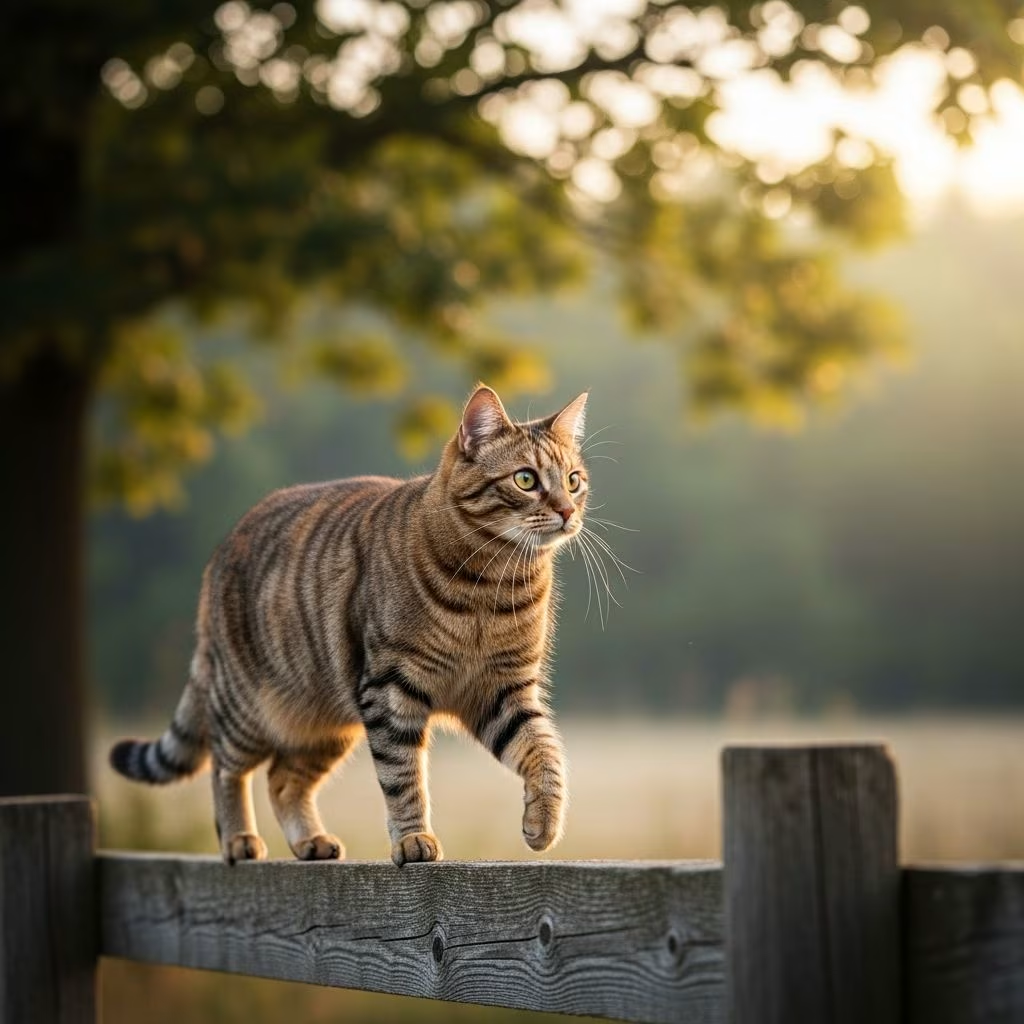
Domestic cats captivate pet owners with their poised demeanor and self-sufficient nature, often appearing as solitary wanderers in a world of needy companions. This trait stems from a blend of genetic heritage, adaptive behaviors, and nuanced social dynamics that prioritize personal security over constant reliance on others.
The Evolutionary Roots of Self-Reliance
Cats descend from solitary wild ancestors like the African wildcat (Felis silvestris lybica), which thrived in harsh environments by honing skills for independent survival. Unlike pack-oriented wolves that evolved into social dogs, these felines mastered solo hunting, territorial defense, and resource management, embedding a core of autonomy into their DNA.
This heritage manifests in domestic settings where cats regulate their own activities, from grooming to exploration, without seeking perpetual human input. Research highlights how this independence allows them to navigate novel environments with minimal distress, viewing owners as beneficial associates rather than essential lifelines.
Attachment Patterns: Secure Yet Distinct
Modern studies challenge the stereotype of cats as emotionally distant by revealing attachment styles akin to those in dogs and infants. In controlled tests like the adapted Strange Situation Test, cats demonstrate secure bonds, showing mild vocalizations during separations but quickly resuming calm exploration upon reunion.
- Cats vocalize more when owners depart than strangers, indicating preference without full dependency.
- They exhibit low distress levels, prioritizing self-soothing over frantic seeking.
- Secure attachment appears in over 64% of cases, marked by trust and swift recovery.
These patterns suggest cats form meaningful connections but process them through an autonomous lens, using owners as a ‘safe base’ for ventures rather than a constant anchor.
Social Flexibility Over Solitude
Far from asocial loners, cats display flexible sociality tailored to context. They engage selectively, preferring familiar kin or trusted humans while maintaining distance from outsiders via scent marking and body language.
Individual personalities amplify this: some cats are bold explorers, perching high and interacting playfully, while others remain reserved, hiding during stress but eating steadily. This spectrum underscores that independence isn’t rejection but a strategic choice for comfort.
| Personality Cluster | Key Behaviors | Response to Novelty |
|---|---|---|
| Shy, Calm Type | Hides, eats more, slow to approach | Avoids interaction, seeks shelter |
| Active, Playful Type | Affiliative, vocal, perches | Explores boldly, engages readily |
Factors Shaping Modern Cat-Human Bonds
Indoor living has intensified cat-owner interactions, sometimes blurring independence lines. With less outdoor stimulation, cats may shadow owners for enrichment or security, mistaking routine for necessity.
Socialization during kittenhood critically influences this: early human exposure fosters comfort in proximity without clinginess, enabling relaxed coexistence. Factors like routine predictability and environmental variety further bolster self-assurance.
Practical Strategies for Balanced Independence
Owners can nurture this innate autonomy while strengthening bonds through targeted approaches.
- Implement Scheduled Interactions: Dedicate short, intense play sessions morning and evening to satisfy needs efficiently, preventing constant demands.
- Design Enrichment Zones: Install cat trees, tunnels, and rotating scents to mimic wild exploration, reducing follow-the-leader habits.
- Practice Gradual Separations: Close doors briefly, rewarding calm with treats to build tolerance for alone time.
- Use Puzzle Feeders: Encourage problem-solving for meals, promoting mental engagement and self-reliance.
These methods transform potential frustration—vocalizing or pacing—into confident solitude, as cats learn presence isn’t abandonment.
Decoding Common Behaviors
Understanding signals prevents misinterpretation. Rubbing legs or soft meows often signal affection and territory claiming, not desperation. Excessive following might reflect curiosity, mild anxiety, or learned rewards from attention.
- Calm shadowing: Indicates comfort and choice.
- Distressed pursuit: Observe for rapid return to ease; if prolonged, enrich environment.
Health Benefits of Fostering Autonomy
Independent cats exhibit lower stress hormones, better appetite regulation, and enhanced immune function. By empowering self-entertainment, owners mitigate issues like separation frustration mislabeled as anxiety.
Routines aligned with circadian rhythms—consistent feeding and quiet periods—further stabilize emotions, yielding healthier, longer-lived companions.
FAQs on Cat Independence
Do all cats prefer solitude?
No, preferences vary; many enjoy selective socializing while valuing alone time for recharge, reflecting their flexible social nature.
Is following me a sign of love or neediness?
Often both—it’s attachment expression. Distinguish by context: relaxed trailing shows trust; agitation suggests enrichment gaps.
Can I train excessive clinginess away?
Yes, via positive reinforcement, routines, and solo activities. This builds resilience without diminishing affection.
Why don’t cats act needy like dogs?
Evolutionary solo survival fosters autonomy; they view humans as allies, not packs, leading to secure, low-maintenance bonds.
Does indoor life reduce independence?
It can increase reliance if unstimulated, but targeted setups restore natural self-sufficiency.
Building a Thriving Partnership
Embracing cats’ independence enriches shared lives. By providing structure, space, and stimulation, owners honor feline instincts, yielding mutual contentment. This dynamic—autonomy alongside affinity—defines the modern cat-human alliance.
References
- New Study Shows Why Domestic Cats Are More Independent than Dogs — Sci.News. 2019-11-20. https://www.sci.news/biology/science-domestic-cats-more-independent-03210.html
- Why Cats Follow Owners Everywhere: Behavioural Attachment & Training — Pet Care Shed. 2023-05-15. https://petcareshed.com.au/blogs/pet-supplies/why-cats-follow-owners-everywhere-behavioural-attachment-training
- Are Cats Social or Independent? — The Cat is in the Box LLC. 2022-08-10. https://thecatisinthebox.com/blogs/kitty-contemplations/are-cats-social-or-independent
- Common Misconceptions about the Social Behavior of Domestic Cats — PMC (National Library of Medicine). 2024-01-15. https://pmc.ncbi.nlm.nih.gov/articles/PMC10841747/
- The Cat-Human Relationship and Factors That Affect It — Psychology Today. 2020-03-12. https://www.psychologytoday.com/us/blog/animal-emotions/202003/the-cat-human-relationship-and-factors-that-affect-it



