

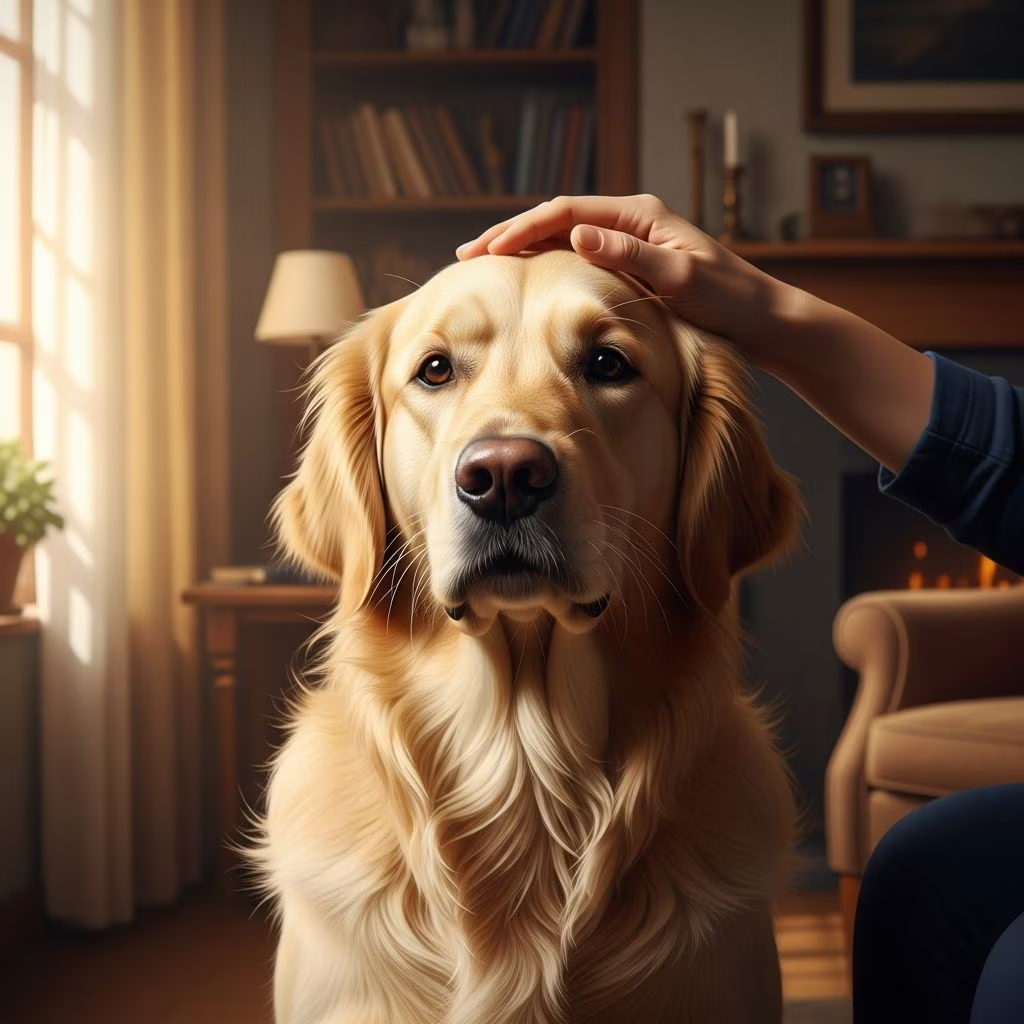
Dogs stand out as one of the most faithful animals, often prioritizing their human companions above all else. This devotion stems from a complex interplay of biological, evolutionary, and social elements that have shaped their behavior over thousands of years.
The Ancient Origins of Canine Devotion
The loyalty of dogs traces back to their wolf ancestors, who formed symbiotic partnerships with early human societies. Wolves that approached human camps for scraps gradually adapted, leading to selective breeding for traits favoring coexistence. Humans gained alert guardians and hunting aides, while these proto-dogs received reliable food sources and protection from harsher wild elements. This mutual reliance embedded loyalty into canine DNA, transforming independent wolves into domesticated partners who view humans as integral family members.
Over generations, natural selection favored dogs that displayed submissive, attentive behaviors toward people. Those that integrated seamlessly into human groups thrived, passing on genes for sociability and dependence. Today, this history manifests in dogs’ instinctive urge to stick close to their owners, seeking approval and security within the household “pack.”
Hormonal Foundations: Oxytocin and Bonding
Central to dog loyalty is oxytocin, a neurotransmitter dubbed the “love hormone” for its role in fostering attachments. Studies reveal that when dogs and owners lock eyes or engage in affectionate touch, both experience oxytocin surges similar to those between human parents and infants. This biochemical response builds trust and reinforces emotional ties, making separations distressing for dogs.
Brain imaging further illuminates this: dogs exposed to their owner’s scent activate reward centers associated with pleasure and positive emotions, akin to human patterns linked to affection. Such reactions underscore why dogs greet returning owners with exuberant displays, driven by neurochemical rewards that deepen attachment.
Pack Dynamics in Modern Homes
Dogs inherit wolves’ pack-oriented structure, perceiving their human families as surrogate packs. Owners often assume the alpha role, providing direction that dogs crave for stability. This hierarchy motivates dogs to remain vigilant, protective, and obedient, ensuring group harmony.
In households, dogs monitor family members’ cues, adjusting actions to align with the group’s needs. This ingrained social framework explains behaviors like shadowing owners or alerting to threats, all geared toward preserving pack unity and earning their place within it.
Empathy and Emotional Synchronization
Dogs excel at reading human emotions, responding with tailored comfort during distress or joy. Experiments show dogs shunning strangers who mistreat owners, indicating a protective bias rooted in empathy. This emotional acuity evolved from living alongside perceptive humans, honing dogs’ ability to interpret facial expressions, tones, and body language.
Recent ethology research compares owner-dog bonds to blends of parental-child and friendship dynamics, noting high emotional support with low conflict due to owners’ control. Dogs provide companionship rivaling close humans, often rated as more satisfying owing to predictability and devotion.
Prosocial Behaviors Reinforcing Ties
Dogs engage in helpful actions, such as retrieving objects or signaling needs, potentially as strategies to solidify caregiver loyalty. Yale research suggests dogs offer more assistance to familiar owners than strangers, using prosocial helping to maintain bonds and even court new allies. In tests, dogs approached doors faster when owners appeared “trapped,” especially if a stranger had interfered, hinting at intentional supportiveness.
- Dogs prioritize owner aid over neutral scenarios.
- They extend limited help to strangers, broadening social reach.
- Control conditions confirm deliberate, context-aware responses.
These actions create reciprocity: dogs “invest” in relationships through service, securing ongoing care without direct resource exchange.
Mutual Gains in the Human-Dog Partnership
The bond benefits both sides profoundly. Dogs receive sustenance, healthcare, and shelter, while humans enjoy reduced stress, enhanced mood, and physical activity prompts from walks. NIH highlights pets’ role in lowering blood pressure and boosting well-being, amplifying loyalty through shared health improvements.
| Benefit to Humans | Benefit to Dogs |
|---|---|
| Emotional support and reduced loneliness | Stable food and shelter |
| Encouraged exercise and outdoor time | Affection and play opportunities |
| Lower stress via pet interactions | Protection from wild threats |
This table illustrates the symbiotic nature, where loyalty flourishes amid interdependence.
Factors Influencing Loyalty Strength
Not all dogs show identical loyalty; breed, upbringing, and experiences play roles. Herding breeds like Border Collies often display intense attentiveness, while hounds may prioritize scents over constant companionship. Early socialization cements bonds: puppies handled gently from weeks old form secure attachments, whereas neglect can foster wariness.
Training reinforces loyalty by channeling instincts positively. Positive reinforcement—treats, praise—mirrors pack rewards, boosting devotion without coercion. Consistency in routines builds trust, as dogs thrive on predictability.
Challenges to Canine Loyalty
Though resilient, loyalty faces hurdles. Abandonment or abuse erodes trust, leading to anxiety or aggression. Rescue dogs may require time to rebuild faith, benefiting from patience and routine. Environmental stressors like loud noises or separations test bonds, but responsive care strengthens them.
Health issues also impact behavior; pain makes dogs withdrawn or irritable. Regular vet checkups preserve physical well-being, sustaining emotional availability for bonding.
Cultivating Deeper Loyalty Daily
Owners can nurture loyalty through intentional practices:
- Quality Time: Daily play and walks fulfill social needs.
- Clear Communication: Consistent commands and body language prevent confusion.
- Affectionate Rituals: Petting and gazing trigger oxytocin boosts.
- Training Sessions: Short, fun exercises build mutual respect.
- Secure Environment: Safe spaces reduce anxiety, enhancing security.
Integrating these habits yields profound returns, transforming casual ownership into profound partnership.
Scientific Comparisons: Dogs vs. Other Pets
Dogs uniquely blend loyalty with interactivity. Cats, while affectionate, retain more independence from solitary feline evolution. Horses offer loyalty through training but lack dogs’ constant companionship. Dogs’ human-tuned cognition sets them apart, enabling nuanced emotional reciprocity.
The Future of Human-Canine Bonds
Ongoing research, including genomics and neuroimaging, promises deeper insights. Understanding genetic loyalty markers could inform breeding for temperament. As society evolves, dogs’ roles in therapy, service, and companionship will expand, rooted in their timeless devotion.
Frequently Asked Questions
Why do dogs follow owners everywhere?
This “velcro” behavior arises from pack mentality and separation anxiety, viewing owners as safety anchors.
Can loyalty change with age?
Senior dogs may slow physically but retain emotional bonds; cognitive support preserves devotion.
Do all breeds equally loyal?
Variations exist, but selective breeding across breeds emphasizes human-oriented traits.
How does neutering affect loyalty?
It typically enhances focus on family by curbing roaming instincts, without diminishing affection.
Why do dogs protect owners?
Instinctive guarding from wolf heritage combines with emotional attachment to defend the pack.
References
- The Science Behind a Dog’s Loyalty — Woof. 2023. https://mywoof.com/blogs/articles/the-science-behind-a-dogs-loyalty
- Why Are Dogs So Loyal to Humans? — Purina US. 2024. https://www.purina.com/articles/dog/behavior/understanding-dogs/why-are-dogs-so-loyal
- Why Dogs Are Better Than People, According to Science — Psychiatrist.com. 2024. https://www.psychiatrist.com/news/why-dogs-are-better-than-people/
- Prosocial Helping in Dogs: A Strategy to Secure Loyalty? — Yale University Psychology. 2019. https://psychology.yale.edu/sites/default/files/files/MadeleineMarino_SeniorThesis_ProsocialHelpingInDogs.pdf
- The Power of Pets — NIH News in Health. 2018-02. https://newsinhealth.nih.gov/2018/02/power-pets
- Human–canine bond — Wikipedia. 2024. https://en.wikipedia.org/wiki/Human%E2%80%93canine_bond



