

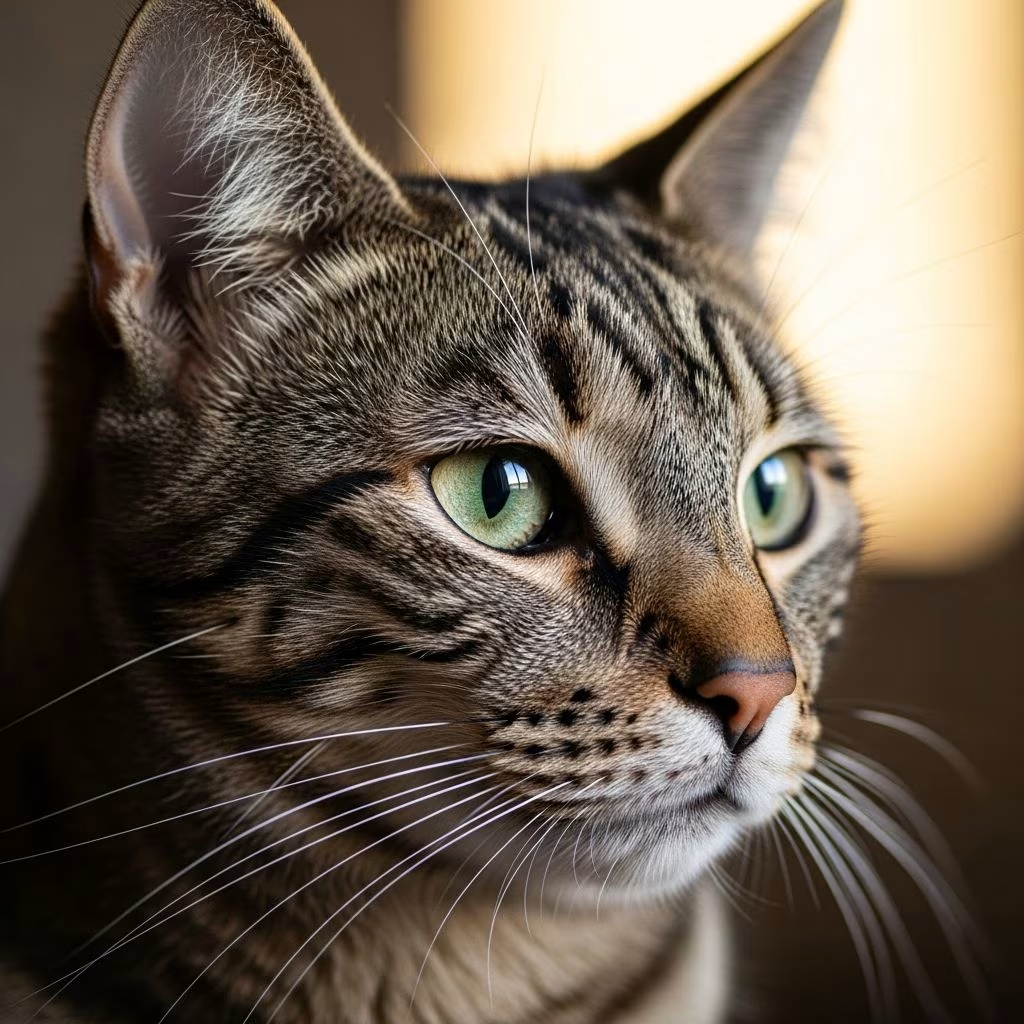
Tabby cats captivate with their bold stripes, swirls, and spots, but these markings define a coat pattern, not a breed. Many owners wonder about their pet’s lineage, as tabbies appear across numerous breeds like the majestic Maine Coon or agile Abyssinian. This guide equips you with practical steps to decode your cat’s heritage using observable traits and reliable methods.
Understanding Tabby Patterns: The Foundation of Identification
Every tabby shares distinct genetic markers, starting with the signature “M” on the forehead, thin lines resembling whiskers on the cheeks, and outlined eyes. These features stem from the agouti gene, creating banded hairs that alternate light and dark shades. Tabby patterns vary widely, influencing how you assess breed specifics.
Recognizing your cat’s pattern narrows breed possibilities. For instance, certain patterns dominate specific breeds due to selective breeding.
Key Tabby Variations Explained
- Mackerel Tabby: The most prevalent, featuring narrow stripes along the body, rings around legs and tail, and a spine line from neck to tail base. Common in Domestic Shorthairs and Orientals.
- Classic (Blotched) Tabby: Bold, swirling whorls and marbled designs on the sides, resembling butterly wings. Often seen in British Shorthairs and Persians.
- Spotted Tabby: Clear, round spots instead of stripes, sometimes with rosettes in Bengals. Broken mackerel stripes can evolve into spots.
- Ticked Tabby: Subtle banding on individual hairs without bold stripes; fur appears uniformly shaded. Typical in Abyssinians and Somalis.
- Patched (Torbie) Tabby: Tabby mixed with tortoiseshell patches of red, cream, and black, creating a mottled look. Appears in various mixed breeds.
These patterns can overlay any base color—brown, silver, red, blue, chocolate—adding diversity. A silver tabby shows white roots under dark stripes, while a brown tabby has grayish backgrounds.
Physical Characteristics: Clues to Your Cat’s Breed
Beyond patterns, scrutinize body structure for breed hints. Breeds differ markedly in size, build, and features, making these traits reliable identifiers.
Body Size and Build
Cats fall into dwarf (under 8 lbs), medium (8-12 lbs), and large (over 12 lbs) categories. Dwarf tabbies might be Singapuras; medium ones often Abyssinians or American Shorthairs; giants like Maine Coons or Siberians exceed 15 lbs with muscular frames.
| Size Category | Average Weight | Possible Tabby Breeds |
|---|---|---|
| Dwarf | 4-8 lbs | Singapura, Munchkin |
| Medium | 8-12 lbs | Abyssinian, Oriental Shorthair, American Shorthair |
| Large | 12-25 lbs | Maine Coon, Norwegian Forest Cat, Siberian |
Fur Length and Texture
Fur offers strong clues: short-haired tabbies include American Shorthairs; long-haired ones like Ragdolls or Persians have flowing coats. Curly textures point to Selkirk Rex, while hairless Sphynx display skin-fold tabby markings. Medium-length fur suits Ocicats or Egyptians Maus.
Facial Structure and Head Shape
Observe the head: rounded with short noses in Persians or Exotics; wedge-shaped in Siamese or Orientals; broad in Maine Coons. Flat faces signal Persians; elongated snouts suggest Siberians. Cheek pinch and ear placement further differentiate—large, tufted ears for Maine Coons, small rounded for British Shorthairs.
Tail and Leg Proportions
Tail length varies: bobbed in American Bobtails or Japanese Bobtails; long and thick in Maine Coons; absent in Manx. Leg length indicates: short-legged Munchkins; elegant long legs in Abyssinians. These traits, combined with patterns, refine guesses.
Temperament and Behavior: Personality Pointers
While individual variation exists, breeds exhibit tendencies. Shy, docile tabbies may be Ragdolls or Persians, preferring laps over adventure. Outgoing, playful ones resemble Abyssinians or Orientals, constantly exploring. Vocal, social tabbies could be Siamese mixes; independent hunters fit Bengals or Savannahs. Affectionate cuddlers point to British Shorthairs.
- Calm and reserved: Persian, Ragdoll
- Energetic and curious: Abyssinian, Bengal
- Social and chatty: Oriental, Siamese
- Gentle giants: Maine Coon, Siberian
Track daily habits: high-energy chasers versus couch potatoes align with breed norms.
Modern Tools for Precise Breed Detection
Visual assessment provides starters; tech confirms. Apps, quizzes, and DNA tests elevate accuracy.
Smartphone Apps and Online Quizzes
Apps like Cat Scanner analyze photos for pattern, size, and features, suggesting breeds. Quizzes prompt trait selections, yielding probabilities—fun but not definitive, as they rely on user input over science.
DNA Testing: The Gold Standard
Swab your cat’s cheek for lab analysis revealing breed mix, health risks, and traits. Companies like Basepaws or Wisdom Panel process samples, reporting percentages (e.g., 40% Maine Coon). Ideal for mixed tabbies, providing vet insights too.
Frequently Asked Questions (FAQs)
Is every striped cat a tabby?
Yes, stripes define tabby patterns, but solid colors or other markings exclude it. All tabbies have the forehead “M”.
Can hairless cats be tabby?
Absolutely—Sphynx show tabby on skin folds.
Are tabby patterns inherited?
Yes, via dominant tabby gene (T), with agouti (A) for banding. Recessive solids hide patterns.
What’s the rarest tabby pattern?
Ticked is less common outside Abyssinians; rosetted spots unique to Bengals.
Do tabby breeds have health issues?
Depends on breed—Maine Coons risk heart disease; Persians face breathing problems. DNA tests screen risks.
Popular Tabby Breeds at a Glance
| Breed | Pattern Preference | Size | Fur | Personality |
|---|---|---|---|---|
| Abyssinian | Ticked | Medium | Short-Medium | Playful, Active |
| Maine Coon | Mackerel/Classic | Large | Long | Friendly, Dog-like |
| American Shorthair | Mackerel | Medium | Short | Easygoing |
| Bengal | Spotted/Rosetted | Medium-Large | Short | Energetic, Wild |
| Persian | Classic | Medium | Long | Calm, Affectionate |
Mastering these elements demystifies your tabby’s origins. Combine observations for best results, and consult vets for ambiguities. Your unique companion’s story awaits discovery.
References
- Cat Identification and Coat Colors/Patterns — University of Florida College of Veterinary Medicine (Dr. Brenda Griffin). 2011. https://sheltermedicine.vetmed.ufl.edu/files/2011/11/identification-and-coat-colors-patterns.pdf
- Cat coat: tabby and genetics — The Little Carnivore. Accessed 2026. https://thelittlecarnivore.com/en/blog/cat-coat-tabby-patterns-genetics
- Identifying the 5 Types of Tabby Cat Markings — Cats.com. Accessed 2026. https://cats.com/tabby-cat-markings
- Striped and Tabby Cat Breeds and Types — PetCareRx. Accessed 2026. https://www.petcarerx.com/article/striped-and-tabby-cat-breeds-and-types/1203



