

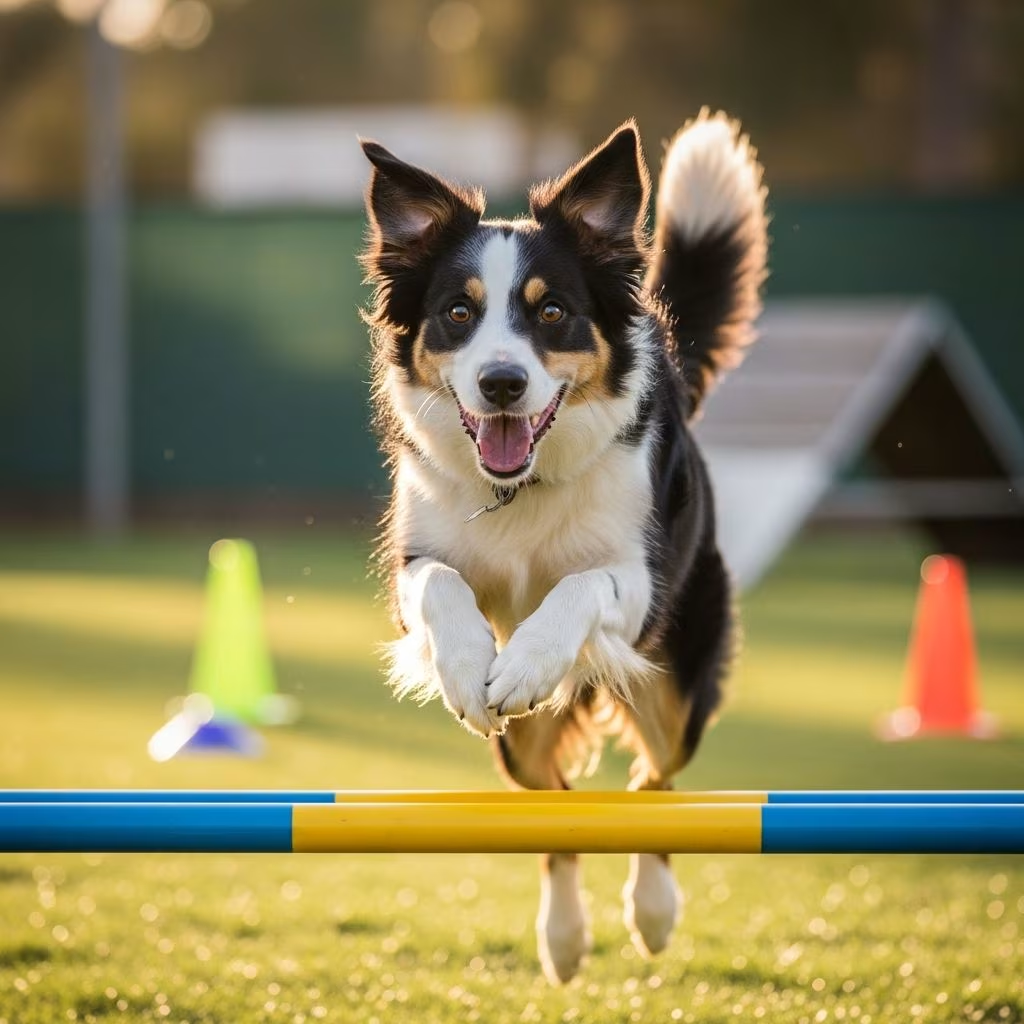
Teaching your dog to perform tricks goes far beyond simple entertainment. This engaging activity serves as a powerful tool for overall development, fostering mental acuity, physical health, and emotional connection. Dog owners often discover that incorporating tricks into daily routines yields surprising improvements in behavior and responsiveness.
The Mental Workout Tricks Provide
One of the standout advantages of trick training lies in its ability to challenge a dog’s cognitive abilities. Dogs thrive on problem-solving, and tricks require them to process cues, remember sequences, and experiment with actions to earn rewards. This mental exercise mirrors the enrichment puzzles designed for captive animals in zoos, keeping boredom at bay.
Regular sessions stimulate neural pathways, enhancing memory retention and learning speed. For instance, teaching a dog to “spin” or “play dead” involves breaking down complex behaviors into small steps, rewarding approximations until the full trick emerges. This process, known as shaping, encourages creative thinking and adaptability.
- Boosts problem-solving skills through trial and error.
- Reduces destructive behaviors stemming from understimulation.
- Improves retention for obedience commands as well.
Owners report that dogs engaged in trick work appear more alert and eager during other training tasks, demonstrating carryover effects to real-world scenarios.
Building Unshakable Confidence in Your Dog
Timid or hesitant dogs often blossom under trick training. Success in mastering new skills reinforces self-assurance, as each accomplishment proves their capability. Watching peers in group classes further motivates shy pups, sparking curiosity and participation.
Consider a dog learning to “high-five” or navigate a small agility weave: the praise and treats associated with success create positive associations. Over time, this builds resilience, helping dogs recover from setbacks in unfamiliar environments.
| Confidence Level | Before Tricks | After Consistent Training |
|---|---|---|
| Shy Dog | Avoids interaction, cowers | Approaches willingly, offers behaviors |
| Anxious in New Places | Paces or hides | Engages with owner on cue |
| Low Enthusiasm | Disinterested in play | Eager for sessions, tail wagging |
Such transformations not only make dogs more enjoyable companions but also aid in addressing fear-based issues.
Mastering Focus Amid Distractions
In a world full of stimuli, teaching tricks equips dogs to tune out irrelevancies and lock onto handler cues. Classes or home sessions with mild distractions—other pets, noises, or movements—gradually increase difficulty, training selective attention.
This skill proves invaluable during walks near traffic or in crowded parks, where ignoring temptations ensures safety. A dog proficient in tricks like “touch” (nose to hand) or “heel” variations learns to prioritize the owner, reducing reactivity.
Experts note that consistent reinforcement in varied settings creates a reliable focus response, transferable to utility training like recall or loose-leash walking.
Channeling Energy into Productive Play
High-energy breeds like Jack Russells or Border Collies benefit immensely from trick sessions that burn mental calories alongside physical ones. Unlike repetitive fetch, tricks demand concentration, leading to quicker fatigue and calmer demeanors post-session.
Owners of energetic dogs find that 15-20 minutes of trick practice rivals an hour of unstructured play in tiring them out. This structured outlet prevents unwanted chewing or digging, promoting better household harmony.
- Physical movement in tricks like jumping or rolling.
- Mental exhaustion from decision-making.
- Endorphin release from rewards and achievement.
Deepening the Human-Canine Partnership
At its core, trick training nurtures trust and communication. Handlers learn to read subtle body language, while dogs discern nuanced verbal and visual signals. This mutual understanding extends to all interactions, creating a team dynamic.
Fun elements like performing for family or friends add joy, with dogs reveling in the spotlight. For children or seniors, tricks provide safe, interactive engagement, enhancing family bonds.
Positive reinforcement methods—treats, toys, praise—keep sessions stress-free, associating learning with pleasure rather than coercion.
Practical Tips for Starting Trick Training
Begin with basics like “sit” or “paw” to build momentum. Use high-value rewards, keep sessions short (5-10 minutes), and end on successes. Progress to chains, like sit-paw-spin, for complexity.
- Select a quiet space initially.
- Mark desired behaviors instantly with a clicker or word.
- Practice daily in varied locations.
- Incorporate play to maintain enthusiasm.
For group settings, choose positive-only classes to maximize benefits.
Advanced Tricks and Long-Term Gains
Once fundamentals click, explore feats like “back up,” “take a bow,” or prop use (e.g., ringing a bell). These not only impress but refine precision and endurance.
Long-term, trick-savvy dogs excel in sports like agility or freestyle, or assist in therapy work, showcasing versatility.
Common Challenges and Solutions
| Challenge | Solution |
|---|---|
| Dog loses interest | Upgrade rewards, vary tricks |
| Struggles with steps | Break into micro-behaviors |
| Over-excitement | Incorporate calm-settling cues |
FAQs on Trick Training
Is trick training suitable for all dogs?
Yes, from puppies to seniors, adapting for physical limits. Even shelter dogs gain adoptability.
How often should sessions occur?
3-5 times weekly, 5-15 minutes each, for steady progress without burnout.
Do I need special equipment?
No—treats, leash, and enthusiasm suffice. Props optional for advanced work.
Can tricks help with obedience issues?
Absolutely; builds focus and motivation transferable to recalls or heeling.
What if my dog is food-motivated only?
Use meals as rewards or mix with toys/praise for balance.
Real-World Applications Beyond Home
Tricks shine in vet visits (counter-conditioning stress), travel (settling cues), or public outings (impress and refocus). Therapy dogs use repertoires to engage audiences positively.
For competitive owners, tricks form foundations for titles in AKC Trick Dog programs, blending fun with achievement.
In summary, trick training elevates dog ownership, turning potential frustrations into shared triumphs. Start small, stay patient, and watch your dog flourish.
References
- Trick Training Benefits — Little Paws of Hope. 2023. https://littlepawsofhope.com/trick-training
- 5 Benefits of Trick Training Your Dog — Whole Dog Journal. 2023. https://www.whole-dog-journal.com/training/tricks_games_sports/5-benefits-of-trick-training-your-dog/
- Why Free Shaping Tricks is Important — Mindfulness4Dogs. 2023. https://mindfulness4dogs.com/why-free-shaping-tricks-is-important/
- Why Trick Training Is Good for Dogs — American Kennel Club (AKC). 2023. https://www.akc.org/products-services/training-programs/canine-good-citizen/articles/why-trick-training-is-good-for-dogs/
- The Power of Trick Training — McCann Professional Dog Trainers. 2023. https://www.mccanndogs.com/blogs/articles/the-power-of-trick-training



