

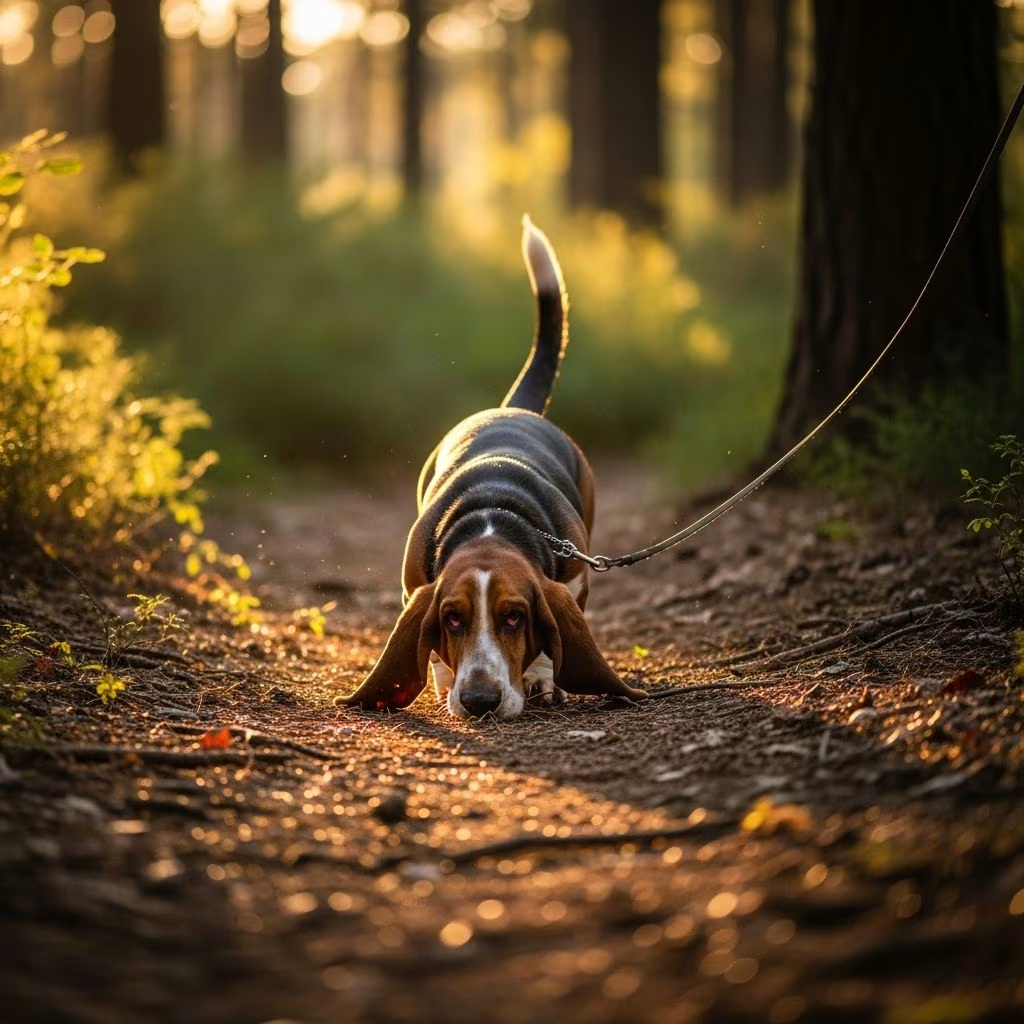
Dogs possess an extraordinary olfactory system that far surpasses human capabilities, making scent tracking one of the most natural and engaging activities for them. With up to 300 million olfactory receptors compared to our mere 6 million, dogs can detect scents at concentrations as low as parts per trillion. This article guides you through building your dog’s tracking skills from simple backyard games to complex trails, enhancing mental stimulation, physical exercise, and the human-canine bond.
The Science Behind Your Dog’s Super Nose
A dog’s nose is a marvel of evolutionary engineering. The olfactory epithelium inside covers a vast surface area, supported by a Jacobson’s organ that detects pheromones. Air enters through nostrils, splits into turbulent flow for scent capture, and moistens for optimal detection. Breeds like Bloodhounds and Beagles excel due to genetics, but any dog can learn tracking with proper guidance.
Environmental factors influence performance: wind disperses scents, temperature affects volatility, and humidity keeps noses damp for better absorption. Training leverages these by starting with strong, ground-level scents and progressing to airborne challenges.
Essential Tools for Scent Training Success
Gather these items before starting:
- Scent articles: Cotton swabs, small tins, or bags infused with birch oil, food, or game scents.
- Containers: Plastic boxes, clamshells, or puzzle toys to hold scents securely.
- Rewards: High-value treats, toys, or tug items for motivation.
- Accessories: Leads, gloves, tweezers, jars for safe scent prep; flags for trail marking.
Prepare scents meticulously: dilute essential oils on swabs in sealed jars to avoid contamination. Always reward at the source to associate sniffing with success.
Beginner Scent Games: Building Confidence
Start with short, rewarding sessions of 5-10 minutes to keep enthusiasm high. These games teach dogs to use their nose proactively without pressure.
Drag-and-Hide Trail
Drag a smelly treat or toy along the ground for 10-20 feet, hide it at the end. Lead your dog to the start, release with a cue like “find it,” and praise lavishly upon discovery. Repeat, lengthening trails gradually.
Scent Box Challenge
Place treats in one of several identical boxes. Let your dog sniff and choose. Shuffle for the shell game variation. Success builds discrimination skills.
Table of Beginner Games Comparison:
| Game | Setup Time | Space Needed | Skill Focus |
|---|---|---|---|
| Drag Trail | 2 min | Backyard | Following linear scents |
| Scent Boxes | 5 min | Indoor | Odor identification |
| Shell Game | 1 min | Any | Memory and choice |
Progress when your dog succeeds 80-90% of the time without cues.
Intermediate Tracking: Straight-Line Trails
Once basics are solid, introduce structured tracks. Create a “scent pad” by walking in place to deposit foot scent, then lay a 30-50 foot straight trail with dragged food or articles.
- Show the scent article/pad.
- Command “track” and follow on a long lead.
- Plant treats along the path initially, fading them out.
- End with a hidden subject or toy for jackpot reward.
Use damp grass or soil for scent retention. Train into the wind so ground scents dominate over air carry. Sessions 2-3 times weekly prevent burnout.
Advanced Techniques: Complex Patterns and Distractions
Elevate skills with non-linear trails and real-world variables.
Angular Trails
Lay L- or U-shaped paths, marking corners with flags. This teaches ground tracking over wind-blown cues. Start with strong scents like soaked game birds.
Introducing Unknown Scents
Switch to novel subjects without prior exposure. Hide in varied terrain: woods, urban areas. Eliminate food lures; use praise/toys only.
Distraction Proofing
Add competing odors (perfume, other animals), wind, or crowds. Hide scents in magnetic boxes or elevated spots for airborne work.
Monitor nose condition: cool and moist is ideal. Hydrate and rest between runs.
Training Phases: A Progressive Roadmap
Structure development in clear stages:
- Phase 1: Basics – Scent intro, simple hides (1-2 weeks).
- Phase 2: Short Tracks – 50ft straights with aids (2-4 weeks).
- Phase 3: Pattern Work – Angles, 100+ft, partial fading (1-2 months).
- Phase 4: Independent – Unknowns, distractions, long trails (ongoing).
- Phase 5: Proficiency – Competition or search simulations.
Adjust pace per dog’s aptitude; scent hounds advance faster.
Common Challenges and Solutions
Problem: Dog air-scents instead of ground tracking. Solution: Train with wind-aligned, flagged angular trails.
Problem: Loss of interest. Solution: Vary scents/rewards, keep sessions short, end on success.
Problem: False alerts. Solution: Reward only at true source; increase discrimination games.
Health check: Avoid if dog has nasal issues. Consult vets for breed-specific advice.
Benefits Beyond the Nose
Scent work reduces anxiety, improves focus, and aids weight management. It’s inclusive for all ages, sizes, and abilities—perfect for seniors or reactive dogs. Compete in AKC Scent Work or UK Sniffer Dogs programs for goals.
FAQs
Q: What age can I start scent training?
A: Puppies as young as 8 weeks; focus on fun, not duration.
Q: Can all breeds track?
A: Yes, though hounds excel. Terriers and herders adapt well with patience.
Q: How often to train?
A: 2-4 sessions/week, 10-20 mins each.
Q: Food vs. toy rewards?
A: Match dog’s drive; fade to variable schedules for reliability.
Q: Outdoor vs. indoor?
A: Both; indoors for precision, outdoors for realism.
Safety and Best Practices
Train in safe areas, use long lines to prevent runaways. Monitor weather: avoid extreme heat/cold. Clean tools to prevent cross-contamination. Positive reinforcement only—no corrections, as stress impairs olfaction.
Integrate with daily walks: hide treats en route for spontaneous practice. Track progress in a journal: distance, time, accuracy.
References
- The 5 Phases of Search Dog Training: How to Train a Tracking Dog — Active Dogs. 2023. https://activedogs.com/blog/the-5-phases-of-search-dog-training-how-to-train-a-tracking-dog/
- The beginner’s guide to scent training for dogs — Tug-E-Nuff. 2023. https://us.tug-e-nuff.com/blogs/news/scent-training-for-dogs
- Scent Detection: The Ultimate Dog Trainer’s Guide — Ray Allen Manufacturing. 2024. https://www.rayallen.com/ultimate-scent-training-for-dogs-guide
- A Beginner’s Guide to Scent Training for Dogs — Mossy Oak. 2023. https://www.mossyoak.com/our-obsession/blogs/how-to/a-beginners-guide-to-scent-training-for-dogs
- How to Teach Your Dog Scent Work at Home — American Kennel Club (AKC). 2024-03-15. https://www.akc.org/expert-advice/training/how-to-teach-your-dog-scent-work/
- Scent Training Your Dog — Zoetis Petcare. 2023. https://www.zoetispetcare.com/blog/article/scent-training-dog



