

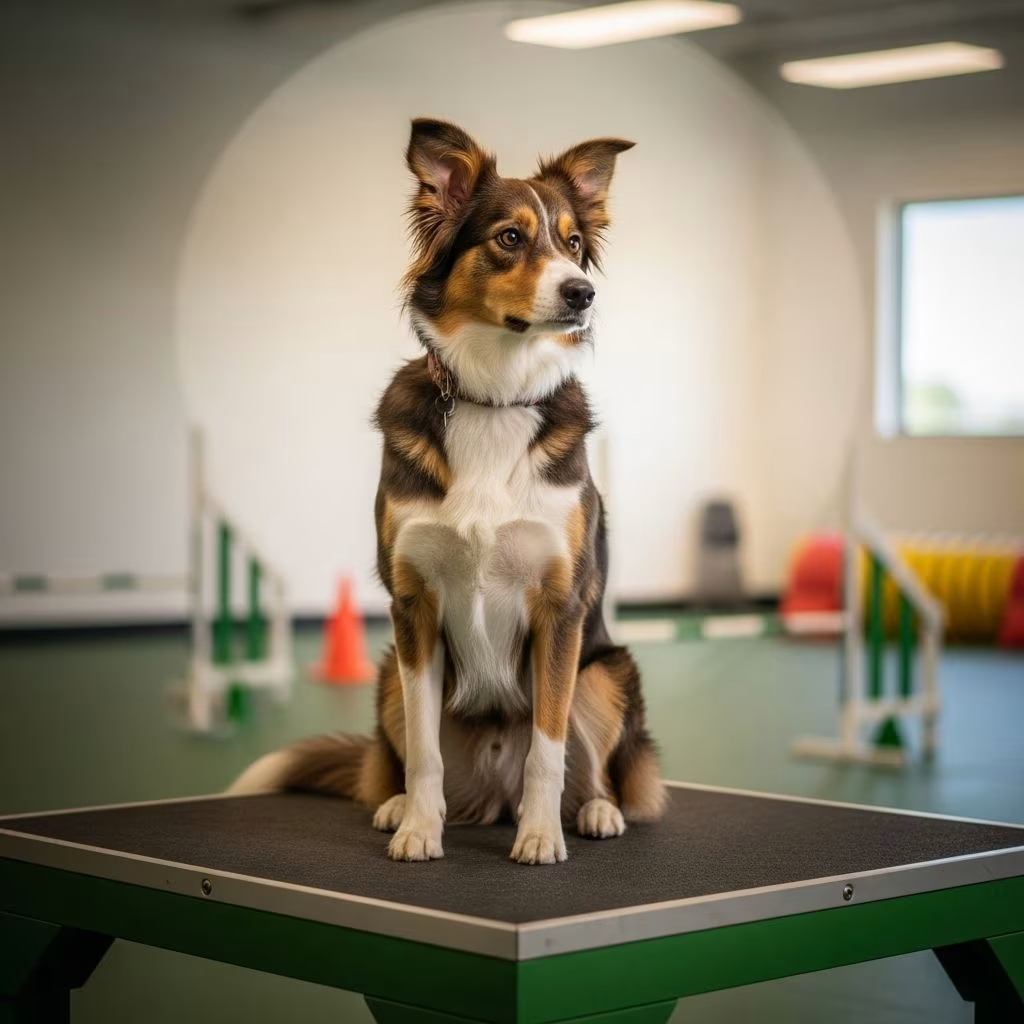
Elevated surfaces known as dog training platforms offer a simple yet powerful tool for teaching dogs to hold positions, build focus, and improve physical conditioning. These stable, raised boards help define clear boundaries, making it easier for dogs to understand and repeat desired behaviors during sessions.
Core Advantages of Using Raised Training Surfaces
Training platforms provide distinct tactile feedback that helps dogs differentiate between correct and incorrect actions. When a dog’s paws touch the surface, it signals reinforcement opportunities, while stepping off prompts a pause in rewards, accelerating learning through clear criteria.
- Enhanced Focus: Fidgety or high-energy dogs settle quickly on a platform, associating it with structured learning time rather than play.
- Improved Posture Awareness: Elevation allows trainers to observe and adjust the dog’s stance, stance, promoting better body alignment.
- Reduced Handler Strain: Working at waist height minimizes bending, ideal for larger breeds.
- Versatile Application: Useful across obedience, sports, therapy, and daily routines.
Professional trainers note that platforms exploit dogs’ natural preference for elevated perches, fostering security and impulse control.
Selecting the Ideal Platform for Your Dog
Choosing the right platform depends on your dog’s size, training goals, and storage needs. Key features include non-slip surfaces, adjustable heights, and portability.
| Feature | Best For | Examples |
|---|---|---|
| Low, Stable Board (4-8 inches high) | Beginner obedience, puppies | Basic place boards |
| Adjustable Pause Table (12-24 inches) | Agility, competition prep | KLIMB-style modular units |
| Stackable, Waterproof Design | Multi-dog homes, grooming | Interlocking platforms |
| Heavy-Duty for Large Breeds | Fitness, strength building | Reinforced fitness boards |
DIY options using plywood and rubber mats work well for budget-conscious owners, ensuring stability and grip. Start with a size matching your dog’s stance—typically shoulder-width for comfort.
Step-by-Step Guide to Platform Training Basics
Introduce the platform gradually to build confidence and precision. Use positive reinforcement like treats or toys to encourage interaction.
- Target Introduction: Place high-value treats on the platform to lure the dog on. Reward paw contact immediately.
- Build Duration: Click or mark the moment all four paws are on, then delay rewards to extend stay time.
- Add Position Cues: Lure into sit, down, or stand; reinforce only on the platform.
- Introduce Distance: Step back gradually, returning to reward; fade the platform as mastery grows.
- Generalize: Practice in varied locations to transfer skills off-platform.
Sessions should last 5-10 minutes, 2-3 times daily, with 100% success rates initially to prevent frustration.
Advanced Skills and Precision Work
Once basics are solid, platforms enable complex behaviors for sports like agility, obedience, or freestyle.
- Precision Stationing: Teach exact foot placement for heelwork or contacts.
- Stay Variations: Fronts, finishes, or pivots with defined boundaries.
- Impulse Control: “Place” command for settling during distractions.
Trainers like those at Fenzi Dog Sports Academy emphasize platforms for undefined spots, easing transitions to ground work.
Incorporating Platforms into Canine Fitness Routines
Beyond obedience, platforms support physical therapy, conditioning, and rehabilitation. Controlled stepping builds coordination, strength, and flexibility.
Sample Fitness Exercises:
| Exercise | Description | Benefits | Reps/Sets |
|---|---|---|---|
| Step-Ups | Dog steps on/off slowly | hindquarter strength | 5-10 per side |
| Platform Stretches | Down then chin-to-paws | flexibility | 3-5 holds |
| Balance Holds | Stand on one front paw | core stability | 10-20 sec |
| Lateral Shifts | Shift weight side-to-side | proprioception | 8-12 shifts |
Veterinary therapists use these for injury recovery, seniors, or performance dogs, progressing from supported to dynamic movements. Videos from brands like Cato Outdoors demonstrate variations.
Creative Everyday Applications
Platforms extend beyond formal training into home life.
- Grooming Station: Teach calm standing for nail trims or brushing.
- Visitor Settle Spot: Designated “place” during guests.
- Travel Aid: Portable for hotels or vet visits.
- Puppy Socialization: Safe novel surface exposure.
For multi-dog households, multiple stackable units prevent resource guarding.
Common Mistakes and Troubleshooting
Avoid these pitfalls for smoother progress:
- Rushing duration: Build tolerance over days, not minutes.
- Inconsistent reinforcement: Reward only on-platform actions.
- Wrong height: Too high intimidates small dogs; too low lacks definition.
- Neglecting generalization: Practice off-platform early.
If a dog avoids the platform, use lower value lures initially and pair with play. Persistent issues may signal discomfort—check for slipperiness or instability.
Platform Training for Puppies and Seniors
Puppies benefit from early platform work for focus and body awareness, preparing for sports. Use soft, low platforms to match their coordination level.
Seniors or injured dogs gain from gentle exercises, improving mobility without high impact. Adjustable heights accommodate arthritis or weakness.
DIY Platform Construction Guide
Build your own for under $50:
- Gather 3/4-inch plywood (24×36 inches), 2×4 legs (6-8 inches), rubber mat, screws.
- Cut legs to height; attach securely to board underside.
- Glue/staple mat for grip.
- Sand edges; test stability.
Scale for breed size; reinforce for chewers.
FAQs
What age can I start platform training?
Any age, but puppies over 8 weeks excel; seniors adapt quickly too.
Do I need a commercial platform?
No, DIY works great; prioritize stability and texture.
How long until my dog masters it?
Basics in 1-2 weeks with daily practice.
Can platforms help reactive dogs?
Yes, for distance settling and focus building.
What’s the difference from mats?
Platforms define edges better via elevation, improving precision.
Integrating platforms elevates training efficacy across disciplines, fostering confident, responsive dogs.
References
- Why do dog trainers use a platform? — Anglian Dog Works. 2023. https://angliandogworks.com/blogs/place-board-training/why-do-dog-trainers-use-a-platform
- Elevate Your Training: Dog Training Platforms & Pause Tables — JJ Dog. 2024. https://www.jjdog.com/blog/elevate-your-training-dog-training-platform-pause-tables/
- How do I train my dog using a platform? — Figo Pet Insurance. 2023. https://figopetinsurance.com/blog/how-do-i-train-my-dog-using-platform
- What Is a Dog Training Platform? — Whole Dog Journal. 2024-03-15. https://www.whole-dog-journal.com/lifestyle/what-is-a-dog-training-platform/
- Puppy Platform Training — Karen Pryor Academy. 2023. https://karenpryoracademy.com/puppy-platform-training/
- Learn About the KLIMB® Dog Training Platform — Blue-9 Pet Products. 2024. https://www.blue-9.com/blogs/learn/the-klimb
- Introducing Platforms: Pre Foundation — Canine Conditioning Coach. 2023. https://canineconditioningcoach.com/listing/introducing-platforms-pre-foundation/



