

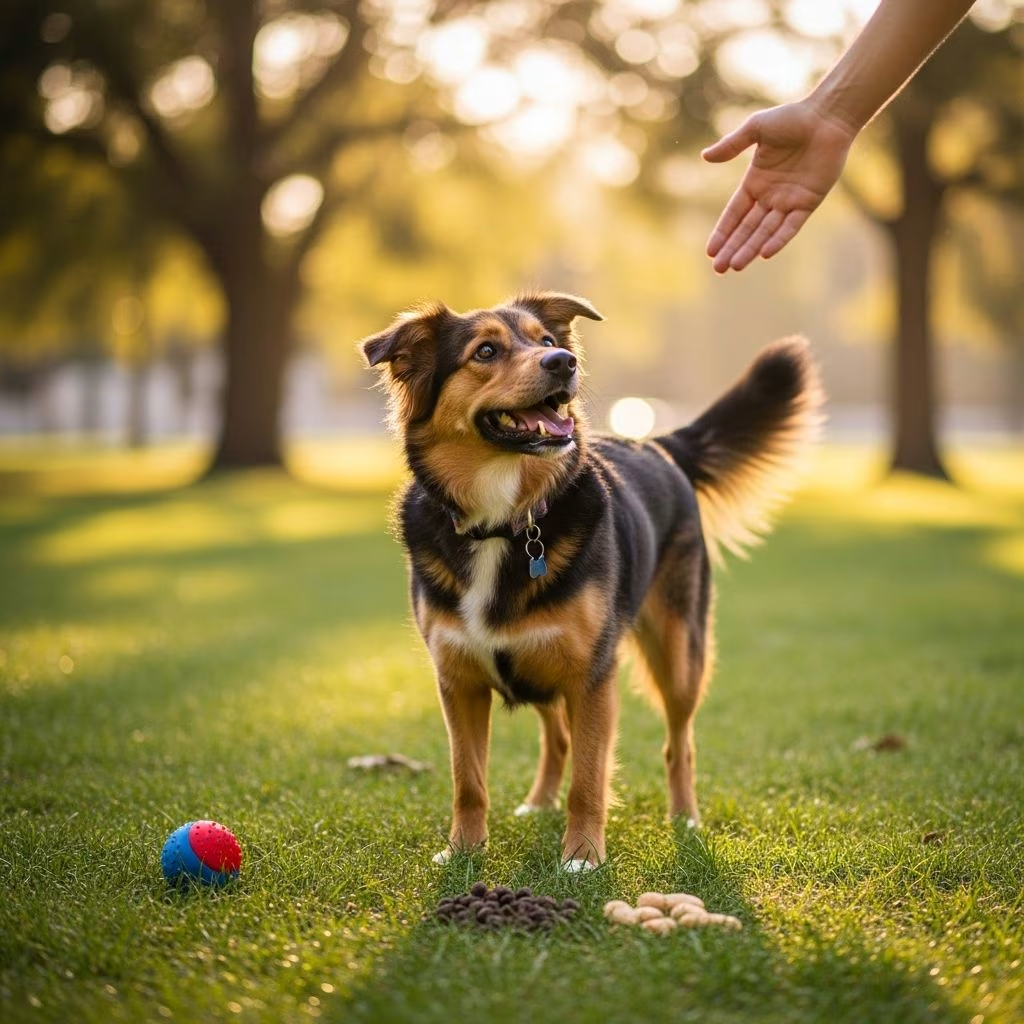
Effective dog training hinges on understanding what truly excites your canine companion. By identifying and leveraging your dog’s personal motivators, you can turn challenging sessions into rewarding interactions that build trust and accelerate learning. This approach, rooted in positive reinforcement, outperforms traditional methods by fostering enthusiasm rather than fear.
Why Motivation Matters in Dog Training
Motivation serves as the foundation of successful dog training. Without it, dogs disengage, leading to stalled progress and frustration for both owner and pet. Research shows that motivated dogs learn faster and retain behaviors longer, creating a positive feedback loop that enhances the human-canine bond.
Consider the learning process: dogs respond to environmental cues, and the strongest motivator wins their attention. In distracting settings, a treat or toy can redirect focus back to you, enabling effective training. Start in low-distraction areas to build this foundation, gradually increasing complexity as engagement grows.
Positive Reinforcement: The Science-Backed Foundation
Positive reinforcement involves rewarding desired behaviors immediately to encourage repetition. Studies confirm this method improves welfare and learning outcomes compared to aversive techniques. Key elements include timing—rewards must follow the behavior within seconds—and consistency to avoid confusion.
Begin with marker training: pair a sound like “yes” or a clicker with a high-value treat. Repeat until your dog anticipates the reward upon hearing the marker. This builds a clear association, speeding up behavior acquisition. Test readiness by using the marker alone; signs like lip-licking or eager looks indicate success.
Decoding Your Dog’s Unique Motivators
Every dog is different—what thrills one may bore another. Observe reactions to potential rewards: does your pup’s tail wag furiously for a squeaky toy, or do they salivate at chicken bits? Experiment systematically to map preferences.
- Food Lovers: Prioritize treats, but vary types to prevent boredom.
- Play Enthusiasts: Use tug games or fetch as rewards.
- Affection Seekers: Leverage petting and verbal praise.
- Adventure Buffs: Offer outdoor access or dog playdates.
For non-food motivated dogs, pivot to toys or activities they crave, ensuring rewards feel valuable. High-drive breeds like herding dogs may ignite over unique stimuli, such as water play or scent games.
Building a Reward Hierarchy for Lasting Engagement
A reward hierarchy categorizes motivators by value, reserving top-tier ones for tough tasks. This maintains interest and prevents habituation.
| Reward Level | Examples | Ideal Scenarios | Tips |
|---|---|---|---|
| High-Value | Cheese, meat, favorite toy | Distractions, new skills, recall | Use sparingly to preserve power |
| Medium-Value | Kibble, mild praise, short play | Basic commands in moderate settings | Builds reliability |
| Low-Value | Verbal cue, quick pat | Polished behaviors, low effort | Fades out over time |
Adjust based on context: elevate rewards in parks, downgrade at home. Combine types for variety—pair praise with a toy toss—to keep sessions dynamic.
Food Rewards: Timing, Variety, and Best Practices
Food remains a top motivator for most dogs. Use it strategically: lure initially for sits or downs, then switch to rewards post-behavior. Vary textures and flavors to sustain appeal, as studies show diversity boosts engagement.
Avoid over-reliance by integrating life rewards, like meals earned through sits. For picky eaters, identify ultra-high-value options like liver for breakthroughs. Always deliver promptly to link action and payoff.
Harnessing Social and Play Rewards
Not all dogs prioritize food; many thrive on attention or play. Enthusiastic praise in an upbeat tone, combined with petting, rivals treats for social butterflies. Watch body language: relaxed ears and wagging tails signal effectiveness.
Play rewards shine for energetic pups. Brief tug sessions or chases reinforce complex behaviors like heel or stay. Dog-dog play or outdoor romps top the list for social extroverts. Rotate to match energy levels and prevent burnout.
Adapting Training for Special Needs Dogs
Tailor approaches for dogs with limitations. Hearing-impaired pups excel with hand signals paired with visual treats or toys. Mobility-challenged dogs benefit from scent work, puzzles, or stationary mental games.
Choose soft, easy-to-chew rewards for dental issues, and opt for calm praise over rough play. Monitor comfort and iterate—success lies in personalization.
Overcoming Common Training Hurdles
Distractions derail sessions; increase distance or reward value to regain focus. Inconsistent rewards confuse dogs, so maintain routines. If motivation wanes, reassess preferences—perhaps switch to novel toys or access privileges.
For stubborn cases, break tasks into micro-steps, rewarding each. Patience yields results; motivation grows with clear successes.
Long-Term Strategies for Engaged Learners
Sustain motivation by varying routines and fading lures over time. Transition to intermittent rewards for reliability, like slot machines for dopamine hits. Incorporate real-life reinforcers, such as door access after sits, for practical obedience.
Track progress in a journal: note effective rewards per behavior. This refines your toolkit, ensuring lifelong engagement.
Frequently Asked Questions
What if my dog ignores all rewards?
Reevaluate in a distraction-free zone with higher-value options. Observe daily joys (e.g., walks) and use them as leverage.
How often should I reward during sessions?
Continuously for new skills, tapering to random for maintenance. Aim for 5-15 minute bursts to preserve focus.
Can I train without treats?
Yes, via play, praise, or life rewards. Identify non-food drivers through trial.
What’s the best age to start?
Immediately upon adoption—puppies or adults benefit from early positive habits.
How do I handle regression?
Return to basics with proven motivators, rebuilding step-by-step.
References
- Top Dog Training Motivation Tips for Every Owner — iPupPee. 2023. https://ipuppee.com/blogs/news/dog-training-motivation-tips
- Dog-Training Tips: Motivators and Reinforcement — Orvis News. 2023. https://news.orvis.com/dogs/dog-training-tips-motivators-and-reinforcement
- 5 Tips for Successful Dog Training — Virginia Tech Vet Med. 2023-01-01. https://vetmed.vt.edu/news/2023/dog-training-tips.html
- The Theory Behind Engagement and Motivation in Dog Training — Leerburg. 2023. https://leerburg.com/theoryofmotivation.htm
- Dog Training Tips #27: Motivation in Dog Training — Maximum Fun Dogs. 2023. https://www.maximumfundogs.com/dog-training-tips-27
- How to Train Non-Food Motivated Dogs — Animal Humane Society. 2023. https://www.animalhumanesociety.org/resource/how-train-non-food-motivated-dogs



