

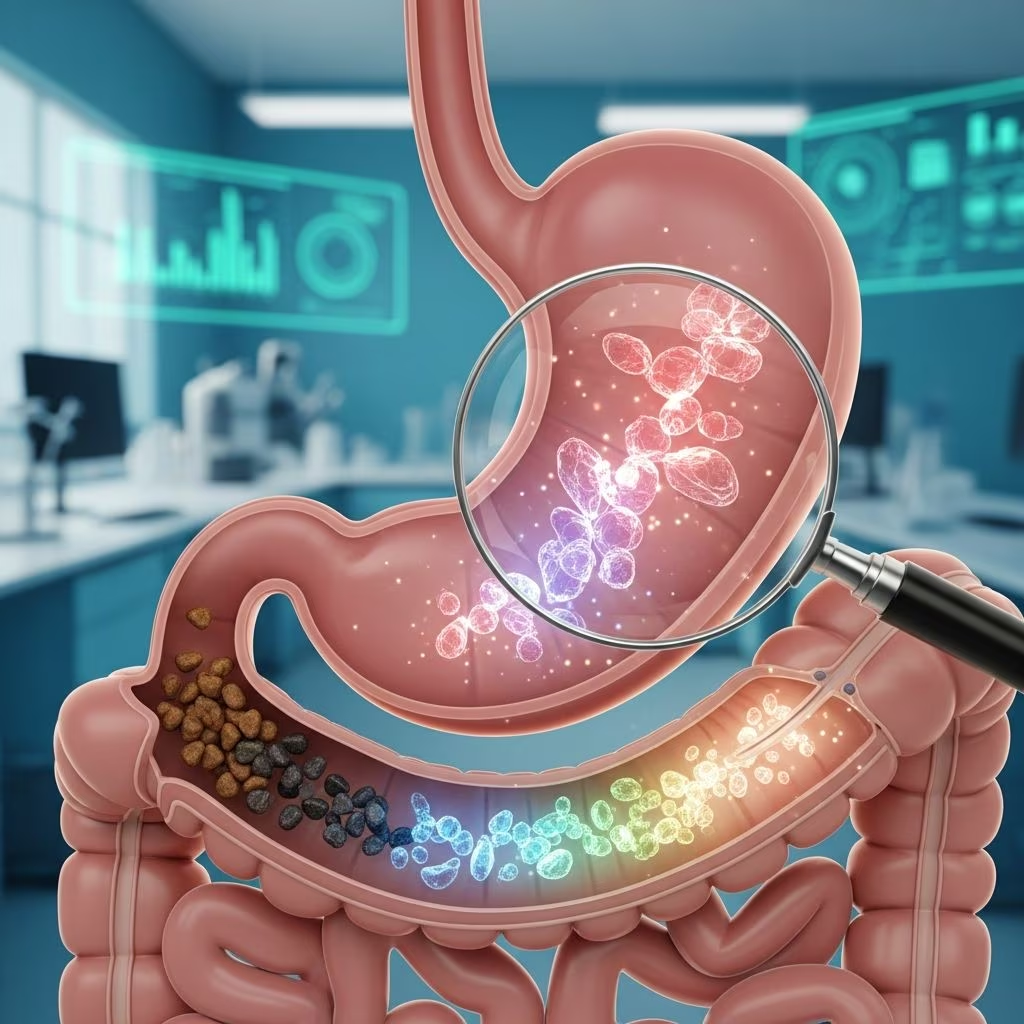
Dog food digestibility measures how effectively a dog’s body absorbs nutrients from their diet, directly influencing energy levels, coat quality, and overall vitality. Highly digestible foods ensure more nutrients reach the bloodstream rather than being wasted in stool, promoting better health outcomes.
Defining Digestibility in Canine Diets
Digestibility refers to the proportion of a food’s nutrients that a dog can break down and absorb into the bloodstream for use by the body. This process occurs primarily in the stomach and small intestine, where enzymes and acids convert proteins, fats, carbohydrates, and other components into usable forms. Not all ingested food gets absorbed; the unabsorbed portion passes through the large intestine and exits as feces.
High digestibility means a larger percentage of nutrients—often above 88%—becomes available, while low digestibility, below 75%, indicates poor nutrient utilization. This metric is crucial because even foods with identical label guarantees, like 26% protein, can deliver vastly different usable amounts based on digestibility. For instance, a 90% digestible protein source provides nearly 24% usable protein, compared to just 21% from an 80% digestible one.
Why Digestibility Drives Canine Wellness
Beyond basic nutrition, digestibility affects multiple aspects of a dog’s life. Owners often notice changes in stool volume and consistency first: highly digestible diets produce smaller, firmer stools because fewer nutrients are excreted. This also correlates with reduced flatulence and gas, as undigested matter ferments less in the gut.
Long-term benefits include improved gut health, stronger immunity, and better weight management. Dogs on digestible foods absorb more energy and protein, supporting muscle maintenance and activity without excess calorie intake. Poorly digestible diets, conversely, can lead to nutrient deficiencies, bloating, and microbiome imbalances.
- Reduced stool output: Up to 50% less volume on high-digestibility foods.
- Enhanced nutrient bioavailability: More vitamins and minerals reach tissues.
- Gut microbiome support: Balanced bacteria from optimal fermentation.
Standard Benchmarks for Dog Food Quality
Industry standards classify digestibility as follows: below 75% is poor, 75-82% moderate, 82-88% high, and over 88% exceptional. Dry kibble often falls in the moderate range due to processing, while fresh or gently cooked foods frequently exceed 88%.
| Digestibility Range | Classification | Typical Food Type | Stool Impact |
|---|---|---|---|
| <75% | Poor | Low-quality kibble | Large, loose stools |
| 75-82% | Moderate | Standard dry food | Moderate volume |
| 82-88% | High | Premium kibble | Firmer, smaller |
| >88% | Exceptional | Fresh/gently cooked | Minimal, firm |
These benchmarks guide consumers, but actual values vary by recipe and individual dog factors like age and breed.
How Digestibility Gets Measured Scientifically
Laboratory feeding trials provide the gold standard for assessment. Dogs consume a fixed diet amount over days, followed by total fecal collection. Researchers analyze food and feces for dry matter (DM), organic matter (OM), protein, fat, and energy content. The formula is: Digestibility (%) = 100 – (Nutrient in feces / Nutrient in food × 100).
Apparent total tract digestibility (ATTD) captures the entire digestive process. Studies show human-grade (HG) foods achieve higher ATTD for DM, OM, and energy than extruded kibble or even some fresh diets. Hematology and serum tests confirm no adverse effects, validating safety.
Processing Methods and Their Digestibility Toll
Extrusion—the high-heat, high-pressure method for most dry kibble—alters proteins and starches, reducing digestibility. Rendering ingredients like meat meals further diminishes quality; for example, raw chicken digests at 88%, but rendered poultry meal drops to 81%. Adding raw ingredients back doesn’t always recover losses due to overall formula interactions.
Fresh, gently cooked foods preserve natural structures, yielding superior absorption. Research confirms HG foods outperform extruded ones in ATTD, with lower fecal output and stable fecal scores.
Ingredient Choices That Boost Absorption
High-quality proteins like fish meal (87% digestibility) outshine lamb (72%) or poultry meal (80%). Avoid fillers like corn or wheat, which lower overall scores. Named meat sources and minimal processing correlate with exceptional digestibility.
- Top proteins: Fish meal, fresh chicken, novel meats.
- Avoid: Rendered meals, grains as primary carbs.
- Bioavailability boosters: Balanced fibers, prebiotics.
Real-World Signs of Optimal Digestibility
Observe your dog’s output: small, firm, low-odor stools signal success. Shiny coat, bright eyes, sustained energy, and minimal gas follow. Track intake versus stool; less waste means better efficiency.
Comparing Diet Types: A Breakdown
| Diet Type | Avg. Digestibility | Fecal Output | Pros | Cons |
|---|---|---|---|---|
| Extruded Kibble | 75-82% | High | Convenient, shelf-stable | Lower nutrient yield |
| Premium Kibble | 82-88% | Moderate | Better ingredients | Still processed |
| Fresh/Gently Cooked | >88% | Low | Superior absorption | Requires refrigeration |
| Human-Grade | 90%+ | Minimal | Optimal health markers | Higher cost |
Data from controlled trials highlight fresh options’ edge.
Navigating Labels and Manufacturer Claims
AAFCO doesn’t mandate digestibility reporting, so seek brands with trial data. Look for ‘complete and balanced’ with ingredient lists prioritizing meats. Independent reviews and lab results offer transparency.
FAQs on Dog Food Digestibility
What digestibility percentage is ideal for my dog?
Aim for 82% or higher; exceptional is 88%+. Puppies and seniors may benefit from 90%+ for easier absorption.
Does wet food beat dry in digestibility?
Often yes, due to less processing, but quality varies. Check trials over moisture content alone.
Can I improve digestibility at home?
Add probiotics or digestive enzymes, but prioritize diet switch to proven high-digestibility formulas.
Is 100% digestibility possible or desirable?
No; some fiber is needed for gut health and motility.
How soon do I see digestibility changes?
Stool improvements in 3-7 days; full benefits in 4-6 weeks.
Practical Steps to Elevate Your Dog’s Diet
Transition gradually over 7-10 days. Consult vets for breed-specific needs. Monitor weight, energy, and stool. Reputable brands share ATTD data proudly.
Choosing digestible food invests in longevity. Informed selections yield vibrant, waste-minimal companions.
References
- Why Digestibility is Crucial for Dog Food — Dog Food Advisor. 2023. https://www.dogfoodadvisor.com/canine-nutrition/dog-food-digestibility/
- Nutrient digestibility and fecal characteristics, microbiota, and metabolites in dogs fed human-grade pet foods — PMC (National Library of Medicine). 2021-10-29. https://pmc.ncbi.nlm.nih.gov/articles/PMC8611730/
- The Importance of Digestible Foods for Dogs — PetMD. 2012-11. https://www.petmd.com/blogs/nutritionnuggets/jcoates/2012/nov/importance_of_digestibility_for_dogs-29432
- What Is Digestibility and Why It Matters — Jinx Pet Food. 2023. https://www.thinkjinx.com/blogs/news/the-dish-on-digestibility
- The Science of Pet-Food Digestibility — The Farmer’s Dog. 2023. https://www.thefarmersdog.com/digest/all-about-pet-food-digestibility/
- How Important is the Digestibility of Dog Food — Whole Dog Journal. 2023. https://www.whole-dog-journal.com/food/dog-food-digestibility-levels-matter/
- All About Pet Food Digestibility — American Kennel Club. 2023. https://www.akc.org/expert-advice/nutrition/pet-food-digestibility/



