

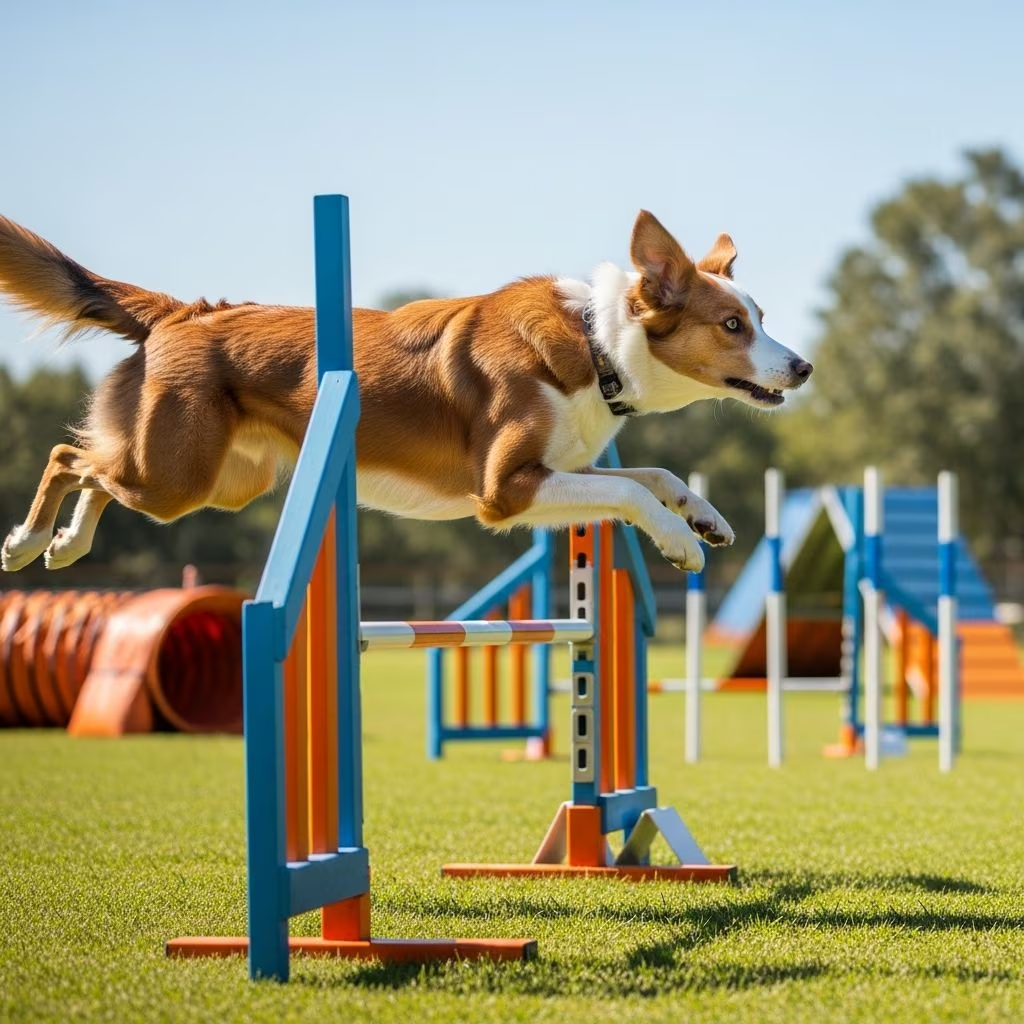
Dog agility training offers a dynamic way to enhance your pet’s overall well-being, combining physical challenges with mental exercises in an enjoyable format suitable for various breeds and ages. This activity involves navigating obstacle courses off-leash, guided by handler cues, fostering skills that extend beyond the field.
The Physical Advantages of Agility Workouts
Engaging in agility routines provides comprehensive physical conditioning that surpasses routine walks. Dogs sprint, jump, climb, and balance across elements like tunnels, ramps, and weave poles, elevating heart rates and building endurance.
- Cardiovascular Health: The high-intensity movements improve heart function and circulation, reducing obesity risks.
- Muscle and Joint Strength: Repeated actions fortify core muscles, legs, and stabilizers, promoting joint stability.
- Flexibility and Balance: Negotiating uneven surfaces and turns enhances coordination and proprioception, vital for mobility.
For high-energy breeds or those needing weight management, agility serves as an efficient calorie burner. Older dogs benefit too, with modified low-impact setups maintaining muscle tone without strain.
| Activity Type | Caloric Burn (per 30 min) | Muscle Groups Targeted |
|---|---|---|
| Daily Walk | 100-200 calories | Legs, basic cardio |
| Agility Course | 300-500 calories | Full body, core, joints |
| Fetch | 200-300 calories | Legs, moderate cardio |
This table illustrates agility’s superior workout intensity compared to standard exercises.
Mental Sharpening Through Obstacle Challenges
Beyond physical exertion, agility demands cognitive effort as dogs process cues, sequence obstacles, and adapt to changes. This problem-solving tires the brain effectively, curbing boredom-induced issues like chewing or digging.
- Focus and Decision-Making: Quick directional shifts require attention to handler signals amid distractions.
- Memory and Learning: Courses reinforce command recall and pattern recognition.
- Stress Reduction: Accomplishing tasks releases endorphins, alleviating anxiety.
Research highlights how such enrichment prevents cognitive decline in seniors, akin to puzzles for humans.
Boosting Confidence and Reducing Fears
Shy or reactive dogs often transform through agility. Successive mastery of intimidating elements—like elevated ramps or confined tunnels—instills self-assurance.
Handlers reward incrementally, creating positive associations. Timid pups evolve into bold navigators, generalizing trust to new environments. This is particularly effective for anxiety-prone dogs, channeling energy productively.
“Agility equips fearful dogs with self-control, helping them process situations thoughtfully rather than impulsively.”
Strengthening the Human-Canine Partnership
Agility emphasizes non-verbal communication—voice, gestures, body positioning—deepening mutual understanding. Handlers learn their dog’s signals, while dogs attune to subtle cues, enhancing everyday obedience.
Shared triumphs release oxytocin, mirroring family bonding. It’s teamwork at its finest, applicable to therapy or service roles.
Suitable Breeds, Ages, and Adaptations
Though popularized by herding breeds like Border Collies, agility suits all sizes and temperaments. Small dogs excel on scaled equipment; large ones on sturdy frames.
- Puppies: Focus on foundational play to avoid growth plate stress.
- Adults: Full courses for peak performance.
- Seniors: Ground-level obstacles for gentle maintenance.
Health checks ensure clearance; consult vets for breeds prone to hip dysplasia.
Essential Gear for Home and Club Practice
Start simply with affordable items:
- Weave poles (PVC pipes).
- Low jumps (hurdles).
- Tunnels (fabric sleeves).
- Contact trainers for professional setups.
Progress gradually to prevent injury.
Step-by-Step Introduction to Training
- Basics First: Solidify sit, stay, come amid distractions.
- Introduce One Element: Lure with treats over a single jump.
- Build Sequences: Chain 2-3 obstacles, fade lures.
- Add Speed: Encourage with enthusiasm.
- Club Enrollment: For structured feedback.
Positive reinforcement yields fastest results; sessions last 10-20 minutes.
Navigating Common Hurdles in Training
Frustration arises if progress stalls. Solutions include:
| Challenge | Solution |
|---|---|
| Fear of Obstacles | Slow desensitization with play. |
| Lack of Focus | Shorter, high-reward sessions. |
| Physical Limits | Vet-approved modifications. |
Patience prevents setbacks.
Competition World: From Fun to Trials
Local clubs host events with levels from novice to masters. USDAA and AKC sanction nationals, emphasizing speed and accuracy. Non-competitive fun matches build skills sans pressure.
Health Monitoring and Long-Term Gains
Regular agility correlates with vitality into old age—stronger bones, less arthritis, extended lifespan via holistic wellness.
Frequently Asked Questions
Is agility safe for my overweight dog?
Yes, with gradual starts and vet approval to shed pounds safely.
Can mixed breeds participate?
Absolutely; talent trumps pedigree.
How often should we train?
3-4 times weekly, 15-30 minutes each.
What if my dog is elderly?
Adapt with flat, low equipment for mobility support.
Do I need prior experience?
No; beginner classes teach all.
Real Stories of Agility Transformations
Owners report hyper Labs calming post-sessions, rescues gaining poise, seniors regaining zip. One account: a reactive Shepherd became a trial star.
Agility enriches lives holistically, turning routine into adventure.
References
- 10 Benefits of Agility Training for Dogs — ElleVet Sciences. 2023. https://www.ellevetsciences.com/blog/agility-training-for-dogs/
- Benefits of Agility Training in Dogs — 4 Paws Kingdom. 2022. https://www.4pawskingdom.com/blog/benefits-of-agility-training-in-dogs
- 5 Benefits of Dog Agility Training — Kinship. 2024. https://www.kinship.com/dog-behavior/dog-agility-training
- Benefits of Dog Agility Training — BarkPark. 2023. https://www.dogparkproduct.com/build-your-park/benefits-of-dog-agility-training/
- 6 Awesome Benefits of Dog Agility Training — FitPaws. 2023. https://fitpaws.com/blogs/fitpaws-community/6-awesome-benefits-of-dog-agility-training
- WHAT IS AGILITY DOG TRAINING — Every Dog Austin. 2024. https://www.everydogaustin.org/what-is-agility-dog-training
- Eight reasons to try agility training with your dog — VCA Animal Hospitals. 2023. https://vcahospitals.com/resources/behavior-dog/training/eight-reasons-to-try-agility-training-with-your-dog



